
Why the Best Ear Rinse for Dogs Matters More Than You Think
The best ear rinse for dogs is not a one-size-fits-all product, and choosing the right one can mean the difference between healthy ears and a painful, recurring infection.
Here's a quick look at top veterinarian-approved options to match common needs:
| Dog's Need | Best Type of Ear Rinse | Key Ingredients to Look For |
|---|---|---|
| Routine maintenance | Gentle cleaning flush | Aloe vera, Docusate Sodium |
| Yeast infections | Antifungal medicated flush | Ketoconazole, Chlorhexidine |
| Bacterial infections | Antibacterial medicated flush | Chlorhexidine Gluconate, PCMX |
| Sensitive ears | Alcohol-free soothing rinse | Aloe vera, Lactic Acid |
| Frequent swimmers | Drying rinse | Salicylic Acid, Isopropyl Alcohol |
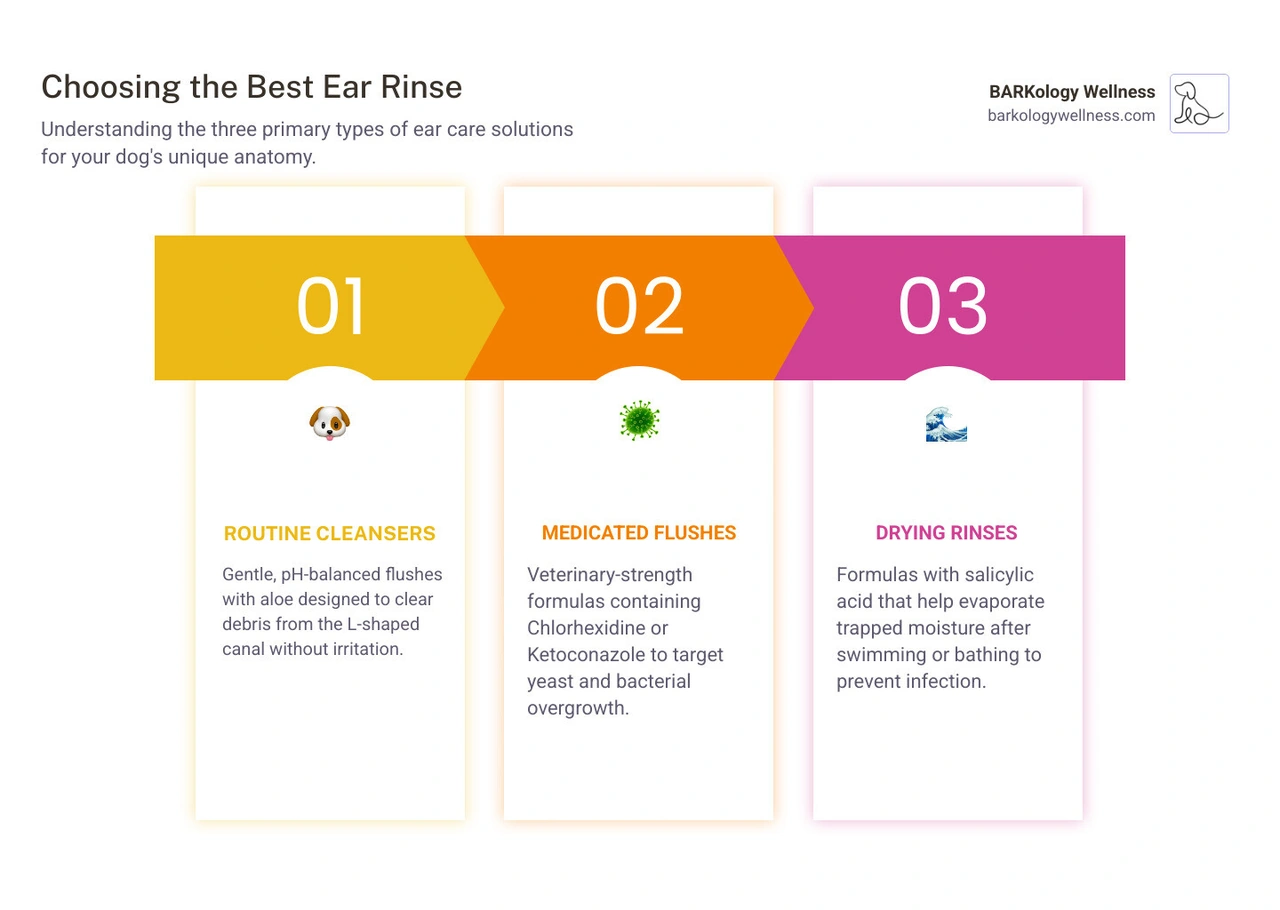
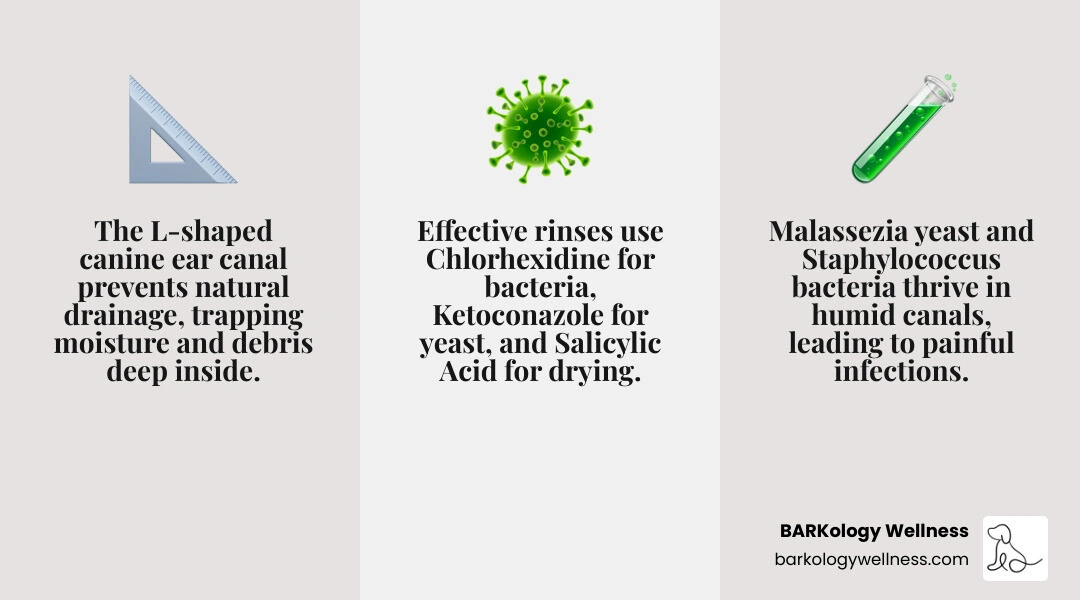
A dog's ear canal is shaped like an "L," running horizontally before turning upward. That structure traps moisture, wax, and debris, creating a warm, dark environment where bacteria and yeast thrive. It's one reason ear infections are among the most common health issues in dogs.
And yet, ear care is one of the most overlooked parts of a dog's grooming routine.
The good news: the right ear rinse, used correctly, can prevent most problems before they start.
I'm Nabilah Shamseddine, founder of BARKology Wellness, where I've built a premium pet wellness brand focused on delivering the kind of thoughtful, health-forward care your dog truly deserves, including helping pet parents find the best ear rinse for dogs for their pup's specific needs. Read on for our carefully curated, vet-informed picks to keep your dog's ears clean, comfortable, and infection-free.
Why Your Pup Needs the Best Ear Rinse for Dogs
If you've ever seen your dog frantically shaking their head or pawing at their ears as if they’re trying to solve a high-stakes puzzle, you’re witnessing the discomfort of ear debris. Because of that unique "L-shaped" anatomy we mentioned, dogs cannot simply "drain" their ears the way humans do.

This structural trap makes dogs particularly susceptible to Malassezia (a common yeast) and Staphylococcus (bacteria). When moisture from a bath or a humid South Tampa afternoon gets trapped in that horizontal canal, it creates a literal petri dish. This is why Ear Cleaning For Dogs is a non-negotiable part of their hygiene.
Certain lifestyles and physical traits make the best ear rinse for dogs even more critical:
- Floppy Ears: Breeds like Basset Hounds or Cocker Spaniels have heavy ear flaps that seal in moisture and heat, preventing airflow.
- The Swimmers: If your pup loves the water, trapped moisture is their number one enemy.
- Seasonal Allergies: Allergies often manifest as skin inflammation, which extends right into the ear canal, leading to secondary infections.
Key Ingredients to Look For (and Avoid)
When shopping for the best ear rinse for dogs, the ingredient label is your roadmap. Not all "natural" products are safe, and not all "chemical" sounding ingredients are scary.
The Power Players
- Chlorhexidine & Ketoconazole: These are the gold standards for medicated flushes. Chlorhexidine targets bacteria, while Ketoconazole is a powerhouse against yeast. Products like Oticbliss™ Ear Flush For Dogs & Cats: Chlorhexidine Antifungal use these to treat active issues.
- Salicylic Acid: This acts as a drying agent and helpfully exfoliates dead skin cells within the canal.
- Hypochlorous Acid: Found in Vetericyn Plus® Antimicrobial All Animal Ear Rinse, this is a gentle, non-toxic antimicrobial that mimics the body’s own immune response.
- Aloe Vera: This is essential for soothing the delicate tissue that becomes red and angry during an infection.
What to Avoid
We strongly recommend avoiding "old school" home remedies. Alcohol and Hydrogen Peroxide are far too abrasive. They can cause significant pain, especially if the ear is already inflamed, and can even damage the healthy microbiome of the ear. Furthermore, if your dog has a ruptured eardrum (which isn't always visible to the naked eye), these substances can lead to permanent hearing loss.
Top-Rated Solutions for Every Canine Need
Finding the best ear rinse for dogs depends entirely on what’s happening inside that ear. Some rinses are designed to "melt" wax, while others are meant to kill "invaders."
Medicated Flushes for Active Issues
When an infection has already taken hold, you need clinical strength. Veterinary studies have shown that the efficacy of a cleaner is often measured by its "dilution activity." For instance, some premium flushes show excellent yeast activity even when diluted to 1/32, meaning they remain powerful even when mixed with ear discharge. If your dog is dealing with stubborn yeast, look for a medicated flush with at least 0.2% Ketoconazole.
Choosing the Best Ear Rinse for Dogs for Sensitive Ears
For pups with reactive skin, "less is more." You want a pH-balanced, alcohol-free formula. These often utilize lactic acid or mild surfactants to gently lift debris without stinging. Proper Dog Ear Cleaning for sensitive dogs should always end with a soothing agent like Vitamin E or Aloe to hydrate the ear tissue.
Drying Rinses for Active Swimmers
If your dog is a regular at the beach or enjoys a backyard pool, a drying rinse is your best friend. These products often contain salicylic acid or specialized solvents that help water evaporate more quickly. Using a drying rinse immediately after a swim can stop "swimmer's ear" before it starts.
How to Apply the Best Ear Rinse for Dogs
Applying an ear rinse is an art form, and it usually involves a bit of "splatter" if you aren't prepared! Here is our expert step-by-step guide to doing it right:
- Positioning: Have your dog sit between your legs or in a corner so they can't back away. Gently lift the ear flap to expose the canal.
- Fill the Canal: Place the tip of the bottle at the opening (do not shove it deep inside!) and squeeze until the liquid is visible.
- The Massage: This is the most important part. Massage the base of the ear (where you feel the firm cartilage) for 30 seconds. You should hear a "squishing" sound. This breaks up Bad Ear Wax In Dogs and ensures the rinse reaches the horizontal canal.
- The Shake: Step back! Let your dog shake their head. This uses centrifugal force to bring the loosened gunk to the surface.
- Wipe: Use a clean cotton ball or gauze to wipe away the visible debris from the outer ear flap. Never use Q-tips, as these can push wax deeper or puncture the eardrum.
- Reward: Always follow up with high-value treats to make the experience positive.
When to Consult a Veterinarian
While the best ear rinse for dogs is a powerful tool, it isn't a substitute for a doctor when things get serious. Research suggests that up to 38% of dogs may experience discomfort even with high-quality cleaners if an active infection is severe enough.
Consult your vet immediately if you notice:
- A "yeasty" or foul odor that doesn't go away after cleaning.
- Bloody or black, coffee-ground-like discharge (which could indicate mites).
- Extreme pain or yelping when you touch the ear.
- A head tilt or loss of balance, which can signal a middle ear infection.
- Redness and swelling that looks like a "cauliflower" texture.
Using a rinse on a ruptured eardrum can be dangerous, so if you suspect an injury, put the bottle down and call a professional.
Frequently Asked Questions about Dog Ear Care
How often should I use an ear rinse on my dog?
For most dogs, a maintenance cleaning once a month is plenty. However, if your dog has floppy ears or is prone to allergies, once a week might be necessary. Avoid over-cleaning, as this can strip the ear of its natural protective oils and lead to irritation.
Can I use homemade rinses like vinegar or alcohol?
We strongly advise against this. Vinegar is highly acidic and can be incredibly painful on inflamed skin. Alcohol is drying to the point of causing cracks in the skin, which actually provides more places for bacteria to hide. Stick to veterinarian-formulated products.
What are the signs of a dog ear infection?
Keep an eye out for persistent head shaking, scratching at the ears, a discharge that looks like dark wax or pus, and a distinct "funky" smell. If the ear feels hot to the touch or looks bright red, an infection is likely present.
Conclusion
Maintaining your dog's ear health is a vital pillar of their overall wellness. By choosing the best ear rinse for dogs and following a consistent routine, you can save your pup from the misery of chronic infections and save yourself from expensive vet bills.
At BARKology Wellness, we believe every dog in South Tampa deserves a "royal treatment" that combines luxury grooming with science-backed care. If you're nervous about cleaning your dog's ears at home or if your pup needs a deep, professional cleaning in a serene environment, we are here to help.
Book a professional grooming and ear cleaning session with our expert team today and give your dog the gift of comfort and health!