
When Your Border Collie Turns Into a Fur Factory (And What to Do About It)
Border collie deshedding is one of the most searched grooming challenges for this breed, and for good reason. Here's a quick snapshot of what you need to know:
Quick Answer: Border Collie Deshedding Essentials
| Question | Answer |
|---|---|
| How often do they shed? | Year-round, with 2 heavy "coat blows" each spring and fall |
| Best tools to use | Undercoat rake, slicker brush, Greyhound comb |
| How often to brush | 2-3x per week; daily during coat blow season |
| Should you shave them? | Never, it damages the coat and disrupts temperature regulation |
| Best single technique | Weekly bath + high-velocity blow dry during shedding season |
If you share your home with a Border Collie, you already know the feeling. One week, their coat looks magazine-worthy. The next, tufts of cottony undercoat are drifting across every floor surface like tumbleweeds. Owners have joked that their dogs "only shed once a year, from June 1st to May 31st." It's funny because it's basically true.
Border Collies shed moderately all year. But twice a year, typically in spring and fall, they "blow" their undercoat in a way that can produce enough loose fur to stuff a throw pillow every single week. Without the right tools and routine, it can feel completely unmanageable.
The good news? It doesn't have to be.
I'm Nabilah Shamseddine, founder of BARKology Wellness, where I've built a premium dog wellness experience focused on exactly these kinds of border collie deshedding challenges that devoted owners face. In this guide, I'll walk you through the specific tools, techniques, and routines that actually work, so you can stop fighting the fur and start winning.
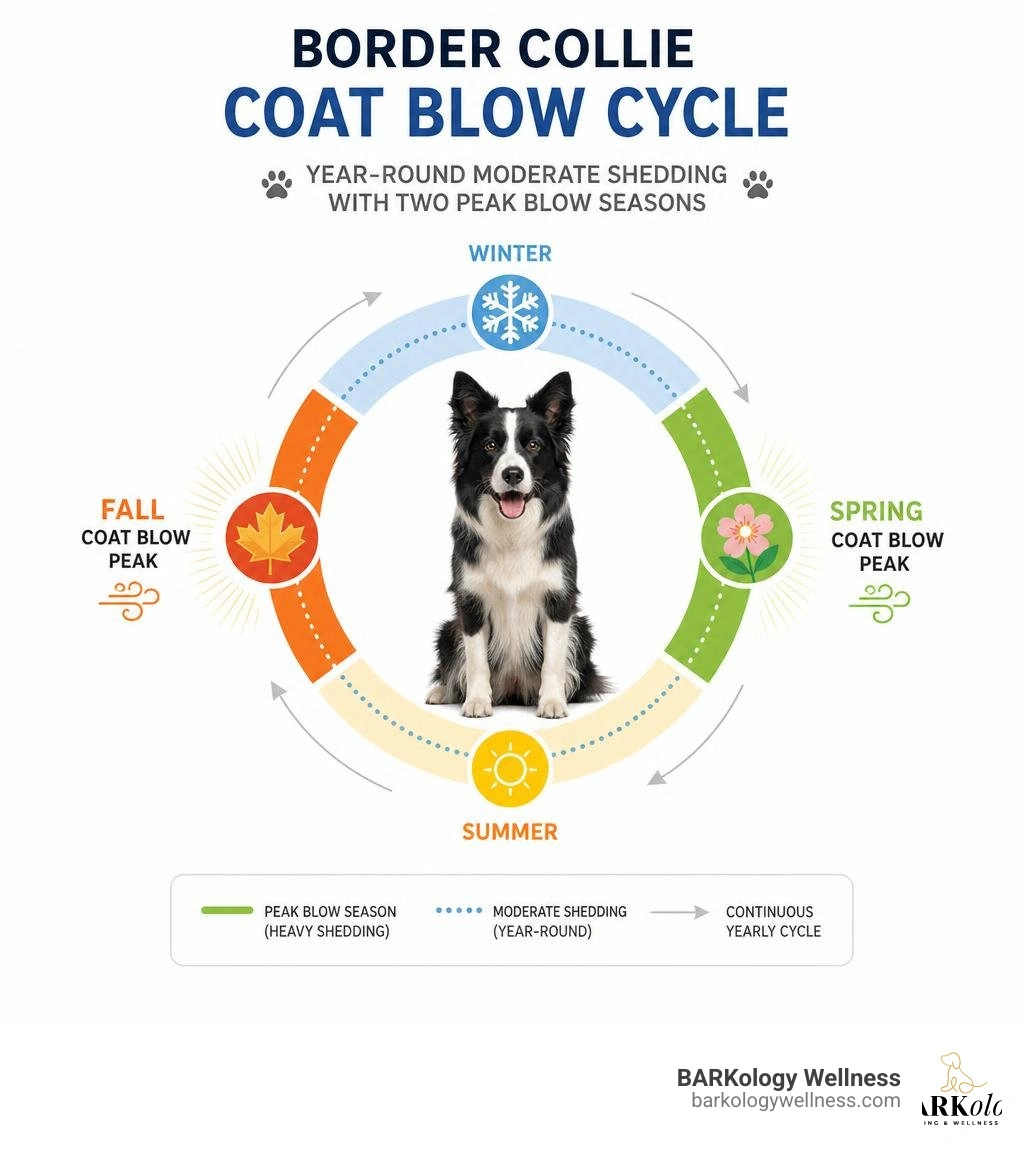
Border collie deshedding terms to remember:
Understanding the Double Coat and the "Fur Blizzard"
To effectively tackle border collie deshedding, we first have to understand the anatomy of their coat. Border Collies are a double-coated herding breed, developed to withstand the damp, cold, and unpredictable weather of the Scottish and Welsh borderlands.
This double coat is composed of two distinct layers:
- The Guard Hairs (Topcoat): This is the outer layer of hair. It is coarser, longer, and weather-resistant. It acts as a protective shield against dirt, water, UV rays, and physical scrapes.
- The Undercoat: This is the soft, dense, cottony layer that sits close to the skin. It acts as insulation, keeping the dog warm in the winter and cool in the summer.
Border Collies generally come in two coat varieties: the rough coat (medium-to-long hair with heavy feathering on the chest, legs, and tail) and the smooth coat (shorter, coarser hair with minimal feathering). It is a common misconception that smooth coats do not shed or lack an undercoat. In reality, both varieties possess a double coat and shed comparable volumes of undercoat; the rough coat simply traps the loose hair more easily, creating those classic "tufts" of flying fur, while the smooth coat drops individual hairs directly onto your furniture.
For more detailed information on managing these differences, check out our guide on Border Collie Coat Care.
The massive shedding events we see twice a year are biologically known as "blowing the coat." This process is primarily triggered by seasonal changes in daylight hours (photoperiod) and hormones, rather than temperature alone. In the spring, they shed their dense winter undercoat to prepare for the warmer months. In the autumn, they shed their lighter summer undercoat to make room for a thick, protective winter layer.
However, living in a climate like Tampa, Florida, can throw a wrench into this natural rhythm. The combination of intense year-round sunshine, high humidity, and indoor air conditioning often tricks a dog's endocrine system, leading to more continuous, year-round shedding rather than two clean, predictable cycles.
For a deeper dive into managing this phenomenon, you can also read the Border Collie Coat Blow Guide: How to Manage the Fur Blizzard Like a Pro .
The Science Behind Border Collie Deshedding
At BARKology Wellness, we emphasize the biological purpose of the coat. The double coat functions as a highly efficient, natural thermoregulation system, essentially a built-in thermostat.
When the undercoat is properly maintained and free of dead, compacted hair, air can circulate freely through the guard hairs. In hot weather, this trapped layer of moving air actually insulates the dog’s skin from the external heat, keeping them cooler than they would be if they were shaved. In cold weather, the undercoat traps body heat to keep them warm.
When dead undercoat is not removed, it begins to compact close to the skin. This compaction blocks airflow, trapping both moisture and heat. Not only does this make your dog highly uncomfortable and restless, but it also creates the perfect warm, damp environment for painful hot spots and skin infections to develop.
This is why active border collie deshedding is not just about keeping your couch clean; it is a fundamental pillar of Dog Deshedding and overall canine health.
Essential Tools for Effective Border Collie Deshedding
Using the wrong tools is the number one reason owners find themselves frustrated with constant shedding. If you only use a standard slicker brush, you are merely skimming the surface of the topcoat, leaving the dense, compacted undercoat completely untouched.
To successfully manage a coat blow, you need a targeted toolkit.
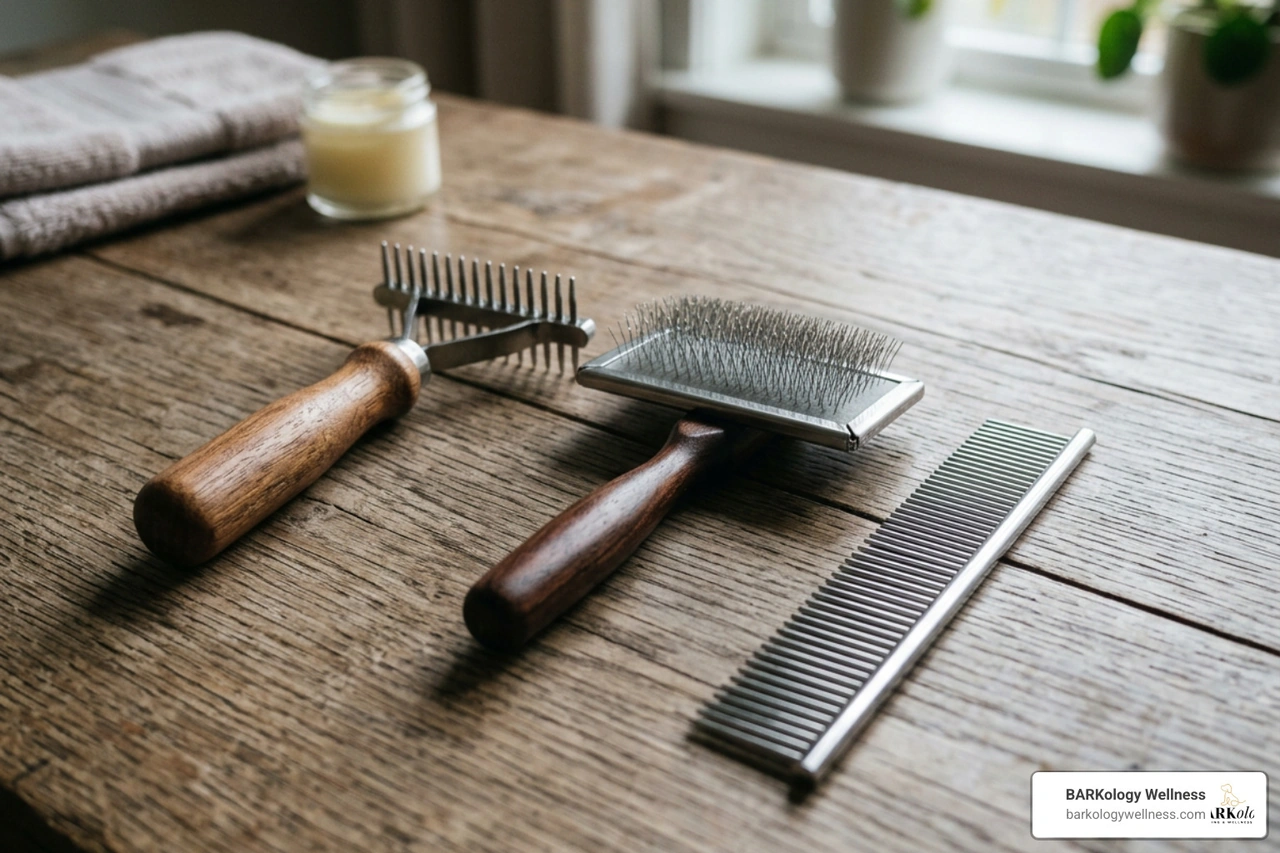
Here is a comparison of the essential tools you should have in your grooming arsenal:
| Tool Type | Primary Function | Best For | Frequency of Use |
|---|---|---|---|
| Undercoat Rake | Reaches through topcoat to pull out loose undercoat | Removing bulk shed during coat blow | 2-3x weekly (daily during heavy shedding) |
| Slicker Brush | Smooths topcoat, removes surface debris and minor tangles | Daily maintenance and finishing | 3x weekly to daily |
| Greyhound Comb | Fine detangling and checking for hidden mats | Feathering areas (ears, legs, tail) | After every brushing session |
| High-Velocity Dryer | Blows water and loose undercoat out of the coat | Rapid deshedding post-bath | 1-2x monthly (as part of bath routine) |
Using these tools in the correct sequence is the key to maintaining a healthy, mat-free coat. For a comprehensive look at brushing techniques, explore our guide on Dog Brushing.
Undercoat Rakes and Slicker Brushes
The absolute MVP of border collie deshedding is the undercoat rake. Look for a rake with long, rounded metal pins, ideally rotating teeth. The rotating teeth glide through the fur more easily, minimizing painful pulling when the tool encounters a knot.
When using an undercoat rake, you must employ a technique called line brushing. Instead of brushing from head to tail in long, sweeping motions, work in small sections. Part the hair horizontally with one hand so you can see the skin, and use the rake to gently pull the loose hair out from the roots outward. Always work in the direction of hair growth.
Be highly mindful of the pressure you apply. Because the teeth of an undercoat rake are metal, pulling too hard or dragging them repeatedly over the same spot can scratch the skin, leading to "brush burn," skin irritation, or micro-tears that can easily become infected. A great rule of thumb from professional groomers is to test the tool on your own forearm first; if it feels scratchy or painful to you, it is too harsh for your dog.
To complement the rake, a high-quality slicker brush with bent wire pins is excellent for collecting loose surface hair and smoothing out the topcoat. For a detailed breakdown of at-home techniques, consult this How to Groom a Border Collie at Home: 2026 Australian Guide .
High-Velocity Dryers and Bathing Essentials
If you ask any professional groomer what their secret weapon is for deshedding a double-coated dog, they won't point to a brush, they will point to a high-velocity (HV) dog dryer.
Unlike human hair dryers, which rely on high heat to evaporate moisture, a high-velocity dryer uses raw, concentrated air pressure (cool or tepid air) to literally blast water and loose undercoat out of the fur. The force of the air reaches deep down to the skin, separating the hairs and pushing out dead undercoat that even the best brushes cannot reach.
When combined with a high-quality Deshedding Dog Shampoo and conditioner, this process becomes incredibly efficient. The shampoo and conditioner help relax the hair follicles and lubricate the coat, allowing the dead undercoat to slide out effortlessly under the stream of high-velocity air.
Step-by-Step Guide to Managing a Border Collie Coat Blow
When the "fur blizzard" hits, having a structured routine will save your sanity and keep your dog's coat in pristine condition.

To prevent painful matting, you must pay special attention to high-friction zones. These are the areas where the fur rubs against itself, collars, or harness straps, causing loose hair to quickly twist into tight knots.
The primary friction zones on a Border Collie are:
- Behind the ears (the soft, fine hair here mats incredibly fast)
- Under the collar or harness line
- The "armpits" (where the front legs meet the chest)
- The "trousers" or breeches (the long feathering on the back of the thighs)
- Around the base of the tail
To protect your dog's skin and keep their coat functional, follow our complete guide to Dog Coat Care.
The Bath-Acceleration Protocol for Border Collie Deshedding
To shorten the duration of a seasonal coat blow from a grueling five weeks down to a manageable two, we recommend implementing the Bath-Acceleration Protocol. This method uses water and air pressure to safely release the bulk of the undercoat all at once.
- The Pre-Bath Brush-Out: Never put a matted or unbrushed dog into a bath. Water acts like a glue on loose undercoat, tightening existing tangles into solid, painful mats. Spend 15–20 minutes line-brushing your Border Collie with an undercoat rake and slicker brush to remove as much loose hair as possible.
- The Warm Bath: Wet the coat thoroughly with lukewarm water. Apply a premium deshedding shampoo, working it deep into the coat down to the skin. Let the shampoo sit for 5 to 10 minutes to help loosen the dead hair follicles.
- The Conditioning Rinse: Rinse thoroughly, then apply a heavy-duty deshedding conditioner. Use a slicker brush or a rubber curry brush to gently work the conditioner through the coat while the dog is in the tub. This helps detangle the hair and release trapped undercoat.
- The Ultimate Rinse: This is the most critical step. Any shampoo or conditioner residue left in the dense undercoat will cause severe skin irritation, itching, and hot spots. Rinse until the water runs completely clear, then rinse for another two minutes just to be safe.
- The High-Velocity Blowout: Towel dry the dog thoroughly (avoid rubbing vigorously, as this can cause tangles). Use your high-velocity dryer, starting at the rear of the dog and working your way forward. Keep the nozzle close to the skin (but keep it moving constantly) to blast the trapped water and loose fur out. Pro-tip: Do this outdoors or in a designated grooming space, as the flying fur will create a literal snowstorm!
- The Final Comb-Through: Once the coat is 100% dry, take your Greyhound comb and run it through the entire coat, focusing on the friction zones, to catch any remaining loose hairs or small knots.
Implementing this protocol weekly during the peak of shedding season will reduce the amount of loose hair in your home by up to 30% to 40%.
Why Shaving Your Border Collie is a Critical Mistake
When the summer heat in South Tampa peaks, it can be incredibly tempting to look at your heavily panting, fluffy Border Collie and think, "I should just shave him to keep him cool and stop the shedding."
Please, never shave a double-coated dog.
Shaving a Border Collie does not stop them from shedding; it simply means they will shed shorter, sharper, more needle-like hairs that are much harder to clean out of your carpets and clothing. More importantly, shaving stripping away their natural defense mechanisms, exposing them to several severe health risks:
- Destruction of Natural Insulation: As we discussed, the double coat acts as a barrier against heat. Shaving removes this "thermostat," making your dog more vulnerable to heatstroke and heat exhaustion, not less.
- Sunburn and Skin Cancer Risks: A dog's skin is incredibly sensitive to ultraviolet radiation. The outer guard hairs act as a natural sunscreen. Without them, your dog can easily suffer painful sunburns and faces a significantly elevated risk of developing skin cancers.
- Clipper Alopecia (Post-Clipping Alopecia): When you shave a double-coated breed, there is a very high chance the coat will never grow back the same way. The soft undercoat grows much faster than the coarse guard hairs. As a result, the undercoat crowded out the guard hairs, leaving the coat looking patchy, fuzzy, dull, and permanently damaged. This new, cottony texture is also far more prone to severe matting and traps dirt like velcro.
- Loss of Insect Protection: The dense outer coat protects your dog's skin from biting insects like mosquitoes, flies, and fleas. Shaving them leaves their skin completely exposed to bites and the diseases those pests carry.
The only exceptions where shaving is acceptable are medical emergencies, surgical procedures, severe parasite infestations, or when a senior dog with mobility issues requires a sanitary trim to maintain basic hygiene.
Supporting Coat Health from the Inside Out
While having the right tools is vital, a dog’s coat is a direct reflection of their internal health. If your Border Collie’s skin is dry, inflamed, or lacking essential nutrients, the hair follicles will weaken, leading to excessive, non-seasonal shedding.
To support a strong skin barrier and a lustrous, healthy coat:
- Omega-3 Fatty Acids: Supplementing your dog's diet with high-quality fish oil (such as wild-caught salmon or pollack oil) provides essential EPA and DHA. These fatty acids reduce inflammation, deeply nourish the hair follicles, and dramatically decrease dry, flaky skin. You will typically see a noticeable reduction in shedding and an increase in coat shine within 6 to 8 weeks of consistent supplementation.
- High-Quality Animal Protein: Hair is made of keratin, which is a protein. A diet lacking in high-quality, easily digestible animal protein will result in a brittle, easily broken coat that sheds prematurely. Ensure your dog's primary food lists real animal protein (like chicken, beef, or lamb) as the very first ingredient.
- Biotin and Zinc: These micronutrients play a crucial role in cellular repair and skin health. A deficiency can lead to hair loss, dullness, and a compromised skin barrier.
- Hydration: Dehydration makes the skin lose its elasticity, leading to dry follicles that drop hair easily. Always ensure your active herding dog has constant access to fresh, cool water, especially during hot Tampa afternoons.
Frequently Asked Questions about Border Collie Shedding
When should I seek professional grooming help for my Border Collie?
While at-home brushing is fantastic, there are times when professional intervention is necessary. You should seek a professional groomer if:
- Your dog has developed tight mats close to the skin (attempting to cut these out at home with scissors is incredibly dangerous and frequently results in severe skin lacerations).
- Your dog shows signs of skin infections, red patches, or hot spots.
- Your dog exhibits extreme anxiety, fear, or behavioral resistance to grooming tools.
- You simply feel overwhelmed by the sheer volume of the seasonal coat blow.
At BARKology Wellness, we offer specialized undercoat removal and luxurious deshedding treatments designed specifically to handle these challenges safely and comfortably. Learn more about our Dog Grooming Services Tampa.
How often should I brush my Border Collie during shedding season?
During the peak of the spring and autumn coat blow, you should aim to brush your Border Collie daily. A quick, focused 15-minute line-brushing session every day is infinitely more effective than a grueling two-hour session once a week. Daily brushing prevents the loose undercoat from settling, compacting, and starting the matting process. During the rest of the year, brushing 2 to 3 times a week is usually sufficient to maintain a healthy coat.
If you are looking to bring a new herding dog into your life, you can explore 25 cute Border Collie puppies for sale in Tampa, Florida | Good Dog or check out adoptable dogs through Border Collie Puppies for Sale in Tampa, FL - Adoptapet.com . To ensure your new pup is comfortable with the grooming process from day one, we highly recommend professional training options like Border Collie Training in Tampa, FL. DTE - Dog Training Elite .
Can I use a shedding blade or FURminator safely?
Shedding blades and tools like the FURminator can be highly effective, but they must be used with extreme caution on double-coated breeds. These tools use a tiny, fine-toothed blade that is designed to grab loose hair. However, if used with too much pressure, used at the wrong angle, or dragged over the same area repeatedly, they can easily cut and damage the healthy guard hairs (topcoat), leading to a dry, frizzy, and damaged coat texture. Limit the use of these tools to no more than once or twice a week, use a very light hand, and rely primarily on your rotating-tooth undercoat rake for heavy lifting.
Conclusion
Managing a Border Collie's glorious coat doesn't have to feel like an endless battle against a fur hurricane. By understanding the biology of their double coat, investing in the right tools, like a rotating-tooth undercoat rake and a high-velocity dryer, and establishing a consistent routine, you can keep your home clean and your dog incredibly comfortable.
If you want to skip the mess, the flying fur, and the grooming stress entirely, let us pamper your pup for you. At BARKology Wellness in South Tampa, we combine scientific coat care with a luxurious, stress-free experience. Our master groomers specialize in double-coat care, ensuring your herding dog gets the precise, high-velocity blowout and undercoat removal they need to stay cool, healthy, and looking their absolute best.
Book a luxury grooming membership at BARKology Wellness today and let us handle the fur hurricane for you!