
Why Border Terrier Coat Care Is Unlike Any Other Breed
Border terrier coat care is in a category of its own, and if you've ever been told to "just clip it," that advice could cause real, lasting damage to your dog's coat.
Here's what you need to know right away:
| Care Task | Frequency | Key Rule |
|---|---|---|
| Hand stripping | Twice a year | Never clip, it ruins the coat |
| Brushing | Weekly (minimum) | Use an undercoat rake + slicker brush |
| Bathing | Every few months | Use a wiry-coat or texturizing shampoo |
| Nail trimming | Every 4-8 weeks | Trim when you hear tapping on the floor |
| Ear cleaning | Every 4 weeks | Use a dog-safe ear cleaner only |
Border Terriers are one of the UK's oldest working terrier breeds, originally bred in the rugged border country between England and Scotland to hunt vermin across rough terrain. That heritage shaped everything about their coat, it's tough, wiry, water-resistant, and built for the outdoors. Today they rank as the 16th most popular dog breed in the UK, according to YouGov data, yet their coats are still widely misunderstood and mistreated at standard grooming salons.
The coat's unique double-layer structure means it needs a specific technique called hand stripping, not clipping, to stay healthy, functional, and true to its natural texture. Skip that, and you're looking at a soft, faded, ginger-toned coat that's lost its weather-resistant qualities entirely.
This guide walks you through everything: the science behind the double coat, how to hand strip correctly, what tools you actually need, and how to care for seniors or dogs with clipping damage.
I'm Nabilah Shamseddine, and through my work leading BARKology Wellness, I've seen how the right breed-specific approach transforms border terrier coat care from guesswork into a precise, health-focused routine. The sections ahead bring together expert grooming knowledge and our wellness-first philosophy so your Border Terrier gets exactly the care their coat was built for.
Explore more about border terrier coat care:
Understanding the Border Terrier Double Coat
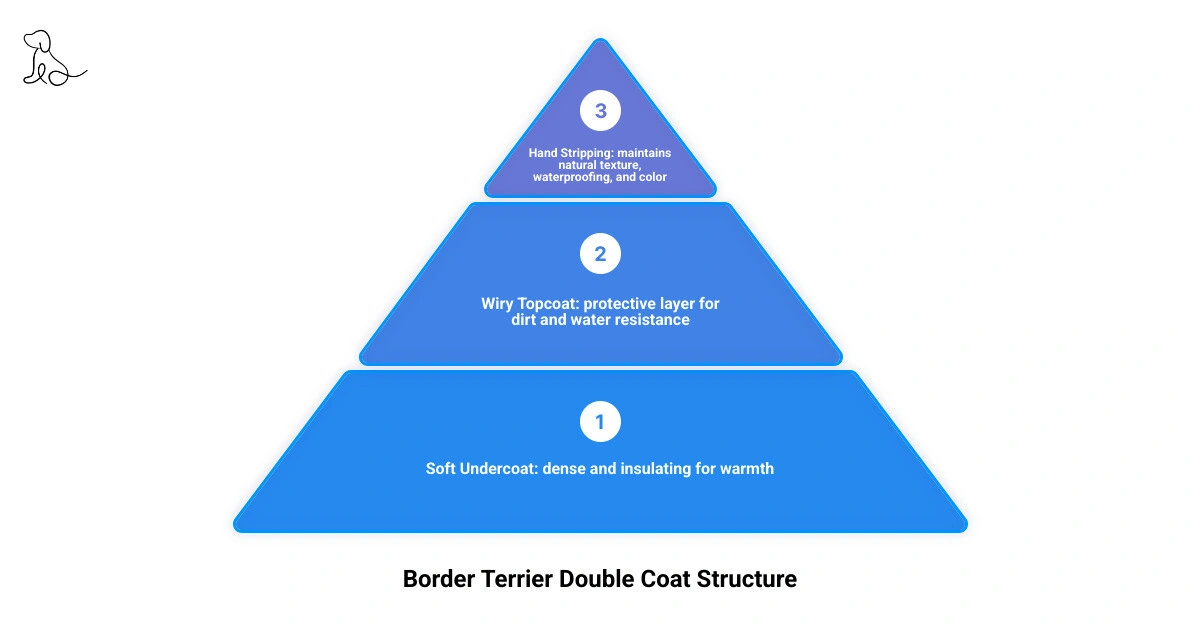
A Border Terrier has a true double coat: a harsh, broken outer jacket over a soft, dense undercoat. That pairing is not decorative. It is functional.
The wiry topcoat helps repel dirt, moisture, and rough outdoor debris. The undercoat adds insulation and protection. Together, they create the practical, weather-ready coat the breed was developed to wear. If you want the short version: the coat should feel more "field jacket" than "fluffy teddy bear."
This is why breed-specific grooming matters. A Border Terrier's coat does not behave like a continuously growing coat such as a poodle mix, and it does not maintain itself the same way as a heavier shedding double coat. Dead guard hairs often stay lodged in place instead of dropping out cleanly, which is why hand stripping is the correct maintenance method.
If you enjoy the science side of grooming, our guide to dog grooming science explains how coat structure affects skin health, airflow, insulation, and grooming technique. And if you want to compare coat needs across breeds, see our article on border collie coat care. The two breeds both have double coats, but they need very different grooming strategies.
Why Clipping Ruins border terrier coat care
Clipping may seem easier, faster, and less intimidating than hand stripping. Unfortunately, for a Border Terrier, it solves the wrong problem.
When we clip a Border Terrier coat, we shorten the dead outer hairs instead of removing them from the follicle. That means the old harsh coat stays behind, crowding the follicle and interfering with healthy replacement growth. Over time, the coat often becomes:
- Soft instead of crisp
- Pale or gingery instead of rich in color
- Thick and fluffy rather than flat and functional
- Less dirt-resistant
- Less water-resistant
- More likely to trap moisture and debris
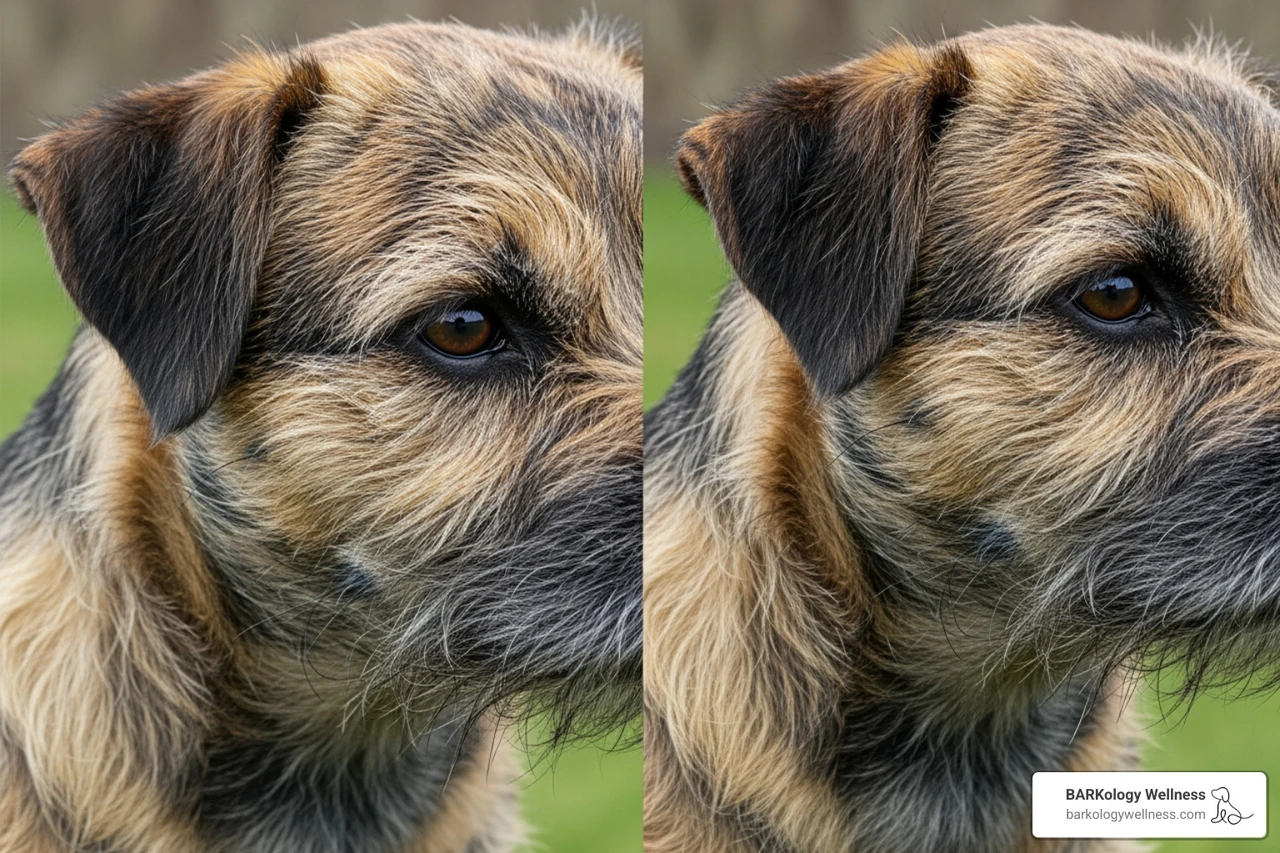
Owners often notice that a previously dark grizzle coat starts looking warm, rusty, faded, or peachy. That classic "soft ginger coat" is a common clue that clipping has altered the jacket.
Clipping itself does not usually injure the dog in the moment. The problem is what it does long term. The coat loses texture, color, and weatherproofing. In some dogs, recovery takes multiple proper stripping cycles. In others, especially seniors or dogs clipped for years, the coat may improve but never fully return to its original harsh finish.
The Art of Hand Stripping and border terrier coat care
Hand stripping is the cornerstone of correct border terrier coat care. It means removing dead outer hairs by hand, or with a stripping tool used carefully, so fresh wiry coat can come through as intended.
Most Border Terriers benefit from a full hand strip about twice a year. Many owners time this around spring and autumn when the coat is naturally "blown." A blown coat usually shows a few obvious signs:
- The coat looks longer, thicker, and duller
- The back may start to part
- Color looks washed out
- More hair comes out on your brush or fingers
- The longest hairs pull out easily without resistance
After a full strip, the dog may look a bit bare compared with the plush pet trim people are used to seeing. That is normal. New outer coat typically starts developing over the next 8 to 10 weeks. Some references note 6 to 8 weeks for visible outer growth, but 8 to 10 weeks is a useful expectation for most pet owners.
For official breed-focused guidance, we recommend the Grooming Guide for Show Dogs & Pets – Border Terrier Club of America and the Border Terrier Club of America grooming overview. We also take a whole-dog view of coat care, which is why our approach aligns closely with holistic dog grooming: the goal is not just a tidy silhouette, but healthy skin, proper coat function, and low-stress handling.
Step-by-Step Hand Stripping Technique
If you want to hand strip at home, patience matters more than speed.
Start with a calm setup.Place your dog on a stable, non-slip surface at a comfortable height. Good lighting helps. So do treats.
Make sure the coat is ready.Only strip dead coat. If the hair resists strongly, the coat is not ready. Pulling live coat is uncomfortable and unnecessary.
Prepare the coat.Brush through first to remove loose undercoat and debris. Many groomers use an undercoat rake lightly before stripping. Some also use a chalk block, grooming chalk, or finger cots for better grip.
Hold the skin steady.With one hand, gently hold the skin taut. This prevents tugging and keeps the pull comfortable.
Work in the direction of growth.Trap just a few long hairs between your thumb and finger, or a properly used stripping knife held parallel to the coat, then pull quickly in the same direction the hair grows.
Take tiny sections.Think "a few hairs at a time," not "grab a chunk and hope for the best." Especially on the head, ears, throat, and tail, small sections are essential.
Roll the skin slightly if needed.On some areas, a gentle skin roll helps the longest dead hairs stand up so you can identify what should come out.
Pause often.At home, 30-minute sessions are usually much kinder than marathon grooming. You can do the back one day, sides another, and finish the furnishings and face later.
Tidy, do not sculpt heavily.A Border Terrier should still look natural. The face is usually hand stripped to keep it tidy, with no heavy beard and no exaggerated jawline fluff.
Stop before your dog gets frustrated.A happy dog is easier to groom tomorrow. A betrayed dog will remember everything.
Here is a simple comparison of the two most common stripping approaches:
| Method | Best For | Frequency | Result |
|---|---|---|---|
| Full strip | Blown coat, major reset | About twice yearly | Coat drops and regrows in cycles |
| Rolling the coat | Ongoing maintenance | Every 2-4 weeks | More even, continuous jacket |
Rolling the coat means removing only the longest dead hairs regularly instead of waiting for a full blow. It can help maintain a steadier appearance and is especially useful when restoring a damaged coat.
For a practical outside reference, see How To Groom A Border Terrier - Groomers Online.
Professional vs. At-Home border terrier coat care
A professional full hand strip often takes 2 to 4 hours, depending on coat condition, dog cooperation, and how much detailing is needed. Face shaping alone can be fiddly enough to make even confident DIY owners mutter a few polite words under their breath.
At home, we usually suggest shorter sessions. Thirty minutes at a time is realistic for most households and much easier on the dog.
Professional grooming may be the better choice when:
- The coat has been clipped before and needs restoration
- The dog has a dense, overblown jacket
- You are nervous about face, head, tail, or ear work
- Your dog dislikes handling
- You are not sure whether your tool is stripping or cutting
At-home care works well when:
- You are doing routine brushing and maintenance
- You are comfortable rolling the coat lightly
- Your dog is easy to handle
- You are willing to learn the correct technique slowly
At BARKology Wellness in South Tampa, we always look at the coat, skin, age, and comfort level of the dog before deciding how much should be done in one session. Breed-specific grooming should never feel like assembly-line grooming.
Essential Tools and Routine Maintenance
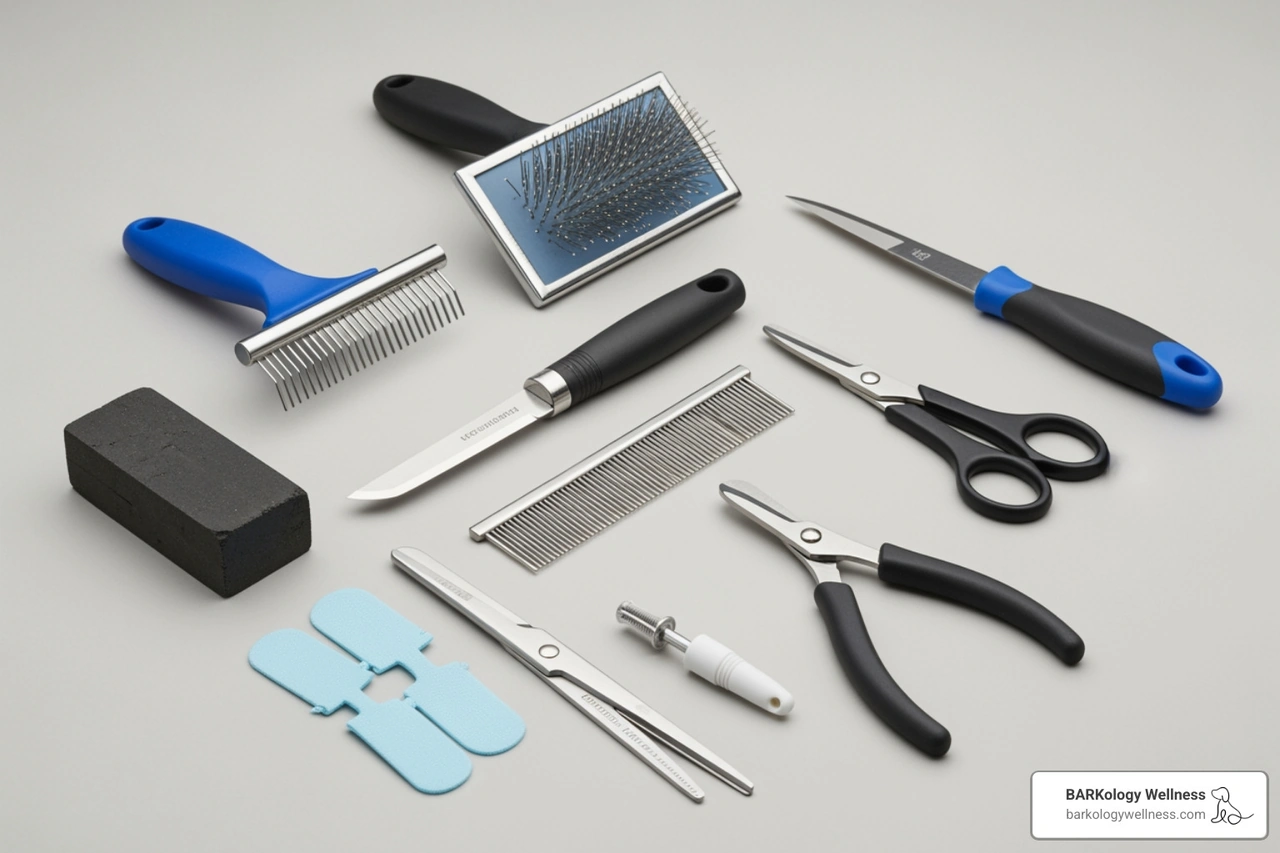
A proper Border Terrier kit does not need to be huge, but it does need to be smart. We recommend:
- Slicker brush for surface debris and light tangles
- Undercoat rake for loose undercoat
- Stripping knife used carefully and correctly
- Finger cots or grooming finger covers for grip
- Chalk block, stripping chalk, or ear powder for slippery coat
- Metal comb for checking small tangles
- Safety-tipped scissors for tiny tidying jobs only
- Dog-safe nail trimmers or grinder
- Dog-safe ear cleaner
- Wiry-coat or texturizing shampoo for occasional baths
For broader maintenance principles that apply across coat types, visit our dog coat care guide.
A quick caution: a stripping knife should help grip and remove dead hair, not slice through it. If the coat looks sharply chopped afterward, the tool is likely cutting.
Brushing and Bathing Best Practices
Border Terriers should be brushed at least weekly. Some coats do best with brushing two or three times per week, especially during seasonal transitions, after outdoor adventures, or if the dog has a fuller undercoat.
The best brush combination is usually:
- An undercoat rake to lift and remove loose dead undercoat
- A slicker brush to tidy the jacket and check friction areas
Pay extra attention to:
- Behind the ears
- Under the front legs
- Chest
- Tail base
- Sanitary area
A Border Terrier is not a heavy shedder compared with many breeds, but they do shed some. They are also not truly hypoallergenic. No dog is 100% hypoallergenic, and Border Terriers still produce dander, saliva proteins, and loose hair. They are often a lighter-shedding breed, which can make them easier for some allergy sufferers to live with, but not guaranteed allergy-safe. For more on that topic, see Do Border Terriers Shed? [Are They Considered Hypoallergenic?].
Bathing should be occasional, not constant. Too much bathing softens the harsh jacket and strips the natural oils that help repel dirt. Most pet Borders only need a bath every few months, or when they are genuinely dirty, smelly, or sticky in a way that no towel can solve.
Use:
- A dog shampoo made for wiry coats, terriers, or texturizing
- A gentle degreasing shampoo if the coat is oily before a stripping session
- Lukewarm water
- Thorough rinsing
Avoid:
- Human shampoo
- Heavy moisturizing formulas
- Frequent conditioning that softens texture
Some groomers bathe before stripping; others avoid it. In practice, bathing first with an appropriate shampoo can work well when done thoughtfully, especially if the coat is dirty or greasy. Clean skin and coat make for cleaner grooming. The main rule is to avoid irritating freshly opened follicles with harsh products after stripping.
Specialized Care for Seniors and Damaged Coats
Border Terriers live an average of 12 to 15 years, so many owners eventually face senior coat changes. Older dogs often have thinner skin, less tolerance for long sessions, and more sensitivity around joints, paws, and hips.
For seniors, we usually adjust by:
- Using shorter, gentler sessions
- Soft stripping only the loosest hairs
- Prioritizing comfort over show-style finish
- Using extra support for standing
- Monitoring the skin for redness, dryness, or irritation
If the skin is fragile or the dog is stressed, a full traditional strip may not be the best choice. In those cases, comfort and skin health come first. That is where wellness-centered grooming matters, and why our dog wellness services complement coat care so well.
If your Border Terrier has a previously clipped or damaged coat, the fix is slow but possible in many cases.
The usual plan is:
- Stop clipping.
- Let enough coat grow out to identify dead harsh hairs.
- Begin rolling the coat every few weeks.
- Remove small amounts regularly rather than overstripping.
- Stay patient through multiple coat cycles.
Some clipped coats improve noticeably after two or three proper hand-stripping cycles. Others recover only partially. The more years of clipping, the more stubborn the coat may be.
Signs recovery is happening include:
- Stronger wiry texture returning along the back
- Deeper, richer color
- Less fluffiness
- Better lay of coat
- Improved dirt and moisture resistance
Maintenance for Face, Nails, and Sanitary Areas
The face should look neat, natural, and unmistakably Border Terrier. That means tidying the muzzle without building a beard. Long straggly cheek or jaw hair can usually be hand stripped lightly.
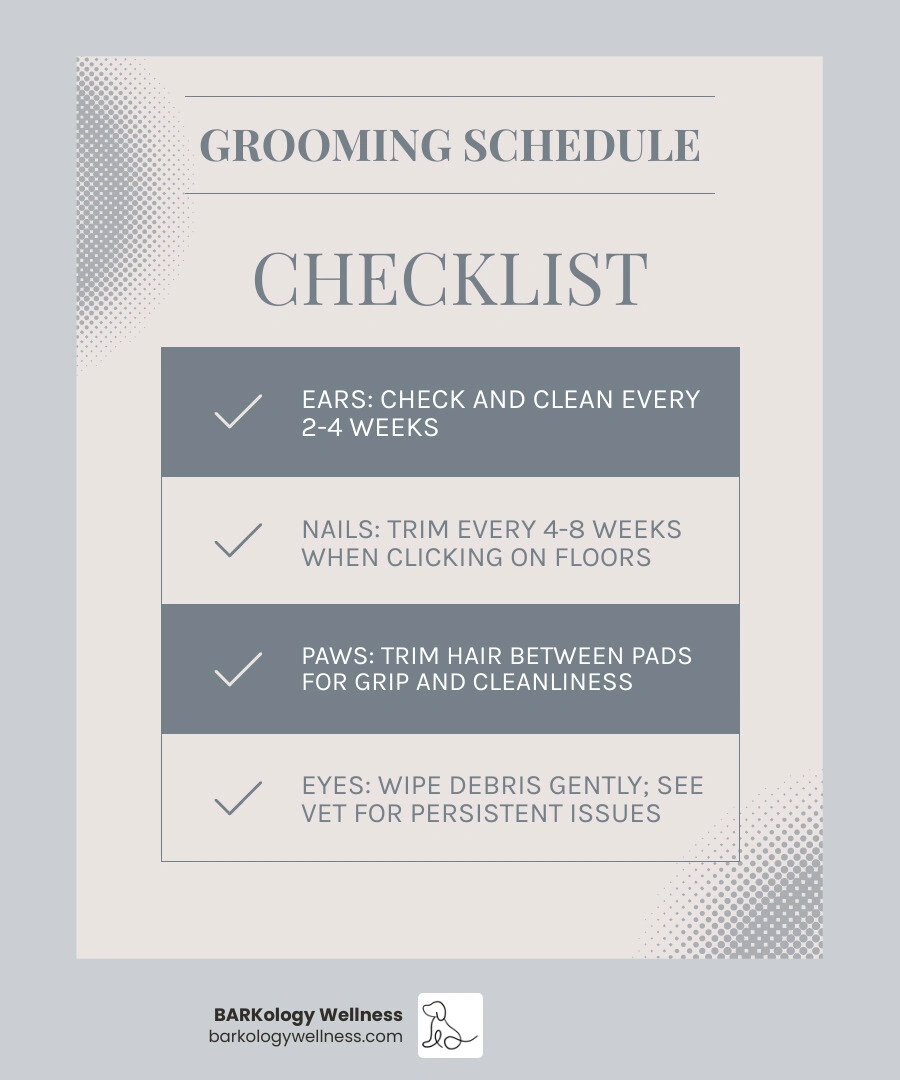
For ears:
- Check every 2 to 4 weeks
- Clean with a dog-safe ear cleaner
- Never use cotton swabs down the ear canal
- Watch for redness, odor, discharge, or frequent scratching
For eyes:
- Wipe away debris gently with a damp soft cloth
- Watch for tearing, squinting, redness, or rubbing
- Ask your vet about anything persistent
For nails:
- Trim every 4 to 8 weeks
- If you hear clicking on the floor, they are too long
- Take off tiny amounts if your dog has dark nails
- Dewclaws need checking too
For paws and sanitary areas:
- Trim only where needed for cleanliness and traction
- Use safety-tipped scissors around the groin, anus, and sparse belly hair
- Keep hair between pads tidy if it affects grip
- Go slowly if your dog dislikes paw handling
If your Border hates having the feet touched, practice outside grooming time. Touch a paw, reward, release. Repeat. A lick mat or helper can turn nail day from a courtroom drama into a manageable routine.
Frequently Asked Questions about border terrier coat care
Are Border Terriers hypoallergenic and how much do they shed?
Not truly. Border Terriers are generally light shedders, but they are not a guaranteed hypoallergenic breed. They still produce dander and allergens. Many homes find them easier to manage than heavy shedders, especially with weekly brushing and regular stripping, but allergy reactions vary by person.
Does hand stripping hurt my Border Terrier?
When done correctly on a blown coat, hand stripping should not be painful. Dead hairs come out relatively easily. Problems happen when someone pulls live coat, takes too much at once, or lets the skin move during the pull. Good technique, small sections, and timing matter.
How do I fix a coat that has been previously clipped?
Stop clipping and start a restoration plan. Let the coat grow, then begin rolling out the dead softer coat a little at a time. Expect several months and possibly multiple stripping cycles before the jacket improves. Some dogs recover beautifully; some improve only partway. Consistency matters more than speed.
Conclusion
Good border terrier coat care is about preserving function, not just appearance. When we respect the breed's natural double coat, we protect texture, color, weather resistance, and skin health all at once.
At BARKology Wellness, we bring that same breed-specific, wellness-first approach to every grooming visit in South Tampa. If your Border Terrier needs routine maintenance, coat restoration, or a more thoughtful plan for senior skin and comfort, we are here to help.
For May 2026 grooming standards and tailored care, book your professional grooming session.