
Why Small Dog Dental Health Deserves More Attention Than You Think
Learning to brush small dog teeth is one of the most impactful things you can do for your pet's long-term health. Yet most dog owners skip it entirely, and the consequences are serious.
Here's how to brush a small dog's teeth (quick answer):
- Choose a quiet time and a calm space
- Let your dog taste a small amount of pet-safe toothpaste from your finger
- Gently rub your finger along the outer surfaces of the teeth and gumline
- Introduce a soft small-breed toothbrush and apply a pea-sized amount of toothpaste
- Hold the brush at a 45-degree angle to the gumline
- Use gentle circular motions on the outer tooth surfaces
- Brush for approximately 30 seconds per side
- Reward your dog with praise and a treat immediately after
Over 80% of dogs over the age of three have some form of periodontal disease. For small breeds, the risk is even higher, their teeth are crowded into smaller jaws, making plaque buildup faster and harder to manage.
Bad breath is usually the first sign something is wrong. But by the time it's noticeable, damage is often already underway.
The good news? A consistent brushing routine at home can make a real difference.
I'm Nabilah Shamseddine, entrepreneur and leader at BARKology Wellness, where premium pet care, including how we brush small dog teeth, is built into every service we offer. In this guide, I'll walk you through everything you need to know to protect your small dog's smile.
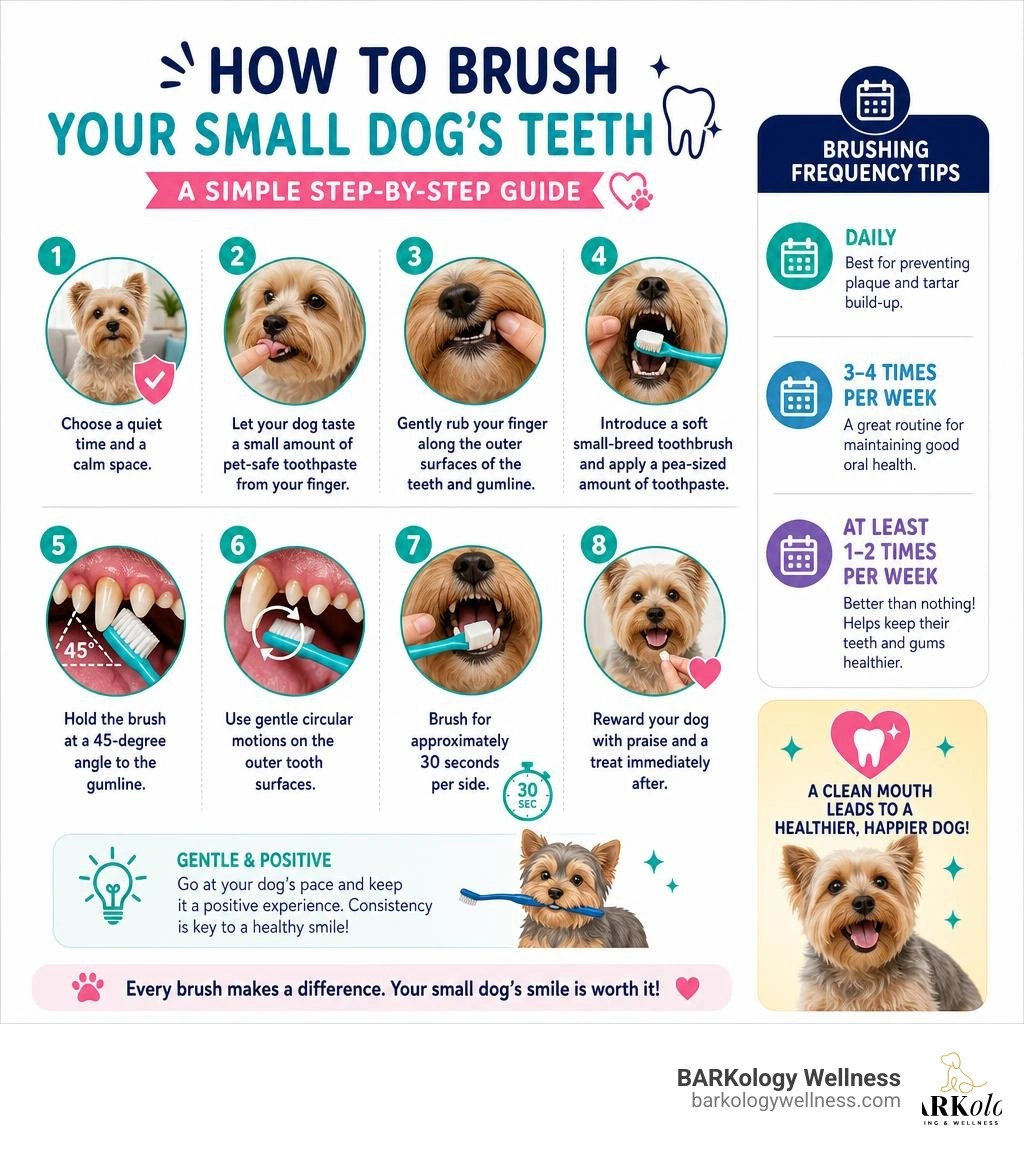
Simple guide to brush small dog teeth:
Why You Must Brush Small Dog Teeth Regularly
When it comes to dental health, small dogs and toy breeds (like Chihuahuas, Pomeranians, Yorkies, and French Bulldogs) got the short end of the evolutionary stick. While their bodies and skulls shrank over generations of breeding, their teeth didn't scale down at the exact same rate.
A small dog still has to fit 42 adult teeth into a tiny mouth. This dental crowding creates perfect, microscopic pockets where food particles, hair, and bacteria get trapped. Because these tight spaces are nearly impossible for a dog’s tongue to clean naturally, plaque builds up at an accelerated rate.
Plaque is a soft, sticky film of bacteria. Within just 24 to 48 hours, this plaque combines with minerals in your dog's saliva and hardens into tartar (calculus). Once tartar forms, it cannot be brushed away at home; it requires professional veterinary scaling to remove.
If left unchecked, this bacterial buildup leads to gingivitis (inflamed, bleeding gums) and eventually progresses to periodontal disease. This destructive process destroys the bone and supportive tissue surrounding the teeth, resulting in painful infections, loose teeth, and eventual tooth loss.
The danger doesn't stop in the mouth. A dog's oral cavity is highly vascular. When gums are inflamed and diseased, harmful bacteria easily enter the bloodstream. From there, these pathogens travel directly to major organs, increasing the risk of:
- Heart Disease: Bacteria can attach to the heart valves, causing endocarditis.
- Kidney & Liver Damage: The kidneys and liver act as filters for the body, making them highly susceptible to chronic bacterial infections originating from the mouth.
- Systemic Inflammation: Chronic dental infections keep the immune system in a constant state of high alert, draining your pet's energy and overall vitality.
Many pet parents write off chronic bad breath in dogs as "just a dog thing." In reality, severe halitosis is a warning cry for help.
While establishing an at-home routine to brush small dog teeth is your first line of defense, it must go hand-in-hand with professional veterinary care. Regular checkups and cleanings under anesthesia are vital. For our local pet parents in South Tampa, establishing a relationship with a trusted medical provider is essential for comprehensive care. You can learn more about the importance of professional veterinary dental care to understand how medical cleanings protect your dog's internal organs.
Essential Tools for Small Dog Dental Care
To successfully brush small dog teeth, you must use tools designed specifically for tiny mouths. Standard human toothbrushes and human toothpastes are not just ineffective; they can be downright dangerous.
Here is a checklist of the essential dental supplies you should have on hand:
- Pet-Safe Enzymatic Toothpaste: Unlike human toothpaste, pet toothpaste does not foam and is formulated to be safely swallowed. It contains enzymes that actively break down plaque even after you finish brushing. It also comes in dog-friendly flavors like poultry, beef, and peanut butter.
- Ultra-Soft Toothbrushes: Look for brushes featuring Polybutylene Terephthalate (PBT) polymer bristles. PBT bristles are ultra-soft, highly durable, and absorb significantly less water than traditional nylon bristles, which limits bacterial growth on the brush between sessions.
- Silicone Finger Brushes: Excellent for puppies, senior dogs, or those just starting their dental care journey. They offer maximum control and are highly tolerated.
- Dual-Head Brushes: Angled dual-head brushes allow you to clean the front and back of the teeth simultaneously or navigate tight corners with ease.
Toothbrush Comparison for Small Dogs
| Toothbrush Type | Best For | Key Benefits | Drawbacks | Recommended Products |
|---|---|---|---|---|
| Ultra-Soft Manual Brush | Daily maintenance, reaching back molars | Precision cleaning, eco-friendly handles, high bristle counts (5000+) | Requires a cooperative dog | Wag & Bright Puppy Polisher Toothbrush for Small Dogs Puppy Polisher Mini Eco Toothbrush (Small) Puppy Polisher Mini Dog Toothbrush |
| Bamboo Handle Brush | Eco-conscious owners, small-medium snouts | Biodegradable, lightweight, smooth and splinter-resistant | Slightly larger head than ultra-mini plastic options | Dog Toothbrush – Small–Medium Bamboo Handle |
| Silicone Finger Brush | Beginners, puppies, sensitive gums | Gentle, non-slip, gives owner precise sensory feedback | Harder to reach the very back molars in extremely tiny mouths | Dog Finger Toothbrush Safe Teeth Cleaning |
| Dual-Headed / Angled Brush | Narrow jaws, quick cleaning sessions | Reaches tight spaces with 125° angled necks, dual heads for different tooth sizes | Can feel bulky if the dog is highly resistant | BITE ME Two-Way Ultra Small Toothbrush | Dual Head Dental Care |
Step-by-Step Guide: How to Clean Your Dog's Mouth
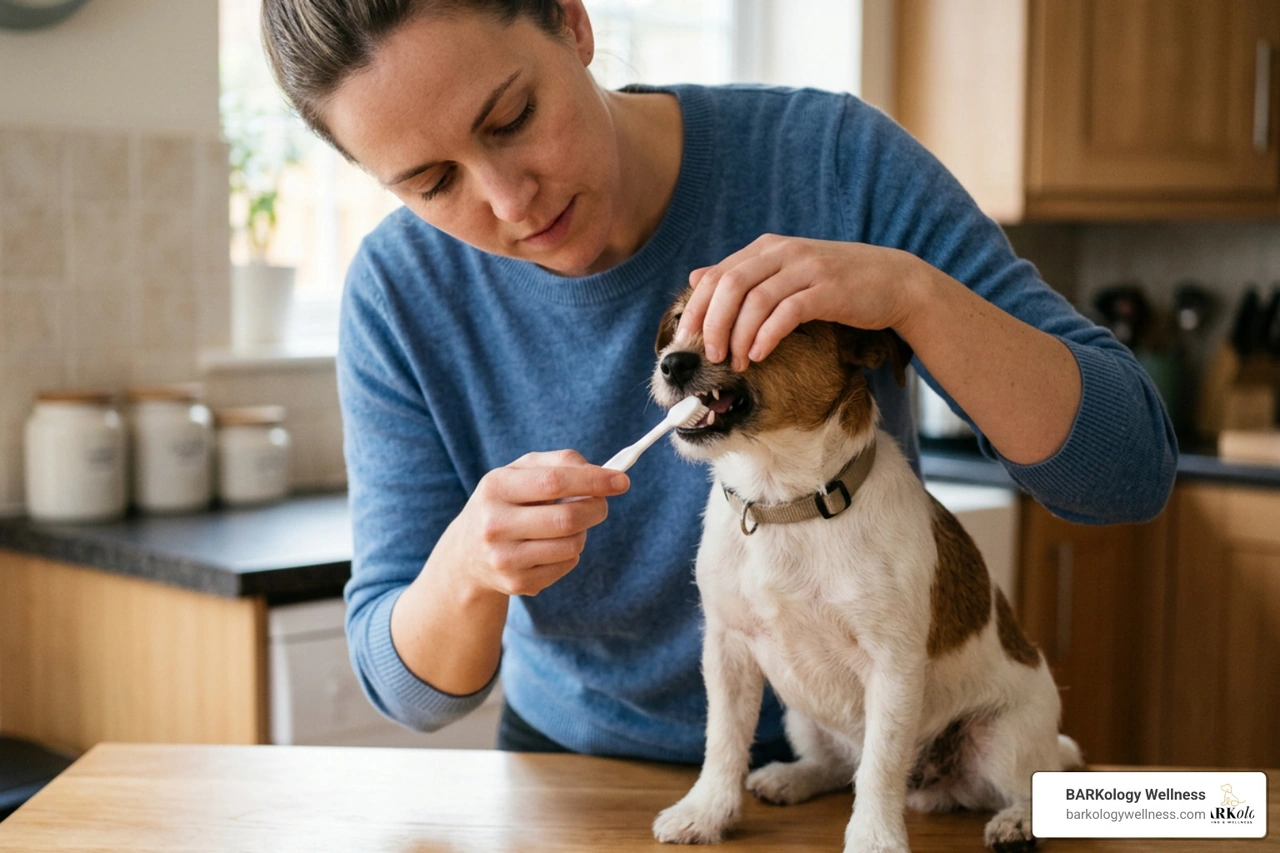
Now that you have the right tools, it’s time to build a positive routine. The secret to success when you brush small dog teeth is patience. Do not expect to complete a full, perfect brushing session on day one. Instead, view this as a cooperative training process.
Always choose a quiet, distraction-free environment to begin. Sit at your dog's level, avoid pinning them down, and use a warm, encouraging tone of voice. Our goal is to make dog brushing feel like a pampering spa session, not a chore.
Phase 1: Preparing to Brush Small Dog Teeth
Before you ever put a toothbrush into your dog's mouth, you must desensitize them to having their muzzle and lips handled.
- The Taste Test: Squeeze a pea-sized amount of enzymatic toothpaste onto your finger. Let your dog lick it off. Because these pastes are flavored like delicious treats, this immediately builds a positive association. Repeat this for 2 to 3 days.
- The Finger Rub: Once your dog loves the taste of the paste, apply another small dab to your bare finger or a soft silicone finger brush. Gently lift their upper lip and rub your finger along their outer teeth and gums. Keep this brief, about 10 to 15 seconds.
- Praise and Reward: Immediately after rubbing their teeth, shower your dog with verbal praise and offer a high-value treat. This teaches them that allowing you to touch their mouth leads to wonderful things.
Phase 2: The Best Technique to Brush Small Dog Teeth Safely
Once your dog is comfortable with your finger in their mouth, you can transition to a specialized small dog toothbrush.
- Apply the Paste: Place a small amount of enzymatic toothpaste on the bristles. Press it down slightly into the bristles so it doesn't immediately slide off.
- The 45-Degree Angle: Gently lift your dog's lip. Hold the toothbrush at a 45-degree angle to the tooth surface, pointing the bristles slightly toward the gumline. This is where plaque accumulates most heavily.
- Gentle Circular Motions: Use light, circular motions to sweep away plaque. There is no need to scrub hard; let the soft bristles and the enzymes in the toothpaste do the heavy lifting.
- Focus on the Outer Surfaces: Focus 95% of your energy on the outer (cheek-side) surfaces of the teeth. This is where tartar builds up most rapidly. You do not need to worry about the inner surfaces of the teeth; a dog's rough tongue naturally sweeps away plaque from the inside.
- Keep it Brief: Aim for approximately 30 seconds per side. If your dog gets restless, stop, praise them, and try again tomorrow. Consistency matters far more than perfection. Over time, you will easily achieve a thorough clean that supports natural canine tartar removal.
Post-Brushing Hygiene and Maintenance
What you do after you brush small dog teeth is just as important for hygiene as the brushing itself. A dog's mouth contains a unique microbiome, and storing a wet, dirty brush can turn it into a breeding ground for bacteria.
Follow these simple post-brushing steps to keep your supplies sanitary:
- Rinse Thoroughly: Wash the toothbrush under hot running water. Use your thumb to massage the bristles, ensuring all remaining toothpaste and food debris are completely washed away.
- Dry Completely: Pat the brush dry with a clean towel. Shake off any excess moisture.
- Store Properly: Store the toothbrush upright (bristle-side up) in a clean, dry, and well-ventilated space. If your brush came with a breathable container, ensure the brush is dry before sealing it. Never store a wet brush in a dark, sealed cabinet.
- Replace Regularly: Just like human toothbrushes, dog brushes wear out. Replace your dog's toothbrush every 8 to 12 weeks (or sooner if the bristles begin to splay or bend out of shape). Bent bristles lose their cleaning efficiency and can irritate sensitive gums.
- Wash Your Hands: Always wash your hands thoroughly with soap and water after every brushing session.
Frequently Asked Questions About Small Dog Dental Care
How often should you brush a small dog's teeth?
Ideally, you should brush your small dog's teeth daily. Because plaque can harden into tartar within 24 to 48 hours, daily brushing is the gold standard to prevent buildup. However, we understand that life gets busy. Brushing three times a week is the absolute minimum recommendation to keep plaque at bay and protect your dog's oral health.
Why should I avoid using human toothpaste on my dog?
You must never use human toothpaste on a dog. Human toothpastes contain ingredients that are highly toxic to pets:
- Xylitol: A common artificial sweetener in human oral care products that causes rapid, life-threatening insulin release and liver failure in dogs.
- Foaming Agents (like Sodium Lauryl Sulfate): These are meant to be spit out. Since dogs swallow everything, foaming agents will cause severe stomach upset, vomiting, and diarrhea.
- High Sodium/Baking Soda: Baking soda has a high alkaline content that can disrupt your dog's delicate stomach acid balance.
What are the signs of dental disease in small dogs?
Because dogs instinctively hide pain, dental disease often goes unnoticed until it is advanced. Watch closely for these warning signs:
- Red, swollen, or bleeding gums
- Persistent bad breath (halitosis)
- Yellow or brown tartar crusting on the teeth
- Pawing at the mouth or rubbing the face against the furniture
- Reluctance to eat, dropping dry food, or chewing on only one side of the mouth
- Loose, broken, or missing teeth
If you notice any of these signs, it is time to consult a veterinary professional. Using the best for dogs teeth and breath products at home is excellent for prevention, but active infections require veterinary intervention.
Conclusion
Establishing a regular routine to brush small dog teeth is one of the greatest acts of love and preventive care you can provide for your furry family member. By committing to just a few minutes of brushing a week, you can save your dog from chronic pain, prevent costly medical procedures, and add vibrant, healthy years to their life.
Consistency is key! Start slow, keep the experience positive and fun, and celebrate the small victories along the way.
At BARKology Wellness in South Tampa, we believe in a holistic approach to pet health that blends clinical science with royal pampering. While home care is vital, professional support makes all the difference. We invite you to learn about our premium Dog Wellness Services and explore our exclusive BARKology Wellness memberships to keep your dog looking and feeling their absolute best.
For complete dental care, we also highly recommend scheduling routine clinical evaluations and professional cleanings under safe anesthesia with your trusted family veterinarian. Regular veterinary checkups ensure that any underlying issues are addressed before they become serious health concerns.
Treat your small dog to the royal, healthy life they deserve. Grab a soft brush, some tasty poultry paste, and let's keep those puppy smiles pearly white!