
Canine Scabies Is More Common, and More Misunderstood, Than Most Dog Owners Realize
Canine scabies treatment needs to start as soon as possible. The longer you wait, the more your dog suffers, and the more it spreads.
Here is a quick overview of how scabies is treated:
- See a vet for diagnosis and a prescription treatment plan
- Treat all dogs in the household at the same time, even if they look fine
- Use prescribed medication, oral isoxazolines (like Nexgard or Bravecto) or spot-ons (like selamectin or moxidectin) are the most common first-line options
- Wash all bedding and clean the environment to prevent re-exposure
- Isolate your dog from other dogs for 2 to 4 weeks after treatment begins
- Follow up with your vet, most dogs improve within 2 weeks and fully recover in 6 to 8 weeks
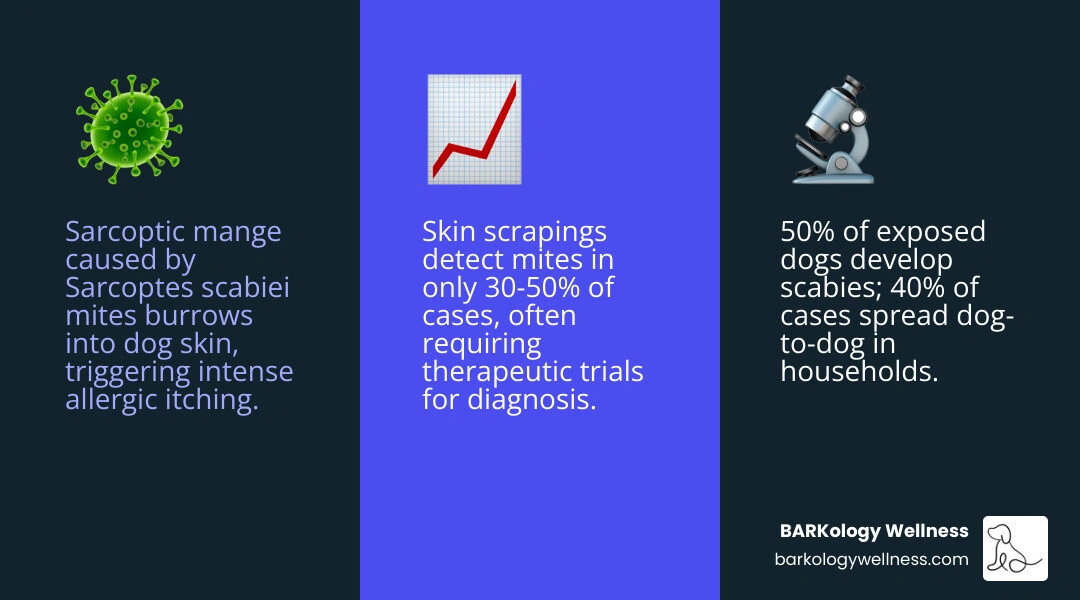
Sarcoptic mange is caused by a microscopic mite, Sarcoptes scabiei var. canis, that burrows into your dog's skin and causes intense, relentless itching. It spreads fast. Studies show that around 50% of exposed dogs will develop the condition, and in roughly 40% of confirmed cases, another dog in the same household was the source.
What makes it especially tricky is that it looks like a lot of other things. Allergies. Fleas. Fungal infections. And standard skin scraping tests only detect mites in 30 to 50% of cases, meaning a negative result doesn't mean your dog is in the clear.
This guide walks you through everything: how to recognize scabies, how it's properly diagnosed, which treatments work best, how to clean your home, and when to call your vet urgently.
I'm Nabilah Shamseddine, and through my work leading BARKology Wellness, I've seen how skin conditions like mange can go unnoticed until they become serious, making education around canine scabies treatment a priority for every dog owner we serve. My goal with this guide is to give you clear, reliable information so you can act quickly and confidently for your dog's health.
Canine scabies treatment word roundup:
What Canine Scabies Is and Why It Spreads So Fast
At its core, canine scabies (or sarcoptic mange) is a parasitic skin disease caused by the Sarcoptes scabiei mite. These tiny invaders are host-preferential, meaning they really love dogs, but they aren't picky about which dog they call home. In our local South Tampa community, we often see cases spike when dogs spend time in high-traffic areas.
The spread is fueled by the mite’s lifecycle and the dog’s own immune system. When a mite hitches a ride, it doesn't just sit on the surface; it burrows. The resulting "itch" isn't just from the physical movement of the mites, but a severe allergic reaction to the mites, their eggs, and their feces.
What causes canine scabies in dogs?
The primary culprit is the microscopic Sarcoptes scabiei var. canis mite. These parasites live their entire life cycle, about 17 to 21 days, on the dog. The females burrow tunnels into the outer layer of the skin to lay their eggs.
The incubation period can range anywhere from 10 days to 8 weeks. This means your dog could have been exposed over a month ago and is only now starting to show the frantic scratching that signals a need for canine scabies treatment. Because the mites are invisible to the naked eye, you won't see them; you’ll only see the damage they leave behind.
How dogs catch scabies from other dogs, wildlife, and environments
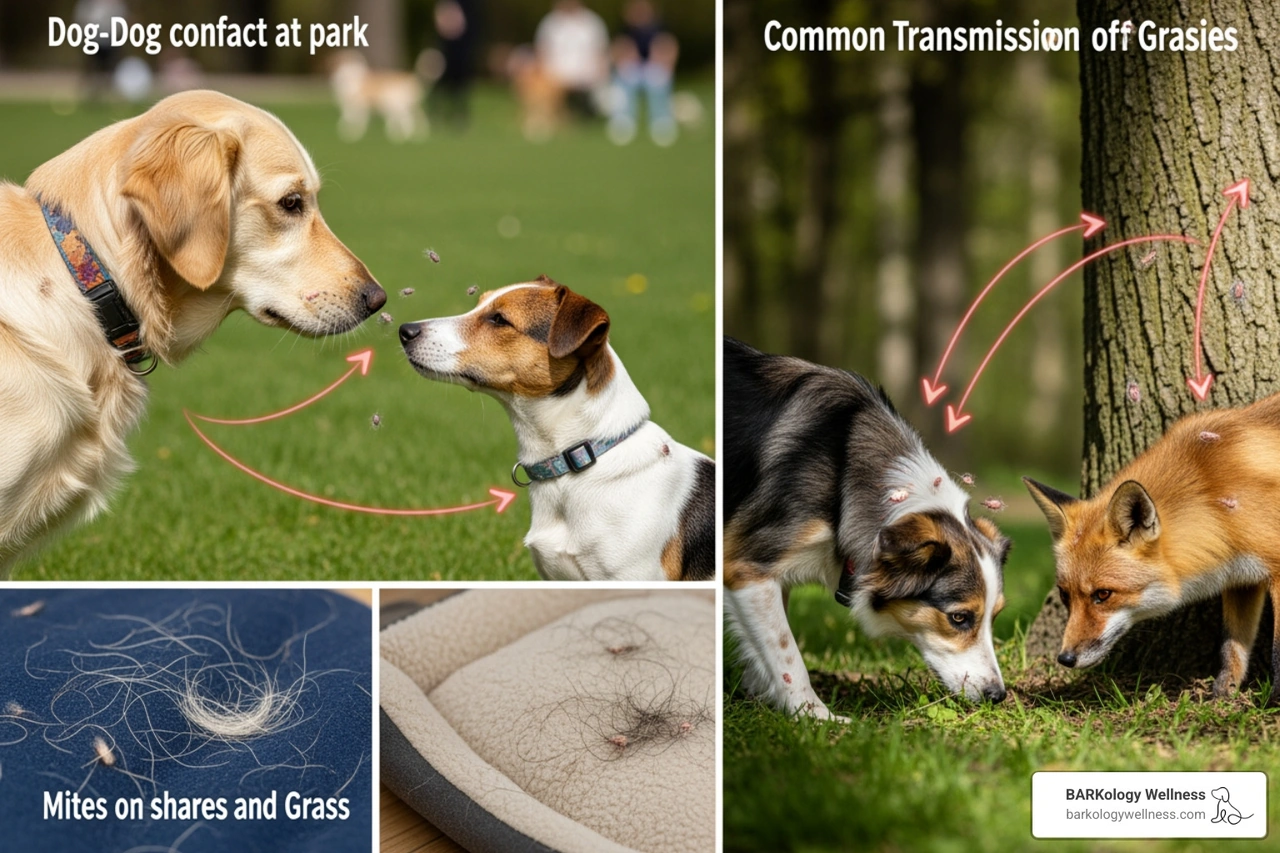
Scabies is highly contagious. It primarily spreads through direct contact with an "in-contact" dog. If your dog plays with an infested pup at a dog park in Tampa, there is a 50% chance they will catch it.
However, dogs aren't the only ones carrying these mites. Wildlife reservoirs like foxes and coyotes are significant players in the spread of scabies. Even if your dog doesn't play with a fox, they can pick up mites from the environment. Mites can survive for a limited time on fomites, objects like shared bedding, grooming tools, or even the grass where an infested animal recently rested. Statistics show that 25% of cases are preceded by a stay in a kennel, and 40% involve spread between dogs in the same household.
Is canine scabies contagious to people and other pets?
Yes, canine scabies is a zoonotic disease. This means it can jump from animals to humans. While the mites prefer dogs and cannot complete their full life cycle on a human, they will still happily bite us. This usually results in a transient, extremely itchy rash consisting of small red bumps, often on the arms or abdomen.
In multi-pet households, other animals like cats or even horses can be transiently affected. While cats are sometimes thought to be reservoirs, they rarely show the same severe symptoms. If you or your family members start scratching after your dog is diagnosed, we recommend following the Clinical care guidance from CDC and consulting a human physician. The good news? Once the dog is treated, the human lesions are usually self-limiting and resolve on their own.
Symptoms and Diagnosis: Why Scabies Is Easy to Suspect but Hard to Prove
Diagnosing scabies is one of the biggest challenges in veterinary dermatology. The symptoms often mimic other common issues, leading to what we call "scabies incognito", where a well-groomed dog has the parasite but doesn't show the classic "crusty" look.
The most common signs that point to canine scabies treatment
The hallmark of scabies is intense, non-seasonal pruritus (itching). If your dog is scratching so hard they can't sleep or eat, scabies should be at the top of your list. Common signs include:
- Red skin and papules: Small red bumps that eventually turn into crusts.
- Classic Distribution: Lesions usually start on the ear margins (tips), elbows, and hocks (ankles).
- Hair Loss (Alopecia): Resulting from constant scratching and biting.
- Systemic Signs: In severe, chronic cases, dogs may become depressed, lose weight, or show signs of exhaustion from the constant itching.
If you notice these signs, seeking professional canine scabies treatment is essential. You can also look for hot spot treatment dog resources if the scratching has led to open, weeping sores.
How veterinarians diagnose scabies when skin scrapings are negative
This is the frustrating part for many owners: Skin scrapings are positive in only 30% to 50% of cases. Because dogs are hypersensitive to the mites, a very small number of parasites can cause massive itching. If a vet performs a superficial scraping and finds nothing, it does not rule out scabies.
When scrapings are negative but the history (like a recent kennel stay) and symptoms fit, many vets will perform a "therapeutic trial." This means they treat the dog for scabies anyway. If the dog improves, the diagnosis is confirmed. This approach is often more efficient than repeated, expensive testing. For a deeper look at the diagnostic process, check out this Sarcoptic mange in dogs overview.
Blood tests, reflexes, and the key differential diagnoses
Beyond scrapings, vets use other tools:
- The Pinnal-Pedal Reflex: If you rub the edge of your dog’s ear and their hind leg starts scratching rhythmically, that is a positive pinnal-pedal reflex. This occurs in about 80% of scabies cases.
- ELISA Blood Test: This test looks for antibodies. It has a high sensitivity (92%) and specificity (96%), but there is a 3-5 week lag after infestation before it becomes accurate.
It is also vital to rule out "differential diagnoses", other conditions that look like scabies.
| Condition | Primary Location | Itch Level | Contagious? |
|---|---|---|---|
| Scabies | Ears, Elbows, Hocks | Extreme | Yes |
| Flea Allergy | Rump, Tail base | High | No (but fleas are) |
| Demodex | Face, Paws | Low to Moderate | No |
| Atopic Dermatitis | Paws, Face, Ears | Moderate to High | No |
Canine Scabies Treatment: The Most Effective Medical Options
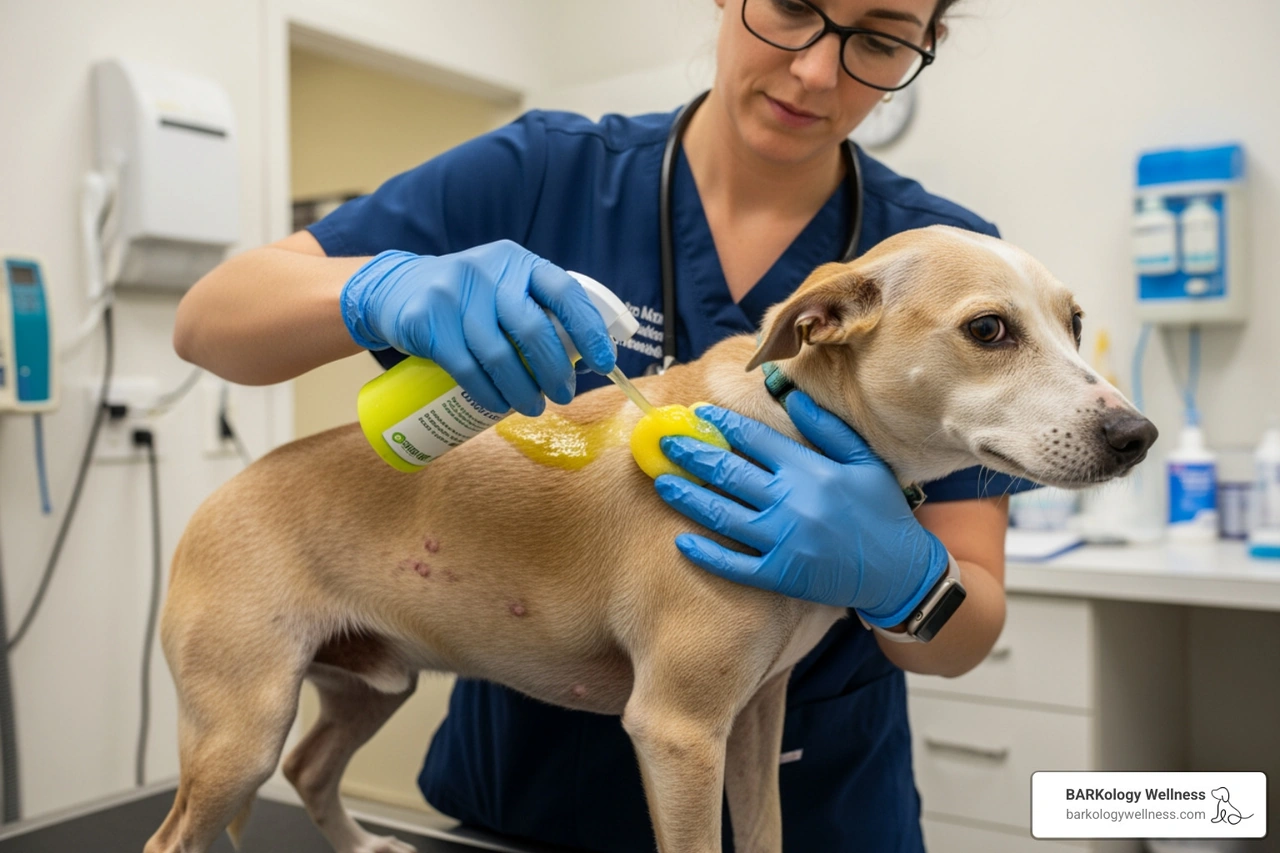
Modern veterinary medicine has revolutionized canine scabies treatment. We’ve moved away from the toxic, smelly dips of the past toward safe, highly effective oral and spot-on medications.
First-line canine scabies treatment and why all dogs in contact must be treated
The golden rule of scabies management is: Treat every dog in the house. Even if the other dogs aren't itching yet, they could be asymptomatic carriers. If you only treat the itchy dog, the mites will simply hop back over once the medication wears off.
During the first 2 to 4 weeks of treatment, the dog is still considered contagious. Isolation is key, no dog parks, no grooming appointments, and no playdates until your vet gives the all-clear.
Oral and spot-on medications: dosing principles, frequency, and safety cautions
The most popular modern treatments belong to a class of drugs called isoxazolines. These are the same medications found in many monthly flea and tick preventatives.
- Isoxazolines (Nexgard, Bravecto, Simparica, Credelio): While often used "off-label" for scabies, they are incredibly effective. Usually, a single dose or two doses spaced a month apart will clear the infestation.
- Macrocyclic Lactones (Selamectin, Moxidectin): These are "spot-on" treatments applied to the skin. Selamectin (Revolution) is a classic choice for scabies.
- Ivermectin: An older, effective oral or injectable treatment. Caution: Some breeds, particularly herding breeds like Collies and Australian Shepherds, have an MDR1 genetic mutation that makes ivermectin toxic. Always consult your vet before use.
Topical treatments and dips: when they still matter
While pills are easier, topical treatments like Lime Sulfur dips or Amitraz still have a place, especially for very young puppies or dogs with certain health contraindications.
- Medicated Shampoos: These don't kill the mites, but they help remove crusts and debris so the actual medication can reach the skin.
- Clipping: For long-haired dogs, clipping the coat can make topical treatments more effective.
For more technical details on these medications, the Merck Veterinary Manual on mite infestation is an excellent resource.
Supportive Care, Home Cleaning, and Recovery Timeline
Killing the mites is only half the battle. Your dog’s skin is likely inflamed, infected, and incredibly uncomfortable. At BARKology Wellness, we focus on the "whole dog" recovery, ensuring the skin barrier is repaired.
Relieving itch and treating secondary skin infections safely
The "scabies itch" is so intense that dogs often create secondary bacterial or yeast infections through self-trauma.
- Antibiotics: Necessary if your dog has developed pyoderma (skin infection).
- Corticosteroids: A short course of steroids can provide immediate relief from the allergic inflammation while the mite-killers do their work. Interestingly, about 40% of scabies cases show a good response to steroids, which can sometimes trick owners into thinking it’s just a simple allergy.
- Antiseptic Baths: Using gentle, soothing shampoos can help. Learn more about itchy skin dog relief and general dog skin treatments to support this process.
How to clean the environment and prevent re-exposure
Mites don't live long off the host (usually only a few days), but you don't want to take any chances.
- Wash all bedding: Use the hottest water setting for blankets, bed covers, and towels.
- Vacuum thoroughly: Focus on rugs, carpets, and the areas where your dog sleeps.
- Disinfect grooming tools: Brushes and combs should be soaked in a disinfectant or replaced.
- Clean the crate: Use a pet-safe parasiticidal spray on hard surfaces.
When improvement should start and what full recovery looks like
You should see a "light at the end of the tunnel" relatively quickly:
- 15 Days: Pruritus (itching) decreases by at least 75% in two-thirds of cases.
- 30 Days: The itch has usually disappeared or is very low in almost all patients.
- 6-8 Weeks: Full resolution, with hair starting to grow back and skin returning to its normal texture.
Treatment failure usually happens because a contact dog wasn't treated, a dose was skipped, or the "itch" was actually caused by something else entirely (like a flea allergy).
When to See a Veterinarian Urgently and How to Prevent Future Cases
While most scabies cases are manageable, some situations require an emergency trip to a Tampa vet.
Red flags that need same-day veterinary attention
If your dog shows any of the following, do not wait:
- Severe Self-Trauma: Bleeding, open sores, or "hot spots" that look infected.
- Facial Swelling or Lethargy: Signs that a secondary infection might be becoming systemic.
- Norwegian Scabies: A rare, severe form of crusted mange often seen in immunocompromised or elderly dogs. It involves massive amounts of mites and thick, heavy crusting.
- Neurologic Signs: If you’ve administered a medication and your dog seems wobbly or disoriented, seek help immediately.
Prevention strategies that lower the risk of another outbreak
The best canine scabies treatment is preventing the mites from ever taking hold.
- Year-Round Parasite Prevention: Many modern flea and tick preventatives also protect against scabies. This is the single most effective thing you can do.
- Avoid High-Risk Wildlife: Keep your dog away from areas where foxes or coyotes frequent.
- Screen Boarding Facilities: Ensure any kennel or daycare you use requires up-to-date parasite prevention for all guests.
- Routine Skin Checks: Regularly run your hands through your dog's coat to feel for new lumps, bumps, or crusts.
For veterinary professionals or those looking for deep clinical details, this Treating canine scabies guide for veterinary professionals provides a wealth of information.
Frequently Asked Questions About Canine Scabies Treatment
Can scabies go away without treatment?
No. Unlike some minor skin irritations, scabies will not resolve on its own. The mites will continue to multiply, the itching will intensify, and the risk of spreading it to every other dog (and human) in the vicinity will increase.
Why did my dog’s skin scraping come back negative if it still looks like scabies?
As mentioned, mites are found in less than half of all scrapings. If your dog has the classic "ear-elbow-hock" distribution of crusts and a positive pinnal-pedal reflex, most vets will proceed with treatment regardless of the scraping result.
What causes treatment failure or recurrence?
The most common reason for failure is not treating the "silent" dogs in the home. If you have three dogs and only treat the one that is scratching, the other two will act as a reservoir for the mites, leading to a never-ending cycle of re-infestation.
Conclusion
Dealing with mange can feel overwhelming, but with the right canine scabies treatment plan, the prognosis is excellent. Most dogs return to their happy, wagging selves within just a few weeks of starting therapy.
At BARKology Wellness in South Tampa, we believe that every dog deserves to feel comfortable in their own skin. Whether it’s through our membership programs that prioritize regular wellness or our specialized dog skin care advice, we are here to help your pup make a "Great Escape" from the discomfort of mange. If you suspect your dog is struggling with skin issues, don't wait, consult your veterinarian today and let the healing begin.