
Why Canine Tartar Removal Matters More Than Most Dog Owners Realize
Canine tartar removal is one of the most important, and most overlooked, parts of keeping your dog healthy.
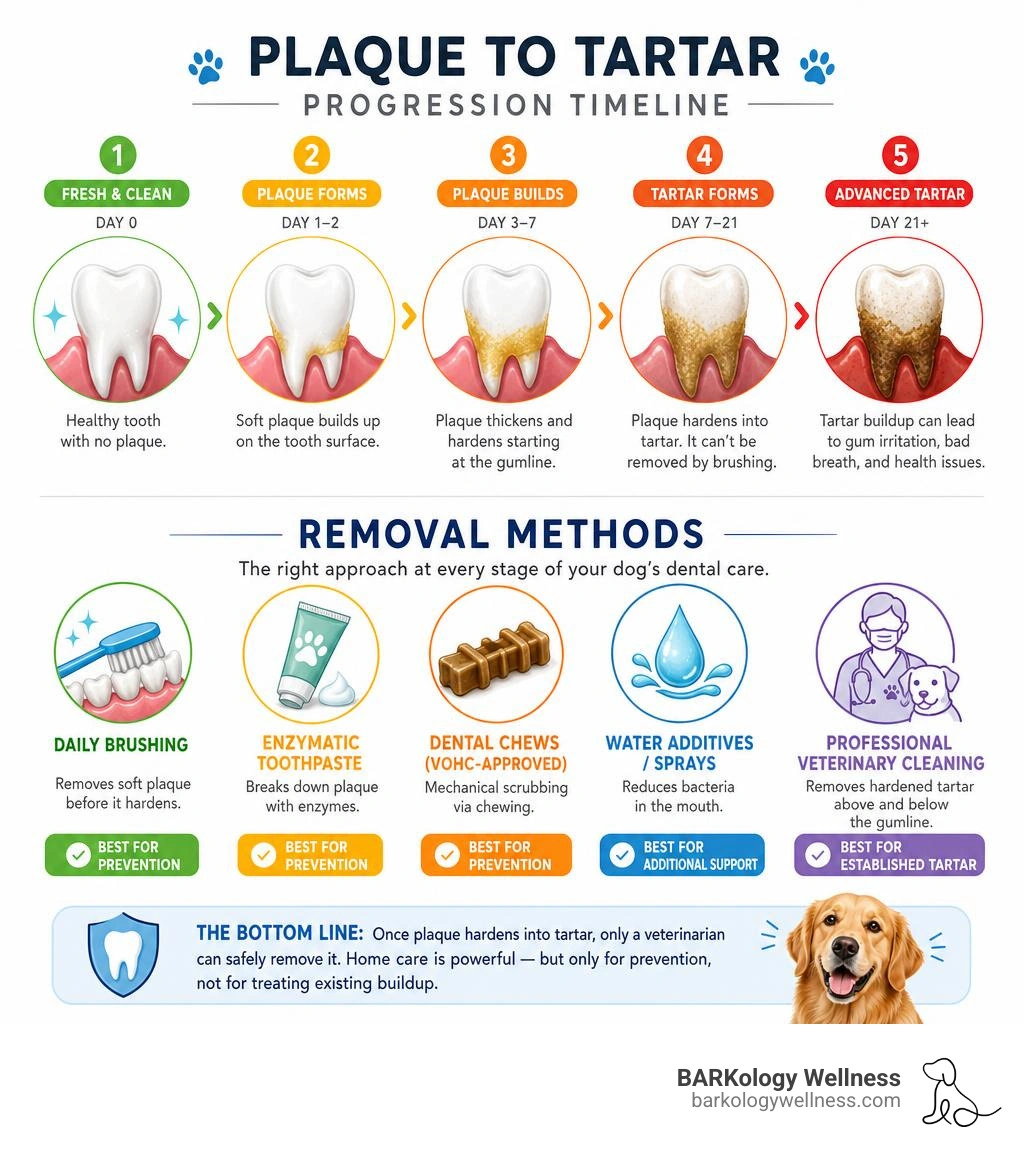
Here's a quick overview of the most effective methods:
| Method | What It Does | Best For |
|---|---|---|
| Daily brushing | Removes soft plaque before it hardens | Prevention |
| Enzymatic toothpaste | Breaks down plaque with enzymes | Daily home care |
| VOHC-approved dental chews | Mechanical scrubbing via chewing | Supplement to brushing |
| Water additives / sprays | Reduces bacteria in the mouth | Additional support |
| Professional veterinary cleaning | Removes hardened tartar above and below the gumline | Established tartar |
The bottom line: Once plaque hardens into tartar, only a veterinarian can safely remove it. Home care is powerful, but only for prevention, not for treating existing buildup.
You lean in for a cuddle and your dog exhales directly into your face. That smell? It's not just "dog breath." It's often the first sign that tartar has already taken hold.
Over 80% of dogs show signs of dental disease by age 3. Most owners don't notice until the problem is well advanced, because dogs instinctively hide oral pain. By the time you spot yellow or brown crust along your dog's gumline, the bacteria causing it may already be affecting more than just their teeth.
Tartar isn't just a cosmetic issue. Left untreated, the bacteria it harbors can enter the bloodstream and put stress on your dog's heart, liver, and kidneys. The good news: with the right routine and the right support, it's largely preventable.
I'm Nabilah Shamseddine, founder of BARKology Wellness, and canine tartar removal is something I'm deeply passionate about as part of a whole-dog approach to wellness. My work building premium pet wellness experiences has shown me how much a consistent dental care routine can change a dog's quality of life. In this guide, I'll walk you through exactly what works, what doesn't, and how to protect your pup's smile for the long run.
Canine tartar removal terms you need:
What Canine Tartar Is and Why It Becomes a Problem
Tartar, also called dental calculus, is hardened plaque that sticks to your dog's teeth. Plaque starts as a soft, sticky biofilm made of bacteria, saliva, and tiny food particles. If it is not brushed away, minerals in saliva help it harden into tartar.
Tartar usually shows up first along the gumline as a yellow, tan, brown, or gray crust. It can form on the visible tooth surface, but the bigger concern is what happens under the gumline, where bacteria can irritate the gums, loosen teeth, and damage the supporting bone.
Scientific interest in canine oral health is growing, too. Research on oral microbiota shifts after tartar removal in dogs shows that tartar removal can temporarily change the bacterial community in a dog's mouth, with the oral microbiome gradually moving back toward baseline over time. In plain English: your dog's mouth is a living ecosystem, and dental care changes that ecosystem.
How Plaque Turns Into Hardened Tartar
Here is the simple timeline:
- Your dog eats.
- Bacteria and food particles collect on the teeth.
- A sticky film called plaque forms, often within hours.
- Saliva minerals begin hardening that plaque.
- Within a day or a few days, plaque can mineralize into tartar.
- Once hardened, brushing cannot reliably remove it.
Some veterinary dental sources describe plaque forming very quickly after cleaning, with calculus developing within roughly 72 hours if plaque is not disrupted. Other guidance notes that plaque can begin hardening within 24 hours. The takeaway is the same: waiting a week between cleanings gives plaque plenty of time to become a problem.
There are two main types of tartar:
- Supragingival tartar: Tartar above the gumline that you can often see.
- Subgingival tartar: Tartar below the gumline, where periodontal disease does the most damage.
That second one is why true canine tartar removal is not a DIY scraping project.
Why Tartar Is More Than a Cosmetic Issue
Tartar looks unpleasant, but the real issue is bacteria. Bacteria living in plaque and tartar can trigger gum inflammation, also called gingivitis. Over time, untreated inflammation can progress into periodontal disease.
Possible consequences include:
- Red, swollen, or bleeding gums
- Persistent bad breath
- Tooth sensitivity
- Chewing on one side
- Dropping food
- Loose teeth
- Tooth loss
- Oral pain
- Gum recession
- Bone loss around the teeth
The effects may not stop in the mouth. Bacteria from infected gums can enter the bloodstream and may place extra stress on the heart, liver, and kidneys. That does not mean every dog with tartar will develop organ disease, but it does mean dental disease deserves respect.
If your dog's breath has gone from "fishy snack" to "tiny swamp dragon," do not ignore it. Learn more about bad breath warning signs in dogs.
Dogs Most Likely to Develop Tartar Fast
Any dog can develop tartar, but some pups are more tartar-prone than others.
Higher-risk dogs include:
- Small breed dogs
- Toy breeds
- Flat-faced dogs with crowded teeth
- Senior dogs
- Dogs with soft-food-heavy diets
- Dogs that do not chew much
- Dogs with genetics that favor fast plaque buildup
- Dogs with a history of periodontal disease
Small dogs are especially prone because their teeth are often crowded into tiny jaws. Crowding creates little pockets where plaque loves to hide. Senior dogs may also build up tartar faster because they have had more time for dental changes, gum recession, and previous plaque accumulation.
For these dogs, routine exams and consistent home care are not optional extras. They are part of keeping your pup comfortable.
Safe Canine Tartar Removal: Vet-Recommended Methods That Actually Work
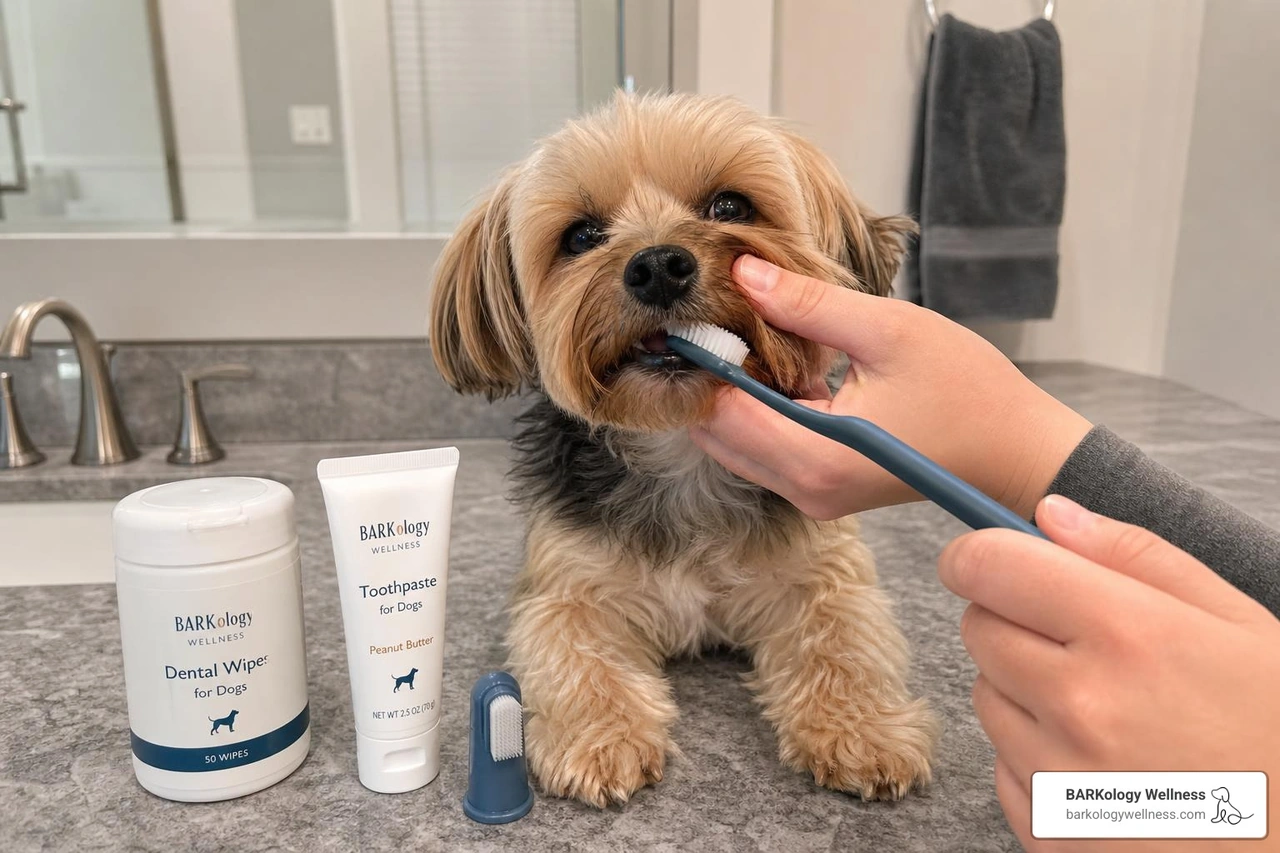
The safest approach to canine tartar removal is a two-part plan:
- At home: Prevent soft plaque from hardening.
- At the vet: Remove hardened tartar safely, especially below the gumline.
At BARKology Wellness in South Tampa, we believe in prevention-first care. Our luxury grooming and wellness approach supports your dog's comfort, cleanliness, and overall health, but we are also clear about limits: hardened tartar and dental disease belong in your veterinarian's hands.
Canine Tartar Removal at Home: What You Can and Cannot Do
At home, you can do a lot. You can remove soft plaque, slow tartar formation, support fresher breath, and help your dog become comfortable with mouth handling.
At-home tools can include:
- A dog toothbrush or finger brush
- Pet-safe enzymatic toothpaste
- Dental wipes
- Dental sprays
- Water additives
- VOHC-accepted dental chews
- Dental diets recommended by your veterinarian
What you cannot safely do at home is remove established tartar below the gumline. You should not scrape your dog's teeth with metal tools. It is easy to scratch enamel, injure gums, miss painful disease, or create a false sense of security by removing only visible surface buildup.
Avoid these at-home "tartar hacks":
- Human toothpaste
- Baking soda and acidic mixtures
- Lemon juice or vinegar
- Metal dental scalers
- Hard bones
- Antlers
- Cooked bones
- Products claiming to magically dissolve heavy tartar overnight
Human toothpaste is not safe for dogs because it may contain fluoride, foaming agents, or xylitol. Xylitol is toxic to dogs.
For gentle support between cleanings, see our guide to dental spray for dogs.
Canine Tartar Removal by a Veterinarian: The Gold Standard for Hardened Deposits
Once plaque becomes calculus, professional veterinary cleaning is the gold standard. This is often called a comprehensive oral health assessment and treatment, or COHAT.
A proper veterinary dental cleaning may include:
- Pre-anesthetic exam
- Bloodwork when appropriate
- General anesthesia
- Full mouth exam
- Ultrasonic scaling above the gumline
- Hand scaling where needed
- Subgingival cleaning below the gumline
- Polishing to smooth tooth surfaces
- Dental X-rays
- Gum pocket measurements
- Tooth charting
- Extractions if teeth are diseased or painful
- Pain management
- Recovery monitoring
- Home care instructions
Why anesthesia? Because dogs do not understand "please hold still while we clean under your gumline." Anesthesia allows the veterinary team to clean thoroughly, protect the airway, take radiographs, and reduce stress and pain.
If your dog already has visible brown tartar, bleeding gums, loose teeth, or chewing changes, start with your veterinarian. For a deeper look at what professional cleaning involves, read our guide to deep dental cleaning for dogs.
Dental Chews vs Ultrasonic Tools vs Enzymatic Toothpaste
Not all dental tools do the same job. Some help prevent plaque. Some freshen breath. Some require skill. Some should only be used with veterinary guidance.
| Tool | Best For | Strengths | Limits | Safety Notes |
|---|---|---|---|---|
| Dental chews | Supplemental plaque and tartar control | Chewing creates mechanical abrasion and stimulates saliva | Does not clean every tooth or below gumline | Choose correct size and texture |
| Enzymatic toothpaste | Daily plaque control | Helps break down plaque and supports brushing | Works best with mechanical brushing | Use dog-safe toothpaste only |
| Dental wipes | Dogs that dislike brushes | Easier introduction to mouth care | Less effective near gum pockets | Use gentle pressure |
| Dental sprays | Breath and bacteria support | Convenient between brushing | Does not replace brushing | Follow label directions |
| Water additives | Additional oral support | Easy for some households | Limited without mechanical cleaning | Introduce gradually |
| At-home ultrasonic tools | Visible surface deposits in select cases | May remove some above-gum buildup | Requires skill; cannot diagnose disease or clean below gumline | Use only with vet guidance |
| Professional cleaning | Hardened tartar and periodontal disease | Cleans above and below gumline; includes X-rays | Requires veterinary visit and anesthesia | Best option for established tartar |
So, how do dental chews compare to ultrasonic tools and enzymatic toothpaste?
- Dental chews are best as a supplement. They help scrape some plaque as your dog chews, especially on chewing surfaces.
- Enzymatic toothpaste plus brushing is usually the strongest home-care foundation because brushing directly disrupts plaque at the gumline.
- At-home ultrasonic tools may appeal to owners because they seem like a professional solution, but they come with more risk. They do not replace dental X-rays, subgingival cleaning, or veterinary diagnosis.
- Professional cleaning remains the only reliable way to remove hardened tartar below the gumline.
If we were ranking for most dogs: brushing with enzymatic toothpaste comes first, VOHC-accepted chews come second, sprays and water additives support the routine, and professional cleaning handles what home care cannot.
Over-the-Counter Tartar Removers: What to Look For and What to Avoid
Over-the-counter dental products can be safe and helpful, but labels matter.
Look for:
- VOHC acceptance when possible
- Dog-safe ingredients
- Xylitol-free formulas
- Fluoride-free pet toothpaste
- Correct chew size for your dog's weight
- Chews that bend slightly or can be dented with a fingernail
- Enzymatic formulas
- Clear dosing instructions
- Veterinary guidance for chlorhexidine products
Avoid:
- Hard bones
- Cooked bones
- Antlers
- Hooves
- Very hard nylon toys
- Metal scalers for home scraping
- Human toothpaste
- Products with vague "miracle tartar removal" claims
- Products without clear ingredient lists
- Chews small enough to swallow whole
The Veterinary Oral Health Council reviews dental products for plaque or tartar control claims. You can review the VOHC accepted dental products list when comparing options.
How to Prevent Tartar Buildup Between Cleanings

Prevention is where pet parents have the most power. The goal is simple: disturb plaque before it mineralizes.
A strong routine includes:
- Brushing as often as possible
- Using dog-safe toothpaste
- Adding dental chews if appropriate
- Keeping fresh water available
- Scheduling routine veterinary exams
- Getting professional cleanings when recommended
- Using supportive tools consistently
Think of it like your own dental routine. Mouthwash is nice, but if you stopped brushing, your dentist would notice. Immediately. Possibly with a sigh.
For product ideas and routine support, see our guide to the best options for dog teeth and breath.
How Often Dog Teeth Should Be Cleaned
Ideal routine:
- Daily brushing: Best for plaque prevention.
- 4 to 5 times weekly: Still very beneficial for many dogs.
- 2 to 3 times weekly: Better than nothing, but tartar-prone dogs may need more.
- Professional dental exam: At least yearly for most dogs.
- Professional cleanings: Often every 6 to 12 months, depending on risk.
Dogs who may need dental care every 6 months include:
- Small breeds
- Senior dogs
- Dogs with crowded teeth
- Dogs with previous periodontal disease
- Dogs with rapid tartar buildup
- Dogs with persistent bad breath despite home care
After a professional cleaning, restart home care right away once your veterinarian says it is safe. Plaque can return quickly, so post-cleaning maintenance is where long-term success happens.
Step-by-Step Brushing Routine for Dogs
Here is a simple training plan we like because it keeps things calm and positive.
Let your dog taste the toothpaste.
Use dog-safe enzymatic toothpaste. Let your pup lick a tiny amount from your finger.Practice touching the muzzle.
Touch the side of the mouth, praise, reward, and stop before your dog gets annoyed.Lift the lip gently.
Do not pry the mouth open. Most plaque builds on the outer tooth surfaces, especially the upper teeth.Start with your finger or finger brush.
Rub along the gumline for a few seconds.Move to a soft-bristled dog toothbrush.
Hold it at about a 45-degree angle toward the gumline.Use small circular motions.
Focus on the outside surfaces. You do not need to scrub like you are cleaning tile grout.Keep it short.
Start with 10 seconds. Build toward 30 to 60 seconds.Reward generously.
Praise, treats, cuddles, or a happy little victory dance all count.Do not rinse.
Most pet toothpastes are designed to be swallowed in small amounts.
If your dog resists, slow down. A calm 10-second session is better than a wrestling match that makes tomorrow harder.
Supportive Tools That Help, but Do Not Replace Brushing
Supportive tools are useful, especially for dogs who are still learning to accept brushing.
Helpful options include:
- Dental chews: Add chewing abrasion and saliva stimulation.
- Dental wipes: Good for beginner dogs or quick gumline wiping.
- Water additives: May help reduce bacteria and odor.
- Oral gels: Can support gum and breath care.
- Dental sprays: Convenient between brushing sessions.
- Dental diets: Some kibble textures are designed to reduce plaque.
- Safe chew toys: Encourage chewing without breaking teeth.
The key phrase is "supportive tools." They help, but they do not replace brushing or veterinary cleanings. If your dog already has thick tartar, these products may improve breath temporarily but will not remove disease under the gumline.
For more breath-focused help, visit our guide to fresh breath treatment.
When Your Dog Needs Professional Dental Cleaning Instead of At-Home Care
At-home care is for prevention and mild plaque. Professional dental care is needed when tartar, inflammation, or pain is already present.
Call your veterinarian if you notice:
- Yellow or brown crust along the gumline
- Red or swollen gums
- Bleeding gums
- Persistent bad breath
- Pawing at the mouth
- Drooling
- Dropping food
- Chewing on one side
- Refusing hard food
- Loose teeth
- Gum recession
- Facial swelling
- Pus near teeth or gums
- Sudden behavior changes
Dogs often hide pain, so subtle changes matter. A dog who suddenly avoids chew toys may not be "being picky." Their mouth may hurt.
Signs At-Home Dental Care Is Not Enough
At-home dental care is not enough when you see signs of established disease.
Watch for:
- Thick brown tartar
- Tartar covering multiple teeth
- Gums that bleed during brushing
- Gum recession or exposed roots
- Loose or shifting teeth
- Bad breath that returns quickly
- Pain when the mouth is touched
- Appetite changes
- Swelling under the eye or along the jaw
- Pus or discharge
- Behavioral withdrawal
If brushing causes bleeding, stop and call your vet. Mild irritation can happen, but bleeding may mean gingivitis or periodontal disease is already present.
What Happens During a Professional Dental Cleaning
A professional veterinary dental cleaning is much more than a visible tooth polish.
Typical steps include:
Pre-anesthetic exam
Your veterinarian evaluates overall health and dental concerns.Bloodwork when recommended
This helps assess organ function before anesthesia, especially for seniors.Anesthesia and monitoring
The team monitors breathing, heart rate, oxygen levels, temperature, and comfort.Full oral exam
Every tooth and gum area is checked.Scaling
Ultrasonic and hand instruments remove tartar above and below the gumline.Dental X-rays
Radiographs reveal root disease, bone loss, abscesses, and hidden damage.Polishing
Polishing smooths the enamel surface, making plaque less likely to stick immediately.Tooth charting
Findings are recorded tooth by tooth.Extractions if needed
Diseased, loose, fractured, or painful teeth may need removal.Recovery and aftercare
Your dog wakes under supervision, and you receive home-care instructions.
This is why cosmetic surface cleaning is not the same as medical dental care.
Frequently Asked Questions About Dog Tartar Care
Does tartar fall off on its own?
No. Hardened tartar usually stays attached and tends to grow. If a chunk breaks off, disease may still remain under the gumline.
Can coconut oil remove tartar?
No. Coconut oil may have some antibacterial properties, but it does not dissolve established calculus. It should not replace brushing or veterinary care.
Can dry food clean my dog's teeth?
Regular dry food may provide a little crunch, but it is not enough. Dental diets with proven claims are different from ordinary kibble.
Do bones clean teeth?
Bones can scrape teeth, but they also can fracture teeth, splinter, cause constipation, or create intestinal blockages. Cooked bones are never safe.
Can I use human toothpaste?
No. Use dog-safe toothpaste only.
Is bad breath normal?
Mild dog breath happens. Persistent foul breath is a warning sign.
How does tartar relate to heart health?
Bacteria from inflamed gums can enter the bloodstream. In some cases, oral bacteria may contribute to infections or inflammation affecting organs, including the heart.
What should I do if my dog hates brushing?
Start smaller. Touch the muzzle, reward, and stop. Then work toward toothpaste tasting, lip lifting, and short brushing sessions. Dental wipes can help during training.
Can groomers remove tartar?
Grooming and wellness services can support prevention, breath care, and toothbrushing comfort. Hardened tartar removal, dental X-rays, and periodontal treatment should be handled by a veterinarian.
Are VOHC-Approved Products Better Than Non-Approved Products?
VOHC stands for Veterinary Oral Health Council. Products with the VOHC seal have submitted data showing they help reduce plaque or tartar according to VOHC standards.
That matters because pet dental marketing can be confusing. A package can say "fresh breath" without proving tartar control. VOHC acceptance gives pet parents a more reliable way to compare products.
VOHC-approved products may include:
- Dental diets
- Chews
- Treats
- Water additives
- Toothpastes
- Wipes
- Oral gels
- Professional sealants
Does a non-approved product automatically mean it is unsafe or useless? Not necessarily. But it does mean the product may not have the same independent review behind its plaque or tartar claims.
When choosing any product, check:
- Your dog's weight range
- Product size
- Ingredient list
- Hardness
- Feeding frequency
- Calorie content
- Safety warnings
- Whether the claim is for plaque, tartar, or breath only
Can Tartar Be Removed Without Anesthesia?
Some services advertise anesthesia-free dental cleaning. These may remove some visible surface tartar, but they cannot provide the same medical care as a veterinary dental cleaning.
Limitations include:
- No dental X-rays
- Limited cleaning below the gumline
- Missed periodontal pockets
- No safe way to assess painful roots
- No extractions if needed
- Possible stress for the dog
- Cosmetic improvement without treating disease
The most harmful dental disease often hides under the gumline. That is exactly where anesthesia-free cleaning cannot fully reach.
If you are worried about anesthesia, talk to your veterinarian. In May 2026, veterinary anesthesia protocols are far more individualized than many owners realize. Pre-anesthetic exams, bloodwork, monitoring equipment, and tailored drug plans can make the process safer for many dogs, including seniors.
How Can I Tell If My Routine Is Working?
A good dental routine should create visible and sniffable improvements. Yes, "sniffable" is a technical term in dog parent life.
Signs your routine may be working:
- Fresher breath
- Pinker gums
- Less redness at the gumline
- Less visible plaque
- Slower yellowing
- Easier chewing
- Less drooling
- Better tolerance of mouth handling
- Positive feedback at veterinary exams
Helpful tracking tips:
- Take monthly photos of your dog's teeth in the same lighting.
- Note breath changes.
- Track brushing days.
- Watch chewing habits.
- Ask your veterinarian to compare gum health at each visit.
If tartar keeps returning quickly, your dog may need a different routine, more frequent brushing, a dental diet, or a shorter interval between professional cleanings.
Conclusion: Keep Your Pup’s Smile Healthy for the Long Run
Canine tartar removal works best when we treat it as a long-term wellness habit, not a one-time emergency. The winning formula is simple:
- Brush daily when possible.
- Use dog-safe enzymatic toothpaste.
- Choose VOHC-accepted products when you can.
- Add chews, sprays, wipes, or water additives as support.
- Schedule regular veterinary dental exams.
- Do not try to scrape hardened tartar at home.
- Act early when breath, gums, or chewing habits change.
At BARKology Wellness, we believe every dog deserves care that feels as good as it is thoughtful. In our South Tampa wellness environment, we blend science-informed care with calm, pampering support so your pup can feel healthy, comfortable, and deeply loved.
Cleaner teeth mean fresher kisses, healthier gums, and a happier dog. And really, fewer swamp-dragon cuddles are a gift to the whole household.
Ready to support your dog's wellness routine? Book wellness support for your dog.