
The True Cost of Fresh Breath: Understanding Your Canine Teeth Cleaning Cost
Just like we visit our dentist to keep our smiles bright, managing your canine teeth cleaning cost is a vital part of keeping your beloved companion healthy and pain-free.
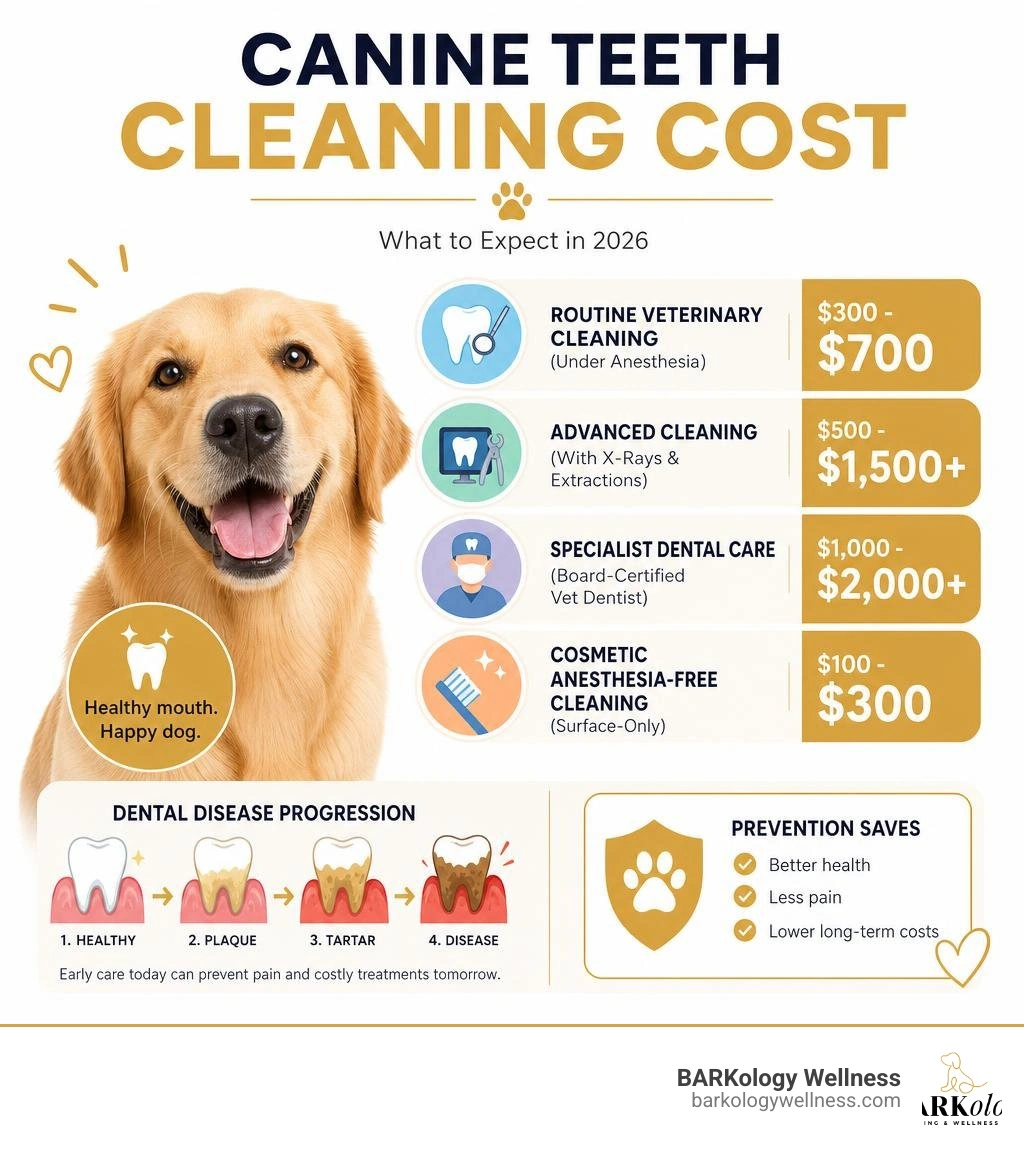
If you are looking for a quick budget estimate, here is what you can expect to pay for dog dental care in 2026:
- Routine Veterinary Cleaning (Under Anesthesia): $300 to $700
- Advanced Cleaning (With X-Rays & Extractions): $500 to $1,500+
- Specialist Dental Care (Board-Certified Vet Dentist): $1,000 to $2,000+
- Cosmetic Anesthesia-Free Cleaning (Surface-Only): $100 to $300
We love our dogs. We want them to have the best of everything, from cozy beds to the healthiest food. But when your pup greets you with smelly breath, it is usually a sign of a deeper health issue. In fact, dental disease affects more than 70% of dogs by the time they turn three years old.
Skipping the vet dentist might seem like a way to save money right now. However, untreated plaque quickly turns into painful infections, tooth loss, and expensive emergency surgeries. Taking care of your dog’s mouth is not a luxury spa treatment; it is a vital part of their basic healthcare.
As the franchise operations leader for BARKology Wellness, I work daily with pet parents to design premium, stress-free hygiene routines that help you manage your canine teeth cleaning cost without sacrificing your dog's comfort. Let’s dive into what you are actually paying for and how to keep your pup's mouth healthy.
Canine teeth cleaning cost terms to remember:
What is the Average Canine Teeth Cleaning Cost in 2026?

When budgeting for your dog's oral hygiene, it is helpful to understand the national and regional price benchmarks. In 2026, the national average cost of a veterinary dental cleaning for dogs is $388, typically ranging between $307 and $702. For general veterinary practices and pet dental clinics, a standard cleaning under anesthesia generally runs between $300 and $1,000.
If you are located in Florida, you will find that our local prices align closely with these figures. The statewide average for a dog dental cleaning in Florida is $392, with typical ranges spanning from $196 on the low end to $686 for more complex cases. However, if you reside in metropolitan areas like Tampa or South Tampa, FL, the average cost rises slightly to $408 due to the higher cost of living and specialized local veterinary care.
To get a complete picture of what you might pay based on your dog's specific needs, look at the comprehensive Dog Teeth Cleaning Cost: 2026 Vet Price Guide. If you want to explore how veterinarians structure these fees, the detailed resource on How Much Does Dog Teeth Cleaning Cost? | PetMD provides excellent professional insights.
When your dog's tartar buildup is severe, a standard surface polish won't suffice. Your vet will likely recommend a deep dental cleaning for dogs to address the plaque hiding beneath the gumline, where the real damage occurs.
What is Included in a Professional Dental Bill?
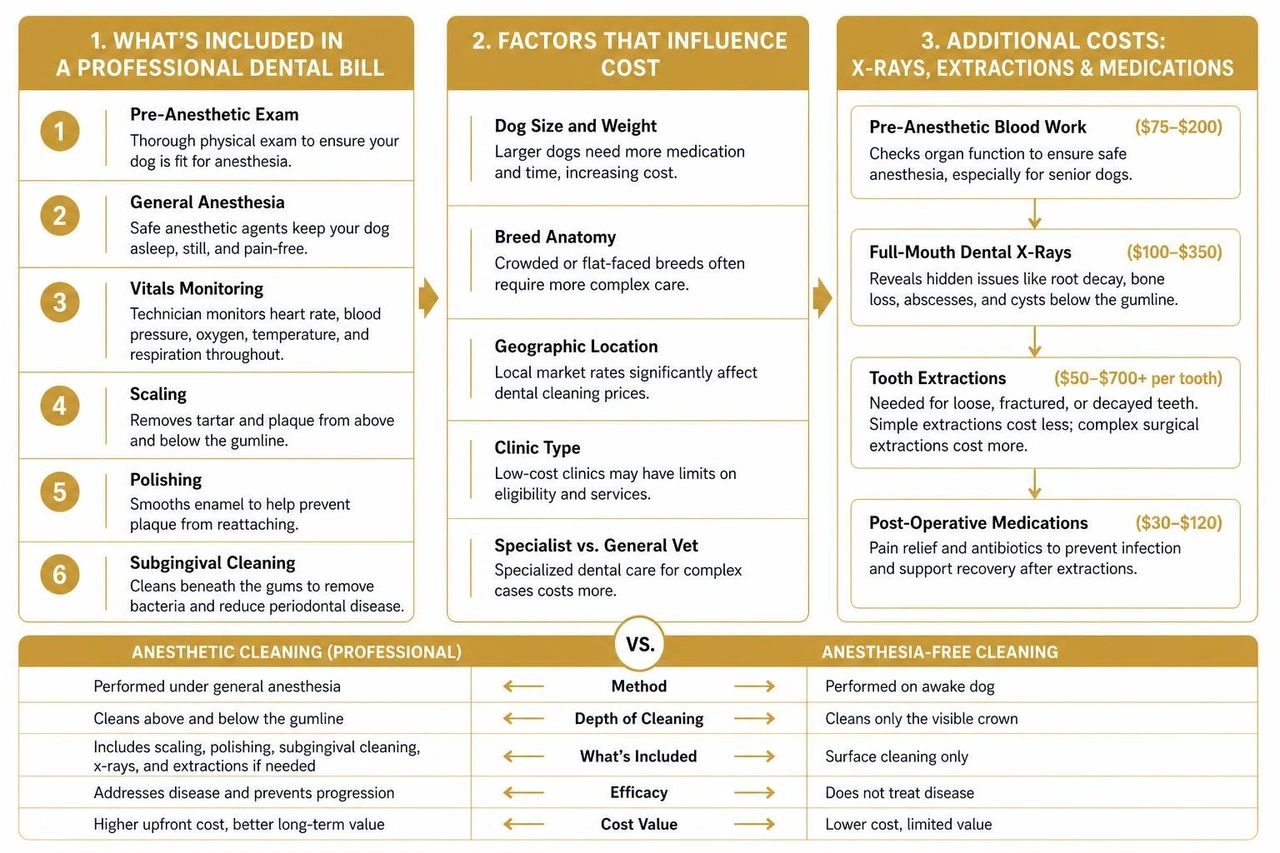
A professional dental cleaning is not just a quick brush-and-go session. It is a fully supervised medical procedure that requires a team of veterinary professionals. When you receive an itemized quote from your vet, a standard, routine dental cleaning package should include the following core services:
- Pre-Anesthetic Exam: A thorough physical examination of your dog's heart, lungs, and overall physical condition on the morning of the procedure to ensure they are fit for anesthesia.
- General Anesthesia: The administration of safe sedative and anesthetic agents to keep your dog completely asleep, still, and free of pain during the procedure.
- Vitals Monitoring: A dedicated veterinary technician monitors your dog’s heart rate, blood pressure, oxygen levels, temperature, and respiration throughout the entire surgery.
- Scaling: Using specialized ultrasonic and hand scalers to remove hard tartar and plaque from both the visible crown of the tooth and, crucially, below the gumline.
- Polishing: Smoothing the microscopic scratches on the tooth enamel left behind by scaling, which prevents plaque from easily reattaching in the future.
- Subgingival Cleaning: Flushing and cleaning the pockets beneath the gums to eliminate harmful bacteria that cause periodontal disease.
Factors That Influence Your Canine Teeth Cleaning Cost
No two dogs are exactly alike, and neither are their dental bills. Several key factors can cause your final invoice to fluctuate significantly:
- Dog Size and Weight: Larger dogs require higher dosages of anesthetic drugs, sedatives, and pain medications. Additionally, cleaning 42 large teeth takes longer than cleaning smaller teeth, increasing the labor and monitoring time.
- Breed Anatomy: Toy breeds and small dogs (like Chihuahuas, Yorkies, and Pugs) have extremely crowded mouths. This crowding traps food and bacteria, leading to rapid, severe periodontal disease. Flat-faced (brachycephalic) breeds also have unique airway structures that make anesthesia monitoring more complex and costly.
- Geographic Location: Where you live plays a major role in pricing. To understand how local market rates affect your bill, check out the guide on Dog Teeth Cleaning Cost in Florida | What to Expect in 2026.
- Clinic Type: High-volume, low-cost clinics might offer basic cleanings at reduced rates, but they often have strict eligibility requirements (such as excluding senior dogs, large breeds, or dogs with pre-existing heart conditions).
- Specialist vs. General Veterinarian: A routine cleaning by a general practitioner is highly affordable. However, if your dog has severe jawbone decay, oral tumors, or needs a root canal, you may be referred to a board-certified veterinary dentist, where specialized procedures can range from $1,000 to over $2,000.
Additional Costs: X-Rays, Extractions, and Medications
While a routine cleaning quote covers the basics, most pet parents face additional charges once the veterinarian examines the mouth under anesthesia. The most common add-ons include:
- Pre-Anesthetic Blood Work ($75 to $200): This is crucial, especially for senior dogs. It checks liver and kidney function to ensure your dog's organs can safely process and eliminate the anesthetic drugs.
- Full-Mouth Dental X-Rays ($100 to $350): Because roughly 60% of a dog's tooth structure sits invisibly below the gumline, X-rays are the only way to detect root rot, bone loss, abscesses, or hidden cysts. Skipping X-rays is a false economy that leaves painful infections untreated.
- Tooth Extractions ($50 to $700+ per tooth): If a tooth is loose, fractured, or suffering from root decay, it must be extracted. Simple single-root extractions are relatively inexpensive ($50 to $150), but complex, multi-root surgical extractions (such as the large canine or carnassial teeth) require drilling, gum flaps, and sutures, pushing the cost to $150–$700 per tooth. For a complete look at these surgical fees, refer to the Dog Dental Extraction Cost: 2026 Per-Tooth Guide.
- Post-Operative Medications ($30 to $120): If your dog undergoes extractions, they will need take-home pain medications (like Deramaxx) and antibiotics (like Clavamox) to prevent infection and manage pain during recovery.
Anesthetic vs. Anesthesia-Free Cleanings: Cost and Efficacy

As pet parents look for ways to reduce their canine teeth cleaning cost, anesthesia-free (or non-anesthetic) dental cleaning has emerged as a popular talking point. Usually priced between $100 and $300, these cosmetic cleanings are often offered by grooming salons or wellness clinics.
While the lower price tag and lack of sedation sound appealing, it is vital to understand what these procedures actually accomplish, and what they leave behind.
| Feature | Anesthetic Dental Cleaning (Veterinary) | Anesthesia-Free Cleaning (Cosmetic) |
|---|---|---|
| Average Cost | $300 to $700+ (Base) | $100 to $300 |
| Anesthesia Used? | Yes (Fully monitored) | No (Dog is awake and restrained) |
| Cleans Below Gumline? | Yes (Where 60% of disease lives) | No (Surface scaling only) |
| Dental X-Rays Possible? | Yes | No |
| Pain & Stress Levels | None (Dog is asleep) | High (Restraint and scraping while awake) |
| Extractions Allowed? | Yes (If medically necessary) | No |
| Professional Approval | Endorsed by AVDC & AAHA | Strongly discouraged by veterinary boards |
Anesthesia-free cleaning is purely cosmetic. A technician scrapes the visible tartar off the crown of the tooth while the dog is held still. However, because the dog is awake, it is impossible to safely use sharp instruments to clean deep inside the subgingival pockets.
This means the harmful bacteria causing periodontal disease are left untouched under the gums. The teeth look clean and white on the outside, but decay continues to rot the roots underneath, giving owners a false sense of security.
Furthermore, awake dogs can easily jerk their heads, leading to severe gum lacerations or damaged tooth enamel. For true therapeutic plaque removal, a professional veterinary canine tartar removal under anesthesia is the only safe and effective method.
The True Cost of Skipping Professional Dental Care
Choosing to ignore your dog’s dental hygiene to save on immediate costs is a risky financial and medical gamble. Periodontal disease is a progressive bacterial infection. When left untreated, bacteria from the mouth enter the bloodstream through inflamed, bleeding gums.
Once in the blood, these bacteria travel directly to major organs, causing chronic inflammation and irreversible damage to the heart valves, kidneys, and liver. What started as a routine cleaning can quickly spiral into congestive heart failure or chronic kidney disease, resulting in thousands of dollars in ongoing medical management.
On a local level, the most immediate consequence of dental neglect is severe bad breath in dogs. While many owners laugh off "dog breath," chronic halitosis is a cry for help from a mouth full of active infection.
Simply trying to mask the odor with a temporary fresh breath treatment won't solve the underlying decay. The only way to eliminate the smell and protect your dog's vital organs is to address the root cause with professional veterinary care.
How to Save on Your Canine Teeth Cleaning Cost
Fortunately, you do not have to choose between going broke and neglecting your dog's health. There are highly effective strategies to minimize your professional dental bills:
- Establish an At-Home Brushing Routine: The absolute best way to stretch the time between professional cleanings is daily brushing. Introducing dog brushing early in your pup's life keeps plaque from hardening into stubborn tartar. If you have a toy breed, learning how to brush small dog teeth is especially critical due to their crowded mouths. Always use pet-safe toothpaste, as human toothpaste contains ingredients like xylitol which are highly toxic to dogs.
- Use Supportive Dental Products: If your dog absolutely refuses a toothbrush, you can utilize a veterinary-approved dental spray for dogs to reduce oral bacteria. Look for products carrying the Veterinary Oral Health Council (VOHC) seal of acceptance, which are scientifically proven to be the best for dogs teeth and breath.
- Leverage Pet Insurance and Wellness Plans: While standard pet insurance covers dental extractions caused by accidents or illness, they rarely cover routine cleanings. To offset the cost of annual cleanings, look for insurance plans that allow you to add a preventive wellness rider.
- Take Advantage of Dental Month Promotions: Many veterinary clinics offer 10% to 20% discounts on dental procedures during National Pet Dental Health Month (February). Booking your dog's cleaning during these promotional windows can save you hundreds of dollars.
Frequently Asked Questions About Dog Dental Care
How often do dogs need professional teeth cleanings?
Most dogs benefit from a professional dental cleaning every 12 to 24 months. However, the ideal interval depends heavily on your dog's breed, size, and at-home care routine. Small and toy breeds, as well as brachycephalic dogs, typically require annual cleanings starting as early as one year of age because their crowded teeth accumulate plaque rapidly. Large breeds with healthy chewing habits may only need a professional cleaning every 2 to 3 years.
Is professional dog teeth cleaning worth the cost?
Yes, absolutely. Investing in regular dental cleanings saves you money in the long run by preventing complex oral surgeries, expensive systemic organ treatments, and emergency extractions. More importantly, it prevents your dog from living in silent, chronic pain. To see how these long-term financial benefits compare to the upfront expense, read the detailed analysis in the How Much Does Dog Dental Cleaning Cost? (2026 Guide) | CostWhale.
Can I scrape plaque off my dog's teeth at home?
No, you should never attempt to scrape plaque or tartar off your dog's teeth with metal scaling tools at home. Without professional training and anesthesia, you risk scratching the tooth enamel, which actually creates a rougher surface for bacteria to cling to. You also risk slipping and severely injuring your dog's sensitive gums. Instead, stick to safe at-home maintenance tools and use a pet-safe dog breath freshener to keep their mouth comfortable between vet visits.
Conclusion
Managing your canine teeth cleaning cost doesn't mean you have to cut corners on your dog's health. By combining regular, professional veterinary cleanings under anesthesia with a robust, pampered at-home hygiene routine, you can protect both your wallet and your companion's well-being.
At BARKology Wellness in South Tampa, FL, we believe that preventive care should feel like a luxury, not a chore. Our state-of-the-art grooming and wellness facilities provide a serene, stress-free environment where your pup receives tailored, royal treatment.
While we leave the medical surgeries and anesthesia to your trusted family veterinarian, our premium grooming packages are designed to support your dog’s daily oral hygiene, keeping their teeth brushed, their breath fresh, and their coat shining.
Ready to elevate your pup's wellness routine? Explore our premium services and book an appointment today through the BARKology Wellness Grooming Services page!