Those Adorable Ears Come With a Catch
Cavalier King Charles ear cleaning is one of the most important, and most overlooked, parts of caring for this breed.
Here's the quick answer:
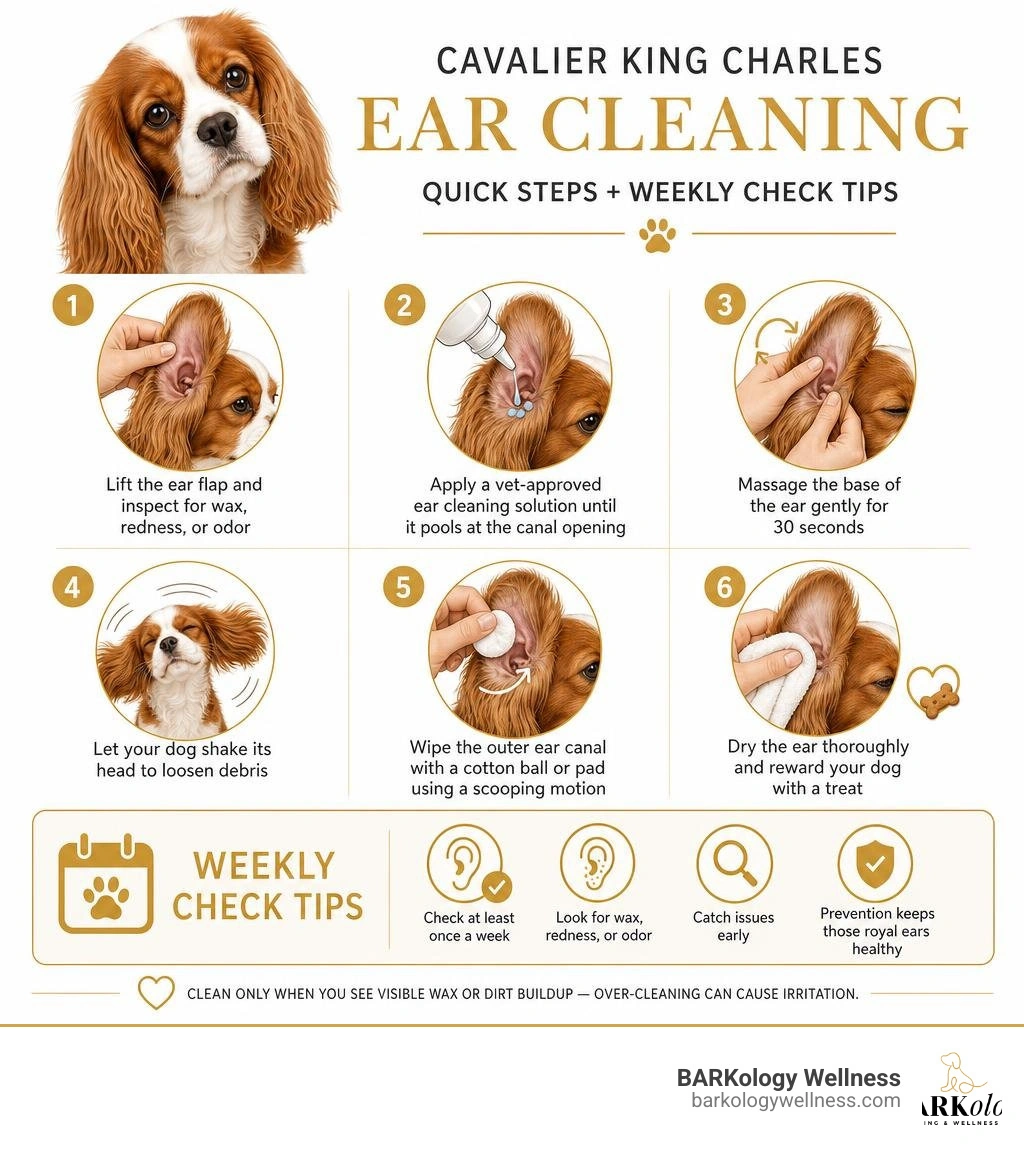
How to clean a Cavalier King Charles Spaniel's ears:
- Lift the ear flap and inspect for wax, redness, or odor
- Apply a vet-approved dog ear cleaning solution until it pools at the canal opening
- Massage the base of the ear gently for 30 seconds
- Let your dog shake its head to loosen debris
- Wipe the outer ear canal with a cotton ball or pad using a scooping motion
- Dry the ear thoroughly and reward your dog with a treat
Check ears at least once a week. Clean only when you see visible wax or dirt buildup, over-cleaning can cause irritation too.
Cavaliers are one of the most beloved companion breeds in the world. Those long, silky, feathered ears are a huge part of their charm. But those same ears create a real health challenge.
Unlike breeds with upright ears, Cavalier ears hang flat against the head. That blocks airflow. Trapped moisture and warmth create the perfect breeding ground for yeast and bacteria. Without a consistent care routine, ear infections can develop fast, and become chronic.
The good news? A simple weekly habit can prevent most problems entirely.
I'm Nabilah Shamseddine, founder of BARKology Wellness, where our mission is premium, health-focused care for dogs who deserve more than the basics, and Cavalier King Charles ear cleaning is one of the most common concerns we address for this breed. With hands-on experience developing wellness-centered grooming programs, I'll walk you through everything you need to keep those royal ears clean, healthy, and infection-free.
Cavalier king charles ear cleaning vocab to learn:
Why Cavalier Ears Need Special Attention
To understand why cavalier king charles ear cleaning is so critical, we have to look at the unique anatomy of these beautiful dogs. The very physical traits that make them look like soft, living teddy bears are the exact reasons their ears are highly vulnerable to health issues.
First and foremost, Cavaliers have heavy, drop ears (also known as floppy ears). While an upright ear (like a French Bulldog's) acts like an open window that allows air to circulate and keep the canal dry, a Cavalier's ear flap acts like a heavy, velvet curtain. It completely seals off the ear canal entrance, trapping body heat and moisture inside.
This lack of ventilation creates a warm, dark, and humid microclimate. If you live in a place like South Tampa, FL, where the outdoor humidity is already high, this effect is amplified. It is the ultimate incubator for yeast spores and bacterial colonies.
Additionally, dogs have a highly unique L-shaped ear canal. Unlike human ear canals, which run straight in, a dog's canal goes vertically down and then takes a sharp 90-degree turn inward toward the eardrum. Any wax, dirt, water, or debris that slips down into that vertical canal gets trapped at the bottom of the "L." Your dog cannot easily shake it out on their own, making manual cleaning essential to prevent buildup.
Why Cavalier King Charles Ear Cleaning is Essential
Neglecting your Cavalier's ear hygiene carries a very high risk of painful medical complications. When yeast and bacteria are allowed to multiply unchecked in the L-shaped canal, it leads to otitis externa (an outer ear infection).
If these infections are not caught early and treated, they can easily become chronic. Over time, chronic ear infections cause the delicate tissue lining the ear canal to undergo pathological changes. The body responds to the constant inflammation by laying down scar tissue, which results in permanently thickened, narrowed ear canals (stenosis).
Once the canal is permanently narrowed, it becomes incredibly difficult to clean. Debris gets permanently trapped, and the dog becomes trapped in a painful cycle of recurring infections that can eventually require a major surgical procedure to remove the entire ear canal (TECA surgery).
Regular grooming and cleaning are your best lines of defense. Keeping up with a solid routine preserves the natural, open structure of the canal. For a deeper look at managing their overall coat and feathering, check out our guide on Cavalier King Charles Spaniel Coat Care. To learn more about breed-standard physical maintenance, you can also read the How to Groom a Cavalier King Charles Spaniel – American Kennel Club resources.
Syringomyelia (CM/SM) and Ear Sensitivity
As Cavalier owners, we must also be deeply aware of breed-specific neurological conditions, most notably Chiari-like Malformation and Syringomyelia (CM/SM). This genetic condition involves a skull size mismatch that can cause fluid pockets (syrinxes) to form in the spinal cord, leading to intense neuropathic pain, especially around the neck, shoulders, and head.
Dogs with CM/SM often experience extreme sensitivity to touch around their ears and back of the neck. You might notice them "phantom scratching" at the air near their ears or crying out when their head is handled.
For these sensitive pups, standard liquid ear cleaning can be highly distressing. Pouring cold liquid down an already sensitive, painful ear canal can trigger a severe pain response or a panic attack.
If your Cavalier suffers from CM/SM or exhibits extreme head sensitivity, we often recommend a dry-cleaning approach or using minimal liquid. For these special cases, applying a therapeutic dry ear powder, such as Thornit powder, around the ear canal entrance with a soft blusher brush can help manage yeast and keep the area fresh without the physical shock of liquid flushes. Always consult your vet and review resources like General Care – Cavalier Matters to tailor your care routine to your dog's specific neurological comfort.
Step-by-Step Cavalier King Charles Ear Cleaning Guide
Before you begin cleaning, it is vital to set yourself and your dog up for success. Choose a quiet, well-lit room with an easy-to-clean floor, like a bathroom or a tiled kitchen. Since your Cavalier will inevitably shake their head and send ear cleaning solution flying, you'll want to avoid carpeted areas!
Keep the environment calm. If you are anxious, your dog will pick up on your energy and assume something scary is about to happen. Take a deep breath, speak in a soft, reassuring voice, and have all your supplies laid out within arm's reach before you bring your dog over.

To make the process easier, we highly recommend choosing a top-tier rinse. You can read about our favorite formulas in our guide on the Best Ear Rinse For Dogs.
Recommended Supplies and Products
Do not just grab whatever is in your bathroom cabinet. Human skin and dog skin have vastly different pH levels, and using the wrong product can cause chemical burns, severe dryness, or make an infection worse.
Here is your ultimate Cavalier ear-cleaning toolkit:
- A Vet-Approved, Dog-Specific Ear Cleaner: Look for gentle, alcohol-free formulas that contain drying agents (like salicylic acid or boric acid) to help evaporate trapped moisture.
- High-Quality Cotton Balls or Cotton Makeup Pads: These are soft, absorbent, and perfectly shaped to scoop debris out of the outer ear.
- A Dry Ear Powder (Optional): Excellent for CM/SM dogs or highly damp ears to absorb excess moisture and soothe itching.
- A Clean, Dry Towel: To wipe your dog's face (and yours!) after they shake.
- High-Value Treats: Think freeze-dried liver, small pieces of cheese, or chicken. These are only given during and immediately after ear cleaning to build a positive association.
What to NEVER use:
- Cotton Swabs (Q-Tips): Never insert these into the ear canal. They act like a plunger, packing wax and bacteria deeper down against the eardrum, and a sudden head flinch can easily rupture their delicate eardrum.
- Household Vinegar or Hydrogen Peroxide: While some DIY blogs recommend these, they can cause intense burning and irritation, especially if the ear is already slightly inflamed. If you are curious about the risks of household remedies, read our breakdown on Clean Dog Ear Vinegar.
Liquid Cleaners vs. Dry Ear Powders
| Product Type | Best Used For | Pros | Cons |
|---|---|---|---|
| Liquid Ear Cleaner | Routine cleaning, heavy wax buildup, flushing out deep debris. | Deeply cleans the entire L-shaped canal; dissolves stubborn wax. | Can feel cold and uncomfortable; not ideal for severe CM/SM sensitivity. |
| Dry Ear Powder | CM/SM sensitive dogs, highly damp ears, gripping hair for light trimming. | Keeps ears dry; absorbs moisture; highly tolerated by sensitive dogs. | Does not flush out deep canal debris; can cake if overused. |
The Safe Cleaning Process
Now that you have your supplies ready, let's walk through the exact steps to clean your Cavalier's ears safely.

- Inspect and Prep: Gently lift your Cavalier's ear flap. Look for any immediate red flags like bright red skin, swelling, or a strong odor. If everything looks normal but there is a light coating of wax or dirt, proceed.
- Apply the Solution: Gently hold the ear tip upward to open the canal. Place the nozzle of the bottle at the entrance of the ear canal (do not insert it deeply). Squeeze the bottle until you see the liquid pool slightly at the opening.
- Massage the Base: Immediately lower the ear flap and place your fingers at the very base of the ear (you will feel a firm, tube-like structure under the fur). Massage this area gently for 30 seconds. You should hear a squishing sound. This action breaks up the deep wax and debris at the bottom of the "L" bend.
- The Head Shake: Step back and let your dog shake their head. This is a crucial step! The centrifugal force of the head shake flings the loosened wax and deep liquid up to the outer, visible part of the ear.
- Wipe Clean: Take a clean cotton ball or pad and gently wipe away the dislodged wax and remaining liquid from the outer ear canal and the inside of the ear flap. Use a gentle outward, scooping motion. Only go as deep as your index finger can easily reach, never force anything down into the canal.
- Dry and Reward: Use your towel to dry the fur around the ears. Give your Cavalier tons of praise and a delicious, high-value treat!
For more tips on refining your technique, check out our comprehensive guide on Dog Ear Cleaning.
To Pluck or Not to Pluck Ear Hair?
A common question among Cavalier owners is whether to pluck the hair growing inside the ear canal. Historically, groomers routinely plucked this hair to "open up" the canal for better airflow.
However, modern veterinary dermatology has shifted on this practice. Plucking hair out of the delicate skin of the ear canal creates tiny micro-abrasions. These tiny wounds weep fluid, creating the perfect, nutrient-rich environment for bacteria and yeast to invade, actually causing an infection where there wasn't one before.
For most Cavaliers, we do not recommend plucking ear hair unless specifically advised by your veterinarian to treat a chronic medical condition. Instead, a much safer alternative is to use blunt-nosed grooming scissors or small clippers to carefully trim the hair around the entrance of the ear canal. This keeps the airway open without damaging the sensitive skin inside. If you are unsure, always seek professional grooming or veterinary advice.
Preventing Ear Infections and Managing Maintenance
Prevention is always easier (and much less expensive) than treating a full-blown infection. To keep your Cavalier's ears in pristine condition, establish a simple weekly checking habit.
Pick a specific day of the week to lift those gorgeous, feathered flaps. If the ears look clean, pale pink, and smell fresh, leave them alone! Over-cleaning can strip the ears of their natural protective oils and cause irritation. Only clean when you see visible wax, dirt, or after your dog has been in the water.
Be especially vigilant during specific times of the year. In South Tampa, FL, our high summer humidity and year-round warmth mean yeast thrives constantly. Nationally, statistics show ear infections often spike during fall and winter when indoor heating can dry out skin or seasonal allergens trigger systemic inflammation.
Water is the ultimate enemy of floppy ears. Whenever you bathe your Cavalier or if they go for a swim, always dry their ears thoroughly. You can use a dry cotton ball to gently absorb any water that slipped into the canal, and use a hand dryer on a completely cool setting to dry the heavy feathering around the ears.
Another fantastic preventative tool is a dog snood, a soft, breathable fabric tube that slips over your dog's head. Wearing a snood during mealtime keeps their long ears out of their food bowl, preventing damp food and moisture from soaking into the ear tips and creating a messy breeding ground for bacteria. For more excellent tips on structural prevention, take a look at Prevent Ear Problems: Cavalier King Charles Spaniel Ear Cleaning Guide - Rapoeats.
Establishing a Cavalier King Charles Ear Cleaning Routine for Puppies
If you have a young Cavalier puppy, start conditioning them to ear handling immediately. Do not wait until they have an ear infection and are in pain to try cleaning their ears for the first time.
Begin by simply touching and massaging their ears during relaxed cuddling sessions. Lift the flaps, look inside, and immediately reward them with a small, tasty treat. Once they are completely comfortable with their ears being handled, introduce the sight and smell of the ear cleaner bottle. Let them sniff the bottle, then give a treat.
Next, place a drop of the cleaner on your finger and touch it to the outer part of their ear, followed by heavy praise. By breaking the process down into tiny, positive steps, your puppy will grow up viewing ear cleaning as a wonderful bonding activity that results in delicious treats, rather than a scary struggle. For more puppy-specific advice, read our guide on Ear Cleaning For Dogs.
Common Mistakes to Avoid
Even well-meaning owners can make mistakes that inadvertently harm their dog's ears. Here are the top pitfalls to avoid:
- Over-Cleaning: Cleaning healthy ears on a strict daily or semi-weekly schedule can dry out the canal, cause micro-tears, and trigger inflammatory reactions.
- Inserting Cotton Swabs Deeply: As mentioned, this dangerous habit packs debris against the eardrum and risks permanent hearing damage.
- Using Human or DIY Products: Human shampoos, baby wipes, rubbing alcohol, and heavy vinegar solutions disrupt the natural pH of canine skin and can cause painful chemical irritation.
- Skipping the Drying Step: Leaving the ear canal or surrounding feathering damp after a bath or swim virtually guarantees a yeast flare-up. Always dry thoroughly!
When to See a Veterinarian
While regular home care can prevent the vast majority of ear issues, it is crucial to recognize when home cleaning is no longer enough and professional medical intervention is required.
Attempting to clean an ear that is already severely infected can be incredibly painful for your dog and can push deep-seated infections further into the middle ear.
If you observe any of the following symptoms, stop cleaning immediately and schedule an appointment with your veterinarian:
- Intense Redness or Swelling: The skin inside the ear flap or canal looks bright red, angry, or swollen shut.
- Foul, Yeasty, or Sweet Odor: A strong smell emanating from the ear that persists even after a light wipe.
- Frequent Head Shaking or Scratching: Your dog constantly shakes their head, rubs their ears against the carpet, or scratches at their ears.
- Abnormal Discharge: Large amounts of dark brown, black, yellow, or bloody discharge.
- Signs of Pain: Whining, crying out, or growling when you touch their ears or head.
- Loss of Balance or Head Tilt: This can indicate that an infection has breached the eardrum and entered the sensitive inner ear, affecting their equilibrium.
To learn more about identifying abnormal wax and discharge, check out our guide on Bad Ear Wax In Dogs.
Frequently Asked Questions About Cavalier Ear Care
How often should I clean my Cavalier's ears?
You should check your Cavalier's ears once a week, but only clean them when you see visible wax, dirt, or debris buildup. For most pet Cavaliers, a thorough cleaning once every two to four weeks is plenty to keep them healthy. However, if your dog swims often or has active allergies, they may require more frequent, targeted cleanings.
Can I use baby wipes or human ear cleaners on my dog?
No, you should never use baby wipes or human ear cleaning products on your Cavalier. Dogs have a much more alkaline skin pH (around 6.2 to 7.4) compared to humans (around 5.5). Human products and baby wipes contain acidic ingredients, alcohol, or synthetic fragrances that can severely strip your dog's natural skin barrier, leading to painful irritation and increasing their risk of infection. Always stick to veterinary-formulated, dog-specific products.
What should I do if my Cavalier whines or shows pain during cleaning?
If your Cavalier whines, pulls away, or shows any signs of discomfort or pain during ear cleaning, stop immediately. Healthy ears should not hurt when being gently cleaned. Pain is a primary indicator of an underlying ear infection, a ruptured eardrum, or severe inflammation. Forcing the issue can damage your bond with your dog and cause further injury. Contact your veterinarian for a proper diagnostic exam.
Conclusion
Caring for your Cavalier King Charles Spaniel's ears is an essential pillar of their overall health and happiness. By committing to a simple weekly check, using the right dog-safe products, and keeping those beautiful, floppy ears clean and dry, you can prevent painful infections and ensure your royal companion lives a comfortable, happy life.
At BARKology Wellness in South Tampa, FL, we specialize in providing the ultimate royal treatment for your beloved pets. Our luxury grooming and wellness services are tailored to the unique needs of breeds like the Cavalier, ensuring their coats, skin, and delicate ears receive the scientific, pampering care they deserve.
If you want to treat your companion to a stress-free, professional grooming experience in a serene, health-focused environment, we are here to help. Book a professional grooming session at BARKology Wellness today and let us pamper your pup from head to paw!