Why Your Cavalier's Coat Deserves Royal Attention
Cavalier King Charles Spaniel coat care starts with understanding what this breed's silky, feathered coat actually needs, and building a simple routine around it.
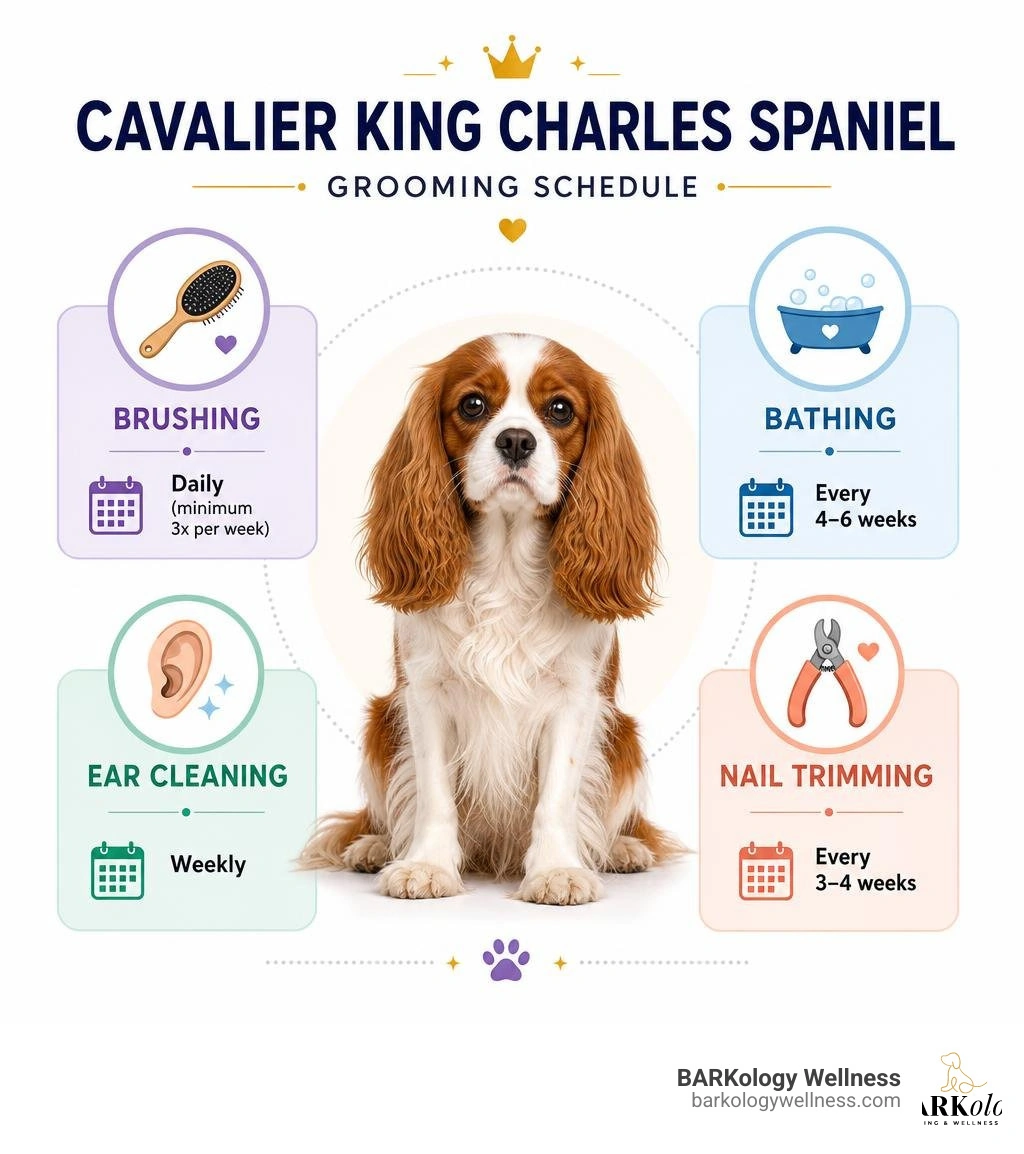
Quick answer: Cavalier King Charles Spaniel coat care at a glance
| Task | Frequency |
|---|---|
| Brushing | Daily (minimum 3x per week) |
| Bathing | Every 4–6 weeks |
| Ear cleaning | Weekly |
| Nail trimming | Every 3–4 weeks |
| Paw pad trimming | Weekly |
| Professional grooming | Every 6–8 weeks |
| Teeth brushing | Every 2–3 days |
The Cavalier King Charles Spaniel is one of the most naturally elegant dog breeds in the world. That long, silky coat with its signature feathering around the ears, chest, and legs turns heads, but it doesn't take care of itself.
Without consistent grooming, those beautiful feathered areas mat quickly. Tangles form almost invisibly behind the ears and under the legs. And because Cavaliers shed moderately year-round, not just seasonally, a skipped brushing session adds up fast.
The good news? This breed is actually easier to maintain than most long-haired dogs. Breed experts note that few Cavaliers have truly unmanageable coats. The right routine, the right tools, and a little consistency go a long way.
I'm Nabilah Shamseddine, franchise entrepreneur and leader at BARKology Wellness, where we specialize in premium, health-focused grooming experiences for dogs who deserve more than the basics. My work with Barkology Wellness has given me a front-row seat to what Cavalier King Charles Spaniel coat care truly looks like when done right, and I'm here to walk you through every step.
Discover more about cavalier king charles spaniel coat care:
Understanding the Cavalier King Charles Spaniel Coat Care Needs
Cavaliers have a medium-length, silky coat with soft feathering on the ears, chest, legs, belly, feet, and tail. The breed comes in four classic color patterns: Blenheim, tricolor, ruby, and black and tan. Coat color does not change the basic grooming routine, but lighter areas may show staining more easily.
A key point in Cavalier King Charles Spaniel coat care is that Cavaliers do not have the heavy, dense undercoat seen in many working or northern breeds. Their coat is often described as single-layer or lightly undercoated rather than a true heavy double coat. That means they usually need less de-shedding than breeds such as Border Collies, but their silky feathering can tangle quickly if ignored.
For broader breed health background, the VCA Animal Hospitals Cavalier King Charles Spaniel guide is a helpful overview. For general coat health principles across breeds, our dog coat care guide explains how grooming supports skin, comfort, and shedding control.
| Feature | Cavalier Coat | Heavy Double Coat |
|---|---|---|
| Texture | Silky, soft, often slightly wavy | Dense, layered, often weather-resistant |
| Undercoat | Minimal to light compared with double-coated breeds | Thick insulating undercoat |
| Shedding | Moderate year-round, heavier in spring and fall | Often heavy seasonal shedding |
| Main grooming concern | Tangles and mats in feathering | Packed undercoat, shedding, overheating risk |
| Clipping needs | Light tidying only | Usually avoid shaving; de-shed instead |
Regular grooming does more than keep your Cavalier looking like they just stepped out of a royal portrait. It helps distribute natural oils, reduces loose hair around your home, prevents painful mats, and gives you a chance to spot early changes such as dry skin, lumps, redness, parasites, hot spots, ear irritation, or sore paws.
In Tampa and South Tampa, humidity can also make coat and ear care extra important. Moisture trapped in feathering or floppy ears can create the perfect party environment for yeast and bacteria. And unlike a fun party, nobody wants that invitation.
The Essential Cavalier Brushing and Detangling Routine
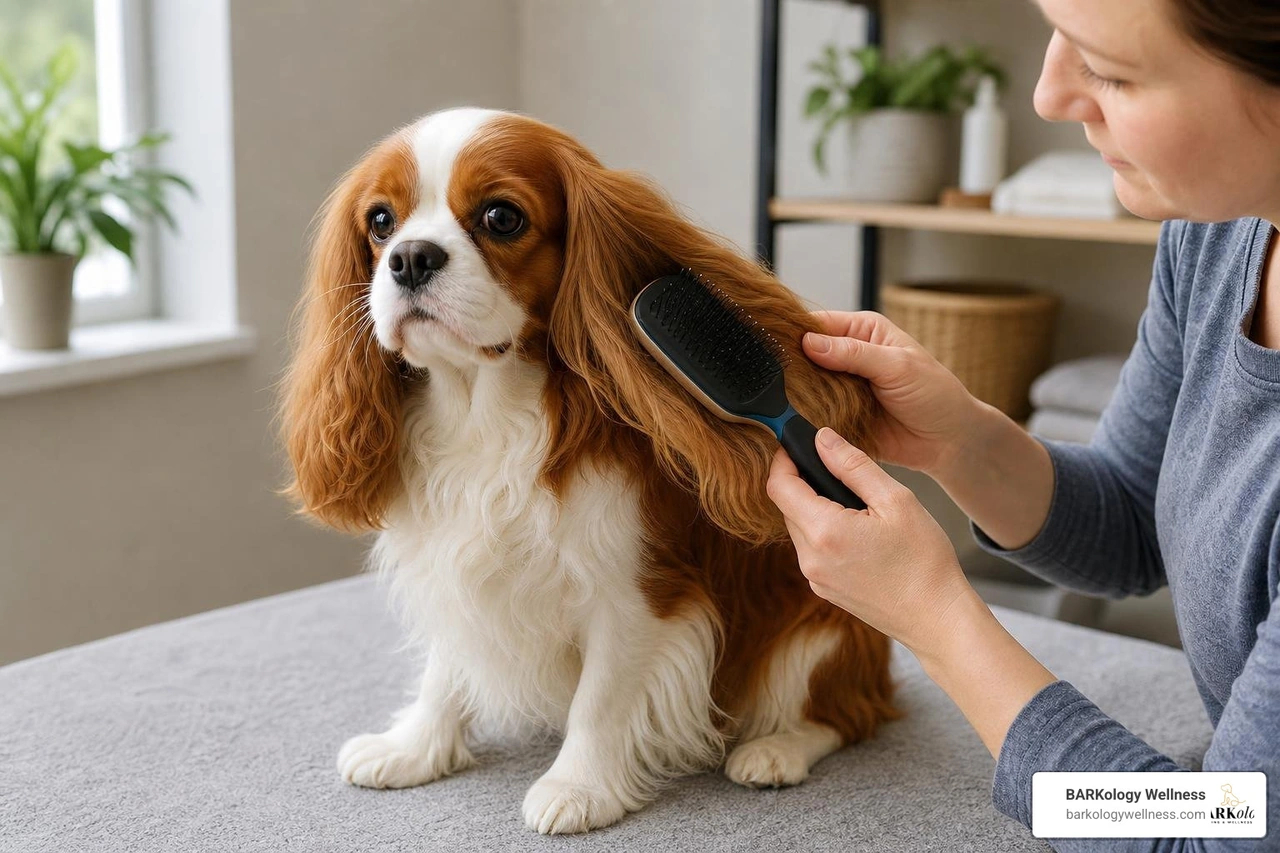
For most Cavaliers, brushing daily is ideal. If daily grooming is not realistic, aim for at least 3 times per week. During heavier shedding seasons in spring and fall, daily brushing makes a noticeable difference.
The best brushing routine is short, calm, and thorough. Ten minutes a day can prevent the 45-minute mat rescue mission nobody enjoys.
Recommended tools include:
- Pin brush: Best for everyday brushing and keeping the coat smooth.
- Slicker brush: Helpful for light tangles and seasonal shedding, but use gently.
- Metal comb: Essential for checking your work, especially behind ears and under legs.
- Wide-tooth comb: Useful for feathering and delicate areas.
- Detangling spray or conditioning mist: Reduces friction and helps prevent breakage.
- Blunt-tip scissors: For minor tidying only, not for cutting out tight mats near skin.
A simple brushing method:
- Lightly mist the coat with detangling spray or water. Avoid brushing a completely dry, static-filled coat.
- Start with the pin brush, moving in the direction of hair growth.
- Focus on high-friction zones: behind the ears, armpits, chest, belly, back legs, tail, and feet.
- Use your metal comb after brushing. If the comb catches, there is still a tangle hiding.
- Reward your Cavalier with praise, a treat, or a dramatic royal announcement like, "You are now officially fluffy."
Do not only brush the top layer. Hidden mats often form close to the skin. If a brush glides over the surface but a comb cannot pass through, the coat is not fully detangled.
Managing Mats in Feathered Areas
Feathering is the Cavalier's crown jewel and its biggest grooming troublemaker.
Common mat zones include:
- Behind and under the ears
- Chest and bib area
- Armpits
- Inner thighs
- Back of the legs
- Tail and tail base
- Between toes and paw pads
The AKC grooming guide for Cavalier King Charles Spaniels emphasizes consistent brushing and attention to ears, nails, and coat maintenance. That advice matters because Cavalier mats can tighten quickly, especially when moisture, dirt, or friction are involved.
To handle a small tangle:
- Spray with detangler.
- Hold the hair near the skin to avoid pulling.
- Start at the ends of the hair, not at the base.
- Use a wide-tooth comb or your fingers to loosen the knot.
- Follow with a metal comb to confirm it is gone.
Do not yank, rip, or force the brush through. Mats can pull on the skin and cause bruising, sores, or grooming anxiety. If a mat is tight, close to the skin, or larger than a small knot, it is safer to let a professional handle it.
Also, always brush out tangles before bathing. Water tightens mats. A small knot before bath time can become a felted little villain afterward.
Bathing and Conditioning for a Silky Shine
Most Cavaliers do well with a bath every 4 to 6 weeks. Some active dogs, allergy-prone dogs, or dogs who enjoy rolling in mysterious Tampa lawn treasures may need more frequent baths. However, bathing more than once a week is usually too much unless your veterinarian or groomer recommends it for a specific skin issue.
A good Cavalier bath routine:
- Brush and comb the coat first.
- Use lukewarm water, not hot water.
- Apply a gentle dog shampoo and massage down to the skin.
- Rinse thoroughly. Shampoo residue can cause itching.
- Apply conditioner, especially through the feathering.
- Rinse again unless using a leave-in product designed for dogs.
- Towel blot, then dry fully with a low-heat or cool dryer while brushing.
Drying matters. Leaving a Cavalier damp, especially around the ears, chest, belly, and armpits, can encourage tangles and skin irritation. In humid South Tampa weather, "almost dry" often means "still damp enough to cause trouble."
If your dog has flaking, itching, or a dull coat, over-bathing or harsh products may be part of the problem. Learn more in our guide to dry skin in dogs.
Best Shampoos and Conditioners for Cavalier King Charles Spaniel Coat Care
The best products for Cavaliers are gentle, hydrating, and made for dogs. Human shampoo is not ideal because canine skin has a different pH.
Look for:
- pH-balanced dog shampoo
- Moisturizing or hydrating formulas
- Oatmeal, aloe, glycerin, or other soothing ingredients
- Light conditioners that soften without weighing the coat down
- Detangling sprays for feathering
- Fragrance-free or lightly scented formulas for sensitive dogs
Avoid:
- Harsh detergents
- Heavy perfumes
- Products that leave greasy residue
- Medicated shampoos unless recommended by a veterinarian
- Whitening products used too often, which may dry the coat
Conditioner is especially helpful for Cavaliers because silky hair tangles less when it is hydrated. A leave-in conditioning mist can also help between baths, particularly on ears, chest feathering, and legs.
Healthy skin is the foundation of a beautiful coat. Our dog skin care guide explains how grooming, product choice, and routine checks all work together.
Trimming, Clipping, and Breed Standards

The Cavalier breed standard favors a natural, untrimmed appearance with long, silky feathering. For show dogs, heavy trimming or sculpting is not appropriate. For family Cavaliers, light practical tidying is common and can improve comfort and hygiene.
Appropriate trimming may include:
- Hair between paw pads
- Sanitary area
- Small tidy-up around feet
- Light shaping of uneven feathering
- Removing hair that collects debris or causes slipping
Paw pad hair should be trimmed regularly, often weekly, because it can cause sliding on tile or wood floors. This is especially important for senior Cavaliers or dogs with knee, hip, or heart-related limitations.
Clipping the whole body short is usually unnecessary. Some pet owners choose a shorter maintenance trim, but the coat should not be shaved down unless there is a medical reason or severe matting. Shaving can change texture, expose skin to sun, reduce natural protection, and make regrowth look thicker, fuzzier, or uneven.
Think elegant tidy-up, not "oops, the spaniel became a squirrel."
Professional vs. At-Home Cavalier King Charles Spaniel Coat Care
At-home care and professional grooming work best as a team.
At home, owners should focus on:
- Brushing and combing
- Checking ears and eyes
- Wiping paws
- Brushing teeth
- Monitoring skin changes
- Keeping the coat free from small tangles
Professional grooming helps with:
- Thorough bathing and drying
- Safe mat removal
- Paw pad trimming
- Nail trimming and filing
- Sanitary trims
- Ear cleaning support
- Coat and skin assessment
- Helping anxious or sensitive dogs stay comfortable
Most Cavaliers benefit from professional grooming every 6 to 8 weeks. Dogs with longer feathering, frequent mats, allergies, or very active outdoor lifestyles may do better every 4 to 6 weeks.
At BARKology South Tampa, we provide luxury grooming in a calm, health-focused environment. Our approach blends science, comfort, and a little spa-day sparkle. You can learn more about what professional care can include in our luxury dog grooming guide.
Beyond the Coat: Complete Hygiene and Wellness Routine
A Cavalier's coat may get the spotlight, but complete grooming includes ears, eyes, nails, teeth, and paws.
Ear care:
Cavaliers are prone to ear issues because their long floppy ears limit airflow. Check ears weekly for redness, odor, wax buildup, discharge, scratching, or head shaking. Clean only with a dog-safe ear cleaner and cotton pads or gauze. Never push cotton swabs deep into the ear canal.
Keep ears dry after baths and water play. Some owners use a snood during meals to keep ear feathering out of food and water bowls.
Eye care:
Cavaliers can have tear staining or eye discharge. Wipe the eye area daily with a soft damp cloth. If discharge becomes thick, yellow, green, smelly, or suddenly worse, call your veterinarian.
Nail care:
Trim nails every 3 to 4 weeks, or sooner if you hear clicking on the floor. Long nails can change posture, strain joints, and make walking uncomfortable. For black nails, trim tiny amounts at a time and watch for the softer center near the quick. Keep styptic powder nearby just in case.
Paw care:
Trim hair between paw pads weekly. Check for burrs, irritation, redness, cracked pads, and debris. Tampa sidewalks can get hot, so paw checks are especially important after walks.
Dental care:
Brush teeth every 2 to 3 days at minimum, though daily is ideal. Use dog toothpaste, never human toothpaste. Cavaliers can be prone to dental buildup, and dental health affects comfort, breath, and overall wellness.
For a broader look at whole-dog care, visit our dog wellness services guide.
Seasonal Adjustments and Common Grooming Mistakes
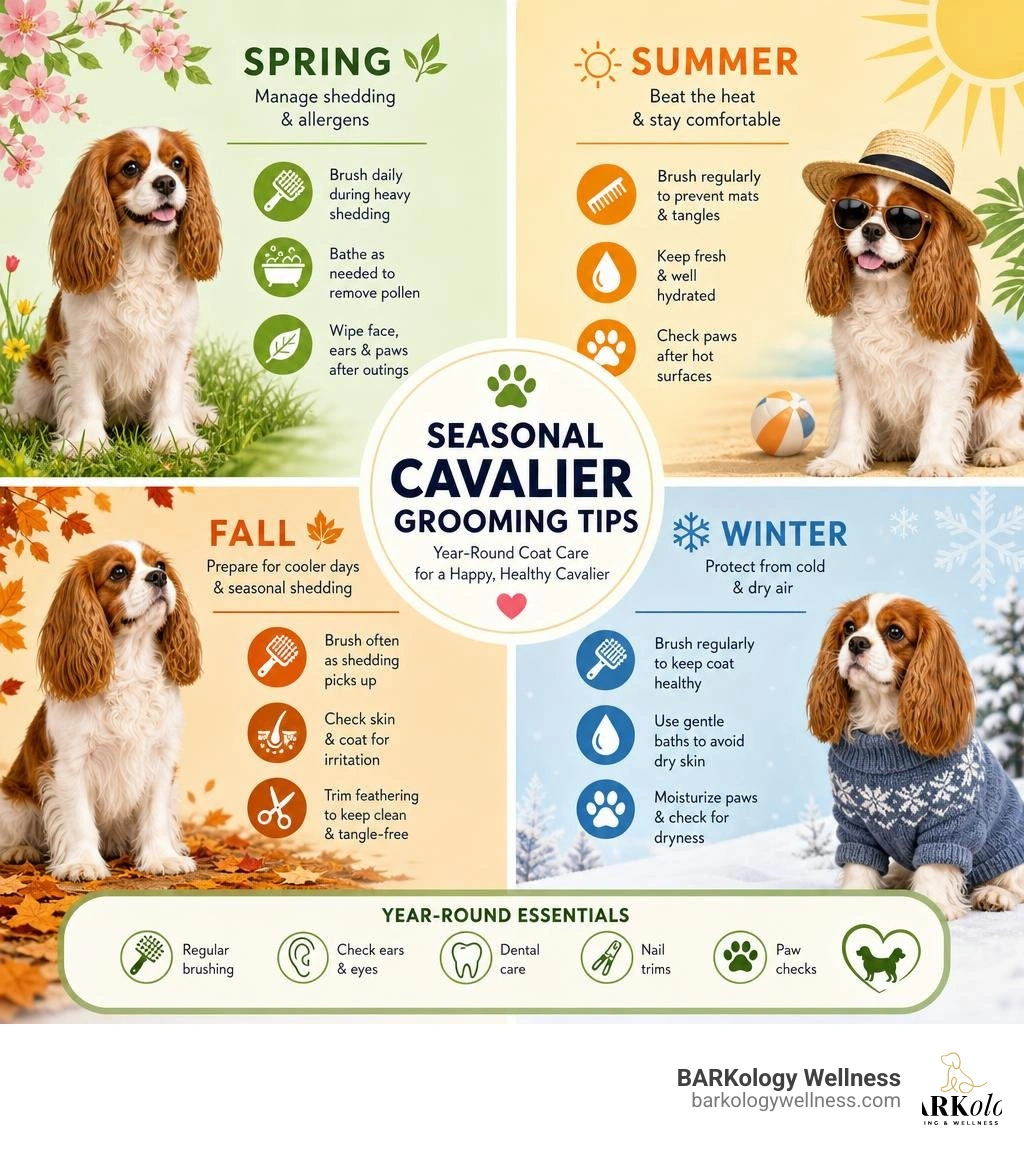
Cavaliers shed moderately all year, but spring and fall often bring more loose hair. In Tampa's warm, humid climate, seasonal changes also affect allergens, moisture, and skin comfort.
Spring:
- Brush daily during shedding increases.
- Check for pollen, fleas, ticks, and skin irritation.
- Wipe paws and belly after outdoor time.
Summer:
- Keep the coat clean and fully dried after baths.
- Do not shave for heat relief; shade, hydration, and timing walks matter more.
- Watch for hot pavement and humid-skin irritation.
Fall:
- Increase brushing during seasonal shedding.
- Check feathering for burrs, leaves, and outdoor debris.
- Keep ears dry as humidity lingers.
Winter:
- Continue brushing even if shedding seems lighter.
- Use moisturizing products if skin becomes dry.
- Watch paw pads for cracking or irritation.
Common grooming mistakes to avoid:
- Brushing only the topcoat
- Skipping the comb check
- Bathing over mats
- Over-bathing with harsh shampoo
- Using human shampoo
- Letting ears stay damp
- Ignoring paw pad hair
- Waiting too long between nail trims
- Cutting out mats close to skin at home
- Shaving the coat without a medical or severe matting reason
- Turning grooming into a wrestling match instead of a calm routine
If your Cavalier gets nervous during grooming, go slowly, use rewards, and keep sessions short. We also recommend reading our resources on dog grooming anxiety and dog grooming for anxious dogs.
Frequently Asked Questions about Cavalier Grooming
Do Cavalier King Charles Spaniels shed a lot?
Cavaliers shed moderately, not usually excessively. The important part is that they shed year-round. You may notice more loose hair in spring and fall, but there is no true "off season."
Regular brushing keeps shed hair in the brush instead of on your sofa, your shirt, your car seat, and somehow your morning coffee. A pin brush and metal comb are usually enough for routine care, with a slicker brush used gently during heavier shedding.
Can you shave a Cavalier King Charles Spaniel?
In most cases, no. Cavaliers do not need full-body shaving. Their silky coat helps protect the skin, and shaving can increase sun exposure, alter coat texture, and lead to uneven regrowth.
Light trimming around the paws, sanitary area, and problem spots is fine for comfort and cleanliness. Severe mats may need professional clipping for safety, but that is a solution to a problem, not a standard style goal.
If you want a lower-maintenance look, talk with a groomer about a tidy pet trim that preserves enough coat length and keeps your Cavalier comfortable.
How do you prevent ear infections in Cavaliers?
You cannot prevent every ear infection, but you can reduce risk with consistent care.
Best practices include:
- Check ears weekly.
- Clean with a vet-approved dog ear cleaner as needed.
- Keep ears dry after baths.
- Dry ear feathering thoroughly.
- Use a snood during meals if ears drag in food or water.
- Watch for odor, redness, swelling, discharge, scratching, or head shaking.
- Contact your veterinarian if symptoms appear.
Because Cavalier ears are long and floppy, airflow is limited. Moisture control is one of the biggest keys to keeping ears healthy.
Conclusion
Cavaliers may look like tiny royals, but their grooming routine does not have to be complicated. Brush often, bathe thoughtfully, condition the silky feathering, keep ears dry, trim nails regularly, and schedule professional grooming before mats take over the kingdom.
At BARKology Wellness in South Tampa, we believe grooming should support both beauty and wellness. Our team provides tailored, gentle, health-focused care for dogs who deserve the royal treatment - Cavaliers very much included.
Ready to help your Cavalier feel clean, comfortable, and camera-ready? Explore our BARKology Wellness Grooming Services.