
Why Every Golden Retriever Owner Needs a De-Shedding Routine
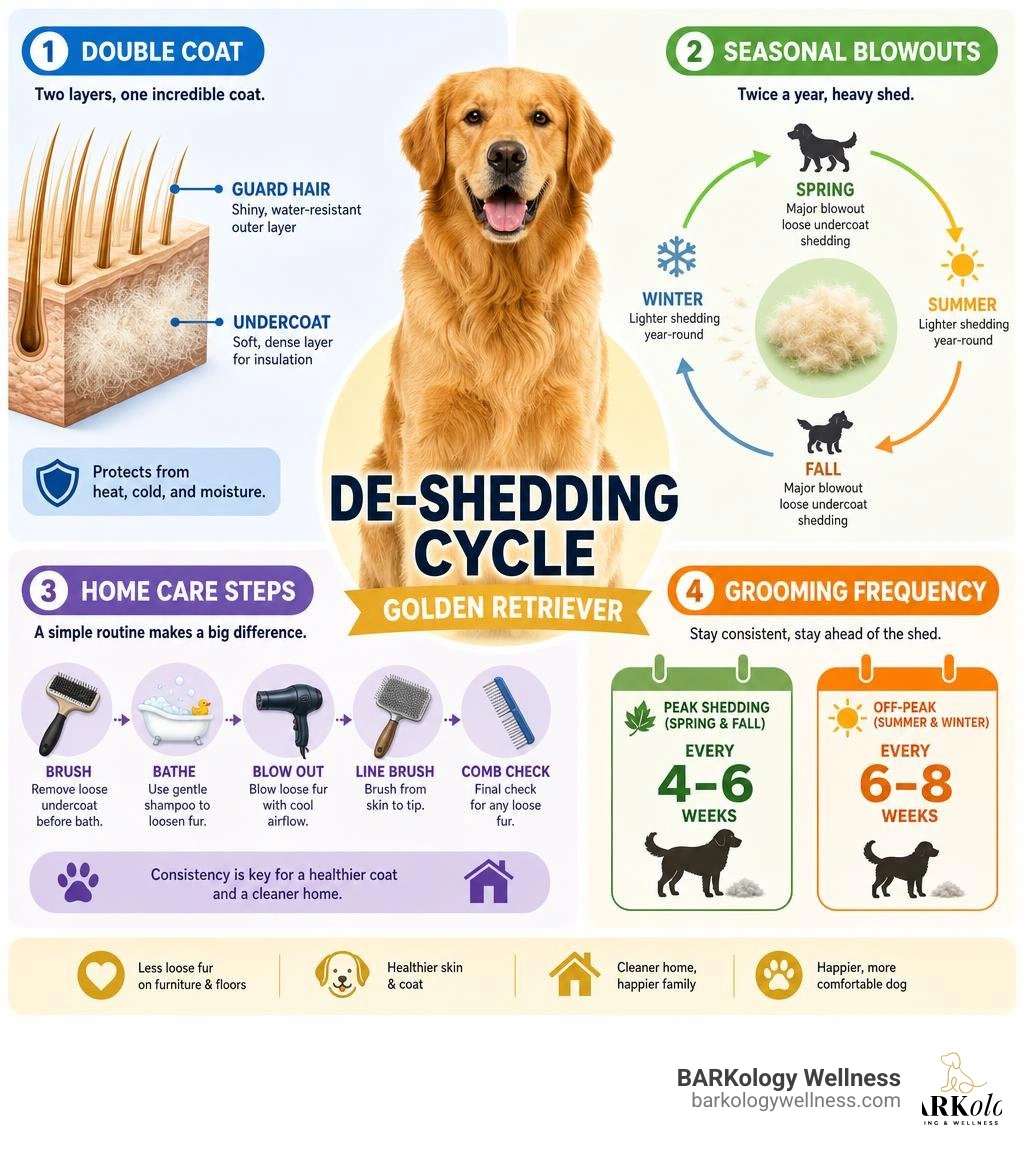
If you want to deshed a Golden Retriever the right way, here's the short version:
- Brush first with an undercoat rake and slicker brush before bathing
- Bathe with a pH-balanced or oatmeal shampoo to loosen dead undercoat
- Blow out loose fur with a force dryer on cool airflow
- Line brush from skin to tip and do a final comb check
- Repeat weekly during shedding season, every 1–2 weeks otherwise
- Book professional grooming every 6–8 weeks (every 4–6 weeks during peak shedding)
Never shave a Golden Retriever to reduce shedding, it backfires and can permanently damage the coat.
Golden Retrievers are beloved for their warm personalities and flowing golden coats. But that same coat comes with a trade-off: a lot of hair. If you've ever run a brush through your Golden before their first grooming appointment and watched a small mountain of fur pile up, you already know what we're talking about.
The good news is that shedding is completely normal, and very manageable. Golden Retrievers have a dense double coat that sheds its undercoat twice a year in heavy waves, plus lighter shedding year-round. With the right tools, technique, and routine, you can dramatically reduce the fur on your furniture, floors, and clothes.
This guide walks you through everything: how the double coat works, how to safely de-shed at home step by step, which tools to use (and which to avoid), and when professional grooming makes a real difference.
I'm Nabilah Shamseddine, franchise entrepreneur and operator of BARKology Wellness, where premium, health-focused pet care is at the core of everything we do, including helping Golden Retriever owners build de-shedding routines that keep their dogs' coats healthy and their homes cleaner. In the sections ahead, I'll share exactly what works when it comes to how to deshed a Golden Retriever safely and effectively.
Why Golden Retrievers Shed So Much: The Double Coat Explained
To understand why your vacuum cleaner is constantly working overtime, you first have to understand the anatomy of your dog's fur. Golden Retrievers are true double-coated dogs. This means their coat is not just a single layer of hair, but a highly engineered, two-layer system designed to protect them from the elements.
The outer layer consists of long, relatively coarse guard hairs. These hairs are water-resistant, dirt-repellent, and tough enough to protect your dog’s skin from scratches, briers, and insect bites. Underneath this topcoat lies a dense, soft, and plush undercoat. This undercoat acts as a natural layer of insulation.
For a complete breakdown of how to care for this unique structure, check out this Golden Retriever double-coat care overview. Understanding this anatomy is the first step toward effective Dog Coat Care.
How the Topcoat and Undercoat Work Together
These two layers work in harmony like a high-performance outdoor jacket. The outer coat acts as a weather shield, shedding rain, mud, and debris. Meanwhile, the soft undercoat traps air close to the dog’s body.
These trapped air pockets create a self-adjusting thermostat. In cold weather, the undercoat keeps warm air in. In hot weather, it traps a layer of cool air next to the skin, preventing the sun's heat from warming the dog too quickly.

A common myth is that removing or shaving this coat helps a dog cool down in the summer. In reality, removing this natural insulation destroys their ability to regulate temperature, exposing them directly to heat and harmful UV rays.
Seasonal Shedding Patterns in Golden Retrievers
While Golden Retrievers shed a moderate amount of hair year-round, they experience two major seasonal events known as a "coat blow" or "blowout."
- The Spring Blowout: As daylight hours increase and temperatures rise, Goldens shed their thick winter undercoat to prepare for the warmer months.
- The Fall Blowout: In autumn, they shed their lighter summer undercoat to make room for a dense, plush winter layer.
These peak shedding periods typically last between 2 to 4 weeks. During this time, you will notice large, soft clumps of undercoat flying off your dog.
It's worth noting that indoor living can disrupt this natural cycle. Because our homes in Tampa utilize artificial lighting and air conditioning, indoor Goldens may experience a more continuous, year-round shedding pattern. Additionally, hormonal changes, such as spaying, neutering, or senior age-related shifts, can also cause the coat to thin or shed more consistently throughout the year.
Why You Should Never Shave a Golden Retriever
If there is one golden rule of grooming this breed, it is this: never shave a Golden Retriever.
Shaving a double-coated dog does not stop shedding; it simply results in shorter, sharper hairs shedding all over your home. More importantly, shaving causes serious, often permanent damage:
- Patchy Regrowth: The undercoat grows back much faster than the slow-growing guard hairs, leading to a patchy, fuzzy appearance.
- Damaged Texture: The coat often grows back sticky, coarse, and highly prone to severe matting.
- Overheating and Sunburn: Without guard hairs to block UV rays, your dog is at a high risk for sunburn and heatstroke.
- Lost Insulation: A shaved dog loses its natural ability to keep cool in the summer and warm in the winter.
The only time a Golden Retriever should be shaved is for legitimate medical reasons, such as surgery prep or treating severe, deep-skin infections. For cosmetic or shedding control, shaving is never the answer.
How to Deshed Golden Retriever at Home Step by Step
If you want to tackle the undercoat yourself, having a structured routine is essential. Trying to brush out a dry, dirty coat can cause painful hair pulling and skin irritation.
Here is our step-by-step professional method to safely deshed a Golden Retriever at home. For additional tips from breed experts, you can review these Golden Retriever rescue grooming tips.
Step 1: Brush Before the Bath
Never put a matted or heavily tangled dog straight into the bath. Water acts like glue on loose undercoat, tightening knots and turning minor tangles into solid mats.
Start by using a slicker brush and a metal comb to gently work through the entire coat. Pay close attention to the high-friction "heavy zones" where mats love to hide:
- Behind the ears
- Under the armpits
- The chest and neck ruff
- The "pants" (the back of the hindquarters)
- The tail
Use an undercoat rake to gently pull out loose undercoat before any water touches the fur.
Step 2: Bathe to Loosen Dead Undercoat
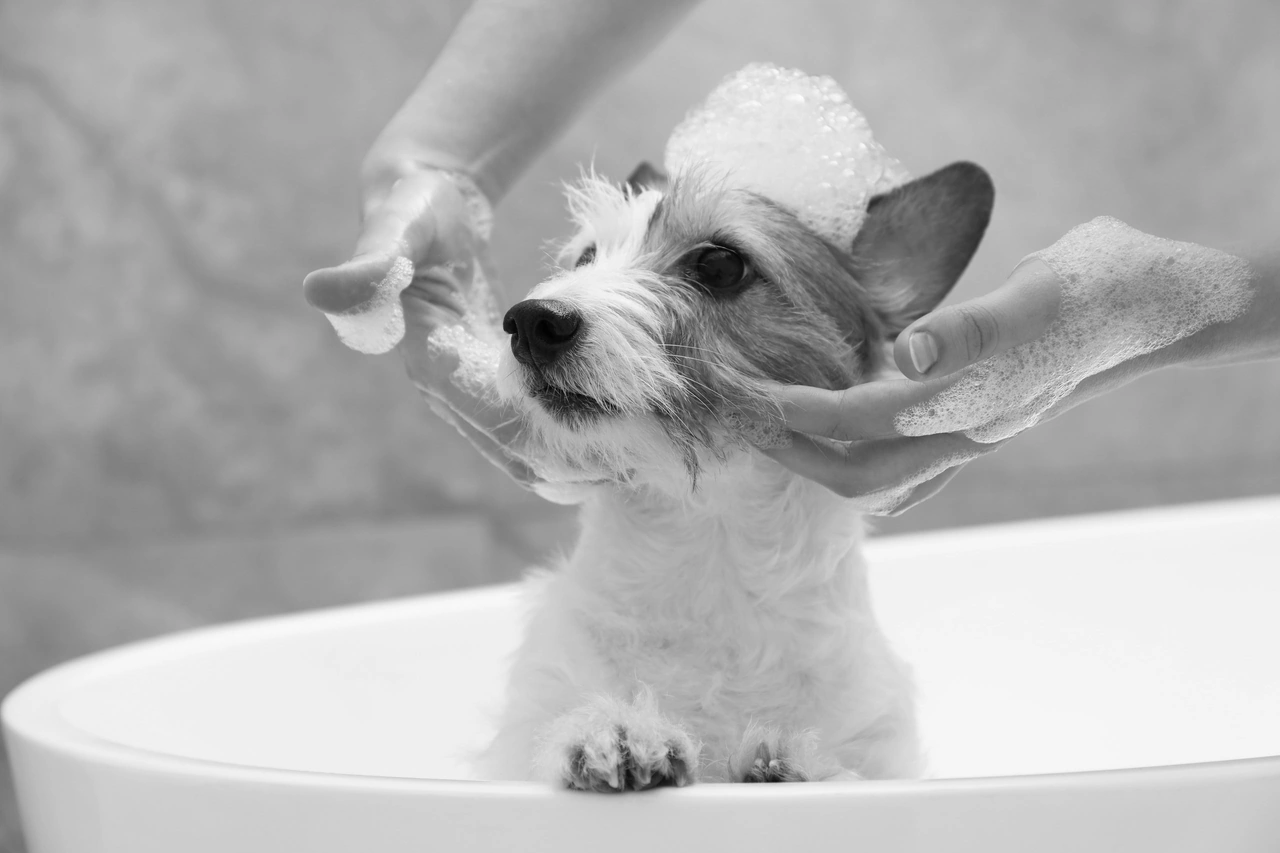
Once the coat is free of mats, it’s time for the bath. Use a high-quality, pH-balanced dog shampoo. Oatmeal-based formulas are fantastic for soothing the skin and maintaining natural oils.
Apply a generous amount of dog-formulated conditioner afterward. Conditioner is a secret weapon in the de-shedding process; it closes the hair cuticles and lubricates the hair shafts, allowing trapped, dead undercoat to slide out easily during the rinse. Be sure to rinse thoroughly, as leftover soap residue can cause dry skin and intense itching.
Step 3: Dry and Blow Out Loose Fur
Gently towel dry your dog to remove excess water. Next, use a high-velocity dog force dryer. Unlike human hair dryers, which rely on high heat that can damage a dog's skin, professional force dryers use a powerful, concentrated stream of cool air to literally blast water and loose undercoat out of the hair follicles.
Always use a cool airflow setting to avoid heat stress. Work in sections, blowing the air in the direction of hair growth. This "blowout" process is incredibly effective and will cause clouds of dead hair to release safely. This is also the perfect time to inspect your dog's skin for any hidden hot spots, lumps, or parasites.
Step 4: Finish With Line Brushing and Comb Checks
Once the coat is completely dry, finish with a technique called line brushing.
- Part the hair with one hand to expose the skin.
- Use your slicker brush in your other hand to brush the hair outward from the skin to the tips.
- Work systematically across the body in small sections, always brushing in the direction of hair growth.
- Apply gentle pressure, never scrape the brush across the bare skin.
- Finish by running a solid metal comb through the coat. If the comb glides smoothly from skin to tip without catching, your de-shedding session is a success!
Always offer plenty of praise and reward breaks to keep the experience positive.
Best Tools to Deshed Golden Retriever Safely
Using the right tools makes the difference between a beautifully maintained coat and a damaged one.
| Tool Type | Purpose | Safety Level | Best Used For |
|---|---|---|---|
| Undercoat Rake | Removes dead undercoat | Very Safe | Thick zones (chest, pants, ruff) |
| Slicker Brush | Smooths topcoat, detangles | Safe | Daily maintenance & feathering |
| Metal Comb | Verification tool, checks for mats | Very Safe | Final pass after brushing |
| Grooming Glove | Gentle loose hair removal | Extremely Safe | Puppies, sensitive areas, and quick touch-ups |
| Blade-Style Tool | Cuts/removes heavy undercoat | Moderate (Use with caution) | Short, controlled seasonal sessions |
For more advanced care tips, read our guide on Dog Grooming In Tampa.
Best tools to deshed golden retriever without damaging the coat
To protect the integrity of your dog's gorgeous feathers and guard hairs, assemble a toolkit consisting of:
- Undercoat Rake: A tool with rounded metal teeth designed to slide past the guard hairs and pull out loose undercoat.
- Slicker Brush: Essential for smoothing the coat and detangling the long feathering on the legs and tail.
- Stainless Steel Comb: Your ultimate check tool to ensure you have reached all the way to the skin.
- Rubber Curry Brush or Grooming Glove: Perfect for gentle, daily sessions that stimulate skin oils.
Avoid aggressive mat splitters or cutting tools unless you have professional training, as they can easily cut your dog's skin.
Are Blade-Style De-Shedding Tools Safe for Golden Retrievers?
Blade-style de-shedding tools (such as the Furminator) feature tightly spaced, tiny metal teeth. While they are incredibly popular, they must be used with extreme caution on Golden Retrievers.
Because these tools have a slight cutting edge, overusing them or applying too much pressure can cut the outer guard hairs, leaving the coat looking dull, frizzy, and damaged. They can also scrape the skin, causing painful abrasions.
If you choose to use a blade-style tool:
- Use it only on a completely dry coat.
- Apply zero downward pressure; let the weight of the tool do the work.
- Move in short, gentle strokes in the direction of hair growth.
- Limit use to once or twice a week for no more than 10 minutes per session.
- Stop immediately if you see any redness or irritation on the skin.
Grooming Techniques That Reduce Shedding Fast
To keep your de-shedding sessions stress-free, keep them short and focused. Work in small sections rather than trying to tackle the whole dog at once.
Rules for Safe and Fast Brushing:
- Brush in the direction of hair growth: Brushing against the grain can pull the hair and cause discomfort.
- Support the hair at the base: When detangling feathers or pants, hold the hair close to the skin with one hand to prevent painful pulling.
- Focus on high-shed areas: Spend extra time on the chest, pants, and behind the ears.
- Never scrape the skin: Keep the pins of your slicker brush parallel to the skin, not digging into it.
Golden Retriever De-Shedding Schedule: Home Care, Professional Grooming, and Products
Managing a Golden's coat requires a balance of daily maintenance, deep home grooming, and professional visits. This is especially true in the South Tampa area, where high humidity and heat can make trapped undercoat particularly uncomfortable and prone to trapping moisture. Learn more about professional options by reading about Dog Grooming Services Tampa.
How often to deshed golden retriever without overdoing it
To maintain a healthy coat without causing skin irritation:
- Daily: Spend 5 to 10 minutes doing a quick pass with a slicker brush or grooming glove to remove daily loose hairs.
- Weekly: Dedicate 20 to 30 minutes to a deep brush-out using your undercoat rake and metal comb.
- Shedding Season (Spring/Fall): Increase deep brushing to 2 or 3 times a week to keep up with the heavy blowout.
When to Book Professional De-Shedding
While home care is vital, booking a professional de-shedding service every 6 to 8 weeks (or every 4 to 6 weeks during peak shedding season) is highly recommended.
A professional groom includes a deep therapeutic bath, a high-velocity blowout (which removes more undercoat in minutes than hours of home brushing can), nail trimming, ear cleaning, a sanitary trim, and a tidy-up of the long feathering. Professional salons also offer specialized accommodations for senior dogs who cannot stand for long periods, as well as gentle introductory sessions for puppies.
Products and Nutrition That Support a Healthy Coat
A beautiful coat starts from the inside out. To reduce excessive shedding, ensure your dog’s diet is rich in high-quality proteins and essential fatty acids.
- Omega-3 and Omega-6 Fatty Acids: Adding a high-quality fish oil supplement to your dog's food helps nourish the skin barrier and strengthens hair follicles.
- Biotin, Zinc, and Vitamin E: Support coat strength and shine.
- Hydration: Ensure your dog always has access to clean, fresh water. Proper hydration keeps the skin elastic and reduces premature shedding.
If your dog suffers from chronic skin allergies, frequent hot spots, or sudden, patchy hair loss, consult your veterinarian to rule out thyroid issues or parasites. For comprehensive wellness advice, explore Dog Wellness Tampa.
Keeping Your Home Cleaner Between Grooming Sessions
To keep your living space fur-free, combine your dog’s grooming routine with a few smart home habits:
- Use a vacuum cleaner equipped with a HEPA filter designed specifically for pet hair.
- Place washable slipcovers on your sofas and chairs.
- Keep reusable lint rollers near your entryway and in your car.
- Set up a dedicated grooming station at home with a non-slip mat to make cleanup easy.
- Use an air purifier to capture airborne dander and fine hairs.
Frequently Asked Questions About Golden Retriever De-Shedding
What is a de-shedding treatment and how does it do more than brushing?
A professional de-shedding treatment is a multi-step process. It begins with a warm bath using specialized anti-shedding shampoos and conditioners that help release trapped hair from the follicles.
Next, a high-velocity dryer is used to blow out the loose undercoat. Finally, the groomer performs targeted line-brushing using professional-grade undercoat rakes and slicker brushes. This combination removes far more dead hair than standard home brushing alone.
Do Mini Golden Retrievers shed less than standard Golden Retrievers?
Yes, but it depends heavily on their genetics. Mini Golden Retrievers (often a mix of Golden Retriever, Poodle, and sometimes Cocker Spaniel) can inherit different coat types.
Those with a "furnished," wavy, or curly Poodle-like coat generally shed significantly less than standard Goldens. However, those with a "smooth" coat will still shed moderately to heavily.
For a detailed groomer’s perspective on these hybrid coats, read this guide on the Low Shedding mini Golden Retriever, Taylormade Miniature Golden Retriever . No dog is 100% hypoallergenic, and all coat types require regular grooming.
When is shedding abnormal enough to call a vet?
While heavy shedding is normal, you should contact your veterinarian if you notice:
- Bald patches or symmetrical hair loss
- Intense, constant scratching, biting, or licking at the skin
- Red, inflamed, or bleeding skin
- A strong, unpleasant odor coming from the coat
- Large amounts of dandruff, scabs, or sticky black flakes (which can indicate conditions like seborrhea or ichthyosis)
Conclusion
Managing your Golden Retriever’s shedding doesn't have to be an overwhelming chore. By understanding how their double coat functions, avoiding the temptation to shave them, and establishing a consistent routine of brushing, bathing, and drying, you can keep their coat in peak condition while maintaining a clean, comfortable home.
When you need an extra hand keeping up with those seasonal blowouts, professional support is always available. At BARKology Wellness in South Tampa, we provide luxury grooming and wellness services tailored to your dog's unique coat needs.
Ready to give your Golden the royal treatment? Book expert grooming support with our team of professional groomers today!