
Why Every Dog Owner Needs to Know About Deshedding Brushes
A deshedding dog brush is one of the most effective tools you can use to reduce loose fur, both on your dog and around your home. Here's a quick breakdown of what you need to know:
What is a deshedding dog brush?A specialized grooming tool designed to reach past the topcoat and pull out loose, dead hair from the undercoat, before it ends up on your sofa.
Key benefits at a glance:
- Reduces shedding by up to 90–95% with regular use
- Removes loose undercoat without cutting or damaging guard hairs
- Supports skin health by improving airflow and natural oil distribution
- Cuts down on vacuuming, lint rolling, and general fur chaos at home
- Works best on double-coated and heavy-shedding breeds
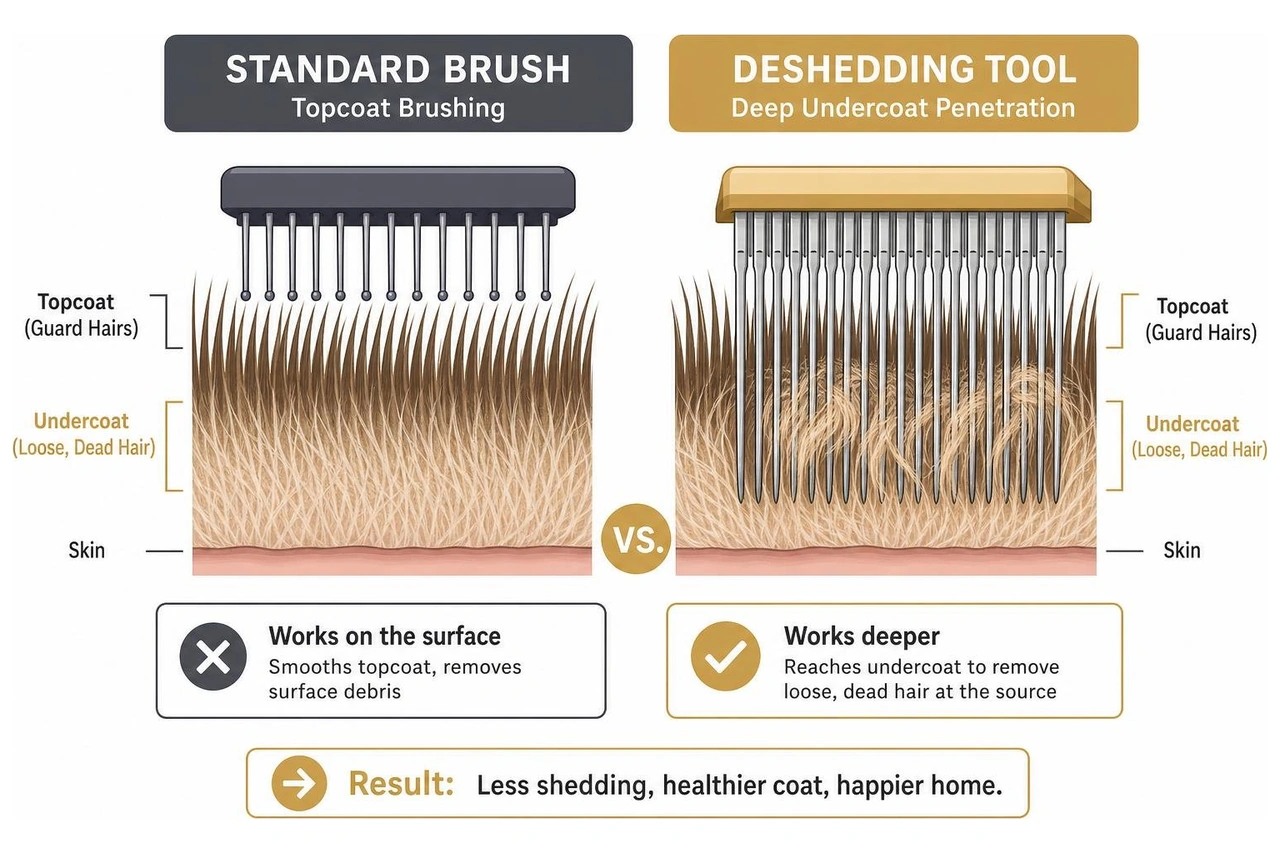
How it differs from a regular brush:Standard brushes smooth the topcoat. A deshedding brush goes deeper, its fine, closely spaced teeth or blades reach the undercoat where loose, dead hair collects before it falls out naturally.
If you've ever watched your dog shake and release a small cloud of fur, you already understand the problem. Dogs naturally shed their undercoat, especially during seasonal changes, and no amount of regular brushing fully keeps up with it. The right deshedding tool changes that equation entirely.
I'm Nabilah Shamseddine, franchise entrepreneur and leader at BARKology Wellness, where I've seen how the right deshedding dog brush transforms both the grooming experience and a dog's overall coat health. In the sections ahead, we'll walk through everything, from how these tools work to which one belongs in your grooming kit.
Deshedding dog brush glossary:
Understanding the Undercoat: How Deshedding Works
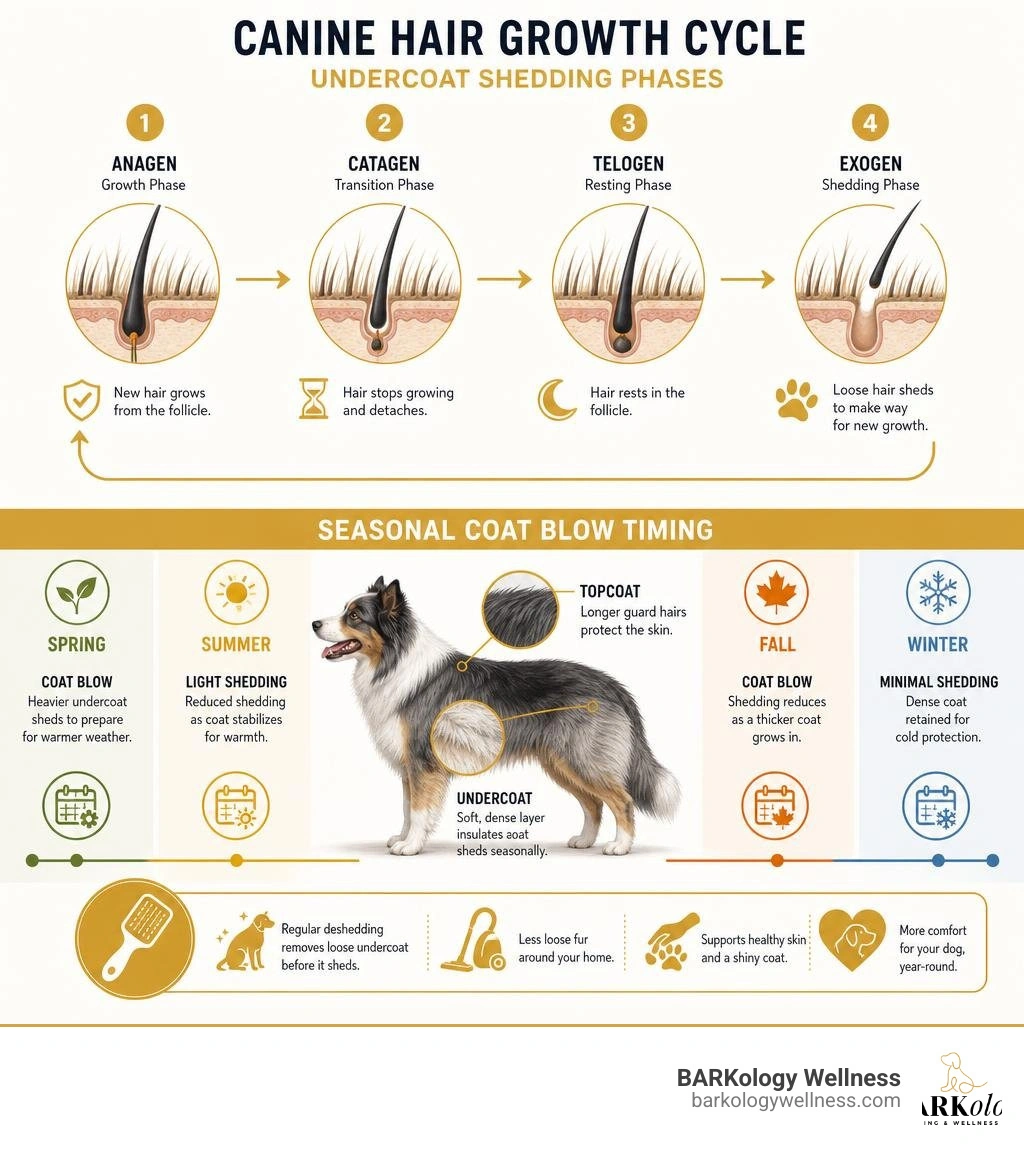
To truly understand why a deshedding dog brush is a game-changer, we have to look beneath the surface. Many dog breeds boast a double coat: a tough, weather-resistant outer layer (the topcoat) and a soft, dense, insulating layer underneath (the undercoat). The undercoat acts like natural climate control, keeping your pup warm in the winter and cool in the summer.
However, this undercoat is constantly cycling. As hair dies, it detaches from the follicle but often gets trapped beneath the topcoat. Without proper dog coat care, this dead hair forms a dense barrier. It blocks airflow, traps moisture against the skin, and eventually forms painful mats.
When we perform dog deshedding at home or in our South Tampa salon, we are actively lifting out this trapped, dead undercoat. Removing this layer does not mean shaving or stripping away their natural defense system; rather, it clears out the "dead weight" so their skin can breathe, natural oils can circulate, and new, healthy hair can grow.
How a Deshedding Dog Brush Differs from Regular Brushes
Many pet parents make the mistake of using a standard pin brush or a soft bristle brush and wondering why their living room still looks like a snow globe. Regular dog brushing tools are excellent for daily maintenance, smoothing the topcoat, and removing surface debris. However, they simply glide over the topcoat without reaching the dense undercoat beneath.
In contrast, a specialized deshedding dog brush is engineered specifically for deep-penetration hair removal. Its teeth are spaced and angled precisely to slide past the guard hairs of the topcoat, latching onto the loose, fuzzy undercoat fibers and pulling them free. Using a high-quality deshedding brush for dog ensures that you are targeting the root of the shedding problem rather than just tidying up the surface.
Which Breeds Benefit Most from Undercoat Removal?
Not all dogs are built the same, which means their grooming needs vary wildly. Double-coated breeds and heavy seasonal shedders benefit the absolute most from a dedicated deshedding regimen.
For instance, managing a border collie deshedding routine requires a tool that can navigate their fine, dense undercoat without tearing their beautiful feathers. Similarly, if you need to deshed golden retriever coats, you need a brush capable of pulling out the thick, water-resistant undercoat that accumulates around their neck, thighs, and tail.
Other breeds that practically demand a high-quality deshedding tool include:
- German Shepherds
- Siberian Huskies and Alaskan Malamutes
- Labrador Retrievers
- Great Pyrenees
- Bernese Mountain Dogs
Without regular undercoat removal, these breeds are highly susceptible to "blowing" their coats, a process where the undercoat sheds in massive, clumpy tufts twice a year, turning your home into a temporary fur factory.
Choosing the Right Deshedding Dog Brush for Your Pup
Walking down the grooming aisle or browsing online can feel overwhelming. There are blades, rakes, pins, and slickers. Choosing the wrong tool can result in skin irritation for your pup or wrist fatigue for you.
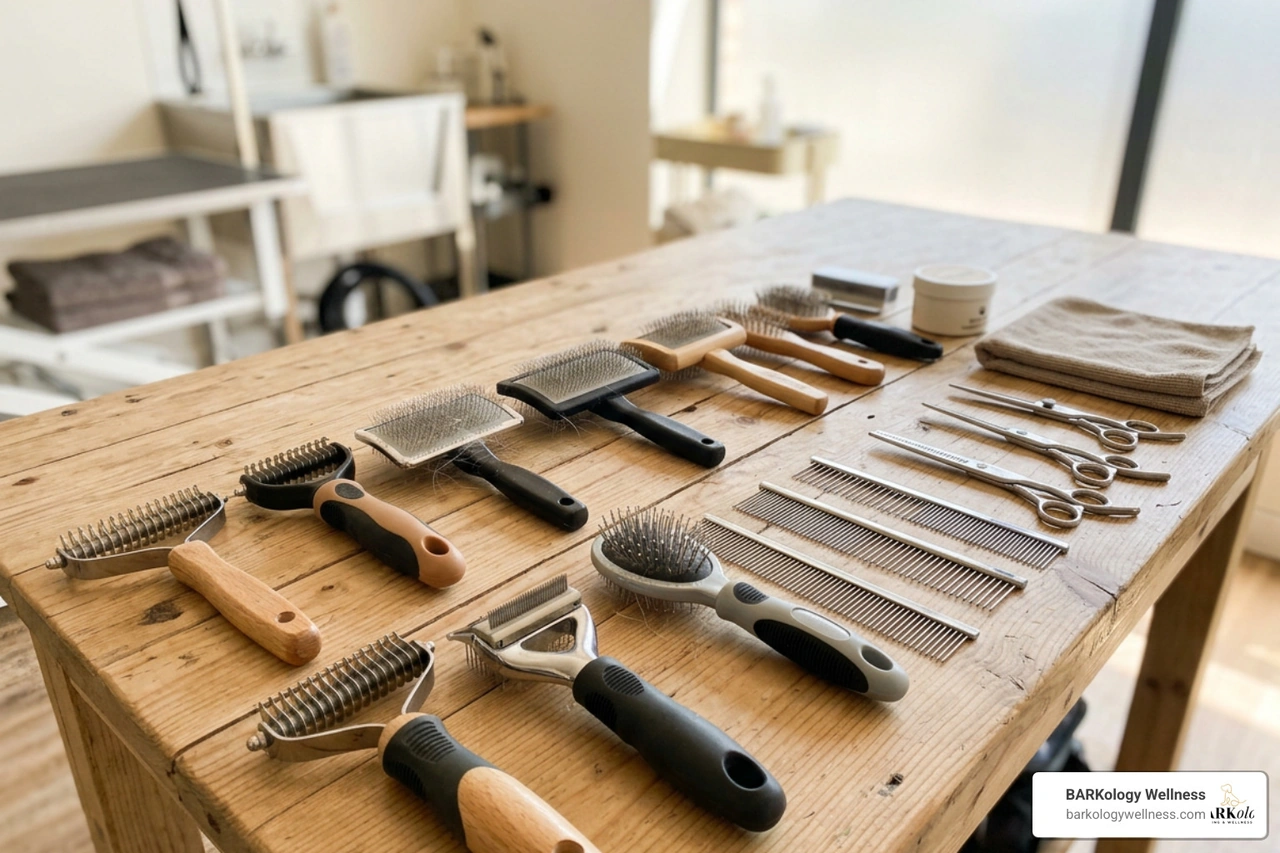
To help you make sense of the options, let's look at how the main categories of deshedding tools stack up:
| Tool Type | Best For | Key Feature | Pros | Cons |
|---|---|---|---|---|
| Blade-Style / Edge Tools | Short to medium double coats | Stainless steel micro-teeth | Removes up to 90-95% of loose hair | Can scrape skin if used with too much pressure |
| Undercoat Rakes | Long, thick, heavy coats | Curved metal tines | Penetrates deep; clears heavy mats | Bulky; requires gentle technique |
| Rotating Pin Combs | Curly, wavy, or mat-prone coats | Independently spinning teeth | Reduces pulling and grooming stress | Less effective on ultra-short coats |
| Slicker Brushes | Medium coats and finishing | Fine, bent wire bristles | Excellent for smoothing and detangling | Doesn't reach the deepest undercoat layers |
Blade-Style Tools and Undercoat Rakes
Blade-style tools are the heavy hitters of the deshedding world. Classic options like the undercoat deShedding tool feature a finely-toothed stainless steel edge that reaches deep through the topcoat. These tools are incredibly efficient, often reducing loose hair by up to 90% with regular use. Many of these modern edge tools feature built-in skin guards to keep the metal from digging into your dog's delicate skin, as well as quick-release buttons to eject the collected fur easily.
If your dog has a thicker, longer coat prone to minor tangles, a dual-sided grooming tool is an exceptional choice. These tools typically feature a lower-density blade side (like a 9-blade configuration) to gently break up mats and a higher-density side (like a 17-blade configuration) to sweep out the loose undercoat. They are designed to glide through dense fur smoothly, making them a favorite for owners of larger double-coated dogs.
Rotating Pin Combs and Slicker Brushes
For dogs with highly sensitive skin, curly coats, or a general dislike of grooming, rotating pin tools offer a much gentler alternative. A high-quality rotating pin deshedding comb features metal pins that spin 360 degrees inside the spine of the comb. This independent movement significantly reduces the friction and pulling force that standard fixed-tooth combs exert on tangles.
Using a professional rotating pin brush is particularly useful for breeds like Doodles, Collies, and Spaniels. The sensory comfort of the rolling pins creates a calming, massage-like sensation, turning what could be a stressful grooming session into a relaxing experience. While they might not pull out quite as much bulk fur in a single pass as a blade-style tool, they are unmatched in comfort and safety for daily detangling.
Breed-Specific Brush Recommendations
Selecting the perfect brush requires matching the tool's design to your dog’s specific coat type and life stage.
- For Retrievers: If you are searching for the best brush for Labrador retriever coats, look for an ergonomic, short-hair edge tool or a medium slicker. Labs have a short but incredibly dense double coat that sheds year-round.
- For Puppies: If you have a young retriever, the best brush for golden retriever puppy grooming is a soft slicker brush or a gentle rotating pin comb. A puppy's adult double coat doesn't fully develop until they are around one year old, so heavy-duty deshedding blades are unnecessary and could irritate their soft puppy skin.
- For Silky/Feathered Coats: Finding the best brush for Cavalier King Charles Spaniel grooming means prioritizing detangling and feather protection. A dual-level pin brush or a gentle slicker with coated tips will keep their silky coat free of mats without breaking the delicate hair shafts.
Best Practices for At-Home Grooming
At-home grooming is a wonderful way to bond with your dog, but it requires the right environment and technique to keep it safe and stress-free.
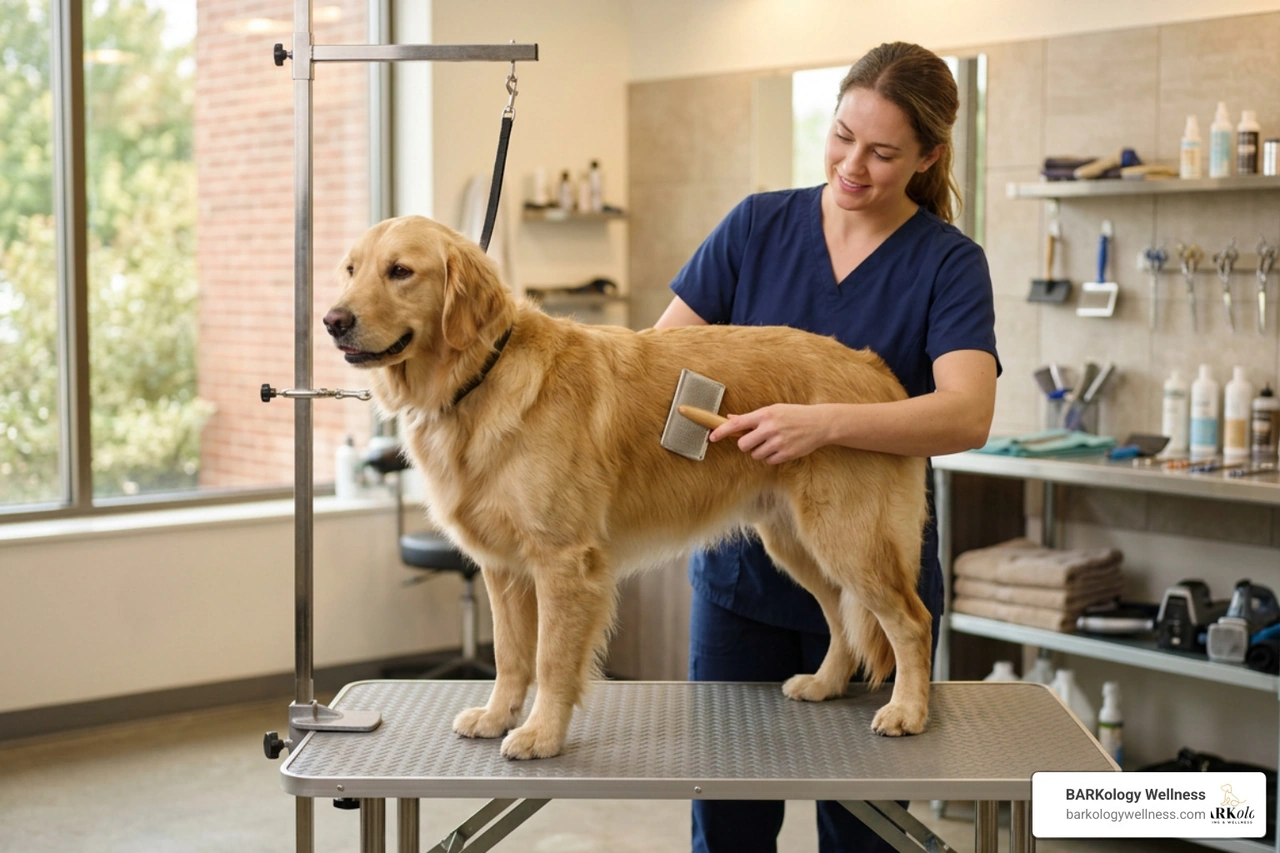
Before you begin, make sure you set up on a non-slip surface, like a rubber mat placed on a sturdy table or counter. This keeps your dog secure and prevents them from slipping or panicking. To make cleanup easier, you can lay down an old sheet to catch the inevitable "fur-nado" that will follow.
For the ultimate at-home treatment, we recommend starting with a high-quality bath. Using a specially formulated deshedding dog shampoo helps relax the hair follicles and release trapped undercoat hair during the wash. Always ensure your dog's coat is completely dry before introducing a heavy-duty deshedding brush, as wet hair is highly susceptible to stretching and breakage.
Step-by-Step Guide: How to Use a Deshedding Dog Brush Safely
To ensure a safe and effective grooming session, follow this step-by-step process:
- Physical Inspection: Before the brush ever touches your dog, run your hands over their entire body. Inspect for any scratches, hot spots, red skin, or hidden mats. Never use a deshedding tool over damaged or irritated skin.
- Pre-Detangle: Use a standard comb or slicker brush to gently work out any large knots or tangles. Trying to pull a deshedding blade directly through a tight mat will hurt your dog and damage the tool.
- Brush with the Grain: Always stroke the brush gently in the direction of hair growth.
- Light Pressure, Long Strokes: Let the weight of the tool do the work. Use long, smooth strokes. Avoid pressing down hard into the skin or repeating strokes over the exact same spot, which can cause painful brush burns.
- Sensitive Areas: Be incredibly gentle around highly sensitive areas, including the belly, legs, tail, and face. For a lightweight, palm-friendly option that reduces wrist strain on these delicate areas, an ergonomic two-tiered teeth brush is an excellent choice.
- Clean as You Go: Clear the accumulated fur from the brush teeth frequently to maintain maximum efficiency.
Brushing Frequency and Seasonal Coat Blows
Consistency is key when managing pet hair. For most double-coated dogs, a thorough 10-to-20-minute deshedding session once or twice a week is ideal. This regular maintenance keeps the undercoat clear and prevents heavy matting.
However, during seasonal "coat blows", typically in the spring as they shed their heavy winter coats, and in the autumn as they prepare to grow new ones, you may need to increase this frequency to every other day. Keeping up with this cycle is crucial for your dog's temperature regulation, ensuring they stay cool during hot Florida summers and comfortable throughout the year.
Frequently Asked Questions about Dog Shedding
Managing a shedding dog comes with plenty of questions. Here are some of the most common inquiries we hear from pet parents:
Can you use a deshedding tool on a wet coat?
As a general rule, you should avoid using blade-style deshedding tools on a wet coat. Wet hair is weaker, more elastic, and highly prone to tearing or breaking. Using a blade on damp fur can damage the healthy topcoat and pull uncomfortably on your dog's skin.
For the safest results, always bathe your pup, dry them completely with a towel or pet-safe blow dryer, and then use your deshedding brush. The only exceptions are specialized rubber curry brushes or specific rotating pin tools designed to help work shampoo through the coat during bath time.
Will a deshedding brush damage my dog's topcoat?
When used correctly, a high-quality deshedding brush will not damage your dog's topcoat. These tools are designed to slide right past the longer, coarser guard hairs and grab only the soft, loose undercoat.
However, damage can occur if you use excessive pressure, brush the same area repeatedly, or use the tool on a non-shedding breed (like a Poodle or Maltese) that does not possess an undercoat. Always choose the correct tool size and hair-length setting for your dog's specific coat.
How do I clean and maintain my deshedding tool?
To keep your grooming tools performing like new for years to come, proper maintenance is essential:
- Remove Hair: Clear out all loose fur after every grooming session.
- Wash Gently: Occasionally rinse the metal teeth with warm water and a mild soap or dog shampoo to remove skin oils and dander build-up.
- Dry Completely: Always dry the tool thoroughly with a towel to prevent any rust from forming on the stainless steel edges.
- Store Safely: Store your tool in a dry place, preferably with its protective edge guard locked in place to keep the delicate teeth from bending or chipping if dropped.
Conclusion
Taming the "fur tornado" doesn't have to be an uphill battle. Armed with the right deshedding dog brush and a consistent routine, you can easily keep your home cleaner and your dog's coat healthier.
While at-home brushing is fantastic for weekly upkeep, nothing compares to the deep, therapeutic relief of a professional undercoat treatment. At BARKology Wellness in South Tampa, FL, we offer luxury grooming services tailored to your dog's unique coat needs. Our calm, pampering environment combined with professional-grade undercoat removal techniques ensures your pup leaves looking and feeling like royalty.
If you're looking for local South Tampa pet groomers who prioritize your dog's long-term wellness, we invite you to experience the BARKology difference. Let us handle the heavy lifting of shedding season so you can enjoy a beautifully groomed pet and a hair-free home.
Ready to treat your pup? Explore our BARKology Wellness Grooming Services or check out our exclusive membership packages today!