
Why Dog Shedding Is More Than Just a Mess to Clean Up
Dog deshedding is the process of removing loose, dead fur from your dog's undercoat before it ends up on your couch, clothes, and floors. If you've ever owned a heavy shedder, you know the struggle is real.
Here's what you need to know at a glance:
- What it is: Deshedding removes loose undercoat fur using specialized tools or treatments
- Why it matters: It reduces household fur, prevents matting, and supports healthy skin and coat
- How often: Every 4 weeks is the general recommendation, more during spring and fall shedding seasons
- Key tools: Deshedding rakes, slicker brushes, rubber curry brushes, and deshedding shampoos
- Pro tip: The FURminator Undercoat deShedding Tool can reduce loose shedding fur by up to 90% with regular use
For most dog owners, shedding is simply a fact of life. No matter how much you love your dog, finding fur in your coffee is not the vibe.
But here's what many owners don't realize: the amount of fur your dog sheds at home is directly tied to how well you manage their coat. Regular deshedding doesn't just keep your home cleaner, it actively supports your dog's skin health, coat condition, and overall comfort.
Dogs shed naturally as part of a biological cycle. Shedding increases significantly in spring and fall as dogs adjust to seasonal temperature and daylight changes. Double-coated breeds, like German Shepherds, Golden Retrievers, and Huskies, shed the most and need the most attention.
The good news? With the right approach, you can dramatically cut down on the fur takeover.
I'm Nabilah Shamseddine, franchise entrepreneur and leader at BARKology Wellness, where I've built a premium grooming experience around exactly this kind of proactive, health-focused dog deshedding care. In this guide, I'll walk you through everything you need to know, from tools and techniques to professional treatments, so your dog's coat stays healthy and your home stays fur-manageable.
Understanding Dog Deshedding and Its Importance
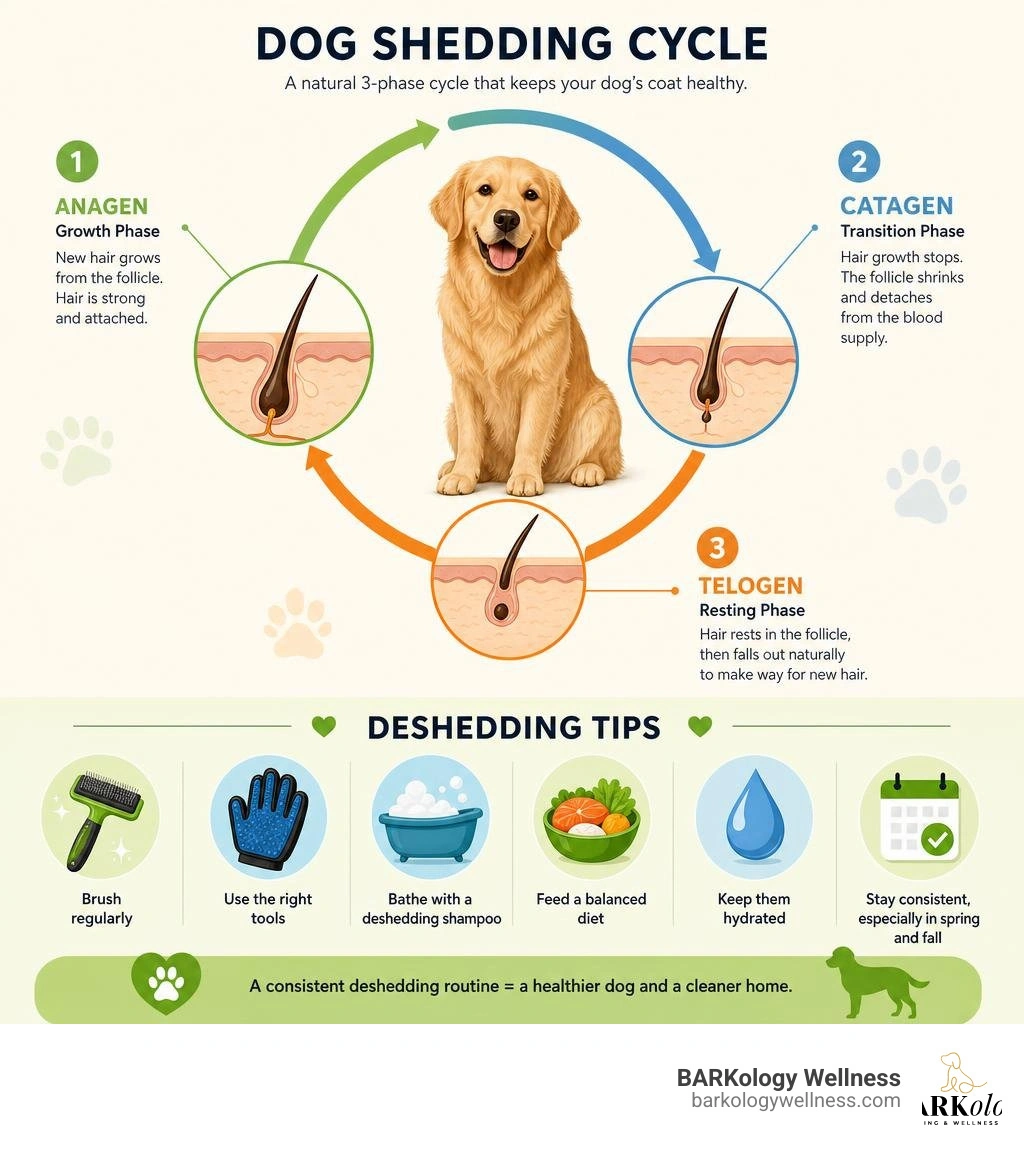
To truly conquer the mountain of loose fur in your home, you have to understand the science behind why your dog sheds in the first place. Shedding is not a random inconvenience designed to ruin your favorite black pants; it is a vital, healthy biological process.
All dogs go through a continuous four-phase hair growth and shedding cycle:
- Anagen Phase: This is the active growth phase where new hair follicles develop and grow to their genetically determined length.
- Catagen Phase: A brief transitional phase where the hair stops actively growing and the hair follicle shrinks.
- Telogen Phase: The resting phase where the hair remains intact but is no longer growing.
- Exogen (Shedding) Phase: The final stage where the old, dead hair is released from the follicle to make room for new growth.
This biological cycle is heavily influenced by environmental factors like temperature and daylight. As we enter the warmer months here in June 2026, many dogs are finishing up their heavy spring "coat blow", the process of shedding their thick winter undercoats in preparation for summer.
To manage this cycle effectively, we must look at the structure of your dog's coat. Most dogs have a two-layered coat system. The topcoat consists of stiffer, longer "guard hairs" that protect the skin from physical debris, moisture, and UV rays. Beneath this lies the undercoat, a layer of soft, dense, fluffy hair designed primarily for thermal insulation.
Proper Dog Coat Care focuses on maintaining both layers, but dog deshedding specifically targets that dense undercoat. When undercoat hairs enter the telogen phase and fall out, they often get trapped beneath the topcoat. If left unmanaged, this trapped dead hair forms tight clumps, restricts airflow to the skin, and eventually leads to painful matting.
While almost all dogs shed (with the exception of naturally hairless or single-coated hair breeds like Poodles), some are legendary for their shedding capabilities. Common high-shedding dog breeds include:
- Golden Retrievers: Famous for leaving a golden trail of soft undercoat everywhere they go.
- German Shepherds: Often jokingly referred to as "German Shedders" because of their year-round, heavy double-coat shedding.
- Siberian Huskies & Akitas: Cold-weather breeds with incredibly dense undercoats that "blow" spectacularly twice a year.
- Chow Chows & Bernese Mountain Dogs: Giant, fluffy breeds with massive volumes of undercoat.
- Dobermans: A surprising entry for many! Despite having short, single coats, Dobermans shed heavily. Because of their large surface area, they drop thousands of tiny, stiff needle-like hairs that easily weave themselves into fabric and furniture.
Brushing vs. Deshedding: What is the Difference?
Many pet parents ask us, "I brush my dog every day, so why is there still so much hair on my rug?"
The answer lies in the difference between regular brushing and dedicated deshedding. While they might look similar to the untrained eye, they serve entirely different purposes and target different layers of your dog's coat.
Regular brushing is a surface-level maintenance routine. It is designed to clear away loose dirt, remove surface debris, detangle minor knots, and smooth out the topcoat. Brushing distributes the natural oils produced by your dog's skin across the outer coat, giving it a healthy, polished shine. It is an excellent daily habit, but it rarely reaches deep enough to pull out the dead undercoat.
Dog deshedding, on the other hand, is a targeted extraction process. It goes deep beneath the topcoat to grab and pull out the dead, loose undercoat hairs before they can fall out naturally or tangle into mats. Deshedding requires specific tools and techniques that penetrate the outer guard hairs without cutting or damaging them.
| Feature | Regular Brushing | Dog Deshedding |
|---|---|---|
| Primary Target | Topcoat (guard hairs) | Undercoat (soft insulating hair) |
| Main Purpose | Detangling, smoothing, removing surface dirt, and distributing oils | Pulling out dead, loose undercoat fur before it sheds |
| Frequency | Daily to every other day | Weekly at home, or every 4 weeks professionally |
| Common Tools | Pin brushes, standard combs, soft bristle brushes | Grooming rakes, undercoat deShedding tools, rubber curry brushes |
| Impact on Shedding | Minimal impact on household fur | Reduces loose shedding hair by up to 90% |
If you only brush the surface, you are essentially leaving a thick blanket of dead undercoat trapped against your dog’s skin. Over time, this trapped hair blocks air circulation, traps moisture, and creates the perfect breeding ground for hot spots and skin infections.
Choosing the Right Tools for Different Coat Types
Using the wrong tool for your dog's coat is like trying to paint a masterpiece with a toothbrush, it is frustrating, ineffective, and can actually cause harm. To deshed safely and comfortably, you must match the tool to your dog’s specific coat length, density, and breed characteristics.

Modern high-quality deshedding tools are designed with advanced features like ergonomic handles to reduce wrist strain and built-in skin guards that prevent the metal teeth from digging into your dog’s sensitive skin. Let's break down the essential tools and how to apply them.
Essential Dog Deshedding Tools
To build a great at-home grooming kit, you should familiarize yourself with these key tools:
- Grooming Rakes: These tools feature a single or double row of rounded metal pins. They are designed to glide right through the topcoat to grab and pull out the loose undercoat. They are absolutely essential for medium-to-long double-coated dogs.
- Slicker Brushes: Standard slicker brushes feature fine, short wire bristles close together on a flat or curved surface. They are excellent for removing minor tangles and loose hair from medium-length coats.
- Rubber Curry Brushes: Made of soft, flexible rubber, these brushes are perfect for short, smooth-coated dogs. The rubber acts like a magnet for loose hair while giving your dog a soothing skin massage that stimulates blood flow and oil production.
- Deshedding Blades: Often designed as a loop of metal with small teeth, these are used to sweep away loose hair on short-to-medium coats.
- Specialized Deshedding Brushes: Innovations in pet care have brought incredible tools to the market. For instance, the De-shedding Dog Grooming Brush | Tangle Teezer uses a patented two-tiered teeth technology. The longer teeth gently reach down to extract the undercoat, while the shorter teeth collect loose hair on the surface.
- Multi-Functional Tools: The Dog Deshedding Tool | Best Dog Brush for Shedding | King Kanine (the famous King Komb) is a fan favorite with over 100,000 tools sold worldwide. It features 51 rubberized bristles for dermal stimulation and three retractable deshedding edges, making it incredibly versatile for removing hair from both your pet and your home’s upholstered furniture.
Tailoring the Method to Your Dog's Coat
To avoid "brush burn" (skin irritation caused by repetitive scraping), you must use the correct technique for your dog's coat type:
- Double-Coated Breeds (e.g., Golden Retrievers, German Shepherds): These dogs require a systematic approach. If you need to Deshed Golden Retriever coats, start with a slicker brush to clear surface tangles, then use an undercoat rake to gently pull out the dense fluff.
- Short-Haired, Dense-Coated Breeds: For medium-to-large dogs with short but dense undercoats, a specialized tool is incredibly effective. Options like the FURminator Dog XL Short Hair or the FURminator Dog M Short Hair are designed specifically to conform to your dog's natural body shape. Using a tool like the Undercoat deShedding Tool Large Dog Short Hair can reduce loose fur by up to 90% when used regularly, as its curved stainless steel edge glides smoothly over the skin without cutting the topcoat.
- Smooth-Coated Breeds (e.g., Boxers, Dobermans): Avoid harsh metal rakes. Instead, use a rubber curry brush in circular motions to loosen the short, stiff hairs, followed by a damp cloth or grooming glove to sweep them away.
The Risks of Improper Grooming and Shaving Double Coats
While regular grooming is essential, improper techniques can do more harm than good. One of the most common mistakes pet owners make is applying too much pressure. Repetitive scraping in the same spot with a metal deshedding tool can cause brush burn, a painful, red skin irritation that can easily lead to open sores and secondary bacterial infections. Always use a light hand, stroke in the direction of hair growth, and limit dry deshedding sessions to 10 to 20 minutes once or twice a week.
Why You Should Never Shave a Double-Coated Dog
When summer heat hits Florida, many well-meaning pet owners look at their fluffy dogs and think, "I should shave them to keep them cool."
Please, do not do this. Shaving a double-coated dog is one of the most damaging things you can do to their coat and overall health.
Here is why:
- Loss of Temperature Regulation: A dog’s double coat acts like home insulation. In the winter, it traps warm air close to the body. In the summer, the dense undercoat sheds out naturally, and the remaining topcoat blocks heat and sun while trapping a cool layer of air against the skin. Shaving removes this natural thermal barrier, making your dog more susceptible to heatstroke.
- Sunburn and Skin Cancer Risks: Without their protective topcoat guard hairs, your dog's pale skin is directly exposed to harsh UV rays, leading to sunburns and a higher risk of skin cancer.
- Permanent Coat Damage: When you shave a double coat, the soft undercoat grows back much faster than the slow-growing topcoat guard hairs. This causes the undercoat to crowd out the topcoat, resulting in a sticky, coarse, patchy texture that mats even easier than before. In some cases, shaving can lead to "clipper alopecia," where the hair grows back incredibly thin, a different color, or not at all.
Unless medically necessary (such as treating severe, pelted matting or skin conditions), a double-coated dog should never be shaved. Instead, a thorough dog deshedding treatment is the safest and most effective way to help them stay cool.
The Role of Diet, Bathing, and Home Remedies
Managing shedding isn't just about brushing; it is a holistic process that starts from the inside out. A healthy coat begins with proper nutrition and healthy skin.
The Power of Diet and Nutrition
If your dog's skin is dry and flaky, their hair follicles will be weak, leading to excessive, unnatural shedding. To support coat health, ensure your dog is eating a high-quality, nutrient-rich diet. Adding natural sources of Omega-3 fatty acids, such as wild-caught salmon oil, conditions the skin and strengthens hair roots.
Some classic home remedies can also help manage shedding:
- Olive Oil: Adding a single tablespoon of olive oil to your dog's food daily can help moisturize dry skin from within.
- Molasses: A teaspoon of molasses per 10 pounds of your dog's weight added to their meals can help improve coat strength.
The Wet Deshedding Bath Technique
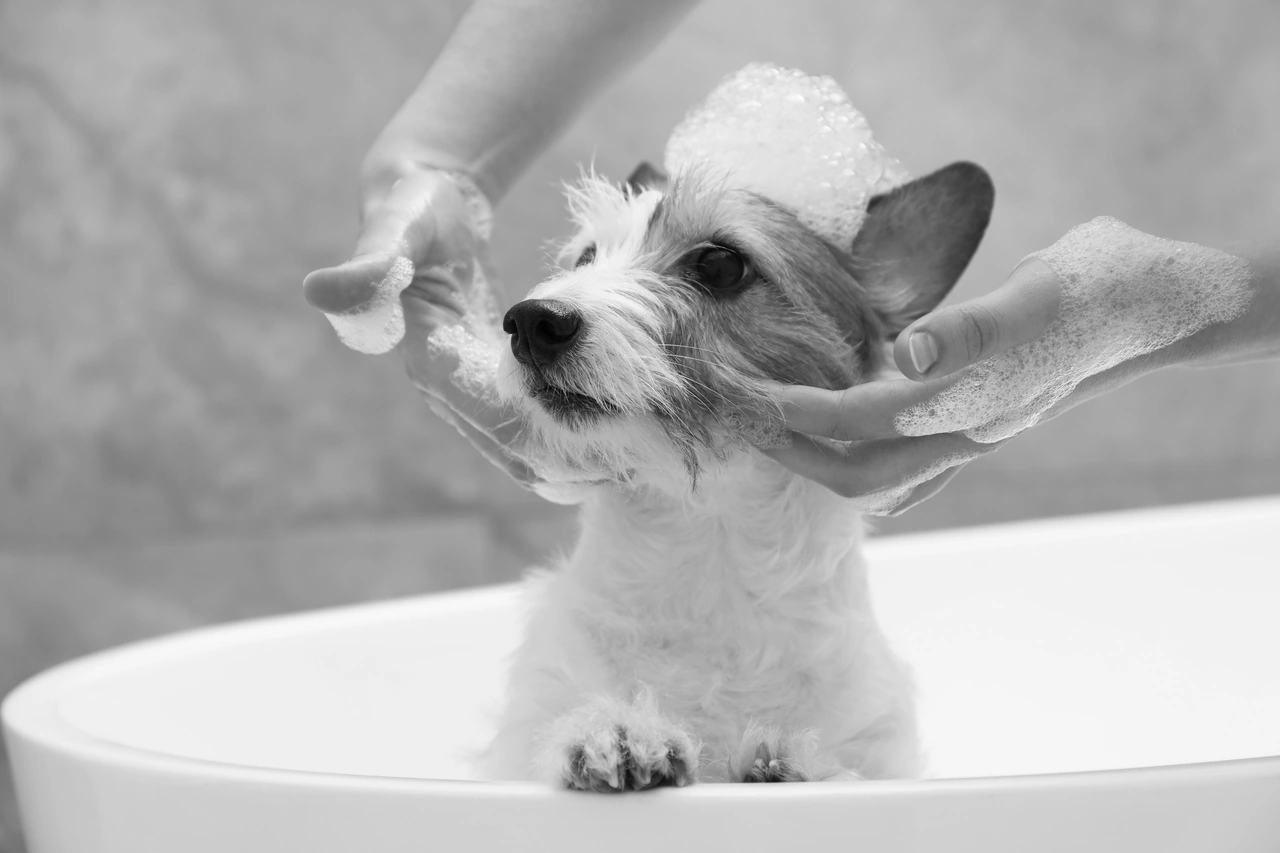
One of the best-kept secrets in professional grooming is that dog deshedding is far more effective when done wet rather than dry. When you bathe a dog, the warm water and shampoo help open up the hair follicles, releasing the trapped, dead undercoat far more easily.
At home, you can implement a wet deshedding routine:
- The Prep: Brush out any major tangles or mats while your dog is dry.
- The Wash: Apply a high-quality deshedding shampoo (such as an oatmeal-based or undercoat control formula) and work it deep into the coat down to the skin.
- The Rake: While the shampoo is still in the coat, gently run a rubber curry brush or a wet-safe slicker brush through the fur. The shampoo provides lubrication, allowing the loose undercoat to slide out smoothly without pulling or causing brush burn.
- The Condition: Apply a dedicated undercoat control conditioner. Let it sit for 5 to 10 minutes to deeply hydrate the hair shafts, making them slick and easy to extract. Rinse thoroughly.
- The Blowout: If you have a high-velocity force dryer, use it to blast the water and the remaining loose undercoat straight out of the coat. This is where the magic happens! (Just be prepared for a "fur tornado" if you do this indoors).
Professional Grooming vs. At-Home Care
While weekly at-home brushing is fantastic for maintenance, there is a limit to what you can achieve in your bathroom or backyard. Managing a heavy shedder can quickly turn into a messy, exhausting chore that leaves your home covered in a layer of flying dander.
This is where professional grooming makes all the difference. Professional salons utilize specialized high-velocity force dryers that safely blast away trapped undercoat hair that standard brushes simply cannot reach. Furthermore, professional groomers are trained to spot early signs of skin issues, hot spots, or parasites that might be hidden beneath a dense coat.
If you are looking for a top-tier Dog Groomer Tampa residents trust, BARKology Wellness in South Tampa offers a level of care that goes far beyond standard grooming. We specialize in luxury, low-stress, health-focused Dog Grooming Services Tampa pet owners rely on to keep their dogs comfortable and their homes clean.
The Benefits of Professional Dog Deshedding
When you bring your dog to BARKology Wellness, they receive a customized, royal treatment that blends science with pampering care:
- Serene, Low-Stress Environment: We prioritize your dog's emotional well-being, ensuring a calm, relaxing experience.
- Advanced Force Drying & Blowouts: We use professional high-velocity dryers to safely and thoroughly remove the packed undercoat, saving your home from the mess.
- Expert Mat Removal: Our professional groomers can safely detangle and remove tight mats without causing discomfort or skin damage.
- Complete Hygiene Maintenance: Every treatment includes nail trimming, ear cleaning, and skin checks to ensure your dog is healthy from head to paw.
Frequently Asked Questions About Dog Shedding
How often should my dog be groomed?
For heavy-shedding and double-coated breeds, we highly recommend a professional dog deshedding treatment every 4 weeks. This timeline aligns perfectly with the natural hair growth and shedding cycle, ensuring dead hair is extracted before it can compact and cause matting. For single-coated or low-shedding breeds, a standard groom every 6 to 8 weeks is usually sufficient.
Can improper grooming damage my dog's skin?
Yes, absolutely. Using the wrong tools, applying too much pressure, or brushing repeatedly in the same spot can cause painful brush burn, scratches, and sores. Always choose tools with built-in skin guards, use gentle strokes, and consult a professional if you are unsure how to handle your dog's specific coat type.
Do indoor dogs shed more than outdoor dogs?
Indoor dogs often shed consistently year-round rather than in distinct seasonal bursts. This is because indoor heating, air conditioning, and constant exposure to artificial lighting can confuse your dog's internal biological clock, causing their body to continuously cycle through the shedding phases rather than "blowing" their coat only in the spring and autumn. Hormonal changes, such as those caused by neutering, can also increase overall shedding.
Conclusion
At BARKology Wellness in South Tampa, we believe that grooming is an essential pillar of your dog's overall health and happiness. Managing a heavy shedder doesn't have to be a stressful, daily battle against flying fur. With the right tools, a healthy diet, and regular professional care, you can keep your dog's coat looking radiant, healthy, and beautifully managed.
Treat your furry companion to the ultimate pampering experience. Whether you want to book a standalone Luxury Dog Grooming session, schedule our comprehensive Full Grooming Package, or explore our convenient BARKology Wellness Grooming Memberships, we are here to provide the highest standard of care in Tampa, FL.
Ready to say goodbye to the constant fur storm?
- Explore our services: Visit BARKology Wellness Grooming to see our luxury treatment options.
- Prioritize their health: Check out our BARKology Wellness Programs for holistic pet care.
- Join our pack: Learn about our exclusive BARKology Memberships for consistent, worry-free grooming.
- Get in touch: Visit our main page at BARKology Wellness to book your dog's next spa day today!