
Why Dog Fur Care Is the Foundation of Your Pet's Health
Dog fur care is one of the most important, and most overlooked, parts of keeping your dog healthy and happy.
Quick answer: How to care for your dog's fur
| Step | What to Do | How Often |
|---|---|---|
| Brush | Match brush to coat type; work from skin outward | Daily (long/curly) to weekly (short/smooth) |
| Bathe | Use dog-formulated shampoo; lukewarm water | Every 4–12 weeks depending on coat type |
| Check skin | Look for redness, lumps, fleas, or hot spots | Every grooming session |
| Nutrition | Feed high-quality food; add omega-3 fatty acids | Daily |
| Professional grooming | Trims, hand-stripping, severe mat removal | Every 4–10 weeks by coat type |
| Deshed | Use undercoat rake during seasonal blowouts | Weekly during peak shedding |
Your dog's coat tells a story. A shiny, smooth coat usually signals good health. A dull, matted, or flaky one can be an early warning sign of nutritional gaps, parasites, or skin conditions brewing underneath.
Dogs with neglected grooming are 3 times more likely to develop skin infections and matting-related issues. And regular brushing alone can reduce shedding by up to 90% in dogs with undercoats during peak season.
Yet most owners either groom too infrequently, use the wrong tools, or apply products designed for humans, all of which can do more harm than good.
This guide covers everything: coat types, brushing techniques, bathing routines, shedding management, nutrition, and when to call in a professional.
I'm Nabilah Shamseddine, founder of BARKology Wellness, where I lead premium pet wellness and grooming services in Tampa with a focus on personalized, health-first dog fur care. My background in wellness operations and franchise development has given me a deep appreciation for how consistent, quality grooming transforms not just a dog's appearance, but their overall wellbeing.
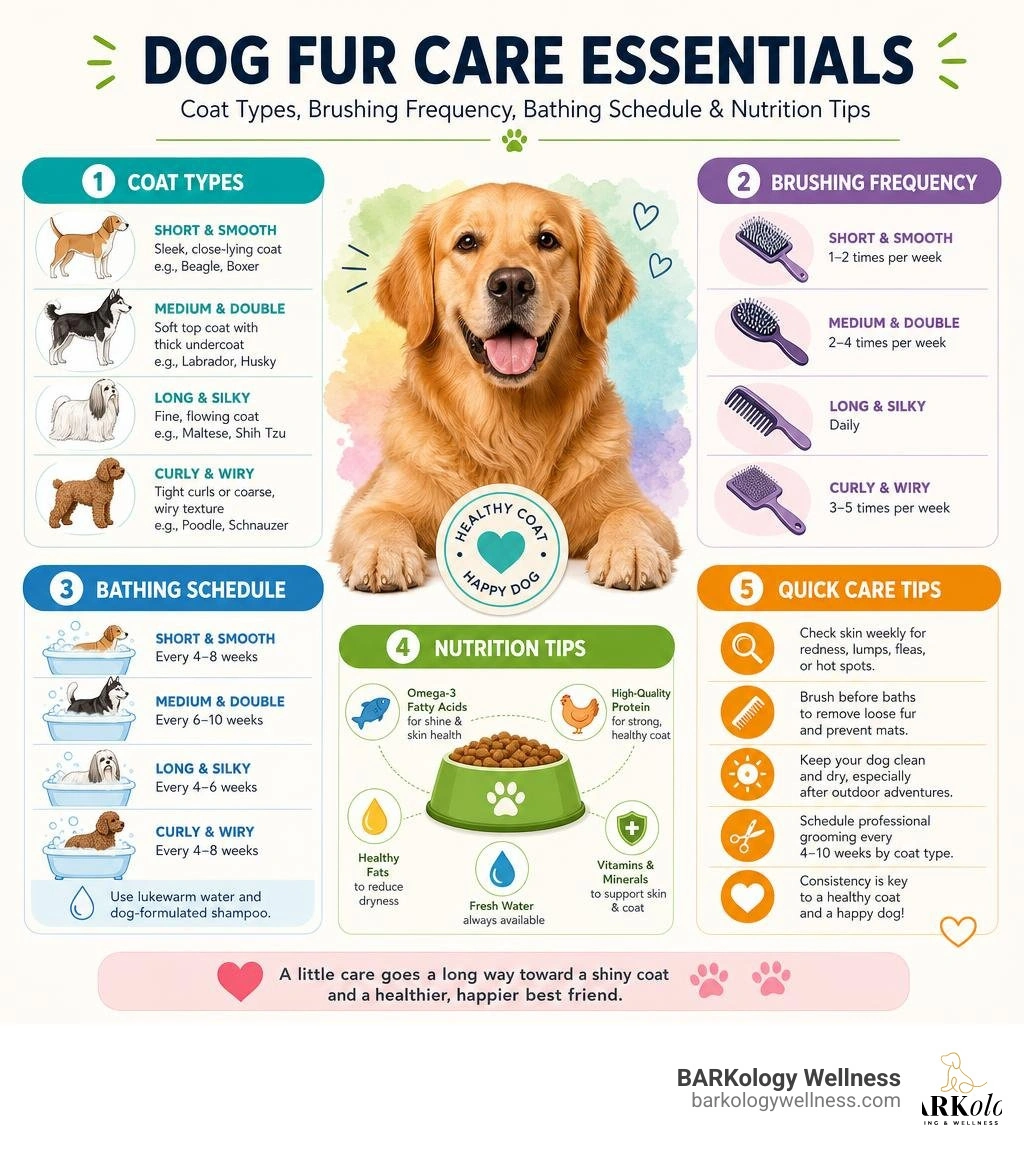
Easy dog fur care word list:
Understanding Your Dog's Coat Type
Every dog is unique, and so is their fur. Understanding your dog's specific coat type is the first step toward building an effective dog fur care routine. If you use a brush meant for a short-haired Pug on a curly-coated Goldendoodle, you will quickly find yourself dealing with a tangled, matted mess.
Let's look at how dog coats differ and what each one requires to stay healthy:
| Coat Type | Common Breeds | Primary Grooming Challenges | Recommended Brushing Frequency |
|---|---|---|---|
| Curly / Wool | Poodles, Bichon Frises, Cockapoos | Constant growth, easy tangling, painful "dreadlocks" | Daily or every other day |
| Double Coat | German Shepherds, Huskies, Golden Retrievers | Heavy seasonal blowouts, massive undercoat shedding | 2–3 times a week (daily during blowouts) |
| Smooth / Short | Boxers, Dalmatians, Staffies | Loose dead hair, skin flakes, environmental dirt | Weekly |
| Wire / Rough | Schnauzers, Border Terriers, Wire Dachshunds | Trapped dead hair, loss of texture if clipped incorrectly | Weekly |
| Long / Silky | Yorkshire Terriers, Shih Tzus, Maltese | Greasiness, matting in high-friction areas | Daily |
Tailoring Dog Fur Care to Different Coat Types
Each coat type has its own biological quirks. For instance, curly and wool coats have continuously growing hair that rarely sheds on its own. Instead, loose hairs get trapped within the curls. If left unbrushed, these trapped hairs quickly bind together to form dense, painful mats.
Double-coated breeds, on the other hand, have two distinct layers: a harsh outer coat that protects against dirt and moisture, and a soft, dense undercoat that regulates temperature. Shaving a double coat is highly discouraged because it destroys this natural insulation system and can lead to permanent damage, such as post-clipping alopecia.
Additionally, long-coated breeds often suffer from higher sebum production, which makes their fur oily and prone to trapping unpleasant odors.
No matter what breed you share your home with, tailoring your routine to their coat biology is essential. For more detailed, breed-specific advice, explore our dedicated guides on dog coat care, border collie coat care, cockapoo coat care, border terrier coat care, and cavalier king charles spaniel coat care.
Brushing Frequency and Tool Selection
Using the right tool makes all the difference. For curly and long coats, a high-quality slicker brush combined with a metal comb is essential for reaching down to the skin. Double-coated dogs require an undercoat rake to pull out the dead, fuzzy undercoat without slicing the healthy guard hairs.
For short, smooth coats, a simple rubber curry brush or grooming mitt is perfect for massaging the skin and wiping away loose hair. Wire-haired breeds benefit from regular brushing with a slicker brush, though they also require hand-stripping to remove dead, coarse hairs from the root.
To learn more about selecting and using these tools safely, check out our comprehensive guide on dog brushing.
Essential Steps for Daily Dog Fur Care
Daily grooming is more than just keeping your dog looking handsome. It is a fantastic bonding experience that builds trust and lowers stress for both of you. It also stimulates blood circulation and helps distribute natural oils across the skin, keeping the coat naturally glossy.

Line Brushing and Detangling Techniques
When brushing a dog with a medium, long, or curly coat, simply running a brush over the top layer of fur is not enough. This common mistake leaves hidden mats close to the skin. To brush effectively, we recommend a technique called line brushing.
First, part the fur with your hand or a comb to expose a line of skin. Gently brush the hair downward from that part, working from the skin outward. Move up to the next section and repeat the process. This ensures you are detangling the coat from root to tip. Always brush in the direction of hair growth first, then gently against the grain to lift out dead undercoat, and finish by brushing with the grain again to smooth it down.
For a complete step-by-step breakdown of home grooming techniques, you can refer to How to Groom Your Dog At Home: the Complete Guide .
Preventing Matting and Tangles
Mats are dense clumps of tangled fur that can pull tightly against your dog's skin, cutting off airflow and trapping moisture. In severe cases, they can restrict blood circulation and hide painful skin infections.
To prevent matting, pay special attention to high-friction areas:
- Behind the ears
- In the armpits
- Around the groin and hind legs
- Underneath the collar or harness
If you find a minor tangle, do not pull or yank on it. Instead, spray the area with a pet-safe detangling spray, or use the best detangler for poodles if you are working with curly hair. Isolate the knot, hold the base of the fur close to the skin to prevent pulling, and gently pick the knot apart from the outer edges inward using a dematting comb or the end of a slicker brush.
Bathing and Cleansing Routines
Bathing keeps your dog smelling fresh and removes accumulated dirt, pollen, and allergens. However, bathing too frequently can strip away natural oils, leaving your dog's skin dry, itchy, and prone to flaking.
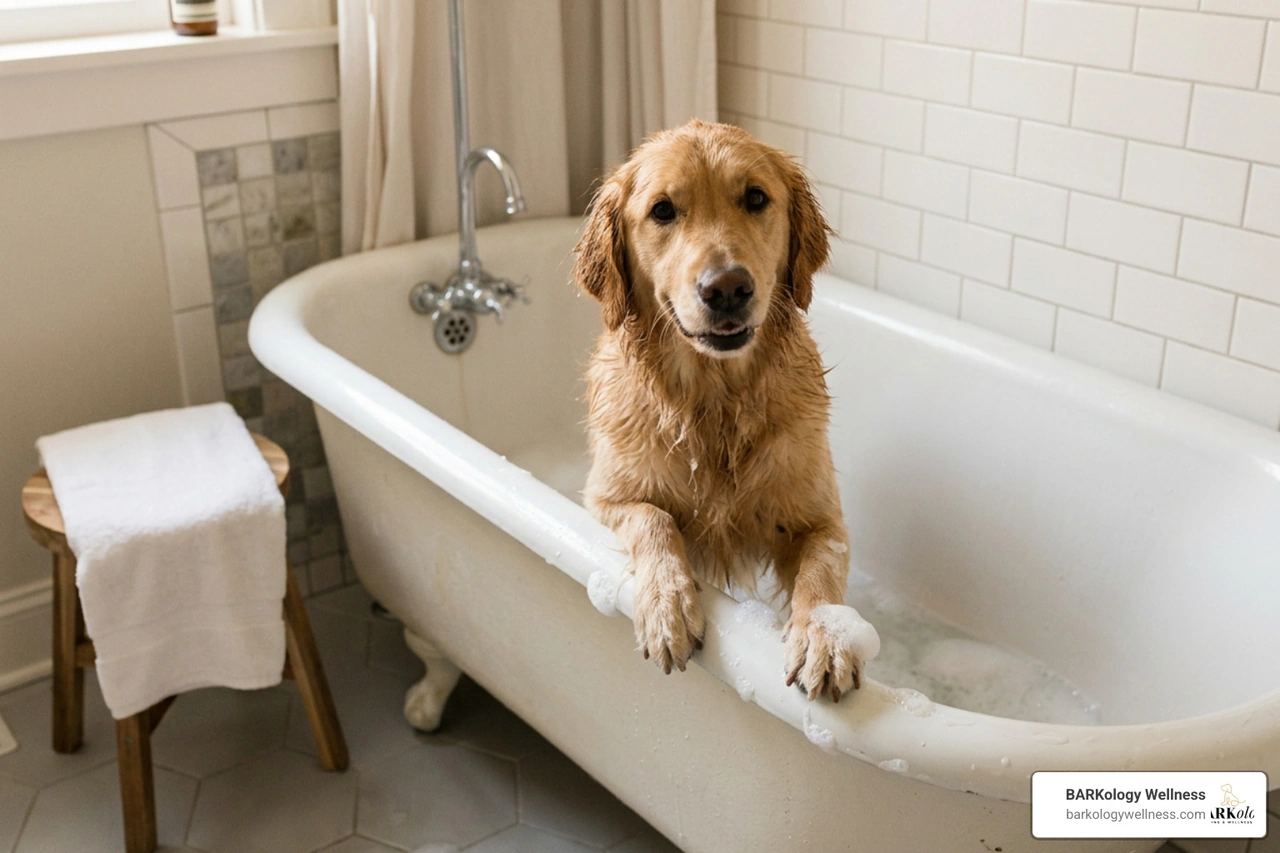
Choosing the Right Shampoo and Conditioner
The most critical rule of dog bathing is to never use human shampoo. A dog's skin has a pH level between 6.2 and 7.4, which is much more alkaline than human skin (which sits around 4.5 to 5.5). Human shampoos are highly acidic for dogs and can easily damage their natural acid mantle, leading to severe dryness, irritation, and bacterial infections.
Instead, always choose high-quality, dog-formulated shampoos. If your dog has sensitive or itchy skin, look for soothing ingredients like oatmeal or aloe vera. If you are dealing with a heavy shedder, a deshedding dog shampoo can help loosen the dead undercoat in the tub. If your pup is struggling with dry patches, read our guide on what to do when my dogs coat is dry and flaky.
Safe Bathing and Drying Techniques
To make bath time safe and stress-free, follow these simple steps:
- Brush before bathing: Always brush your dog thoroughly before getting them wet. Water acts like glue on mats, making them much tighter and harder to remove once dry.
- Protect eyes and ears: Place a sterile eye lubricant in your dog's eyes to protect them from shampoo irritation. Gently place large cotton balls in their ears to keep water out, which helps prevent painful ear infections.
- Use lukewarm water: Dogs are sensitive to temperature. Keep the water lukewarm and use a hand-held sprayer to control the flow.
- Lather and rinse thoroughly: Work the shampoo from neck to tail, leaving the head for last. Rinse extensively, dried shampoo residue is a leading cause of post-bath itching.
- Dry gently: Squeeze excess water out with a towel. If using a blow dryer, use a pet-specific dryer on a low-heat or cool setting to avoid burning your dog's sensitive skin.
For more details on professional bathing standards, check out Grooming and Coat Care for Your Dog | VCA Animal Hospitals .
Managing Seasonal Shedding and Blowouts
Shedding is a natural process where old, dead hair makes way for new, healthy growth. While some single-coated dogs shed lightly year-round, double-coated breeds experience dramatic seasonal shedding events known as "blowing their coat."
The Science of Shedding
Shedding is primarily triggered by changes in daylight and temperature. In the spring, double-coated dogs shed their heavy winter undercoat to prepare for the summer heat. In the fall, they shed their lighter summer coat to make room for a dense winter layer.
Dogs that live primarily indoors under artificial lighting and temperature-controlled environments may shed more consistently throughout the entire year. Maintaining stable home humidity levels can help minimize dry skin and reduce excessive, out-of-season shedding.
If your dog is experiencing sudden, patchy hair loss or bald spots, this is not normal shedding and should be evaluated by a veterinarian. To learn more about managing this process, read our guide on dog deshedding.
Deshedding Tools and Techniques
During blowout seasons, regular brushing is your best defense against loose hair floating around your home. Using an undercoat rake or a specialized deshedding tool can reduce shedding by up to 90% when used correctly.
Always use gentle pressure and let the tool do the work. Avoid dragging the tool over the same patch of skin repeatedly, as this can cause "brush burn" and skin irritation. For more professional tips on managing heavy shedders, read the Dog Grooming Tips | ASPCA guide.
Nutrition and Health Monitoring During Grooming
A beautiful coat starts from within. Grooming is also the perfect opportunity to perform a quick health check on your dog, helping you spot potential issues before they become serious medical problems.
Dietary Impact on Coat Health
Your dog's body uses up to 30% of its daily protein intake just to maintain its skin and coat. Feed a high-quality diet rich in real animal proteins, vitamins, and minerals.
Essential fatty acids are the secret to a glossy, radiant coat. Adding high-quality omega-3 and omega-6 fatty acids (such as salmon oil) to your dog's diet can improve coat shine and reduce dandruff in 65% of dogs within six weeks. Other key nutrients for skin health include zinc, biotin, and vitamins A and E.
Checking for Skin Issues and Parasites
As you brush, part the hair and inspect the skin underneath. Watch for:
- Parasites: Look closely for fleas, flea dirt (which looks like tiny black pepper flakes), or ticks.
- Hot Spots: Red, moist, irritated lesions that can grow rapidly if your dog licks or chews them.
- Mange or Infections: Watch for crusty patches, severe flaking, or unusual bald spots.
- Ear Infections: Check the ears weekly for redness, swelling, or a strong, yeast-like odor.
- Nails and Paws: Keep an eye on nail length. Overgrown nails can alter your dog's posture and stride, leading to joint pain and early arthritis. Trim your dog's nails every 3 to 4 weeks, or whenever you hear them clicking on the floor.
Professional Grooming and Trimming Decisions
While daily brushing and basic bathing can easily be done at home, certain coat care tasks are best left to professionals.
When to See a Professional Groomer
Professional groomers have the specialized training, high-end equipment, and patience required to handle complex grooming needs safely. You should seek a professional for:
- Severe Matting: Never attempt to cut tight mats out with scissors at home. A dog's skin is incredibly thin and elastic, and it is very easy to accidentally cut your pet. Professional groomers use specialized clippers to safely shave underneath tight mats.
- Breed-Standard Cuts: Breeds like Poodles, Schnauzers, and Spaniels require precise styling to maintain their classic looks.
- Hand-Stripping: Wire-coated breeds need dead hair plucked from the follicle to preserve the coat's natural color and wire texture.
- Sanitary and Paw Trims: Trimming the delicate hair around the eyes, groin, and paw pads requires steady hands and professional-grade shears.
When you need professional-grade care and styling in the Tampa area, we invite you to explore professional dog grooming with us. Our team is dedicated to providing a safe, stress-free experience that keeps your dog's coat healthy and beautiful.
Common Mistakes to Avoid in Dog Fur Care
To keep your dog's coat in top condition, avoid these common home grooming pitfalls:
- Shaving Double-Coated Breeds: Shaving a Husky, Golden Retriever, or German Shepherd removes their natural temperature regulation system, leaving them vulnerable to heatstroke and sunburn.
- Brushing Wet Fur: Wet hair stretches and weakens, making mats tighter and far more difficult to remove once dry. Always brush your dog when their coat is completely dry.
- Using Human Shampoo: As mentioned earlier, this disrupts their skin's natural pH, leading to irritation and infections.
- Ignoring the Undercoat: Only brushing the topcoat leaves dense mats hiding close to the skin. Use line brushing techniques to reach the root.
Frequently Asked Questions about Dog Grooming
How often should I bathe my dog?
Most dogs only need a bath every 4 to 8 weeks. However, the exact frequency depends on their coat type, activity level, and skin sensitivity. Smooth-coated dogs can often go up to 12 weeks between baths, while oily, long-coated breeds may need a bath every 4 weeks. If your dog has sensitive skin, consult your veterinarian about using a medicated shampoo on a specific schedule.
Can I use human shampoo on my dog?
No, you should never use human shampoo or baby shampoo on your dog. Human skin is much more acidic than dog skin. Using human products strips away your dog's natural acid mantle, leaving their skin dry, flaky, and highly susceptible to yeast and bacterial infections.
How do I safely remove mats from my dog's fur?
To remove a mat safely:
- Spray the area with a pet-safe detangling spray.
- Isolate the mat from the surrounding healthy hair.
- Hold the base of the fur firmly near the skin to prevent painful pulling.
- Use a dematting comb or the edge of a slicker brush to gently pick the mat apart, working from the outer ends of the hair inward toward the skin.
- If the mat is tight against the skin, do not use scissors. Seek professional help to have it safely clipped out.
Treat Your Dog to the Ultimate Wellness Experience
At BARKology Wellness in South Tampa, FL, we believe that grooming is not just about looking good, it is a vital part of your dog's preventative healthcare. We combine state-of-the-art coat science with a serene, luxury salon environment to give your pup the royal treatment they deserve.
Whether your dog needs a relaxing bath, a professional deshedding session, or a custom breed-standard trim, our expert team is here to help.
Book a luxury grooming session with us today, or explore our exclusive wellness memberships to keep your best friend feeling and looking brilliant all year round. Have questions? Visit https://barkologywellness.com to learn more about our services!