
Understanding Common Dog Groomer Health Problems
When we talk about dog groomer health problems, we have to start with the foundation: your back and legs. It is a startling reality that back pain affects approximately 85% of professional dog groomers. This isn't just a "sore muscle" here and there; it is a chronic occupational hazard stemming from spending 6 to 8 hours a day on your feet.
Standing on hard salon floors creates significant standing fatigue, which radiates from the arches of your feet up through your knees and into your lower back. When you add the weight of lifting a 60-pound Golden Retriever into a tub, you are looking at a recipe for long-term spinal issues. According to the study Hazardous Exposures Among Dog Groomers, poor body posture is one of the primary physical risks in the facility.
To combat this, we recommend two essential workplace upgrades:
- Anti-fatigue mats: These provide a cushioned surface that reduces the impact on your joints.
- Adjustable grooming tables: Stooping over a table that is too low is the fastest way to ruin your posture. Electric or hydraulic tables allow you to bring the dog to your level, rather than you bending to theirs.
| Feature | Manual/Static Tables | Electric/Hydraulic Tables |
|---|---|---|
| Height Adjustment | Fixed or difficult to change | Smooth, foot-pedal operated |
| Back Strain | High (due to stooping) | Low (adjustable to eye level) |
| Lifting Requirement | Must lift every dog | Lowers to floor for large dogs |
| Stability | Generally stable | Very stable with heavy bases |
Respiratory Risks and the Reality of Groomer’s Lung
One of the most discussed yet misunderstood dog groomer health problems is a condition colloquially known as "Hairy Lung," or more formally, Groomer's Lung. This is a form of hypersensitivity pneumonitis, an inflammation of the lung tissue caused by inhaling tiny, sharp particles of pet hair, dander, and dried skin.
Research indicates that the mean respirable dust exposure among dog groomers is approximately 0.14 mg/m³. While that might sound like a small number, these microscopic particles can travel deep into the lungs, where they can cause permanent scarring over time. Unlike a cold that goes away, the damage from Groomer's Lung can be lifelong.
Symptoms often include:
- Persistent, dry coughing
- Chest tightness or "heaviness"
- Shortness of breath during minor exertion
- Chronic fatigue
Exposure to certain chemicals can also trigger these issues. For example, pyrethrin, an insecticide often found in flea and tick shampoos, has been linked to respiratory irritation and asthma flare-ups. To manage these risks, as detailed in Groomer’s Lung: What You Need to Know & How to Cope, it is vital to use high-quality personal protective equipment (PPE).
We suggest installing HEPA filtration systems and using specialized hair control tools like the Clipper Vac, which sucks away hair at the source before it can become airborne. At the very least, wearing a fitted N95 or high-quality cloth mask during de-shedding and drying sessions is a non-negotiable step for your long-term health. You can find more about the mechanics of this condition in All About Groomer's Lung.
Preventing Musculoskeletal Injuries and Repetitive Strain
Managing Repetitive Strain and Carpal Tunnel
If your back is the foundation of your career, your hands are the tools of the trade. Unfortunately, the repetitive motion of scissoring, clipping, and brushing can lead to carpal tunnel syndrome. This occurs when the median nerve, which runs from your forearm into the palm of your hand, becomes compressed at the wrist.
Common signs of repetitive strain include tingling in the fingers, weakness when gripping shears, and a dull ache in the wrist that worsens at night. To protect your hands, we recommend investing in ergonomic shears. These are designed with offset handles and swivel thumbs to keep your wrist in a neutral position, reducing the "cranking" motion that leads to tendonitis.
Taking regular breaks to perform stretching exercises, like "the prayer stretch" or wrist circles, can significantly improve blood flow and nerve health. For those looking to optimize their workflow while staying healthy, you can find more info about grooming services that prioritize professional techniques.
Ergonomic Workplace Adjustments
Beyond just your wrists, your shoulders and hips are also at risk. Many dog groomer health problems start with how we handle the animals. Never attempt to lift a large or struggling dog alone. Proper lifting techniques, using your legs, not your back, are essential.
Maintaining your equipment is also a form of ergonomic protection. Dull clipper blades and stiff shears require more force to use, which increases the strain on your joints. As noted in Occupational Hazards for Dog Groomers Health Risks, regular tool maintenance and choosing lightweight equipment can prevent shoulder impingement and chronic joint pain.
Protecting Your Senses: Hearing, Vision, and Skin Health
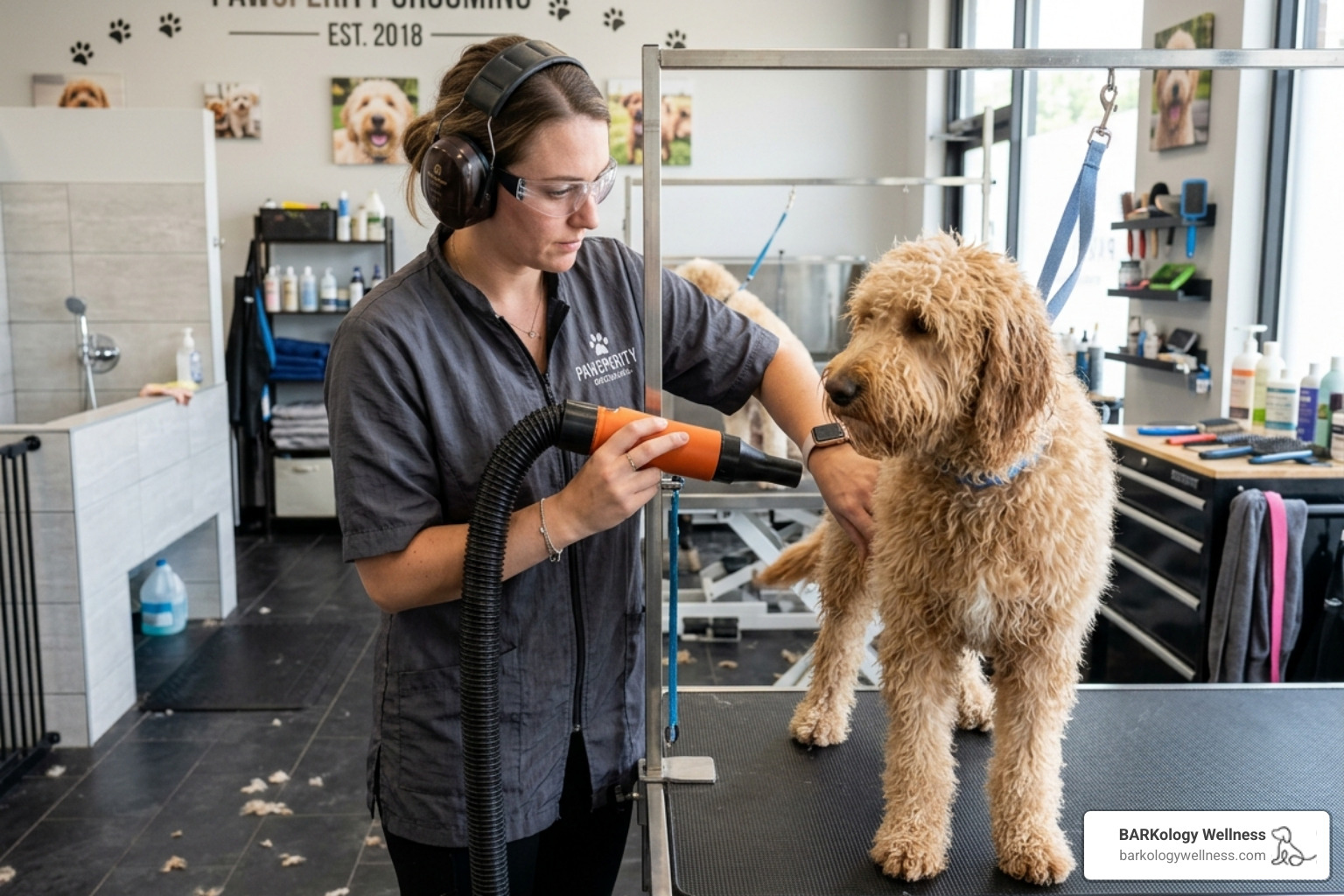
Grooming is a sensory-heavy job, and your ears, eyes, and skin often take the brunt of the environment.
Hearing Health: High-velocity dryers are amazing for getting a coat bone-dry, but they frequently exceed 85 decibels. Prolonged exposure to this noise level, combined with the "white noise" of the salon and the occasional barking dog, can lead to permanent hearing loss or tinnitus (ringing in the ears). Always wear ear defenders or high-quality earplugs when the dryers are running.
Vision Protection: Have you ever had a "hair splinter" in your eye? It’s as painful as it sounds. Flying hair, nail clippings, and splashes of shampoo can cause corneal ulcers or abrasions. Safety goggles or wrap-around glasses are your best defense against these sudden injuries.
Skin Health: Constant exposure to water and various shampoos can strip the natural oils from your hands, leading to contact dermatitis or eczema. This makes your skin crack, itch, and bleed, which also increases your risk of infection. To prevent this, we recommend:
- Using barrier creams before starting your shift.
- Wearing waterproof gloves during the bathing process.
- Applying high-quality, professional-grade moisturizers immediately after drying your hands.
For a deeper dive into these sensory risks, check out 9 Common Health Risks for Dog Groomers and How to Prevent Them.
Managing Animal-Related Injuries and Zoonotic Risks

No matter how much we love our furry clients, they can be unpredictable. Bites and scratches are some of the most immediate dog groomer health problems we face. Understanding canine body language, recognizing the subtle lip curl, the stiffened tail, or the "whale eye", is your first line of defense.
Beyond the physical injury of a bite, there is the risk of zoonotic diseases. These are infections that jump from animals to humans. Common risks in a grooming environment include:
- Ringworm: A fungal infection easily spread through skin-to-skin contact.
- Leptospirosis: A bacterial disease often spread through contact with infected urine.
- Sarcoptic Mange: Tiny mites that can cause temporary, itchy rashes on humans.
Hygiene is paramount. Tools must be disinfected with medical-grade cleaners between every single dog. We also recommend that all groomers stay up to date on their tetanus shots. If you do get bitten or scratched, wash the wound immediately with soap and water and seek medical attention if there are signs of redness or swelling. You can find more info about wellness and how a clean environment protects both pets and people on our site.
Mental Wellness: Combating Stress and Burnout
We often focus so much on the physical dog groomer health problems that we forget about the mental ones. Compassion fatigue and burnout are very real in this industry. Dealing with anxious pets who don't want to be groomed, coupled with high client expectations and the physical toll of the job, can lead to emotional exhaustion.
To maintain a long career, you must set boundaries. This includes:
- Scheduling limits: Don't overbook yourself. Quality over quantity ensures you have the energy to handle difficult dogs safely.
- Work-life balance: Leave the salon at the salon. Engage in hobbies that don't involve animals to give your "compassion battery" time to recharge.
- Professional support: Talk to your peers. Often, just knowing that others share your frustrations can alleviate the feeling of being overwhelmed.
Self-care isn't just a buzzword; it’s a career-preservation strategy. Whether it’s a monthly massage to help with your back pain or a dedicated "quiet hour" after work, prioritize your mental health as much as your physical safety.
Frequently Asked Questions about Dog Groomer Health Problems
What is the most common dog groomer health problem?
The most widespread issue is musculoskeletal pain, specifically back and neck strain. This is followed closely by repetitive strain injuries like carpal tunnel syndrome. Because grooming requires both long hours of standing and fine motor skills with the hands, these two areas are the most vulnerable.
How can I prevent Groomer's Lung?
The best prevention is a multi-layered approach: use a fitted N95 mask during high-dust activities (like de-shedding or drying), ensure your salon has excellent ventilation with HEPA air purifiers, and use vacuum systems like the Clipper Vac to remove hair before it enters your breathing zone.
Are dog groomer health problems permanent?
Some can be, but many are preventable or manageable with early intervention. While Groomer's Lung can cause permanent scar tissue, and chronic carpal tunnel may require surgery, most issues like back pain and skin irritation can be reversed or significantly reduced with proper ergonomics and protective gear. The key is to start these habits before you feel the pain.
Conclusion
At BARKology Wellness, we believe that the best grooming results come from professionals who are at the top of their game, both physically and mentally. By understanding the common dog groomer health problems and implementing these safety tips, you aren't just protecting your health; you are ensuring that you can continue doing the work you love for years to come.
Whether you are working in South Tampa or anywhere else in the industry, your well-being is the engine that drives your success. We prioritize a health-first approach in everything we do, blending science with care to create a sustainable environment for everyone.
Ready to experience a different kind of grooming environment? Join our membership for royal treatment and see how we prioritize wellness for every dog and every professional on our team.