
When Grooming Feels Scary: Understanding Dog Grooming Anxiety
Dog grooming anxiety is one of the most common challenges pet owners face, and it's more manageable than you might think. Here's a quick overview:
How to manage dog grooming anxiety:
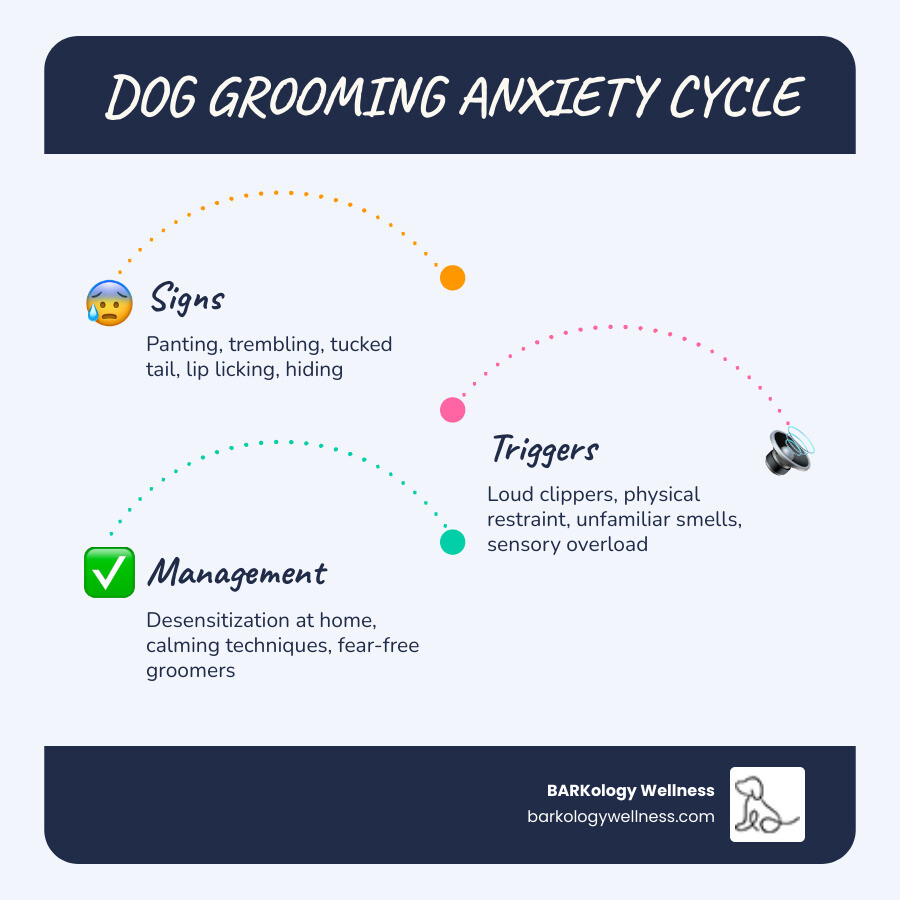
- Recognize the signs, panting, trembling, tucked tail, hiding, or lip licking
- Desensitize at home, gradually introduce tools, sounds, and handling with treats
- Choose the right groomer, look for cage-free, fear-free certified professionals
- Use calming techniques, exercise before grooming, pheromone therapy, or aromatherapy
- Seek professional help, consult your vet if anxiety is severe or leads to aggression
Grooming is essential for your dog's health, it prevents matting, ear infections, overgrown nails, and more. But for many dogs, it's anything but relaxing.
Think about it from your dog's perspective: a stranger handles their most sensitive areas, loud clippers buzz near their ears, and unfamiliar smells fill the air. As one groomer put it, "It's a big ask, we're essentially a stranger grabbing them, putting them in a bathtub, making loud noises around them."
That reaction your dog has? It makes complete sense.
The good news: with the right approach, grooming can go from dreaded to doable, and even enjoyable.
I'm Nabilah Shamseddine, franchise entrepreneur and leader at BARKology Wellness, where delivering premium, stress-free experiences for dogs is at the heart of everything we do. My background building wellness-focused brands has given me a deep understanding of how to address dog grooming anxiety with both compassion and consistency.
Introduction
At BARKology Wellness, we believe that grooming should be a royal treatment, not a traumatic ordeal. However, we recognize that for many of our furry neighbors in South Tampa, a trip to the salon feels less like a spa day and more like a "perfect storm" of scary stimuli.
Maintaining your dog's hygiene is a cornerstone of their overall health. Regular grooming prevents painful matting, reduces the risk of ear infections, and ensures their nails don't grow so long that they cause joint issues or postural changes. Yet, when dog grooming anxiety enters the picture, many owners find themselves caught in a difficult cycle. The dog becomes stressed, the owner becomes stressed, and the grooming tasks get delayed, leading to more intensive (and potentially uncomfortable) sessions later on.
Managing this stress is about more than just "getting through it." It’s about breaking the cycle of fear and replacing it with trust. By understanding why our dogs feel the way they do, we can implement strategies that prioritize their mental well-being alongside their physical cleanliness.
Understanding Dog Grooming Anxiety: Signs and Triggers
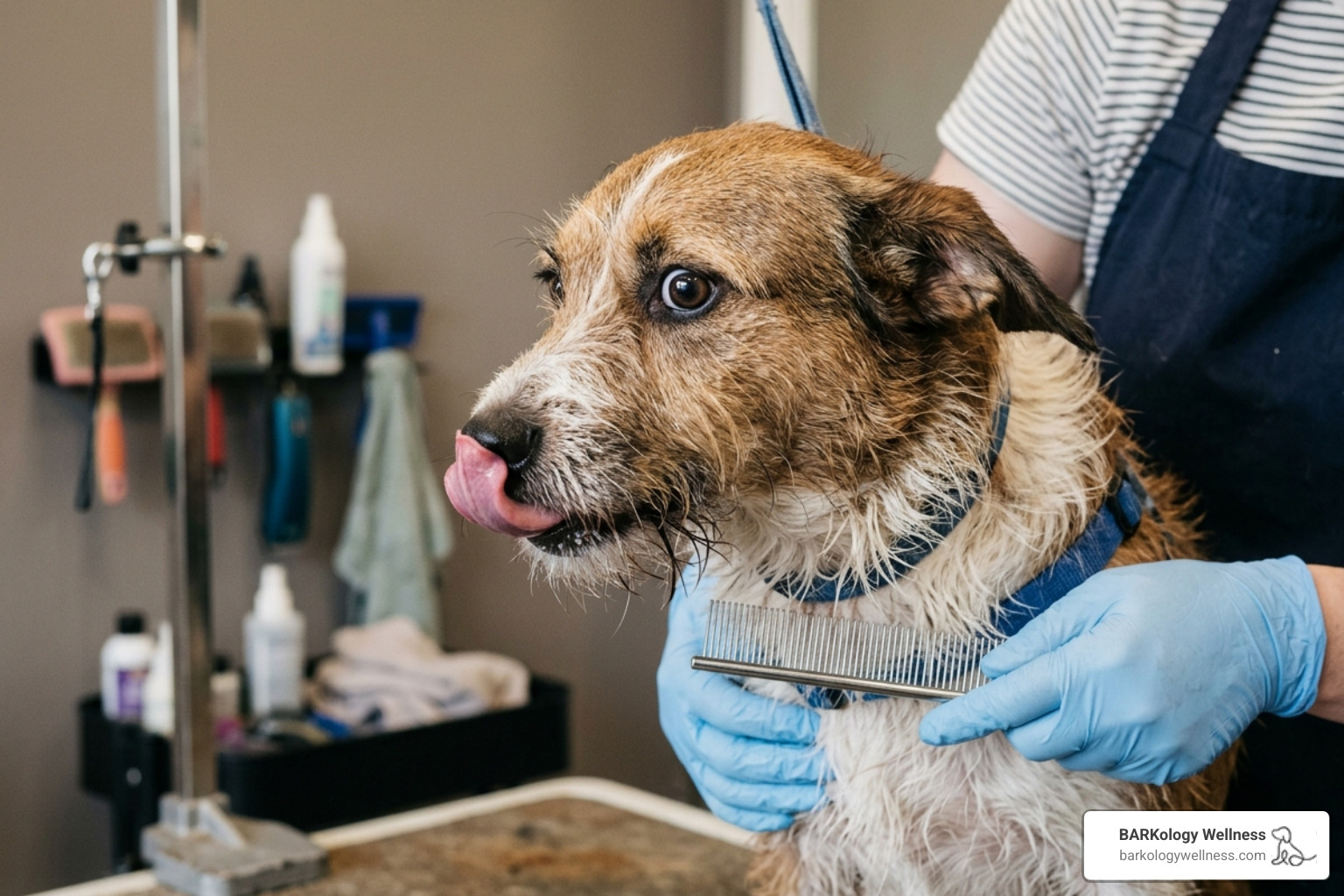
To help our dogs, we must first speak their language. Dogs are masters of subtle communication, and dog grooming anxiety often manifests in physical cues long before a dog resorts to growling or snapping.
Common Signs of Stress
- Lip Licking and Yawning: If your dog isn't hungry or tired, these are classic "displacement" behaviors used to self-soothe in uncomfortable situations.
- Excessive Panting: Even in a climate-controlled room, a stressed dog may pant heavily or salivate excessively.
- Trembling or Shaking: This is a clear physiological response to adrenaline and fear.
- Tucked Tail and Flattened Ears: These signs indicate a dog is trying to make themselves smaller and feels vulnerable.
- "Whale Eye": This is when you can see the whites of a dog's eyes because they are scanning the environment for threats while keeping their head still.
Frequent Triggers
Understanding the why behind the worry is crucial. Most dog grooming anxiety stems from a combination of the following:
- Sensory Overload: Grooming salons are hives of activity. The high-pitched whine of blow dryers, the vibration of clippers, the scent of other stressed animals, and the feeling of high-velocity water can overwhelm a dog's sensitive nervous system.
- Physical Restraint: Dogs are "cursorial" animals, meaning their primary defense is to run away. Being tethered on a grooming table or held firmly for a nail trim removes their flight option, which can trigger a "fight" or "freeze" response.
- Past Trauma: A single negative experience, like a "quicked" nail (cutting into the blood vessel) or a painful de-matting session, can create a lasting negative association.
- Separation Anxiety: For some dogs, the stress isn't about the bath itself, but the fact that their "safe person" has left them in an unfamiliar place with strangers.
Identifying Severe Dog Grooming Anxiety
It is important to distinguish between "normal" nervousness and severe anxiety. A nervous dog might be hesitant but can be redirected with a high-value treat. A dog with severe anxiety has moved past the "thinking" brain and into a purely reactive state.
Signs of Severe Anxiety:
- Vocalization: Intense whining, howling, or barking that doesn't stop.
- Escape Attempts: Frantic clawing at crates or trying to leap off grooming tables.
- Defensive Behavior: Growling, lunging, or air-snapping to keep the groomer away.
- Physiological Distress: Some dogs may experience stress-induced diarrhea or vomiting during or immediately after a session.
| Feature | Normal Nervousness | Severe Anxiety |
|---|---|---|
| Response to Treats | Will still take and eat a treat | Refuses even high-value treats |
| Body Language | Slightly tucked tail, occasional lip licking | Trembling, rigid posture, frantic eyes |
| Recovery Time | Bounces back once the task is over | May remain "shut down" or hyper-vigilant for hours |
| Safety Risk | Low; mostly fidgety | High; potential for defensive biting |
Home Preparation: Desensitizing Your Dog to Grooming
The work of a stress-free groom actually begins in your living room. Desensitization is the process of gradually exposing your dog to a scary stimulus at a level so low they don't react, then slowly increasing the intensity as they build confidence.
Handling Drills
Many dogs are sensitive about their paws, ears, and "undercarriage" because these are vulnerable areas. We recommend "handling drills" that last only 30–60 seconds, performed 3–5 times a day.
- The Paw Touch: Touch a paw, give a treat. Gradually work up to holding the paw, then touching each individual toe, always pairing the touch with a reward.
- Ear Cleaning Prep: Gently lift the ear flap and reward. This prepares them for the sensation of ear cleaning solutions or hair plucking.
Tool and Sound Introduction
Don't wait until the grooming appointment to show your dog the tools.
- Visual Exposure: Leave the brush or clippers (turned off) near their food bowl so they associate the object with something positive.
- Sound Desensitization: Use an electric toothbrush to mimic the sound and vibration of clippers. Turn it on at a distance while your dog is playing or eating, and slowly move it closer over several days. You can also find recordings of salon sounds online to play at low volumes during mealtime.
The Role of Positive Reinforcement in Dog Grooming Anxiety
Positive reinforcement is the most powerful tool in our kit. Rather than punishing a dog for being afraid (which only confirms their fear), we want to "counter-condition" them. This means changing their emotional response from "Oh no, a brush!" to "Yay, a brush means chicken!"
- High-Value Treats: Use something your dog loves, think boiled chicken, string cheese, or peanut butter, reserved exclusively for grooming tasks.
- Predictor Words: Use cues like "ears" or "paws" before touching those areas. This gives your dog a sense of control because they know what is coming next.
- Patience is Key: If your dog shows signs of stress, back up a step. Forcing them through it will only cause a setback.
For more tips on maintaining your dog's overall well-being between visits, explore our wellness services.
Professional Solutions for Canine Stress
When you choose a professional, the environment matters just as much as the skill of the groomer. Traditional high-volume salons can be loud and chaotic, which is why we advocate for a different approach.
Cage-Free Environments and One-On-One Care
At BARKology Wellness, we prioritize a serene environment. High-volume salons often use cages for drying or waiting, which can escalate dog grooming anxiety, especially for dogs with separation issues.
- One-on-One Care: This ensures your dog has the groomer's undivided attention. There are no other barking dogs or ringing phones to distract from the task of keeping your pet calm.
- Custom Pace: A professional experienced with anxious dogs will recognize when your pup needs a "cuddle break" or a moment to sniff around and reset.
Fear-Free Principles
Look for professionals who understand Fear-Free or low-stress handling techniques. These certifications train groomers to recognize the earliest signs of stress and use environmental modifications, like non-slip mats, calming pheromones, and specialized equipment, to keep the experience positive. You can learn more about our philosophy on our grooming services page.
Choosing a Groomer for Dog Grooming Anxiety
Don't be afraid to interview your groomer! A good professional will welcome your questions.
- Experience Levels: Ask specifically about their experience with nervous or fearful dogs.
- Salon Tours: Visit the facility. Is it clean? Is the noise level manageable? Does the staff seem calm and patient?
- Communication: Provide the groomer with a "cheat sheet" of your dog's triggers (e.g., "hates the blow dryer," "sensitive about the back left paw").
- Trial Visits: Ask if you can schedule a "Happy Visit." This is a 10-minute appointment where your dog simply walks in, gets a few treats and pets from the groomer, and leaves. This builds a positive association with the building itself.
Breed-Specific Factors and Sensory Sensitivities
Not all dog grooming anxiety is created equal. Different breeds have different biological "hard-wiring" that affects how they perceive grooming.
- Brachycephalic Breeds (Pugs, Bulldogs, Shih Tzus): These dogs have shortened airways. Stress can cause them to overheat or struggle for breath more quickly than other breeds. They require extra-cool water, shorter sessions, and minimal restraint around the neck.
- Double-Coated Breeds (Huskies, Goldens): These dogs often have intense "undercoat" blowing sessions. If they aren't brushed regularly at home, the de-shedding process can be long and physically tiring, leading to irritability.
- Herding Breeds (Border Collies, Shepherds): These dogs are bred to be hyper-aware of movement and sound. The sudden movements of a groomer or the high-pitched sounds of equipment can trigger their "alert" instinct.
- Small Breeds (Yorkies, Chihuahuas): Their small size makes the world (and the grooming table) look very big. They may feel more vulnerable when being handled by a stranger.
- Age-Related Sensitivity: Senior dogs may have arthritis or cognitive dysfunction. Standing for long periods can be painful, which they may express through grumpiness or anxiety.
Effective Techniques for Calming Dogs During Grooming
Beyond training and environment, there are several "hacks" we use to lower the stress threshold during the groom itself.
Pre-Grooming Exercise
A tired dog is a calmer dog. Take your pup for a long walk or a vigorous play session about 30 minutes before their appointment. This helps burn off excess adrenaline and pent-up energy, making them more likely to settle on the table.
Pheromone and Aromatherapy
- Pheromones: Synthetic "Dog Appeasing Pheromones" (DAP) mimic the scents a mother dog produces to calm her puppies. These can be used as sprays or diffusers in the grooming area.
- Aromatherapy: Lavender essential oil (properly diluted and dog-safe) has been shown in veterinary research to reduce travel and grooming stress in canines.
Specialized Equipment
- Happy Hoodies/Calming Wraps: These fabric tubes fit over a dog's ears to muffle the terrifying roar of the blow dryer.
- Anti-Slip Mats: Many dogs panic because they feel unstable on a slick grooming table. Using a rubber mat provides better traction and confidence.
- Muzzle Training: If a dog is a "fear-biter," a basket muzzle can actually lower their stress. It prevents them from successfully biting, which allows the groomer to move calmly and confidently, which in turn calms the dog. Note: Muzzles should always be introduced positively with treats at home first.
Post-Grooming Recovery
The "stress hormone" cortisol can stay in a dog's system for 24 to 72 hours. After a grooming session:
- Keep it Quiet: Avoid the dog park or big parties immediately after grooming.
- Reward the Bravery: Give them a special "jackpot" treat when you get home.
- Observe: Watch for any signs of lingering stress, such as hiding or changes in appetite.
Medication Options
In cases of severe dog grooming anxiety, behavior modification alone may not be enough. If your dog is a danger to themselves or the groomer, consult your veterinarian. They may prescribe "event-based" medications (like Trazodone or Gabapentin) to be given a few hours before the groom. These aren't meant to "knock the dog out," but rather to take the edge off their fear so they can actually learn that they are safe.
Frequently Asked Questions about Dog Grooming Anxiety
When should I consider professional help or medication?
If your dog's anxiety leads to aggression (growling, snapping, biting), or if they are so panicked they risk injuring themselves (trying to jump off high surfaces), it's time to call in the experts. A veterinary behaviorist can help create a long-term plan, and your regular vet can discuss whether pharmaceutical support is appropriate. Medication is often a "bridge" that allows training to become effective.
What are the most common triggers for grooming-related stress?
The "Big Three" are usually the blow dryer (noise and air pressure), nail trimming (pressure on the nail and foot handling), and the high-velocity water in the bath. Separation from the owner and the presence of other barking dogs also rank highly. Identifying which of these bothers your dog most allows you to work on targeted desensitization.
Conclusion
At BARKology Wellness, we know that your dog is a member of the family, and their emotional health is just as important as their physical appearance. Overcoming dog grooming anxiety isn't an overnight process, it requires consistency, patience, and a "team" approach between you and your groomer.
By starting with small, positive steps at home and choosing a professional environment that prioritizes peace over profit, you can transform grooming from a source of dread into a routine part of your dog's wellness journey. Every dog is an individual; what works for a nervous Yorkie might be different for a sound-sensitive Shepherd.
We invite our South Tampa community to "Paws and Reflect" on their current grooming routine. If you're looking for a partner in your dog's care who understands the science of stress and the art of pampering, we are here to help.
Learn more about our memberships to see how regular, low-stress visits can help your dog become a confident, happy spa-goer for life.