
Why So Many Dogs Dread Grooming (And What You Can Do About It)

Dog grooming for anxious dogs is one of the most common challenges pet owners face, and you're far from alone in dealing with it.
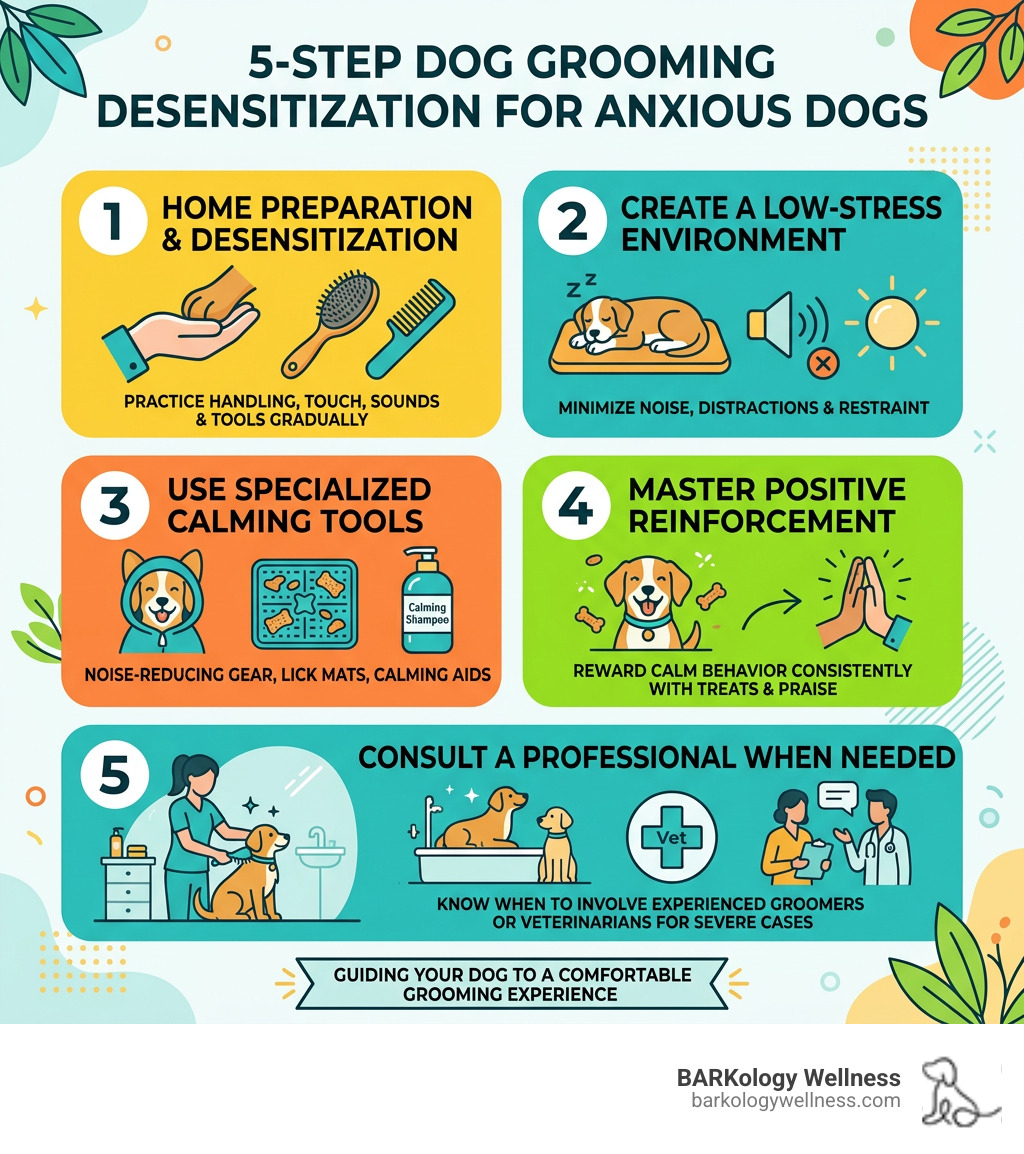
Here's a quick overview of the 5-step approach covered in this guide:
- Home preparation and desensitization, Practice handling, sounds, and tools at home before any salon visit
- Create a low-stress environment, Minimize noise, distractions, and restraint during grooming
- Use specialized calming tools, Noise-reducing gear, calming shampoos, lick mats, and more
- Master positive reinforcement, Reward calm behavior consistently with treats and gentle handling
- Consult a professional when needed, Know when to involve a vet or experienced groomer for severe cases
Think of it like going to the dentist as a kid. Even if nothing bad happened, the sounds, the smells, and the strangers touching your face were enough to make it terrifying. For many dogs, a trip to the groomer feels exactly like that.
The numbers back this up. Around 70% of dogs display some form of anxiety, and roughly 40% show stress specifically during grooming sessions. That's not a small problem, it's a widespread one that deserves a real, thoughtful approach.
Grooming environments hit dogs with a wave of unfamiliar sensations all at once: buzzing clippers, rushing water, loud dryers, and being handled by strangers. For a dog already prone to anxiety, that sensory overload can quickly spiral into panic.
The good news? With the right steps, most anxious dogs can learn to tolerate, and even enjoy, grooming.
I'm Nabilah Shamseddine, founder of BARKology Wellness, where I've built a premium, health-first approach to pet care that puts every dog's comfort at the center of the experience. My background in wellness, individualized coaching, and client-centered service directly shapes how we approach dog grooming for anxious dogs, because we believe a great grooming experience should feel like a spa day, not a stressor.
Understanding the Signs and Causes of Grooming Stress
Before we can fix the fear, we have to understand what it looks like and where it comes from. Dogs don't have words to tell us they are overwhelmed, but their bodies speak volumes. When we talk about dog grooming for anxious dogs, the first step is becoming fluent in "dog."
Reading Canine Body Language
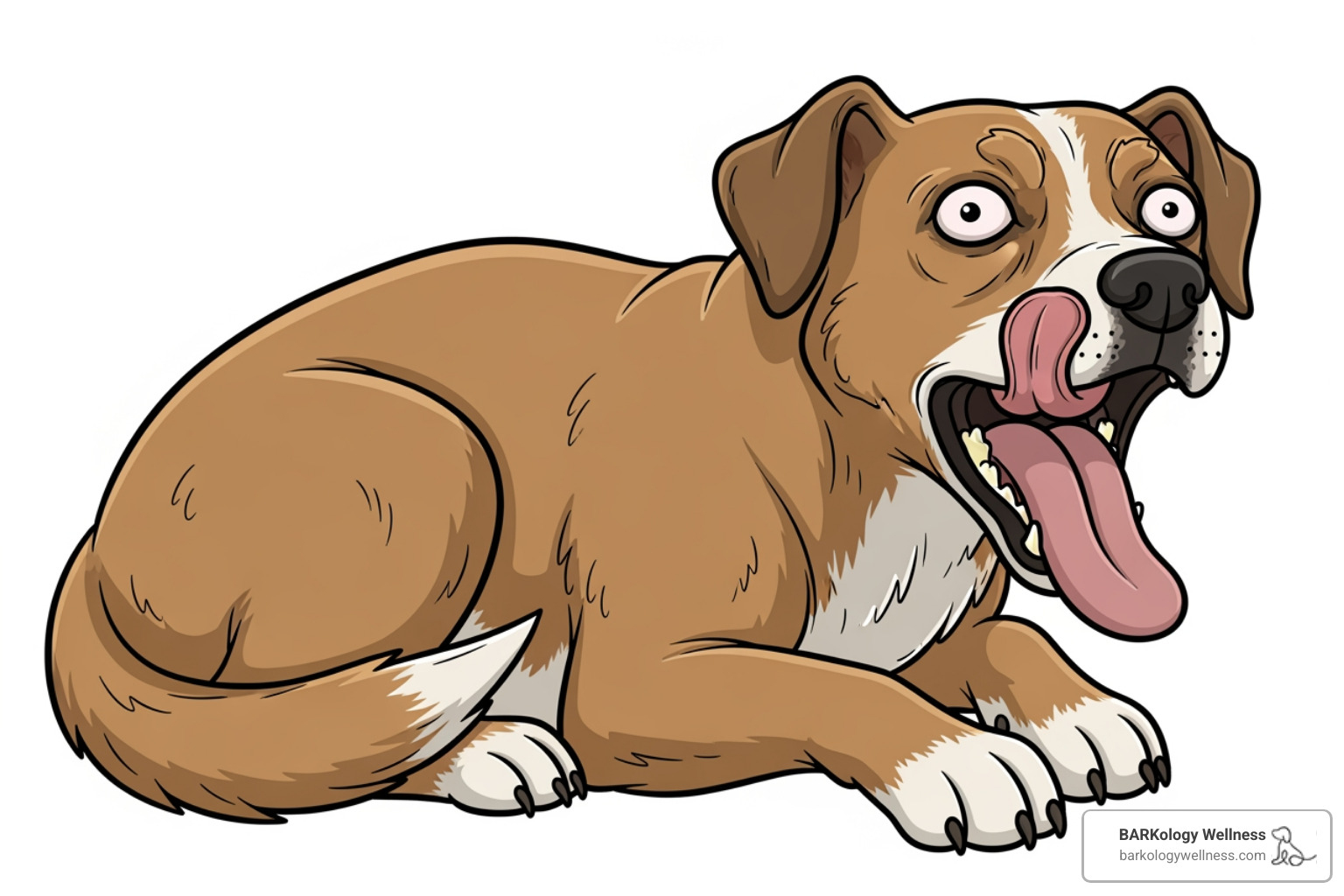
Anxiety often starts subtly. You might see a "whale eye" (where the white part of the eye shows), frequent lip licking, or yawning when the dog isn't tired. As stress levels rise, physical signs become more obvious:
- Trembling or Shaking: Often misread as being cold, this is a classic sign of adrenaline and fear.
- Excessive Panting: Even in a cool room, an anxious dog may breathe rapidly with a "spatulate" tongue (wide and flat).
- Tucked Tail and Cowering: Attempting to look smaller or protect their underside.
- Freezing: This is one of the most dangerous signs. A dog that goes completely still is often in a state of "shutdown" and may snap if pushed further.
Why Is My Dog So Scared?
According to a study of 264 different breeds of dogs, anxiety is incredibly prevalent, ranging from noise sensitivity to general fear. The root causes usually fall into a few categories:
- Past Trauma: Especially in rescue dogs, a single bad experience, like a painful nail "quicking" or being forced into a loud dryer, can create a lifelong negative association.
- Sensory Sensitivity: Some dogs are simply born more sensitive to touch, sound, and smell. For them, a high-velocity dryer feels like standing behind a jet engine.
- Lack of Socialization: If a dog wasn't exposed to brushes, water, and strangers touching their paws during their "puppy window" (under 16 weeks), these things feel like threats.
- Trigger Stacking: This is a big one. A dog might handle a car ride okay, and a bath okay, but by the time the clippers come out, their "stress bucket" is full. The final task is the one that causes the meltdown.
Identifying Triggers for Dog Grooming for Anxious Dogs
Every dog has a unique "touch budget", a limit on how much handling they can take before they've had enough. Common triggers include the vibration of clippers against the skin, the pressure of nail trimmers, or the feeling of being restricted on a grooming table. Some dogs specifically fear the face area or having their paws held.
At BARKology Wellness, we focus on identifying these specific triggers early so we can adjust our approach. You can learn more about how we prioritize canine comfort in our wellness services.
Step 1: Home Preparation and Desensitization
You wouldn't run a marathon without training, and your dog shouldn't face a full groom without "practice" at home. Desensitization is the process of slowly making "scary" things "normal."
Touch Desensitization and Predictor Words
Start by touching your dog’s paws, ears, and tail while they are relaxed on the couch. Use "predictor words" to tell them what’s coming. For example, say "Ears," then gently touch an ear and immediately give a high-value treat. This teaches them that being touched leads to good things.
Sound Conditioning
The sound of a hairdryer or clippers is often the biggest hurdle. Start by running these tools in another room while you play with your dog or feed them. Gradually move the tool closer over several days. Never point the air or the tool at the dog initially; just let the sound become background noise paired with rewards.
Massage and Surfaces
Practice lifting your dog onto a raised surface, like a sturdy table with a non-slip mat, to simulate a grooming station. Give them a full-body massage, focusing on sensitive areas like the groin and between the toes. This builds their "touch budget" and helps them feel secure when they aren't on solid ground.
Step 2: Creating a Low-Stress Environment for Dog Grooming for Anxious Dogs
The environment plays a massive role in how a dog feels. Traditional salons can be loud, chaotic, and full of barking dogs, which is a recipe for disaster for a nervous pup.
The BARKology Difference: Salon vs. Low-Stress Care
| Feature | Traditional Salon | Low-Stress/Luxury Care |
|---|---|---|
| Noise Levels | High (multiple dryers/barking) | Low (one-on-one, quiet tools) |
| Crating | Common (waiting in cages) | Cage-free or private suites |
| Attention | Shared among multiple pets | Dedicated one-on-one care |
| Flooring | Often slippery tile | Non-slip mats and rugs |
| Scent | Strong chemicals/wet dog | Pheromones and aromatherapy |
Managing the Senses
We recommend using pheromone diffusers (like Adaptil) which mimic the calming scents a mother dog releases. Playing "Through a Dog’s Ear" or other calming classical music can mask the startling sounds of clippers. Temperature control is also vital; a dog that is too hot will pant more, which increases their physiological stress.
For more tips on setting up a stress-free space, the ASPCA provides insights on managing pet stress that apply perfectly to the grooming world.
Step 3: Utilizing Specialized Tools and Calming Products
Sometimes, a little extra help from technology and nature goes a long way. When dog grooming for anxious dogs, we use a variety of tools designed to dampen the "scary" parts of the process.
- Mutt Muffs & Happy Hoodies: These are noise-canceling headgear or snug fabric sleeves that cover the ears. They are game-changers for dogs who panic during blow-drying.
- Scaredy Cut Silent Clippers: These are essentially manual clippers that look like scissors with combs attached. They provide a precise trim without the "vroom" and vibration of electric blades.
- Lick Mats: Smearing peanut butter or Greek yogurt on a suction-cup lick mat keeps a dog’s brain occupied and releases endorphins through the act of licking.
- Aromatherapy: Calming shampoos infused with lavender, chamomile, or calendula can physically soothe the skin and the mind.
- Anxiety Wraps: Products like the ThunderShirt apply gentle, constant pressure, which has a dramatic calming effect on many nervous dogs.
Step 4: Mastering Positive Reinforcement and Handling
Handling an anxious dog requires a "gentle but firm" approach. We never use force, as it only confirms the dog's fear that grooming is a fight they need to win.
The Minimum Viable Groom (MVG)
When a dog is highly stressed, we pivot to the "Minimum Viable Groom" framework. This means we prioritize health and hygiene over "pretty." We might trim the hair away from the eyes and paw pads and skip the fancy pom-pom tail if the dog is reaching their limit. Safety and trust always come before aesthetics.
Task Reordering and Micro-Pauses
If a dog hates their nails done, we don't save it for the end when they are already tired. We might do one nail, give a treat, do a little brushing, and then come back to the next nail. Taking "micro-pauses" allows the dog's heart rate to return to baseline before we move to the next step.
Professional Techniques for Dog Grooming for Anxious Dogs
Our professional team uses "behavioral fluency" to read a dog’s micro-expressions. We might suggest a pre-grooming long walk to burn off nervous energy or a "happy visit" where the dog just comes in for treats and cuddles without any actual grooming.
Building a routine is the best way to reduce long-term anxiety. You can explore our grooming memberships to see how regular, low-stress visits can transform your dog's relationship with the spa.
Step 5: Professional Consultation and Safe Sedation
In some cases, the fear is so deeply ingrained that behavioral training alone isn't enough. This is where we bridge the gap between grooming and veterinary medicine.
When to Consider Medication
If a dog is a danger to themselves or the groomer, biting, thrashing, or reaching a state of "panic attack", it is time to talk to your vet.
- Anti-Nausea Meds: Sometimes "grooming anxiety" is actually car sickness. If the dog arrives at the salon nauseous, they will be grumpy and fearful.
- Pharmaceutical Aids: Your vet may prescribe a mild sedative to be given a few hours before the appointment. This doesn't "knock them out"; it simply lowers their anxiety threshold so they can actually learn that the groomer isn't a scary place.
- Safety First: Always check credentials. A groomer experienced with anxious dogs will document every trigger and reaction to share with you and your vet.
Frequently Asked Questions about Dog Grooming for Anxious Dogs
How do I know if my dog needs sedation for grooming?
If your dog displays aggressive behavior (snapping, growling), attempts to jump off high tables, or shows signs of extreme physiological distress like vomiting or diarrhea, sedation should be discussed with a vet as a compassionate last resort.
Can I groom my anxious dog at home successfully?
Yes! For many dogs, being in their own home with a trusted owner is the best-case scenario. However, make sure you have the right tools (like non-slip mats and rounded-tip scissors) to ensure it stays a positive experience.
How long does it take to desensitize a dog to grooming?
It’s a marathon, not a sprint. Most owners see significant improvement in 2 to 4 weeks of daily, 5-minute training sessions. The key is consistency and never pushing the dog past their breaking point.
Conclusion
At the end of the day, dog grooming for anxious dogs is about one thing: empathy. It’s about looking at the world through your dog's eyes, where a buzzing clipper is a monster and a bathtub is a trap, and gently showing them they are safe.
By following these 5 steps, home prep, environment control, the right tools, positive handling, and professional support, you can turn a "harrowing" situation into a "tail-wagging" one. At BARKology Wellness, we are dedicated to these luxury care standards because your dog deserves to feel like royalty, especially when they’re feeling brave.
Ready to give your pup the serene, tailored experience they deserve? Book your professional grooming service with us in South Tampa today and let us help your dog find their inner calm.