
Dog Grooming Science: More Than a Pretty Coat
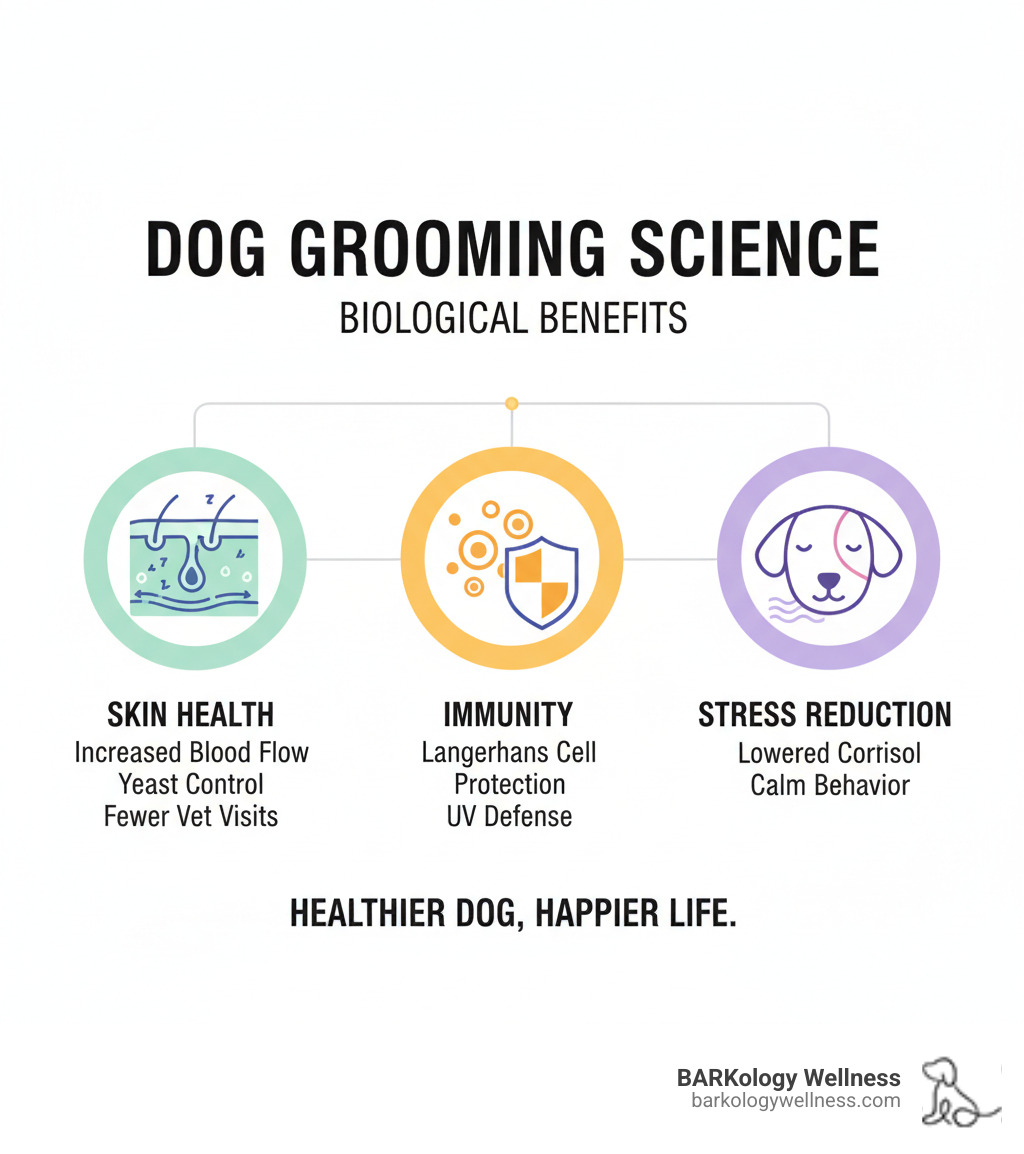
Dog grooming science is the study of how grooming practices affect a dog's physical health, skin biology, emotional wellbeing, and immune function, far beyond how your dog looks after a trim.
Here's what the science shows at a glance:
| Benefit | What the Science Says |
|---|---|
| Skin health | Regular brushing increases blood flow to skin by up to 30% |
| Yeast control | Bi-weekly grooming reduces Malassezia yeast colonization by 65% |
| Stress reduction | Professional grooming lowers cortisol levels by 45%, with effects lasting 72 hours |
| Fewer vet visits | Regularly groomed dogs experience 40% fewer skin problems |
| Immune protection | Proper coat length shields Langerhans immune cells from UV damage |
| Sensory integrity | Trimming a dog's whiskers (vibrissae) disables a highly innervated sensory organ |
Most people think of grooming as a cosmetic service. A bath, a trim, maybe a bow. But the biology tells a different story.
A dog's skin is thinner than human skin, more absorbent, and more vulnerable to sun damage, fungal overgrowth, and environmental toxins. Their coat isn't decorative, it's a functional system regulating temperature, protecting immune cells, and even transmitting sensory information. When grooming is done right, it supports all of that. When it's done wrong, or skipped, the consequences show up at the vet.
This guide breaks down the full science: skin anatomy, coat chemistry, shave risks, behavioral stress responses, and how professional grooming functions as genuine preventive healthcare for your dog.
I'm Nabilah Shamseddine, a wellness entrepreneur and franchise leader at BARKology Wellness, where applying dog grooming science to premium, health-first pet care is at the core of everything we do. My background building science-backed wellness brands gives me a unique lens on why grooming deserves to be treated as the health service it truly is.
The Biological Foundation of Dog Grooming Science
To understand dog grooming science, we first have to look at the "canvas" we are working on: the canine skin. While many owners assume a dog’s skin is tougher than ours because they live outdoors, the biological reality is the exact opposite.
Dogs actually have much thinner skin than humans. While our skin is thick and our hair is relatively thin (usually one hair per follicle), dogs possess a thin epidermis protected by a dense, complex coat. In fact, a dog’s skin is nearly seven times more absorbent than human skin. This high absorbency rate means that any toxins, allergens, or harsh chemicals that sit on the skin enter their bloodstream much faster than they would ours.
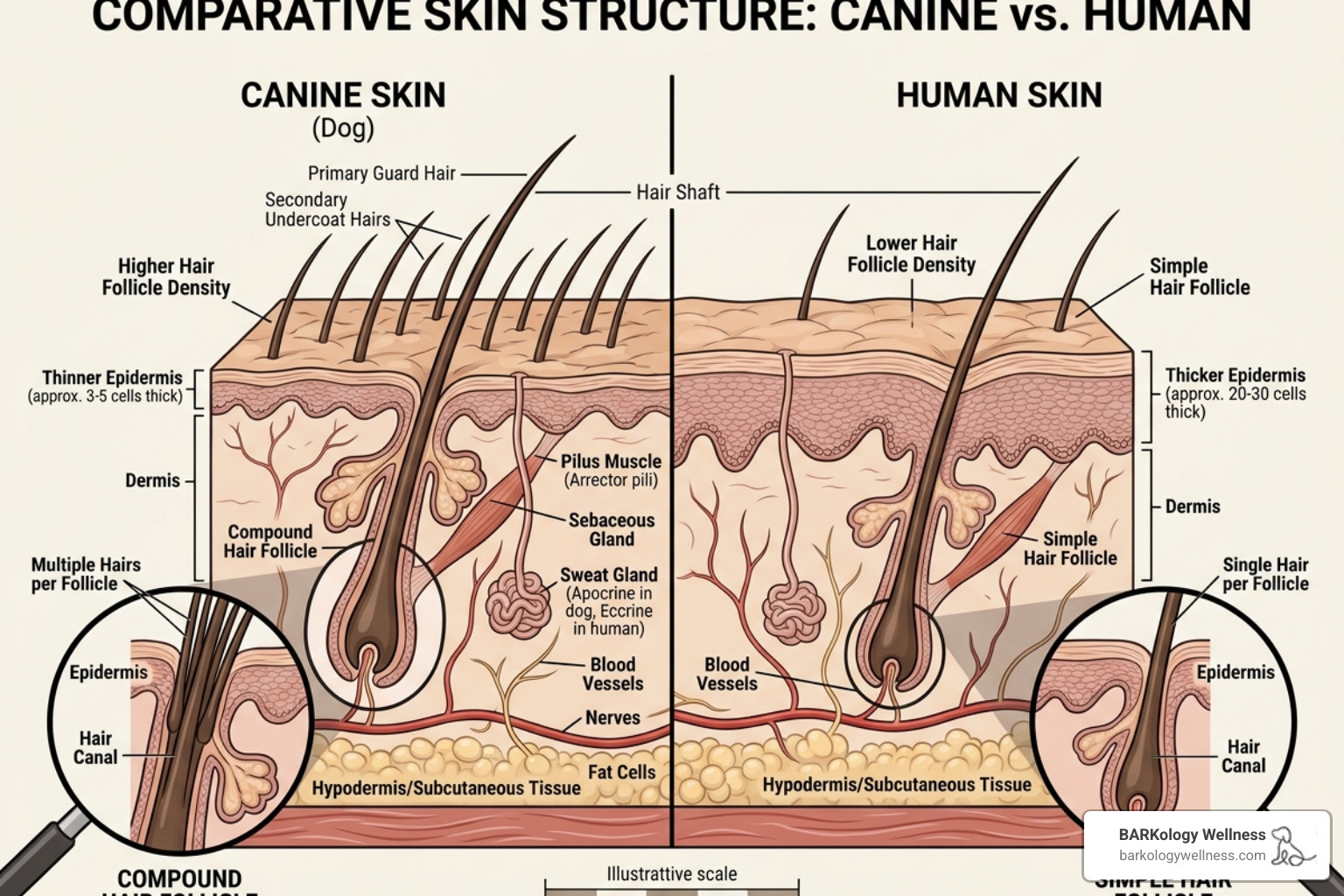
This anatomical difference is why we view ourselves as "topical dermatologists." According to research on Thin Skin, Thick Hair & the Canine Immune System, the skin is the largest organ in the mammalian body and serves as the primary line of defense for the immune system. Within this thin skin live Langerhans cells, specialized immune cells that identify "invaders" like bacteria or fungi.
When a dog is shaved too short or has a poorly maintained coat, UV rays from the sun can actually destroy these Langerhans cells. This damage leads to a weakened immune response and increases the risk of solar keratosis and squamous cell carcinoma (skin cancer). By maintaining the correct coat length and health, we aren't just making a dog look good; we are literally protecting their immune system. For owners looking to integrate this biological protection into a routine, exploring more info about wellness programs can help bridge the gap between aesthetics and immunity.
Applying Dog Grooming Science to Coat Chemistry
The science of the "tub" is where chemistry meets biology. A dog's hair and skin are naturally anionic, meaning they carry a negative electrical charge. Dirt and debris are attracted to the sebum (natural oils) produced by the sebaceous glands, which coats the hair cuticles.
When we wash a dog, we aren't just "rinsing away dirt." We are managing the pH balance of the skin. Human skin is more acidic (around 5.5 pH), while dog skin is more neutral to slightly alkaline. Using human shampoo on a dog can disrupt their "acid mantle," the thin protective layer on the skin, leading to irritation and infection.
Professional dog grooming science utilizes the "Close/Further Close/Fully Close" method:
- Shampoo (Close): Professional, pH-balanced shampoos cleanse the hair without forcing the cuticle scales wide open.
- Conditioner (Further Close): Conditioners are cationic (positively charged). They bond to the anionic hair shaft, neutralizing static electricity and sealing the cuticle scales flat.
- Leave-in Sprays (Fully Close): These provide a final seal to lock in moisture and repel environmental toxins.
| Product Type | Typical pH Range | Scientific Function |
|---|---|---|
| Common Bar Soap | 9.0 – 10.0 (Alkaline) | Opens cuticles, strips oils, causes irritation |
| Professional Shampoo | 6.0 – 7.0 (Neutral) | Gently cleanses without damaging the acid mantle |
| Cationic Conditioner | 4.0 – 6.5 (Acidic) | Closes cuticles, eliminates static, replaces sebum |
By using chemistry to seal the hair cuticle, we prevent the "velcro effect" where open cuticles snag on each other, creating the painful mats that many owners struggle with at home.
Coat Preservation: Shave Science and Sensory Protection
One of the most controversial topics in dog grooming science is the "summer shave." From a biological perspective, shaving certain breeds, especially double-coated ones, can do significantly more harm than good.
Dogs are categorized into two main coat types:
- UDL (Undetermined Length): These are "hair-type" dogs like Poodles or Doodles whose hair grows continuously and requires regular trimming.
- PDL (Pre-determined Length): These are "fur-type" dogs like Huskies, Golden Retrievers, or Labradors. Their hair grows to a specific length and then sheds.
Shaving a PDL (double-coated) dog disrupts their natural thermal regulation. The primary guard hairs protect against UV rays and heat, while the secondary undercoat provides insulation. When these layers are cut to the same length, the "ventilation system" powered by the erector pili muscles, which lift the hair to allow air to circulate, is compromised.
According to Shave Science: The Facts About Shaving, shaving can also lead to follicle clogging, especially in wire-coated breeds. If wire hair is clipped instead of hand-stripped, the dead hair stays in the follicle, leading to "comedones" or skin "blackheads." To protect the skin, the "one-inch rule" or using at least a #4 blade is recommended for UDL breeds to ensure the skin remains shielded from the elements.
Sensory Organs and Dog Grooming Science
Beyond temperature and immunity, grooming affects a dog's "sixth sense." A dog's whiskers, or vibrissae, are not just long hairs; they are highly sophisticated sensory organs.
Recent research published in Scientific Reports on The canine vibrissal system as a highly innervated and functional sensory organ proves that these follicles (follicle-sinus complexes) are packed with nerves and mechanoreceptors. They allow dogs to detect subtle air currents, navigate in the dark, and protect their eyes via reflex blinking.
When a groomer shaves the face of a dog (common in show-style Poodle trims), they are essentially disabling a sensory organ. This can lead to sensory impairment, where dogs become disoriented or bump into objects. At BARKology Wellness, we prioritize welfare standards that respect these "microvibrissae," ensuring that even the most stylish trim doesn't compromise a dog's ability to perceive its world.
Behavioral Science and Emotional Wellbeing
Grooming isn't just a physical process; it's a psychological one. A dog’s emotional state during a groom directly impacts their physiological health. Stress triggers the release of cortisol, a hormone that, in high levels, can suppress the immune system and increase heart rate.
Science shows that professional grooming can actually be a "spa day" for a dog's nervous system. A controlled study of 120 dogs showed a 45% reduction in cortisol levels following professional grooming, with the calming effects lasting up to 72 hours. This is achieved through:
- Humane Handling: Moving away from outdated "forcing" methods that cause "flooding" (overwhelming a dog until they shut down) or "learned helplessness."
- Positive Reinforcement: Using calm vocalizations and patience to build trust.
- Pressure Therapy: Gentle massage during the bath stimulates blood flow and mimics the calming effect of a "Thundershirt."
Communication with the owner is also a part of this science. Asking detailed questions about a dog's touch sensitivities or past experiences allows us to tailor the environment. For those interested in how we create this serene atmosphere, you can find more info about grooming services that prioritize emotional health.
Clinical Benefits of Professional Grooming
When we brush a dog, we aren't just removing loose fur. We are performing "topical physical therapy." Professional brushing techniques can increase blood flow to the skin by up to 30%. This increased circulation brings vital nutrients to the hair follicles and helps the lymphatic system remove metabolic waste products.
In humid environments like Tampa, FL, dog grooming science becomes even more critical. High humidity creates a "greenhouse effect" on a dog's skin, accelerating the growth of bacteria and fungi.
A 2023 study found that dogs receiving bi-weekly professional grooming showed a 65% reduction in Malassezia pachydermatis (a common yeast) colonization compared to those groomed monthly. In tropical or humid climates, the rate of fungal infections can be 340% higher than in temperate zones. Regular professional care, using antimicrobial protocols and specialized drying techniques, is the only way to keep these infection rates down. This data is part of the growing body of The Science Behind Dog Grooming that supports grooming as medical-grade preventive care.
The Role of Dog Grooming Science in Preventive Healthcare
Because groomers see your dog every 4-8 weeks and feel every inch of their body, we often act as the first line of defense in medical detection. We are trained to spot:
- Lumps and Bumps: Detecting new growths before they are visible to the owner.
- Parasites: Finding fleas, ticks, or mites that are hidden deep in the undercoat.
- Ear Infections: Identifying "yeasty" smells or inflammation early.
- Joint Health: Long nails aren't just a cosmetic issue; they alter a dog's gait. When nails are too long, the dog's "toes" are pushed up, changing the angle of the leg and leading to joint stress and arthritis.
By catching these issues early, regular grooming can lead to a 40% reduction in skin problems and significantly lower veterinary costs over the dog's lifetime.
Frequently Asked Questions about Grooming Science
How does dog skin differ from human skin?
Aside from being thinner, dog skin has a different pH balance (more alkaline) and is much more absorbent. While humans have one hair per follicle, dogs have "compound follicles" where multiple hairs grow from a single pore. This makes their skin a much more complex ecosystem that requires specialized products to maintain the "acid mantle" and prevent infection.
Why is shaving double-coated dogs scientifically risky?
It destroys their natural "thermostat." The guard hairs act as a reflective shield against the sun's heat. Without them, the dog's skin is exposed to direct UV rays, increasing the risk of heatstroke and skin cancer. Furthermore, the undercoat often grows back faster than the guard hairs, leading to a "patchy" coat that traps even more heat and moisture against the skin.
How does grooming impact a dog's immune system?
It works in two ways: physical and psychological. Physically, regular grooming removes allergens and pathogens from the coat and protects Langerhans immune cells from UV damage. Psychologically, it reduces cortisol (the stress hormone). High cortisol levels are known to suppress the immune system, so a low-stress grooming session actually keeps your dog's internal defenses strong.
Conclusion
At BARKology Wellness in South Tampa, we believe that every dog deserves royal treatment, but we also believe that treatment should be rooted in hard science. From the pH of our shampoos to the way we handle a fearful pup, every decision we make is designed to support your dog’s biological and emotional health.
Luxury grooming isn't just about the "after" photo; it's about the science of the "during." By blending pampering care with dermatological and behavioral expertise, we ensure your dog isn't just the best-looking pup in Tampa, but the healthiest one, too. If you're ready to experience the BARKology difference, we invite you to explore more info about memberships and join our community of wellness-focused pet parents.