
Dry Skin Is More Common Than You Think, Here's How to Fix It
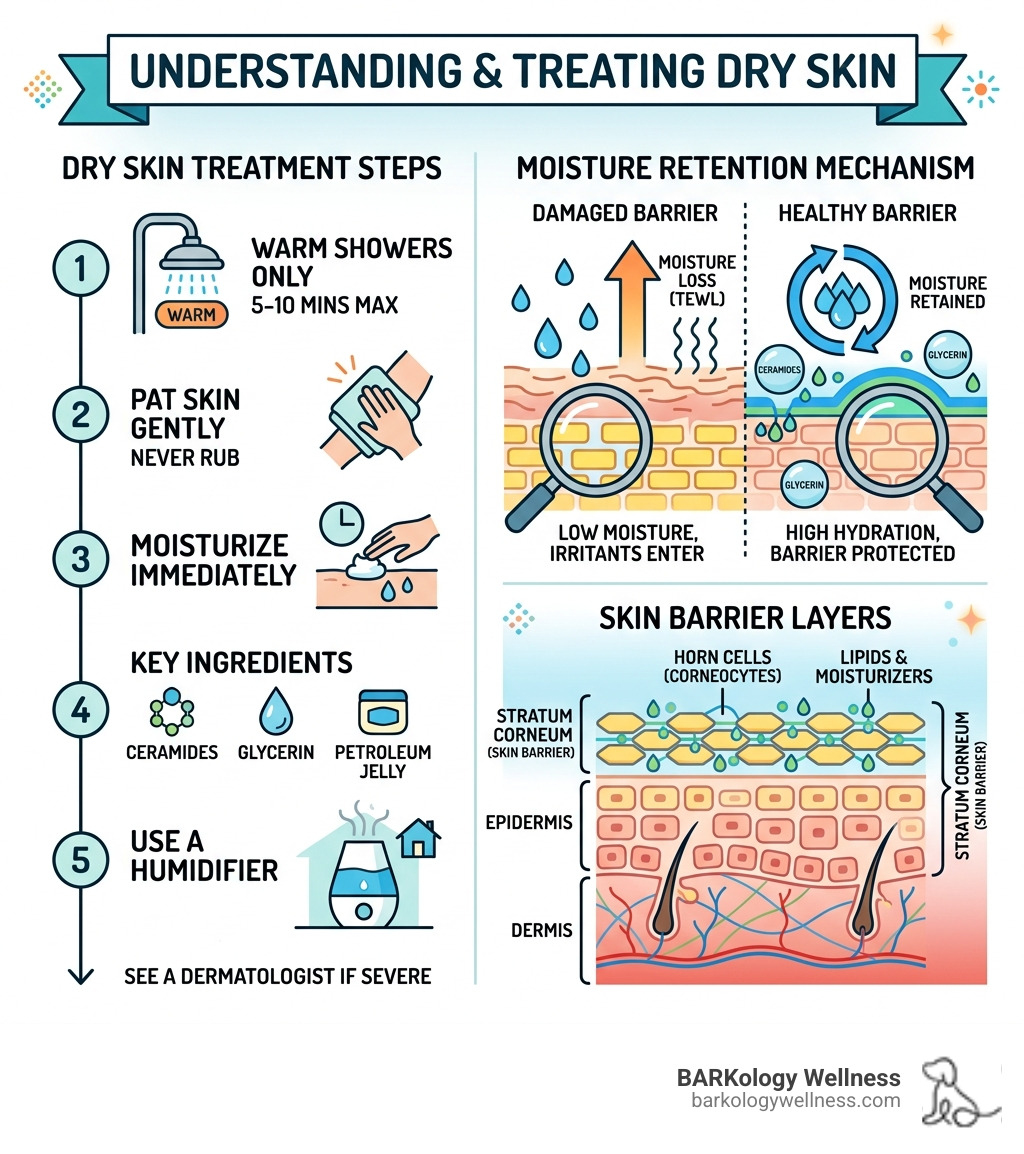
Dry skin treatment starts with a few simple, proven steps you can do at home today:
- Shower in warm (not hot) water for 5–10 minutes max
- Pat skin dry gently, never rub
- Apply a fragrance-free moisturizer immediately while skin is still damp
- Look for key ingredients like ceramides, glycerin, or petroleum jelly
- Use a humidifier at home, especially in dry or cold months
- See a dermatologist if dryness persists, cracks, bleeds, or disrupts sleep
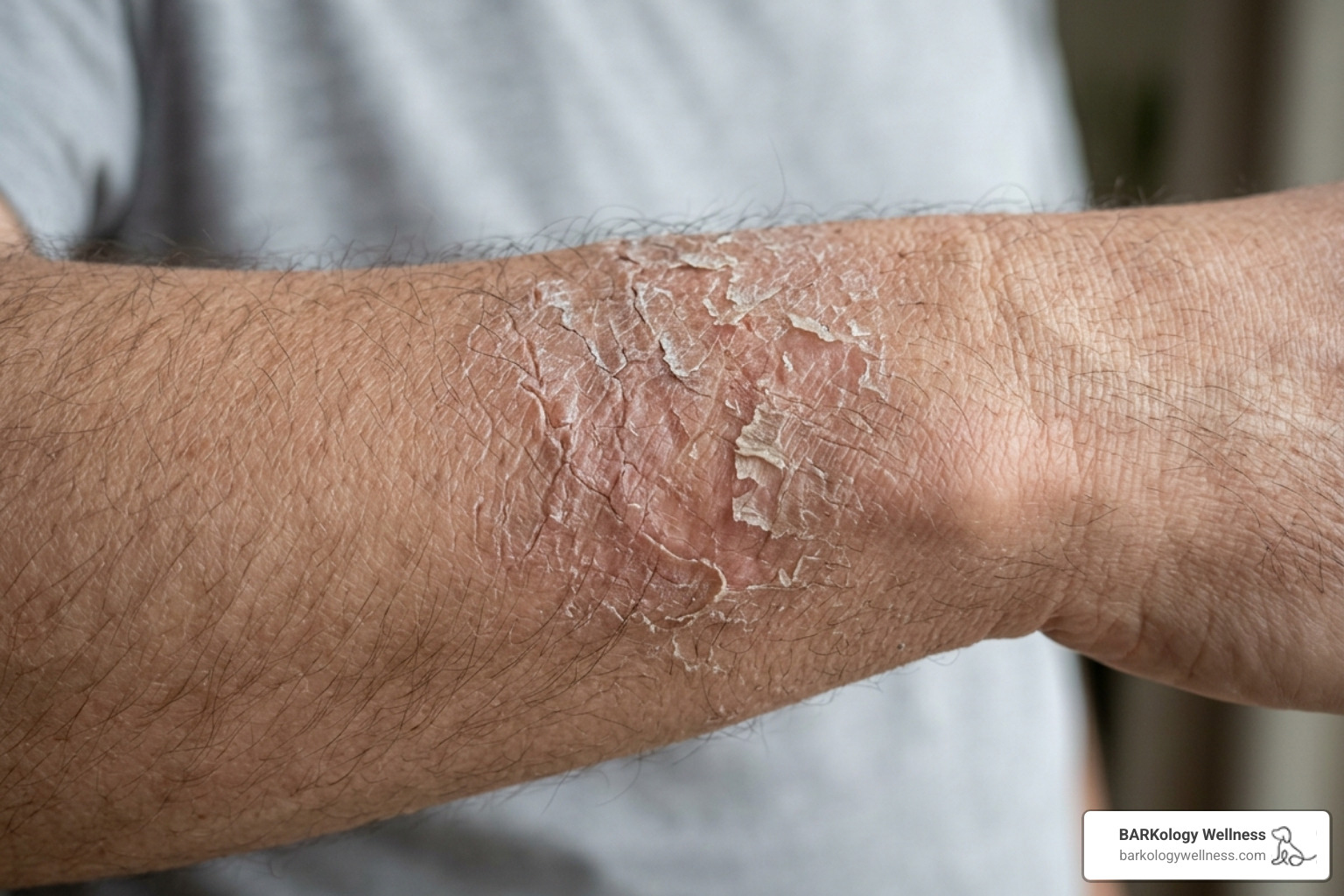
Dry skin can flake, itch, crack, and even bleed. Medically known as xeroderma, or xerosis in severe cases, it affects nearly everyone at some point. It's not just uncomfortable. It's actually a sign that your skin's protective barrier is damaged and losing moisture faster than it can hold onto it.
The good news? Most cases respond well to simple lifestyle changes and the right products.
I'm Nabilah Shamseddine, a wellness entrepreneur and the leader behind BARKology Wellness, where a deep commitment to holistic care shapes everything we do. My background in health-focused wellness brands has given me a front-row seat to how proper skin care, including dry skin treatment, fits into an overall well-being routine. Let's walk through exactly what works.
Key terms for Dry skin treatment:
Understanding the Root Causes of Your Skin’s Thirst
To find the right dry skin treatment, we first have to understand why our skin feels like the Sahara Desert. In our practice at BARKology Wellness in South Tampa, we often talk about the importance of a healthy "barrier." Just as your pup’s coat protects them from the elements, your skin’s outer layer, the epidermis, acts as a shield.
When this shield is compromised, you experience something called Transepidermal Water Loss (TEWL). This is a fancy way of saying moisture is evaporating off your body faster than you can replace it. As we move through April 2026, many of us in Florida are still feeling the effects of transitioning seasons, where indoor air conditioning can be just as drying as a harsh winter wind.
According to the Mayo Clinic, dry skin occurs when the skin doesn't retain sufficient moisture. This can happen due to frequent bathing, harsh soaps, or the natural process of aging. In fact, skin oil (sebum) production drops dramatically around age 40, and by age 60, nearly everyone experiences some level of dryness.
Common Symptoms of Xeroderma
How do you know if you’ve crossed the line from "slightly tight" to needing a dedicated dry skin treatment? The symptoms of xeroderma (the medical term for dry skin) vary based on your age, health, and skin tone:
- Texture Changes: Your skin might feel rough to the touch or look like a "dry riverbed."
- Visual Cues: You may notice flaking, scaling, or peeling. On brown or black skin, this often presents as an "ashy" appearance. On lighter skin tones, it may look reddish or gray.
- Physical Discomfort: A feeling of skin tightness, especially after bathing or swimming, is a hallmark sign.
- Advanced Irritation: Severe cases lead to deep cracks (fissures) that may bleed or become infected.
- The "Itch" Factor: Itchiness (pruritus) is one of the most frustrating symptoms and can even disrupt your sleep.
Environmental and Medical Triggers
While the weather is a major player, your environment and internal health are equally responsible.
Environmental Factors:
- Low Humidity: Whether it’s the dry air of a cold climate or the moisture-stripping effects of central heating and air conditioning, low humidity is a primary culprit.
- Heat Sources: Sitting by a space heater or a fireplace can literally bake the moisture out of your skin.
- Harsh Chemicals: Frequent hand washing or exposure to cleaning agents and detergents can strip the natural oils (lipids) that keep your skin barrier intact.
Medical Factors:Sometimes, dry skin is a "messenger" for an underlying condition. If your dry skin treatment isn't working, it could be related to:
- Hypothyroidism: An underactive thyroid can reduce the sweat and oil produced by your skin.
- Diabetes: High blood sugar levels can cause the body to lose fluid, leading to dehydrated skin.
- Skin Conditions: Atopic dermatitis (eczema) and psoriasis are chronic conditions that require specific medical management.
- Medications: Common drugs like statins (for cholesterol) and diuretics (for blood pressure) are known to have drying side effects.
The Ultimate Daily Routine for Dry Skin Treatment
The foundation of any effective dry skin treatment is your daily routine. It’s not just about what you put on your skin, but how you treat it during the most "vulnerable" times, like when you’re washing.
At BARKology Wellness, we believe in the "Science of Pampering." This means using methods that feel good but are backed by dermatological evidence. For more information on how we apply these holistic principles, visit our Wellness Services page.
Step-by-Step Guide to Effective Dry Skin Treatment
If you want to heal your skin, you need to change your relationship with water. While it sounds counterintuitive, water can actually dry you out if used incorrectly.
- The 5-Minute Rule: Board-certified dermatologists recommend limiting your baths and showers to 5 to 10 minutes. Any longer, and you start washing away the very oils that keep you hydrated.
- Turn Down the Heat: Use warm water, not hot. Hot water is a solvent; it dissolves the protective fats in your skin.
- Choose Your Cleanser Wisely: Avoid traditional bar soaps that contain sodium lauryl sulfate. Instead, opt for "fragrance-free," "soap-free," or "moisturizing" cleansers. Use them only where necessary (like underarms and groin) to avoid over-cleansing.
- The "Pat Dry" Technique: When you step out of the shower, do not rub yourself dry with a rough towel. Gently pat your skin so it remains slightly damp.
- The 5-Minute Window: This is the most critical step in dry skin treatment. Apply your moisturizer within five minutes of washing. By applying it to damp skin, the product traps that existing water in your pores.
Advanced Ingredients for Targeted Dry Skin Treatment
Not all moisturizers are created equal. To effectively treat dry skin, you need a combination of three types of ingredients:
| Ingredient Type | What It Does | Examples |
|---|---|---|
| Humectants | Pulls water from the air or deeper skin layers into the surface. | Glycerin, Hyaluronic Acid, Urea, Lactic Acid |
| Occlusives | Creates a physical barrier (like a "greenhouse roof") to stop water loss. | Petroleum Jelly, Mineral Oil, Lanolin |
| Emollients | Fills in the gaps between skin cells to make skin feel smooth. | Ceramides, Shea Butter, Jojoba Oil, Squalane |
Recent statistics show that products like Vaseline® Intensive Care™ lotions, which have been reformulated with Ultra-Hydrating Lipids, can provide 88% more moisture to the skin barrier. For those with very dry skin, the Eucerin Advanced Repair Cream is a popular choice, boasting a 4.1 out of 5-star rating from users who need intensive repair.
Lifestyle Adjustments to Prevent Moisture Loss
Beyond your bathroom routine, your daily habits can either help or hinder your dry skin treatment. Small changes in your home environment in Tampa, FL, can make a massive difference in how your skin feels by the end of the day.
According to MedlinePlus, managing your environment is a key pillar of self-care.
Clothing and Household Habits
What you wear and how you wash it matters.
- Fabric Choice: Natural fibers like cotton and silk allow your skin to breathe. Avoid wool or synthetic fabrics like polyester directly against your skin, as they can be highly irritating.
- Laundry Lessons: Use detergents labeled "fragrance-free" and "dye-free." Skip the fabric softeners and dryer sheets, which are often loaded with chemicals that can trigger an "itch-scratch" cycle.
- Protection: When doing dishes or using cleaning chemicals, always wear protective gloves. For extra hydration, apply a thick layer of petroleum jelly to your hands, put on cotton gloves, and then put your rubber gloves on top.
Diet, Hydration, and Sun Protection
While topical dry skin treatment is vital, you must also hydrate from the inside out.
- The 3-Liter Goal: Aim to drink around 3 liters of water per day. If you live in a hot climate like South Tampa, you may need even more to compensate for perspiration.
- Watch the Caffeine: Noncaffeinated beverages are best, as excess caffeine can act as a mild diuretic.
- Sun Protection is Non-Negotiable: Sun damage thins the skin and makes it less able to hold moisture. Use a broad-spectrum SPF 30 or higher every single day. One highly-rated option is Eucerin Immersive Hydration Daily Lotion SPF 30, which holds a 4.6-star rating for its ability to hydrate while protecting.
When to Seek Professional Help for Persistent Dryness
Most of the time, home remedies and over-the-counter products are enough. However, there are moments when you need the expertise of a board-certified dermatologist.
According to the American Academy of Dermatology (AAD), you should make an appointment if:
- Your skin doesn't improve despite your best efforts at home.
- The dryness and itching are so severe they prevent you from sleeping.
- You have open sores or infections from scratching.
- You have large areas of scaling or peeling skin.
Diagnosis by a Healthcare Professional
When you see a professional for dry skin treatment, they will do more than just look at your skin. They will likely:
- Review Medical History: They'll ask about family history of asthma, hay fever, or allergies, which are often linked to skin issues.
- Perform a Physical Exam: This might include the "fingernail test," where a doctor lightly drags a fingernail across your skin to see if it leaves a chalky, flaky mark.
- Order Tests: If they suspect an underlying issue, they may request blood work to check your thyroid or kidney function, or even a skin biopsy to rule out specific conditions.
Prescription Solutions and Underlying Conditions
For severe cases, a dermatologist may prescribe specialized treatments. This could include:
- Prescription Moisturizers: These often contain higher concentrations of urea, lactic acid, or ceramides.
- Topical Steroids: Hydrocortisone creams (at least 1%) or stronger prescription versions can help calm inflammation and stop the itch.
- Wet Dressings: For severely cracked or "weeping" skin, doctors might use wet dressings to rehydrate the area and prevent infection.
- Targeted Treatment: If your dryness is caused by psoriasis or ichthyosis, the doctor will treat those specific conditions to resolve the skin symptoms.
Frequently Asked Questions about Dry Skin
Why is my skin still dry even after I moisturize?
This is a common frustration! Usually, it’s due to one of three things:
- Wrong Ingredients: You might be using a lotion that is too thin. Switch to a thick cream or ointment.
- Timing: If you wait until your skin is bone-dry to apply moisturizer, you've missed the window to lock in water.
- Hidden Irritants: Your product might contain "unscented" masking fragrances or alcohols (like isopropyl alcohol) that actually dehydrate the skin.
Is petroleum jelly safe for facial dry skin?
Yes! Many dermatologists call petroleum jelly the "gold standard" for dry skin treatment. It is noncomedogenic, meaning it won't clog your pores. It acts as a "greenhouse roof," sitting on top of the skin to prevent moisture and heat loss. A popular technique called "slugging" involves putting a thin layer of petroleum jelly over your face at night to repair the barrier, just skip this if you are prone to acne.
How long should I limit my baths to relieve dryness?
Dermatologists recommend keeping baths and showers to between 5 and 10 minutes. Use lukewarm water and keep the bathroom door closed to trap the humidity inside the room while you wash. This "mini-steam room" effect helps your skin absorb more moisture before you even step out.
Conclusion
Effective dry skin treatment isn't about the most expensive "luxury" products; it's about consistency, the right ingredients, and gentle habits. By shortening your showers, moisturizing on damp skin, and protecting yourself from the Tampa sun, you can restore your skin's natural glow and comfort.
At BARKology Wellness in South Tampa, we know that wellness is a family affair. Whether it’s providing royal treatment for your pup or sharing expert advice for your own health, we are dedicated to a holistic approach to care. From our luxury dog grooming to our serene wellness environment, we prioritize health and happiness for every member of your household.
Ready to give your furry friend the same level of care you give your skin?
- Explore our Grooming Services
- Check out our Membership Plans
- Visit us at https://barkologywellness.com/
Take care of your barrier, and your skin will take care of you!