
Why Hypoallergenic Dog Grooming Is the Key to Stopping Constant Scratching

Hypoallergenic dog grooming is a specialized approach to coat and skin care that reduces allergens, prevents matting, and soothes sensitive skin, all at once. Here's what it covers at a glance:
| Goal | What Grooming Does |
|---|---|
| Reduce allergens | Removes dander proteins (Can f 1-7) trapped in the coat |
| Soothe sensitive skin | Gentle, fragrance-free products prevent irritation |
| Prevent matting | Regular brushing stops knots from forming in curly coats |
| Protect skin oils | Correct bathing frequency keeps the coat naturally healthy |
| Reduce owner exposure | Removes dried saliva and loose fur that trigger reactions |
Allergies in dogs are incredibly common, and they almost always show up through the skin and coat. You might notice your dog scratching constantly, developing dandruff, or just looking uncomfortable. For owners of breeds like Poodles, Schnauzers, or Doodles, the challenge goes deeper: these dogs have continuously growing, curl-prone coats that trap dead hair, debris, and skin flakes close to the body.
That trapped buildup isn't just uncomfortable for your dog, it's a major source of the allergens that affect you and your family too.
Standard grooming products and routines simply weren't designed with these dogs in mind. The wrong shampoo, the wrong brush, or even the wrong bathing frequency can make things significantly worse.
I'm Nabilah Shamseddine, entrepreneur and wellness brand leader behind BARKology Wellness, and my work building premium pet wellness experiences has given me a deep understanding of what hypoallergenic dog grooming truly requires, far beyond a basic bath. In this guide, I'll walk you through everything you need to know to keep your dog comfortable, healthy, and allergen-managed.
Understanding Hypoallergenic Dog Grooming and Coat Science
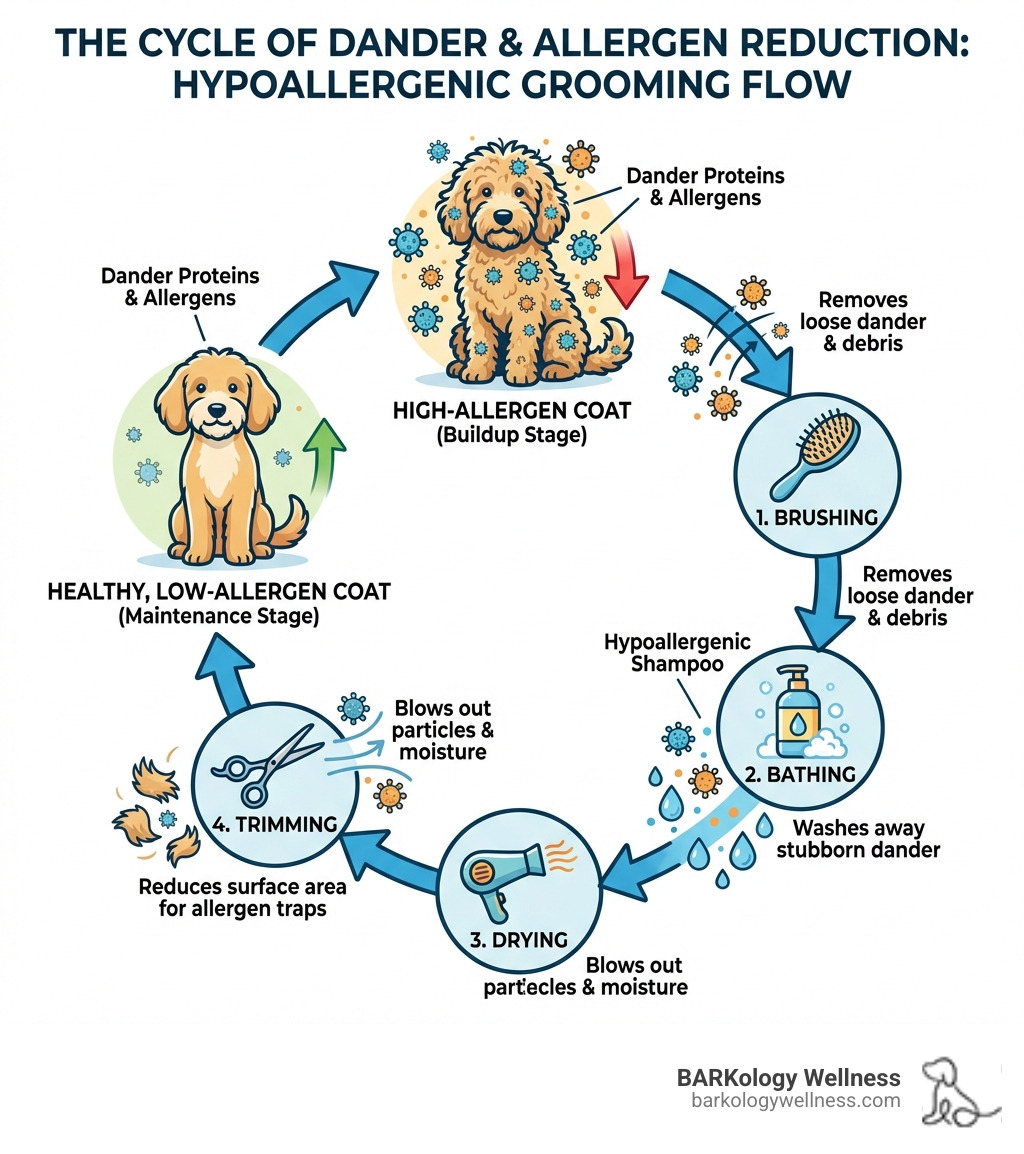
To master hypoallergenic dog grooming, we first have to understand the science behind our dogs' coats. Many people believe that pet allergies are caused by fur, but that is a common misconception. The real culprits are proteins known as Can f 1-7, which are found in a dog’s dander (dead skin cells), saliva, and urine.
When a dog licks themselves or sheds skin, these microscopic proteins stick to the hair. In traditional shedding breeds, the hair falls out, spreading these allergens all over your South Tampa home. However, "hypoallergenic" breeds like Poodles, Shih Tzus, and Maltipoos have a different coat structure.
Hair vs. Fur: The Growth Cycle
Most hypoallergenic dogs have hair rather than fur. Unlike fur, which grows to a certain length and then sheds, hair grows continuously. This results in a low-shedding dog, which is great for your allergies, but it creates a unique grooming challenge. Because the hair doesn't fall out on its own, it traps the dander proteins and loose hairs within the coat. If not brushed out daily, this creates a "trap" for allergens and debris.
Why Hypoallergenic Breeds Need Specialized Care
Because these coats are often wavy or curly, they are prone to knot formation. These knots, or mats, don't just look messy; they can actually pull on the skin, causing pain and cutting off airflow. This lack of circulation leads to moisture retention, which can cause hot spots and bacterial infections.
Furthermore, hypoallergenic dogs often have more sensitive skin. Their skin oils need to be preserved to maintain a healthy barrier against environmental pollutants. If we use harsh chemicals or groom them incorrectly, we strip those oils, leading to the very scratching we are trying to stop.
The Best Products for Hypoallergenic Dog Grooming
Choosing the right products is the foundation of a successful routine. At BARKology Wellness, we believe that what you put on your dog is just as important as what they eat.
| Feature | Standard Dog Shampoo | Hypoallergenic Formula |
|---|---|---|
| Fragrance | Often heavy (synthetic) | Fragrance-free or natural |
| Dyes | Common for aesthetic appeal | Dye-free |
| pH Balance | Can be inconsistent | Specifically pH-balanced for canine skin |
| Ingredients | May contain sulfates/parabens | Gentle, coconut or plant-derived |
| Tearless | Not always | Usually tearless and non-toxic |
Essential Ingredients for Sensitive Skin
When shopping for supplies or looking for wellness services, keep an eye out for these soothing, natural ingredients:
- Oatmeal: Known for its anti-itch properties and ability to soothe inflamed skin.
- Aloe Vera: Provides immediate cooling relief and hydration.
- Coconut Oil: A natural moisturizer that leaves the coat glossy without leaving a heavy, greasy residue.
- Glycerin: Helps the skin retain moisture, preventing the dryness that leads to dandruff.
- Sea Salt: Can help naturally cleanse the skin without harsh chemicals.
Avoiding Common Irritants in Grooming Supplies
Many commercial shampoos contain artificial thickeners and "masking" fragrances that can trigger an allergic flare-up. Even some medicated shampoos can be too harsh because of the dyes used. You want a product that is biodegradable and non-toxic, ensuring that it rinses out quickly and cleanly. A "residue film" left behind by poor-quality soap is one of the leading causes of post-bath itching.
Step-by-Step Guide to Bathing and Drying
Bathing a sensitive dog is an art. If the water is too hot, you'll irritate the skin; if you scrub too hard, you'll cause "brush burn."
The Bathing Process
- Water Temperature: Use lukewarm or cool water. Cool water helps soothe itchy skin and closes the pores, which prevents allergens from entering the skin barrier.
- Application: Massage the shampoo from head to tail, being careful to avoid the eyes.
- Massage Technique: Use your fingertips to gently work the suds down to the skin. This helps break up the dander proteins (Can f 1-7).
- Rinsing: This is the most critical step. Rinse until the water runs clear and you no longer feel any "slip" on the hair.
Proper Brushing Technique for Curly and Wavy Coats
You should never bathe a matted dog, as water acts like a sponge for knots, tightening them further.
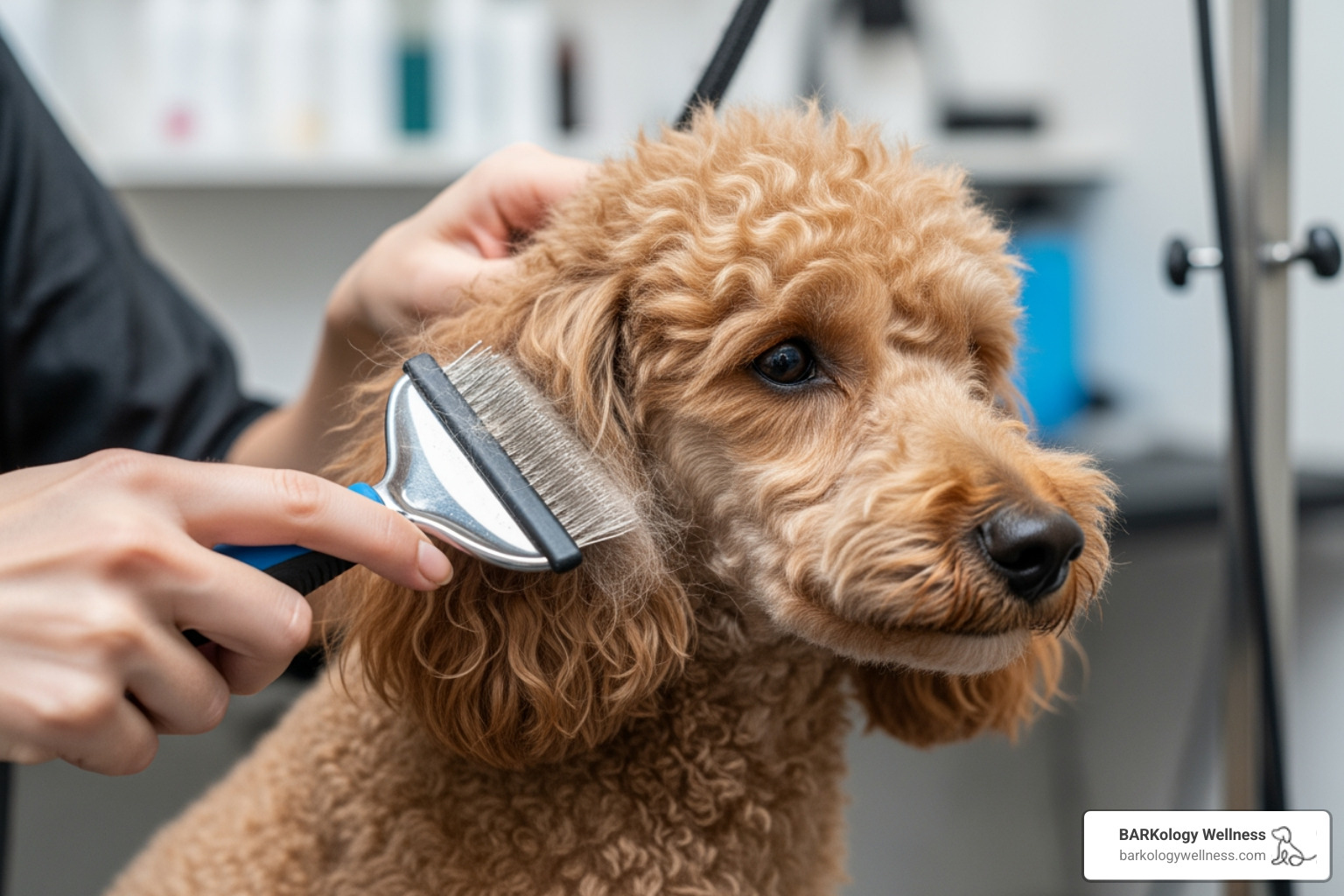
- Sectioning: Part the hair and work in small sections.
- The "Ends-to-Skin" Method: Always start brushing at the ends of the hair and work your way back toward the skin. This prevents painful pulling.
- Tools: Use a slicker brush and follow up with a metal comb to check for hidden tangles. A high-quality detangling spray can make this process much more comfortable for your pup.
- Trouble Spots: Pay extra attention to the belly, behind the ears, and under the limbs where friction causes mats to form quickly.
Safe Drying and Finishing Touches
Avoid high-heat blow dryers, which can "cook" the skin and cause extreme dryness. Instead, towel dry thoroughly first, then use a low-heat or "cool" setting on a pet-specific dryer.
- Ear Care: Ensure the inside of the ears are dry to prevent yeast infections.
- Paw Cleaning: Paws are magnets for pollen and urban chemicals. Use hypoallergenic wipes after every walk in South Tampa to keep irritants out of your home.
Professional Services vs. At-Home Maintenance
While daily brushing is your job, some tasks are best left to the experts. Hypoallergenic dog grooming often requires precision tools that can be dangerous in untrained hands.
Why Professional Grooming is Essential
Professional groomers provide services that are difficult to replicate at home, such as:
- Sanitary Trims: Keeping the "private" areas clean to prevent irritation and infection.
- Nail Grinding: Smoother than clipping and less likely to cause cracking.
- Symmetrical Clipping: Maintaining the breed-standard look while ensuring the coat is at a manageable length.
- Razor Burn Prevention: Professionals know how to handle clippers to avoid irritating sensitive skin.
Managing Owner Exposure to Dander
If you are the one with allergies, grooming your dog can be a catch-22. To reduce your exposure:
- Vacuum-Assisted Tools: Use tools that attach to a vacuum to capture dander before it hits the air.
- Air Purifiers: Keep a high-quality air purifier in the room where you groom.
- Weekly Brushing: If you can't do it daily, aim for a thorough weekly session.
- Outsource: If your allergies are severe, it is often safer to let a professional handle the "heavy lifting" of the grooming process.
Special Considerations for Puppies and Seniors
For puppies, the goal is desensitization. We want them to view grooming as a spa day, not a scary ordeal. Use progressive exposure, start with short sessions and lots of treats.
For senior dogs, we prioritize comfort and joint support. Older dogs may have trouble standing for long periods, so we provide extra TLC, frequent breaks, and ensure the temperature is strictly regulated to prevent them from getting too cold.
Holistic Allergy Management and Environmental Care
Grooming is just one piece of the puzzle. To truly stop the scratching, we have to look at the whole dog.
- Dietary Support: Adding Omega-3 and Omega-6 fatty acids to your dog's diet can significantly improve skin elasticity and reduce inflammation.
- Veterinary Check-ups: Sometimes "allergies" are actually parasites or infections. Regular vet visits are a must.
- Grooming Memberships: Consistency is key. Explore our grooming memberships to ensure your dog stays on a healthy, regular schedule.
Maintaining a Clean Home Environment
Your dog's bedding and toys act as "dander sponges."
- Wash Bedding Weekly: Use unscented, hypoallergenic detergents.
- Frequent Vacuuming: Use a vacuum with a HEPA filter to remove trapped allergens from carpets.
- Toy Sanitization: Clean plastic toys with mild soap and wash plush toys in the machine.
Frequently Asked Questions about Hypoallergenic Dog Grooming
How often should I bathe a dog with sensitive skin?
Generally, once every two weeks is the sweet spot. This is frequent enough to remove allergens like pollen and dander but infrequent enough to preserve the natural skin oils. However, if your dog gets particularly muddy or has a flare-up, consult your vet for a modified schedule.
What is the best way to prevent matting in hypoallergenic dog grooming?
Daily brushing is the only way to truly prevent mats. Use a metal comb to "line brush", meaning you can see the skin at the part. If the comb catches, you have a tangle that needs attention before it becomes a mat.
Can regular grooming eliminate my pet allergies?
While it won't "cure" a human's allergy to dogs, it can significantly reduce the "allergen load" in your home. By removing the dander and dried saliva from the coat before it becomes airborne, most owners find their symptoms become much more manageable.
Conclusion
At BARKology Wellness, we believe that hypoallergenic dog grooming is more than just a haircut, it’s a vital component of your dog’s healthcare. By combining science-based techniques with luxury care, we help your pup feel their best from the inside out.
If you're in the South Tampa area and want to give your dog the royal treatment they deserve in a serene, stress-free environment, we are here for you. Our tailored approach ensures that even the most sensitive dogs leave feeling pampered and refreshed.
Ready to stop the scratching? Book your professional grooming session today and experience the BARKology difference.