
Essential Supplies to Safely Wash a Dog's Face
Before you start to wash a dog's face, having the right tools on hand makes all the difference. Scrambling for a clean towel while holding a damp, impatient pup is a recipe for bath-time chaos. Gathering pet-safe, gentle supplies beforehand keeps the environment peaceful and ensures your dog’s safety throughout the grooming process.
Here is your essential checklist of tools and products designed specifically for delicate facial fur and skin:
- Soft Microfiber Cloths or Washcloths: Standard bath towels can feel abrasive against tender snouts and around eyes. High-quality microfiber cloths are ultrasoft, highly absorbent, and gently lift grime without harsh friction.
- Cotton Balls or Gauze Pads: Perfect for cleaning delicate areas around the eyes, nostril crevices, and deep skin folds. Use a fresh pad or ball for each eye to prevent spreading bacteria. Avoid paper towels or paper napkins entirely, when wet, paper products shred easily, leaving tiny fibers trapped in your dog's coat and eyes.
- Tearless, Dog-Specific Shampoo: Look for a pH-balanced, fragrance-free, hypoallergenic facial wash or tearless puppy formula. Canine skin has a distinctly different pH balance than human skin. Using human products strips natural oils and compromises the protective coat barrier.
- Sterile Saline Solution or Canine Eye Flush: Ideal for flushing minor debris or clearing tear crusts around the corners of the eyes safely without stinging.
- Cotton Balls for Ear Protection: Placing soft cotton balls lightly into the opening of your dog’s ears prevents stray water droplets from entering the canal, significantly lowering the risk of post-wash ear infections.
- Lukewarm Water: Fill a bowl or set your sink faucet to a comfortable lukewarm temperature (around 37–38°C or 98.6–100°F). Water that is too hot can burn delicate facial skin, while cold water causes unnecessary stress and discomfort.
- High-Value Treats: Keep small, highly rewarding treats nearby, or prepare a suction-cup lick mat filled with xylitol-free peanut butter, to establish a positive association with face washing.
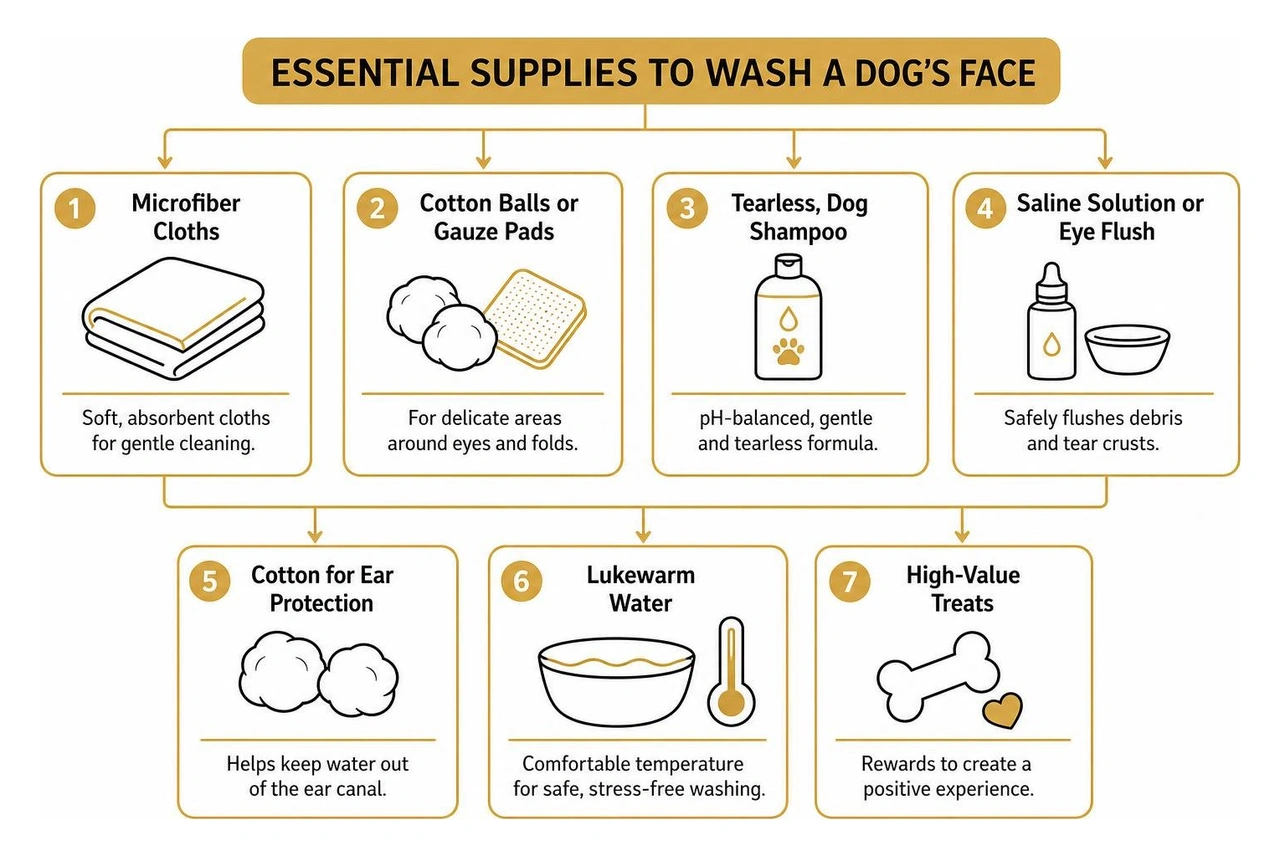
By assembling these safe, non-irritating materials ahead of time, you create a smooth, efficient routine that protects your pup's vision, ears, and sensitive skin.
Pre-Wash Preparation and Stress-Free Desensitization
For many dogs, having their face touched or wiped can trigger anxiety. Their eyes, muzzle, and whiskers are rich in sensory nerves, making sudden movements around the head feel threatening. Before wetting a single cloth, dedicate time to gentle desensitization using positive reinforcement.
At BARKology Wellness, we emphasize a low-stress approach to all grooming rituals. Preparing your pup starts long before bath time:
- Establish a Calm Setting: Choose a quiet room away from loud noises or household commotion. If working on a countertop or inside a bath basin, always place down a non-slip rubber mat. Slipping causes immediate panic and distrust.
- Desensitize Touch: Practice touching your dog's chin, cheeks, and forehead while offering calm praise and high-value treats. Start with short, two-second touches, rewarding instantly. Gradually increase handling duration over several days until your pup remains relaxed.
- Pre-Wash Facial Brushing: If your dog has medium or long facial hair, gently brush the head and muzzle fur prior to washing. Using appropriate tools from regular Dog Brushing sessions clears loose debris, mats, and dry tangles before water is applied, preventing tight knots from forming.
- Protect the Ears: Carefully place a dry cotton ball just inside the outer opening of each ear canal. Do not jam the cotton deep into the ear channel; place it just far enough to catch stray moisture.
- Set the Right Temperature: Always double-check water temperature on the inner side of your wrist. It should feel comfortably warm, closely matching a dog's normal body temperature.
Taking these deliberate pre-wash preparation steps builds deep trust between you and your pet, transforming an intimidating process into a rewarding, cooperative experience.
Step-by-Step Technique to Clean Eyes, Muzzle, and Facial Wrinkles
Washing a dog's head requires a segmented approach. Rather than pouring water over the head, which causes instinctive head-shaking, fear, and water entrapment in ears, tackle each facial region individually using precise, controlled techniques.
How to Wash a Dog's Face Around Sensitive Eyes
The area surrounding the eyes is exceptionally delicate. Mucus build-up, morning sleepers, and tear stains are common, but direct contact with the eyeball must always be avoided. Maintaining high hygiene around the eyes plays a fundamental role in overall Dog Skin Care and infection prevention.
To clean around the eyes safely:
- Dampen a soft cotton ball or cotton pad with warm water or sterile saline solution. Ensure it is moist but not dripping wet.
- Approach your dog slowly from the side or below rather than swooping down directly from above, which can startle them.
- Place the cotton pad gently at the inner corner of the eye near the tear duct.
- Wipe smoothly in an outward motion toward the cheekbone, lifting away discharge and crust.
- Never wipe directly across the eyeball itself.
- Always switch to a clean, fresh cotton ball when moving to the second eye. This simple step prevents cross-contamination if one eye harbors subtle bacteria or infection.
Gentle Lathering and Cleaning the Muzzle Area
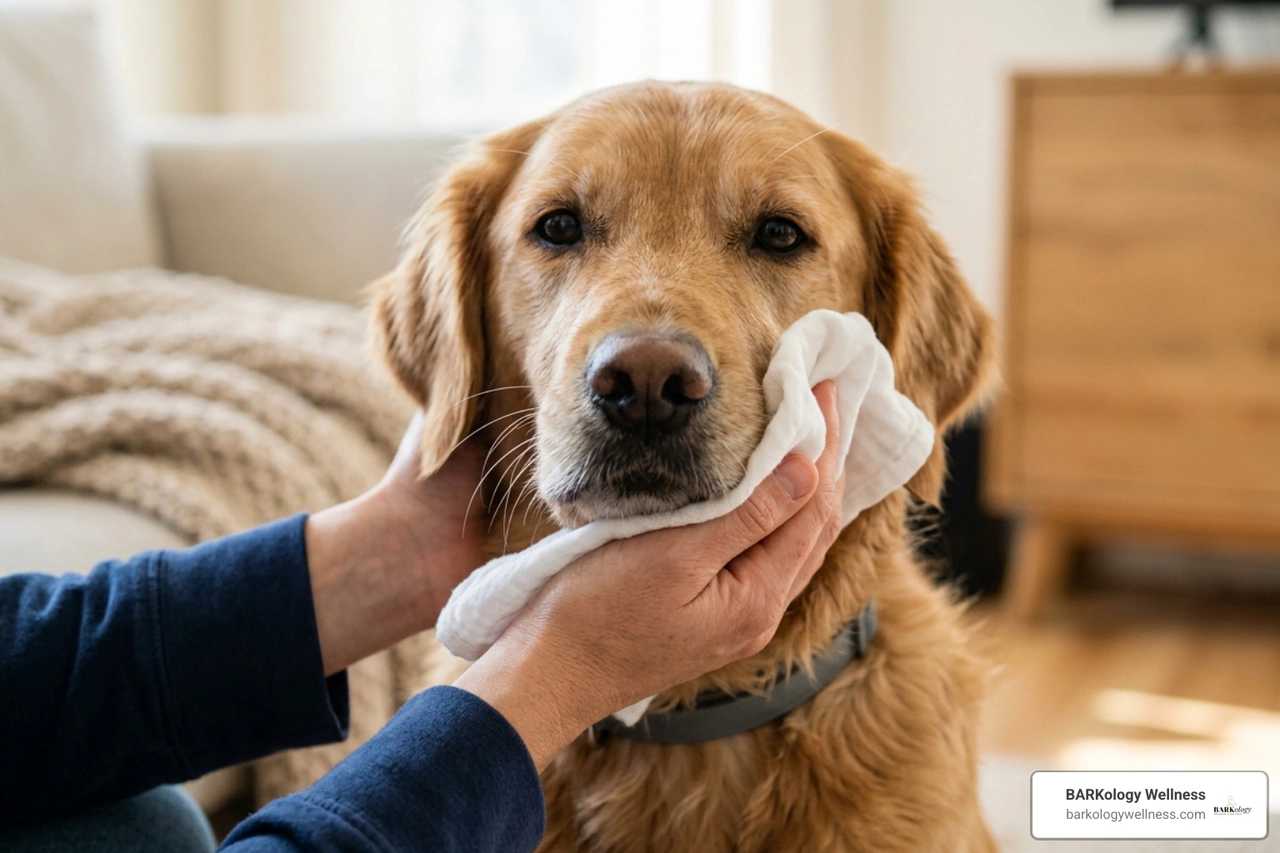
A dog’s snout, chin, and lips are magnet zones for dried kibble, wet food residue, mud, and trail dirt. Over time, trapped food particles around the mouth foster unpleasant odors and skin inflammation.
To clean the muzzle area thoroughly:
- Moisten your microfiber cloth in warm water and wring out all excess liquid.
- Apply a dime-sized drop of tearless dog shampoo to the cloth and work it into a gentle, soft lather.
- Support your dog’s lower jaw softly with one hand to stabilize the head.
- Apply gentle, multiple soft strokes along the bridge of the nose, cheeks, and chin. Avoid fast, forceful wiping, which can tug facial whiskers.
- Work from the chin upward toward the forehead to maintain optimal control over soap placement and keep lather well away from eye sockets.
- Wipe around the outer lip folds carefully to clear away dried saliva and food crusts, making sure your dog does not lick lather from the cloth.
Special Care for Brachycephalic Facial Wrinkles and Folds
Flat-faced (brachycephalic) breeds like French Bulldogs, Pugs, English Bulldogs, and Boston Terriers possess deep facial wrinkles. While adorably characteristic, these skin folds trap body heat, moisture, environmental dust, and skin cells. Left unmanaged, this dark, warm environment creates an ideal breeding ground for rapid bacterial and yeast overgrowth.
When caring for deep facial folds:
- Gently spread the skin fold open using your thumb and index finger to expose the inner crevice.
- Use a damp gauze pad or specialized pet wipe to clean deep inside the fold, sweeping out trapped moisture and brown organic buildup.
- If you notice active redness, a sour yeast odor, or discharge, consult your vet for an antifungal or chlorhexidine-based cleanser.
- Crucial Step: After wiping, immediately follow up with a completely dry cotton pad or gauze to dry the interior of every fold. Removing lingering moisture is the single most effective way to prevent recurrent fold dermatitis and yeast infections.
How to Rinse, Dry, and Prevent Common Washing Mistakes
Once you have safely cleaned the eyes, muzzle, and skin folds, proper rinsing and drying ensure that no soap residue or moisture is left behind to cause post-wash irritation.
Best Rinsing and Drying Practices when You Wash a Dog's Face
Rinsing facial fur requires patience. Never use a high-pressure showerhead or pour buckets of water directly over your dog's nose or forehead. Instead:
- Wet a clean microfiber cloth in fresh, lukewarm water with no shampoo. Wring out excess water.
- Gently wipe down the entire face in repetitive, downward strokes, continually rinsing the cloth in clean water until all soap residue is completely removed.
- Pay close attention to hidden spots like under the chin, lip margins, and between facial folds where soap lathers like to hide.
- Immediately after rinsing, use a dry, plush towel to pat the entire face dry. Refrain from rubbing vigorously, as intense friction tangles coat hairs and irritates sensitive skin.
- Double-check hair density around the ears, chin, and neck, ensuring all fur is completely dry. Proper drying is an essential part of maintaining overall Dog Fur Care.
- Remove the temporary cotton balls placed inside the ears and verify that the outer ear flap is clean and dry.
Common Mistakes to Avoid During Facial Grooming
Even well-intentioned pet owners can fall into common grooming traps that cause discomfort or injury. Review these critical pitfalls before your next bath:
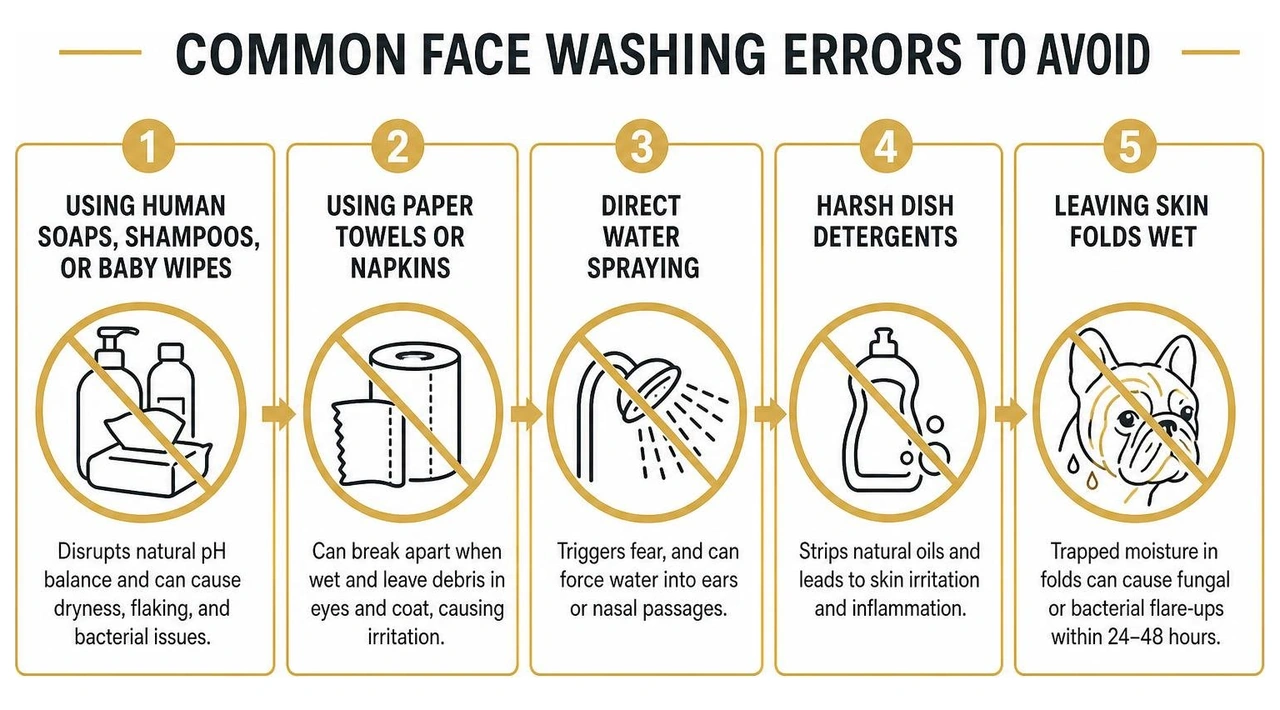
- Using Human Soaps, Shampoos, or Baby Wipes: Human skin has an acidic pH (around 5.5), whereas canine skin is much more neutral to alkaline (around 6.5 to 7.5). Using human hygiene products disrupts your dog’s natural acid mantle, leading to severe dryness, flaking, and bacterial vulnerability.
- Using Paper Towels or Napkins: As noted, paper disintegrates when wet, dropping paper debris into eyes and coat strands that cause eye scratching and skin irritation.
- Direct Water Spraying: Spraying water directly onto a dog’s head triggers immediate panic, instills water phobia, and risks forcing water deep into ear canals or nasal passages.
- Harsh Dish Detergents: Products like Dawn dish soap strip natural skin oils, resulting in severe skin inflammation. As noted in expert grooming guidelines on How To Bathe a Dog: Expert Tips for Safe Home Grooming, harsh household detergents should be avoided for routine bath sessions.
- Leaving Skin Folds Wet: Leaving moisture trapped inside skin wrinkles guarantees fungal and bacterial flare-ups within 24 to 48 hours.
Recommended Frequency and Managing Tear Stains
How frequently should you wash a dog's face? While a full body bath is typically recommended roughly once a month for most healthy dogs, facial touch-ups vary based on breed, coat structure, and lifestyle.
For standard dog breeds with minimal facial folds, washing the face 1 to 2 times per week using warm water or a gentle damp cloth is completely sufficient. Over-washing with shampoos, even mild ones, can strip natural protective oils and damage the skin's barrier layer. However, dogs prone to heavy food staining, active outdoor play, or excessive tear production benefit from daily touch-ups using warm water or dedicated pet wipes.
Understanding and Treating Tear Stains
Tear stains (colloquially called "Poodle Eye," though affecting many breeds including Bichon Frises, Maltese, and Shih Tzus) present as dark reddish-brown discolorations underneath the inner corners of the eyes.
Tear discoloration occurs when excessive tear production reacts with natural bacteria on the facial hair. Tears contain iron-porphyrin compounds that oxidize upon exposure to air, turning dark brown over time.
To prevent and manage tear stains:
- Daily Removal: Wipe tear discharge daily using a warm damp cotton pad before oxidation occurs.
- Tear-Stain Cleansers: Use pet-safe, specialized tear stain solutions applied to a cotton ball to break down set-in pigments gently over time.
- Keep Fur Trimmed: Keep facial hair around the inner eye corners neatly trimmed to prevent stray hairs from curling into the eye and causing reflex tearing.
- Veterinary Check: If tear staining is chronic, severe, or accompanied by eye redness, swelling, or foul odor, consult your veterinarian. Chronic tearing can indicate underlying medical issues such as blocked tear ducts, allergies, inverted eyelashes (entropion), or corneal irritation.
Understanding the underlying principles of coat hygiene and skin health is at the core of proper Dog Grooming Science.
Frequently Asked Questions About Cleaning Your Dog's Face
Can I use human wipes or baby wipes on my dog's face?
No, you should never use human wet wipes or baby wipes on your dog's face. Even wipes labeled "unscented" or "gentle" are formulated for human skin pH and frequently contain chemical preservatives, alcohol, or fragrances that cause severe stinging, skin drying, and eye irritation in dogs. Always choose wipes manufactured specifically for canine use.
What should I do if water or soap gets into my dog's eyes?
If accidental soap contact occurs, stay calm. Immediately tilt your dog's head slightly sideways and gently flush the affected eye using sterile saline solution or fresh lukewarm water. Use a clean cloth to catch the runoff. Avoid rubbing the eye. If your dog continues to squint, paw at the eye, or shows persistent redness and swelling after flushing, contact your veterinarian promptly for evaluation.
How do I prevent yeast infections in my dog's facial folds?
Preventing yeast infections in facial wrinkles requires daily vigilance. Wipe inside all skin folds once a day using a damp cotton pad or pet-safe antiseptic wipe to clean out moisture and debris. Immediately follow up by thoroughly drying the inside of the fold with a soft, clean cotton pad. Keeping the fold interior 100% dry starves yeast and bacteria of the moisture they need to grow.
Conclusion
Keeping your dog's face clean is far more than a simple cosmetic touch-up, it is an essential part of proactive health care that protects delicate eyes, sensitive ears, and skin folds from painful irritation and infection. By taking a slow, gentle approach, using lukewarm water, choosing tearless dog-specific products, and ensuring complete drying, you transform facial hygiene into a peaceful, stress-free routine.
Over time, this calm care builds a deep bond of trust between you and your companion. At BARKology Wellness, we treat every pet with the royal, individualized care they deserve. For professional grooming support, stress-free care, and luxurious bath packages in South Tampa, explore our full suite of Luxury Dog Grooming Services today.