
Why Your White Dog's Coat Loses Its Sparkle (And What to Do About It)
Whitening dog shampoo is a specially formulated cleanser that removes yellowing, stains, and dullness from light-colored dog coats, without bleach or harsh chemicals.
Top-rated whitening shampoos at a glance:
| Product | Key Feature | Rating |
|---|---|---|
| TropiClean Whitening Shampoo | Natural ingredients, widely trusted | 4.6/5 (34,120 reviews) |
| Chris Christensen White on White | Lasts up to 4 weeks, show-quality results | Professional favorite |
| Bio-Groom Super White | Paraben-free, soy protein formula | 4.6/5 (2,554 reviews) |
| Veterinary Formula Snow White | Budget-friendly, high volume | 4.4/5 (12,058 reviews) |
| Wahl USA Whitening Shampoo | Groomer-trusted, great lather | 4.6/5 (5,282 reviews) |
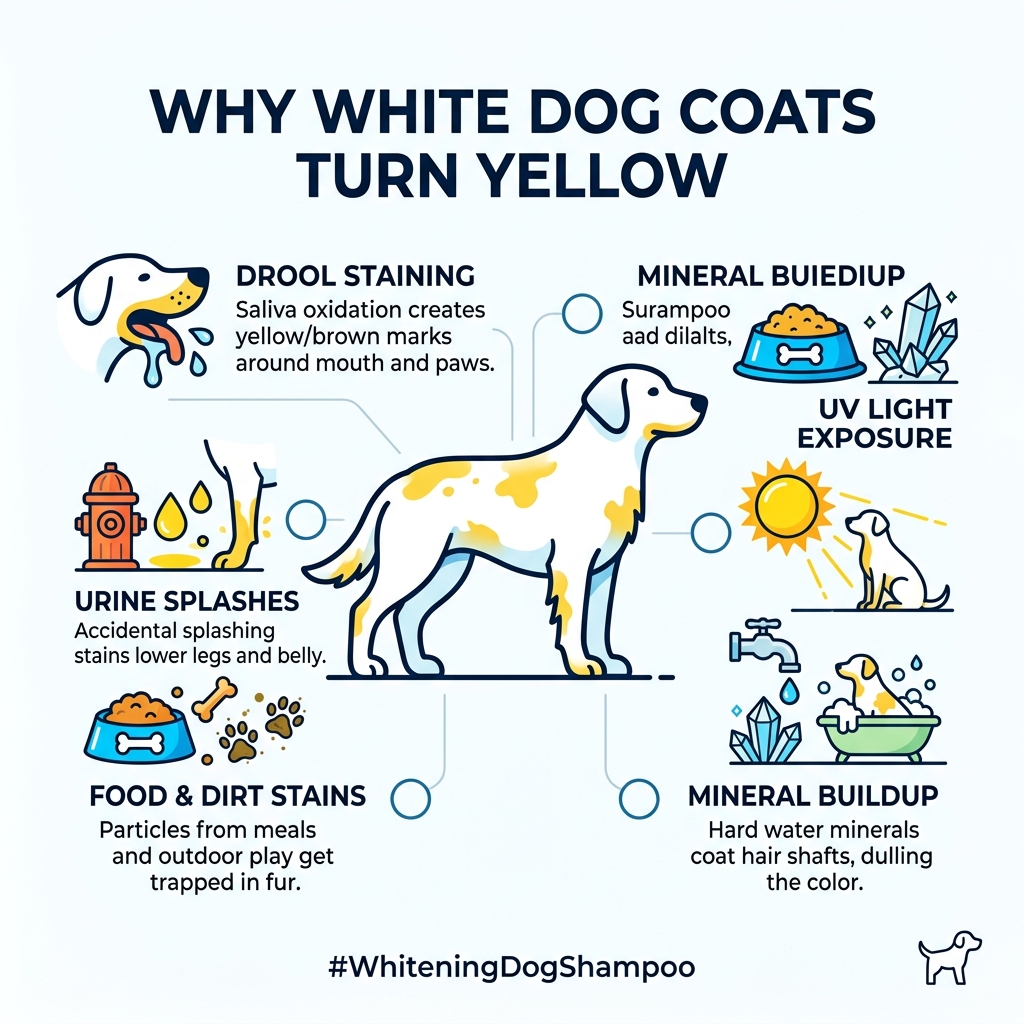
If you have a white or light-colored dog, you already know the struggle. Mud, drool, urine, and even plain old saliva can turn a once-brilliant coat dingy and yellow, fast. And regular shampoo alone just doesn't cut it.
The good news? The right whitening shampoo can restore that bright, fluffy-cloud look between professional grooms. Knowing which formula to choose, and how to use it safely, makes all the difference.
I'm Nabilah Shamseddine, franchise entrepreneur and wellness brand leader behind BARKology Wellness, where premium coat care, including finding the best whitening dog shampoo for every pup, is a core part of what we do. Read on for everything you need to keep your dog looking their absolute best.
How Does Whitening Dog Shampoo Actually Work?
It might seem like magic, but the science behind a bright white coat is actually quite fascinating. Most people assume that "whitening" means bleaching, but in high-quality pet care, that couldn't be further from the truth. Modern whitening shampoos use several clever mechanisms to restore brilliance without damaging the hair shaft.
The Power of Purple and Blue Pigments
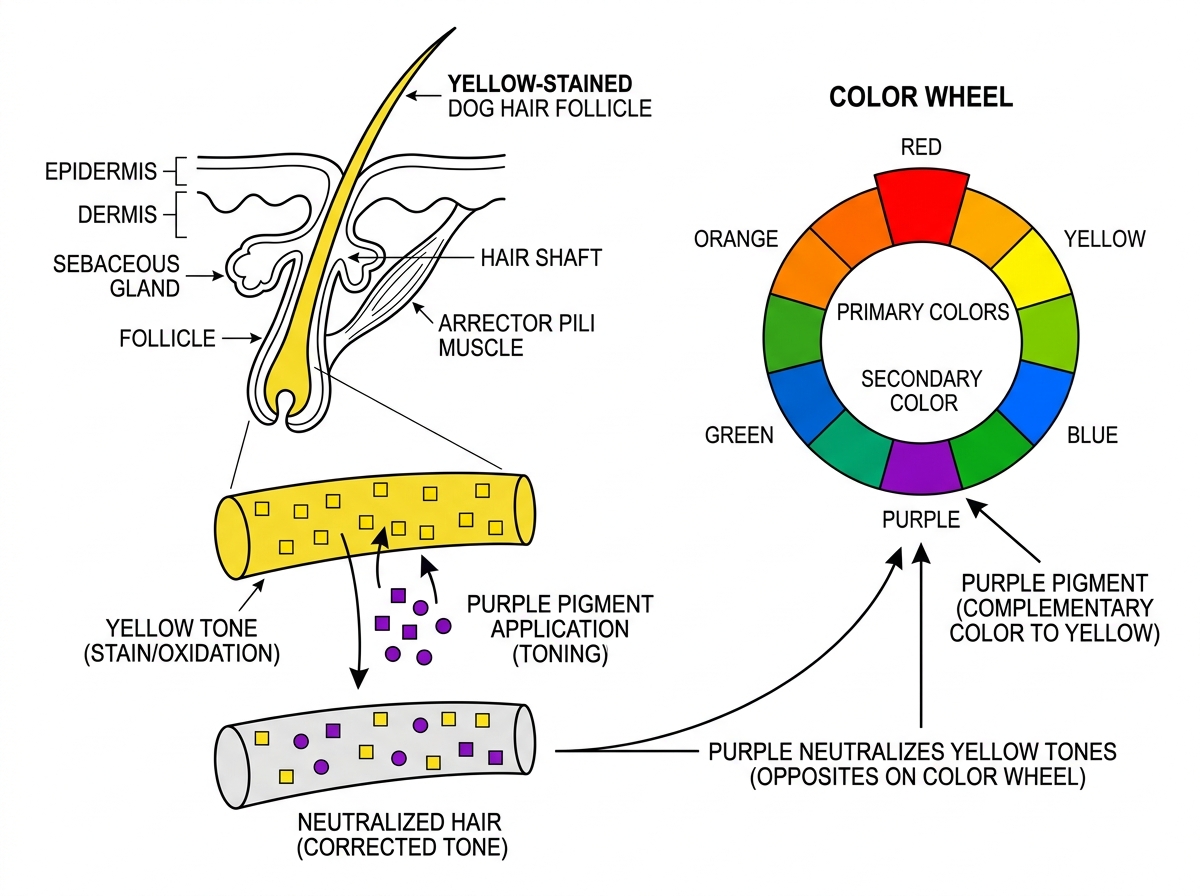
Have you ever noticed that many whitening shampoos have a deep violet or blue hue? This is based on basic color theory. On the color wheel, purple and blue sit directly opposite yellow and orange. When these pigments are applied to a dingy coat, they neutralize the "brassy" or yellow tones. This doesn't actually "dye" the dog; it simply cancels out the warm stains, making the coat appear a crisp, snowy white to the human eye.
Optical Brighteners and Fluorescence
Some formulas utilize optical brighteners. These are special compounds that absorb invisible ultraviolet (UV) light and re-emit it as visible blue light. This process, known as fluorescence, tricks the eye into perceiving the coat as brighter and whiter than it actually is. It’s the same technology used in many laundry detergents to keep your white shirts looking brand new.
Enzymatic Cleaners
For tougher organic stains, like those caused by drool, food, or urine, enzymatic shampoos are the heavy hitters. These formulas contain enzymes (like protease) that literally "eat" or break down the proteins that cause discoloration. By dissolving the stain at a molecular level, these shampoos clean deeper than a standard soap ever could.
Top Ingredients for a Safe and Effective Glow
When we look for a whitening dog shampoo for our clients in South Tampa, we prioritize ingredients that nourish the skin while they brighten the fur. A dog's skin is their largest organ, and it is thinner and more sensitive than human skin. According to the American Kennel Club, maintaining the proper pH balance is crucial for a dog's skin health.
Beneficial Ingredients to Look For:
- Coconut-derived Surfactants: These provide a rich, luxurious lather without the harshness of traditional sulfates. They cleanse gently while preserving natural oils.
- Aloe Vera and Chamomile: These botanical extracts soothe the skin, preventing the irritation that can sometimes occur during deep cleaning.
- Soy Protein and Keratin: These ingredients help strengthen the hair from the root to the tip, repairing damage and adding a healthy "snap" to the coat.
- Awapuhi and Argan Oil: These provide deep moisture and a lustrous sheen, ensuring the coat doesn't just look white, but also feels silky and healthy.
Ingredients to Avoid
It is critical to avoid any product containing bleach or peroxide. These chemicals are far too harsh for a dog's skin and can lead to severe irritation, dryness, and brittle fur. We also recommend staying away from parabens and heavy dyes that can cause allergic reactions.
| Ingredient Type | Natural Option | Chemical/Harsh Option |
|---|---|---|
| Whitener | Optical Brighteners/Pigments | Bleach/Peroxide |
| Cleanser | Coconut-based surfactants | Harsh Sulfates (SLS) |
| Moisturizer | Argan Oil/Aloe Vera | Mineral Oil/Silicones |
| Preservative | Potassium Sorbate | Parabens |
Best Practices for Using Whitening Dog Shampoo
Using a whitening dog shampoo isn't exactly like using a standard "squirt and scrub" formula. To get those professional, "Best in Show" results at home, you need to follow a specific protocol.
Preparation and Dilution
Many professional-grade shampoos, such as those from Bio-Groom or Fresh ’n Clean, are highly concentrated. A 15:1 or 10:1 dilution ratio is common. This means you mix one part shampoo with fifteen parts water. Using these full-strength can sometimes be too intense for the skin and harder to rinse out. However, some specific treatments, like Chris Christensen White on White, are designed to be used at full strength for maximum impact. Always read the label!
The Importance of Rinsing
Rinsing is perhaps the most important step. If any pigment or surfactant is left on the skin, it can cause itching. Furthermore, if you are using a "bluing" shampoo and don't rinse thoroughly, your dog might end up with a slight lavender tint, which is cute, but probably not the look you were going for!
Step-by-Step Guide to Using Whitening Dog Shampoo
- The Pre-Wash: Start by thoroughly wetting your dog with warm water. If your dog is particularly dirty or oily, we recommend a "pre-wash" with a clarifying shampoo. This strips away the surface grime so the whitening agents can reach the hair shaft directly.
- Application: Apply the whitening dog shampoo (diluted or full strength as per instructions). Start from the back of the ears and work your way to the tail.
- The Massage (The "Wait" Period): This is where the magic happens. Don't rinse immediately! Most whitening shampoos need to sit on the coat for 2 to 10 minutes. This allows the enzymes to break down stains or the pigments to neutralize yellowing. Use this time to give your pup a relaxing massage.
- The Rinse: Rinse with warm water until the water runs completely clear and there are no bubbles left in the fur.
- Conditioning: Whitening shampoos can sometimes be slightly drying because they are so effective at cleaning. Always follow up with a high-quality conditioner to seal the hair cuticle and restore moisture.
For those who want the ultimate results without the bathroom mess, our grooming services in Tampa offer these professional treatments in a serene, stress-free environment.
Frequency and Safety for Sensitive Pups
How often should you use these products? Generally, we recommend using a whitening dog shampoo every 3 to 4 weeks. Using it too frequently can strip the coat of essential oils.
Safety Tips:
- Age Matters: Most whitening formulas are safe for puppies 8 weeks and older.
- Avoid the Eyes: These shampoos can be irritating to the eyes. Use a damp cloth or specialized tear-stain wipes for the face area.
- Spot Testing: If your dog has sensitive skin, perform a spot test on a small patch of skin (like the belly) and wait 24 hours to ensure there is no redness or irritation.
Choosing the Right Formula for Your Dog’s Coat
Not all white dogs are created equal. A Poodle’s curly, porous coat has different needs than the thick, double coat of a Samoyed or the silky hair of a Maltese.
Selecting a Whitening Dog Shampoo Based on Coat Type
- For Porous/Damaged Coats: Look for formulas enriched with keratin or soy protein. These help fill in the gaps in the hair shaft, making the whitening more effective and long-lasting.
- For Stinky Pups: If your dog tends to have a "doggy" odor, choose a formula like Arm & Hammer Ultra Fresh, which uses baking soda to neutralize smells while it brightens.
- For Sensitive Skin: Opt for plant-based, botanical blends like Bodhi Dog, which avoid "bluing" agents entirely in favor of natural optical brighteners.
Professional Grooming Secrets for Show-Quality Results
At BARKology Wellness, we believe every dog deserves the royal treatment. Our approach to whitening isn't just about aesthetics; it's about health. Professional groomers often "layer" products, using a clarifying wash first, followed by a targeted whitening treatment, and finishing with a pH-balanced finishing rinse.
In our South Tampa facility, we provide a cage-free, luxury experience where we tailor each bath to your dog's specific skin and coat porosity. This custom care is what transforms a "dingy" pet into a "fluffy cloud."
Frequently Asked Questions about Whitening Shampoos
Can I use whitening shampoo on dark-coated dogs?
Yes! Interestingly, products like Chris Christensen White on White are safe for all coat colors. On dark-coated dogs, these shampoos don't "whiten" the fur; instead, the optical brighteners add a lustrous, multi-dimensional sheen that makes black, brown, or red coats look incredibly vibrant. It effectively "intensifies" whatever color is already there.
Is it safe to use whitening shampoo on puppies or cats?
Many high-quality brands, such as Bio-Groom and Bodhi Dog, are formulated to be safe for puppies, kittens, and even other small animals like rabbits or horses. Always check the label for "puppy safe" or "multi-species" designations. Most are safe once the pet reaches 8 weeks of age.
What should I do if the shampoo doesn't remove deep tear stains?
Tear stains are often caused by porphyrins (iron-containing molecules) in tears and saliva. If a standard whitening dog shampoo isn't cutting it, you may need a specialized enzymatic tear stain remover or wipes. For heavy staining, we recommend a professional consultation at BARKology Wellness, as deep staining can sometimes be linked to diet or underlying health issues that need to be addressed alongside topical grooming.
Conclusion
Maintaining a brilliant, snowy coat is a labor of love, but with the right whitening dog shampoo, it's entirely achievable. By understanding the science of color neutralization and choosing products rich in nourishing ingredients like aloe, argan oil, and soy protein, you can keep your pup looking and feeling their best.
The brightest results come from a combination of high-quality at-home maintenance and regular professional care. Whether your dog is a mud-loving adventurer or a pampered lap dog, we are here to help them shine.
Ready to see the difference professional-grade wellness can make? Book a luxury grooming session at BARKology Wellness today and let us treat your dog to the bright, healthy coat they deserve.