
When Your Dog Won't Stop Scratching: What You Need to Know
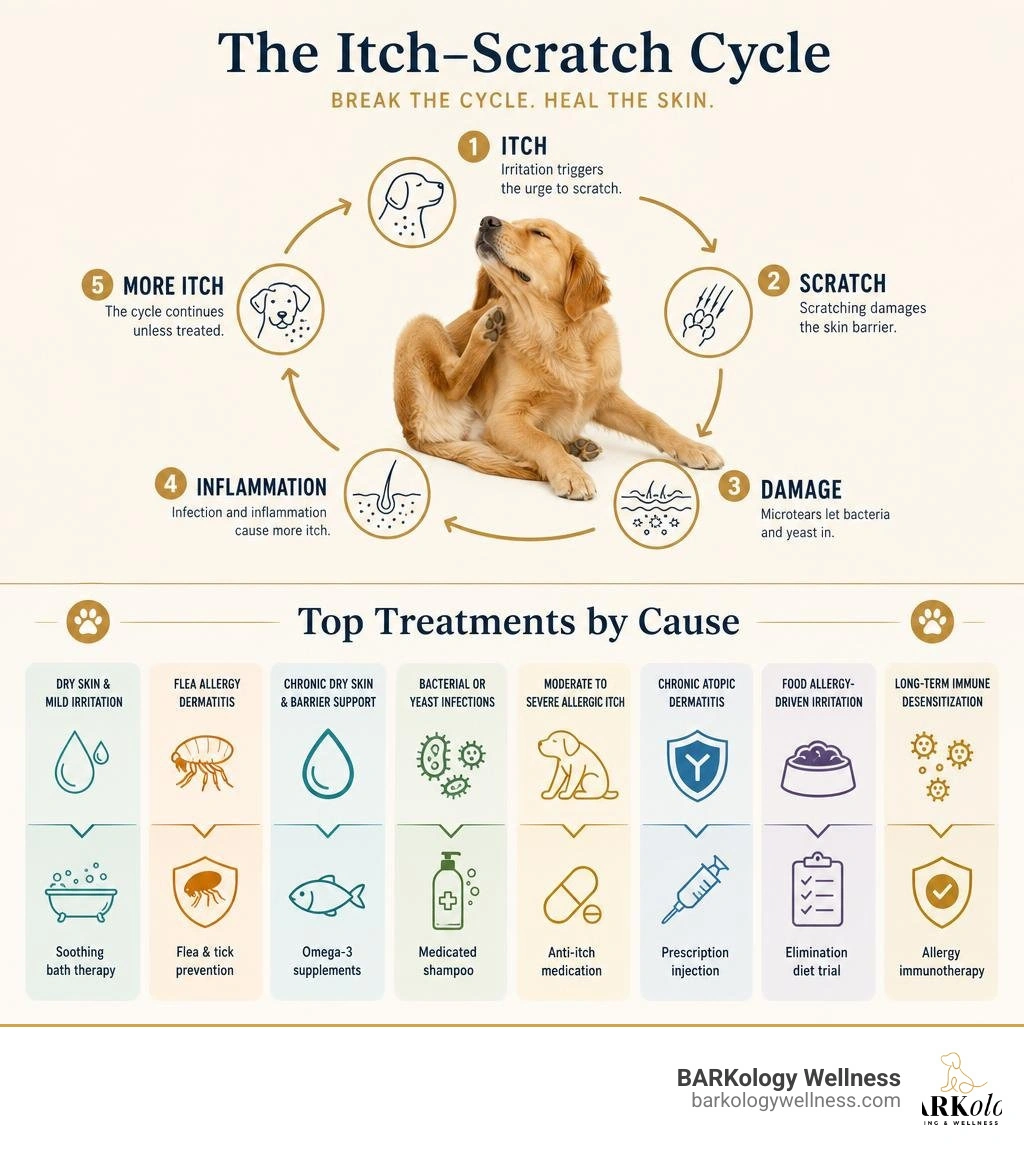
Finding the best treatment for dog skin irritation starts with understanding that not all scratching is the same, and the right fix depends on the cause.
Here's a quick overview of the most effective treatments, so you can act fast:
| Treatment Type | Best For | Speed of Relief |
|---|---|---|
| Colloidal oatmeal bath | Mild irritation, dry skin, environmental allergies | Minutes |
| Flea and tick prevention | Flea allergy dermatitis | 24–48 hours |
| Omega-3 fish oil supplements | Chronic dry skin, skin barrier support | Weeks |
| Medicated shampoo (chlorhexidine) | Bacterial or yeast infections | Days |
| Oclacitinib (Apoquel) | Moderate to severe allergic itch | Within 24 hours |
| Lokivetmab (Cytopoint) injection | Chronic atopic dermatitis | 1–3 days |
| Elimination diet trial | Food allergy-driven skin irritation | 4–8 weeks |
| Allergen-specific immunotherapy | Long-term immune desensitization | 9–12 months |
Itchy skin, called pruritus in clinical terms, is the single most common reason dog owners visit a veterinarian. And it's easy to see why it's so distressing. Picture your dog constantly rubbing their face on the carpet, licking their paws raw, or waking up in the night to scratch. That cycle of itch and scratch isn't just uncomfortable. It physically damages the skin barrier, allowing bacteria and yeast to enter through tiny breaks in the skin, turning a simple itch into a full-blown infection.
The causes range widely: environmental allergens like pollen and dust mites, food sensitivities, flea bites, yeast overgrowth, bacterial infections, and even dry indoor air during colder months. Because the triggers are so different, so are the solutions.
This guide walks you through everything, from safe home remedies you can try today, to prescription treatments for chronic conditions, to professional grooming strategies that physically remove allergens from your dog's coat.
I'm Nabilah Shamseddine, entrepreneur and leader at BARKology Wellness, where I've built a premium pet wellness experience around exactly the kind of proactive, health-first care that makes a real difference for dogs with sensitive skin. My work developing wellness-focused services has given me a front-row seat to how the best treatment for dog skin irritation combines at-home care, professional grooming, and, when needed, veterinary intervention.
Best treatment for dog skin irritation glossary:
Understanding the Root Causes of Canine Pruritus
To find the best treatment for dog skin irritation, we first have to play detective. Why is your dog scratching in the first place?
In dogs, histamine is concentrated primarily in their skin rather than their eyes and nasal passages. This biological quirk explains why a dog with allergies scratches, bites, and licks their skin instead of sneezing or getting a runny nose like we do.
Here in Tampa, Florida, our warm, humid climate creates a year-round paradise for several primary culprits:
- Environmental Allergies (Atopy): Pollen, mold spores, grass, and house dust mites trigger intense immune reactions. Because Tampa doesn't experience a true winter freeze, environmental allergens remain highly active all year long.
- Flea Allergy Dermatitis (FAD): Fleas are a constant pressure in Florida. For an allergic dog, it doesn't take a massive infestation to cause misery. A single flea bite can trigger a cascade of severe, body-wide itching because flea saliva is highly allergenic.
- Food Sensitivities: While less common than environmental allergies, some dogs develop hypersensitivities to specific dietary proteins, most commonly chicken, beef, or pork. This often manifests as chronic itching around the "ears and rears" and may be accompanied by mild gastrointestinal issues like soft stools.
- Yeast and Bacterial Infections: Our humid climate is the perfect incubator for Malassezia (yeast) and Staphylococcus (bacteria). These microbes naturally live on healthy dog skin in small numbers, but when a dog scratches and breaks the skin barrier, these organisms multiply rapidly. This leads to a secondary infection characterized by red, greasy, and distinctly smelly skin.
- Mites (Mange): Sarcoptic mange (scabies) is highly contagious and causes extreme, relentless itching. Demodectic mange, on the other hand, is caused by a native mite that overpopulates when a dog's immune system is compromised; it is not contagious but causes localized hair loss and scaling.
Identifying Allergies, Parasites, and Infections
Figuring out which of these issues is bothering your pup requires a systematic diagnostic approach. Veterinarians rely on clinical frameworks like the Favrot criteria to diagnose canine atopic dermatitis, which typically begins to show signs between 6 months and 4 years of age.
When you bring your dog in for a professional evaluation, the diagnostic journey generally follows this path:
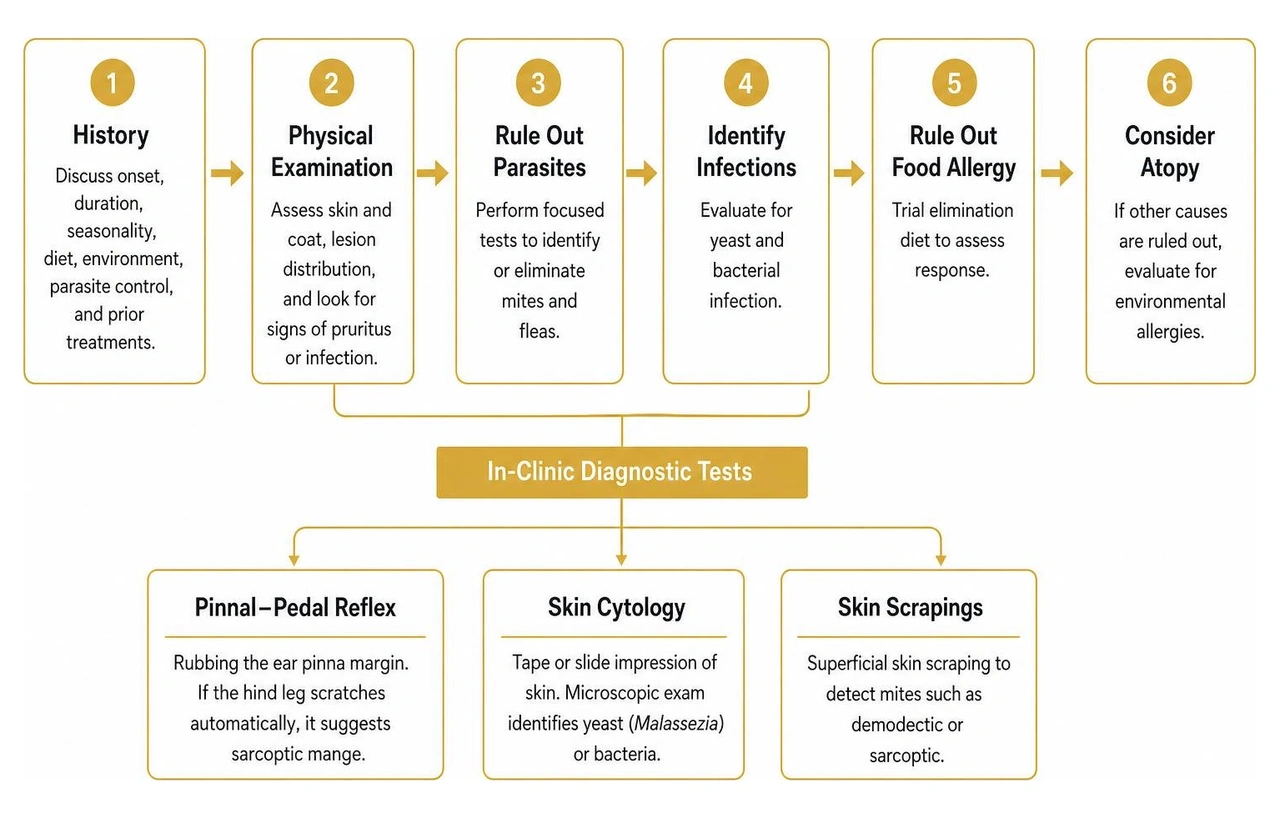
During this process, your vet will perform several quick, in-office tests:
- The Pinnal-Pedal Reflex: Gently rubbing the margin of your dog's ear pinna. If their hind leg starts scratching automatically, it is a highly specific indicator of sarcoptic mange.
- Skin Cytology: Pressing a piece of clear tape or a glass slide against the irritated skin to collect cells. Under a microscope, this reveals whether yeast or bacteria are driving the itch.
- Skin Scrapings: Gently scraping the top layer of skin to look for microscopic demodectic or sarcoptic mites.
By identifying the exact cause, you can avoid wasting time on ineffective remedies and target the root issue. Proactive dog skin care is always about matching the treatment to the specific diagnosis. For a deeper look at the veterinary standards used to make these determinations, refer to the 2023 AAHA Management of Allergic Skin Diseases in Dogs and Cats Guidelines.
Finding the Best Treatment for Dog Skin Irritation at Home
For mild, seasonal, or sudden flare-ups, you can often find the best treatment for dog skin irritation right in your kitchen pantry or bathroom cabinet. Safe, natural home remedies are excellent for providing immediate, low-cost comfort while you work on a long-term plan with professionals.
If your dog is experiencing mild itching, try these highly effective canine dermatitis home remedies:
- Apple Cider Vinegar Spray: Mix equal parts organic apple cider vinegar and water in a clean spray bottle. Lightly mist the itchy areas. The natural acidity helps restore the skin's pH balance, making it less hospitable to yeast overgrowth. Crucial warning: Never apply this spray to open wounds, raw skin, or scratched areas, as it will sting intensely.
- Coconut Oil: Organic, cold-pressed coconut oil contains lauric acid, which has natural antibacterial and antifungal properties. Rub a tiny amount between your palms and massage it directly into dry, flaky patches on your dog's elbows, tummy, or tail base. Use it sparingly to avoid clogging pores or causing digestive upset if your dog licks it off.
- Chamomile and Green Tea Soaks: Both chamomile and green tea contain natural anti-inflammatory compounds. Brew a few tea bags in hot water, let the liquid cool completely, and use it as a soothing rinse over your dog's itchy spots. Alternatively, you can press the cooled, damp tea bags directly onto localized hot spots to calm the heat.
- Pure Aloe Vera Gel: Apply a thin layer of 100% pure, alcohol-free, fragrance-free aloe vera gel directly to red, irritated patches on the belly or legs. It cools the skin and reduces inflammation on contact.
Natural Ingredients as the Best Treatment for Dog Skin Irritation
Among all natural home remedies, colloidal oatmeal remains the undisputed gold standard for soothing inflamed skin. Colloidal oatmeal is simply whole oat kernels that have been ground into an incredibly fine powder. When mixed with water, it forms a milky, protective barrier over the skin.
This works exceptionally well for an itchy belly, paws, and chest. The active compounds in oatmeal, called avenanthramides, are powerful anti-inflammatories that physically block the itch response, reduce redness, and restore essential moisture to the skin barrier.
To give your dog an oatmeal bath at home:
- Grind plain, unflavored oatmeal in a food processor until it looks like a very fine flour.
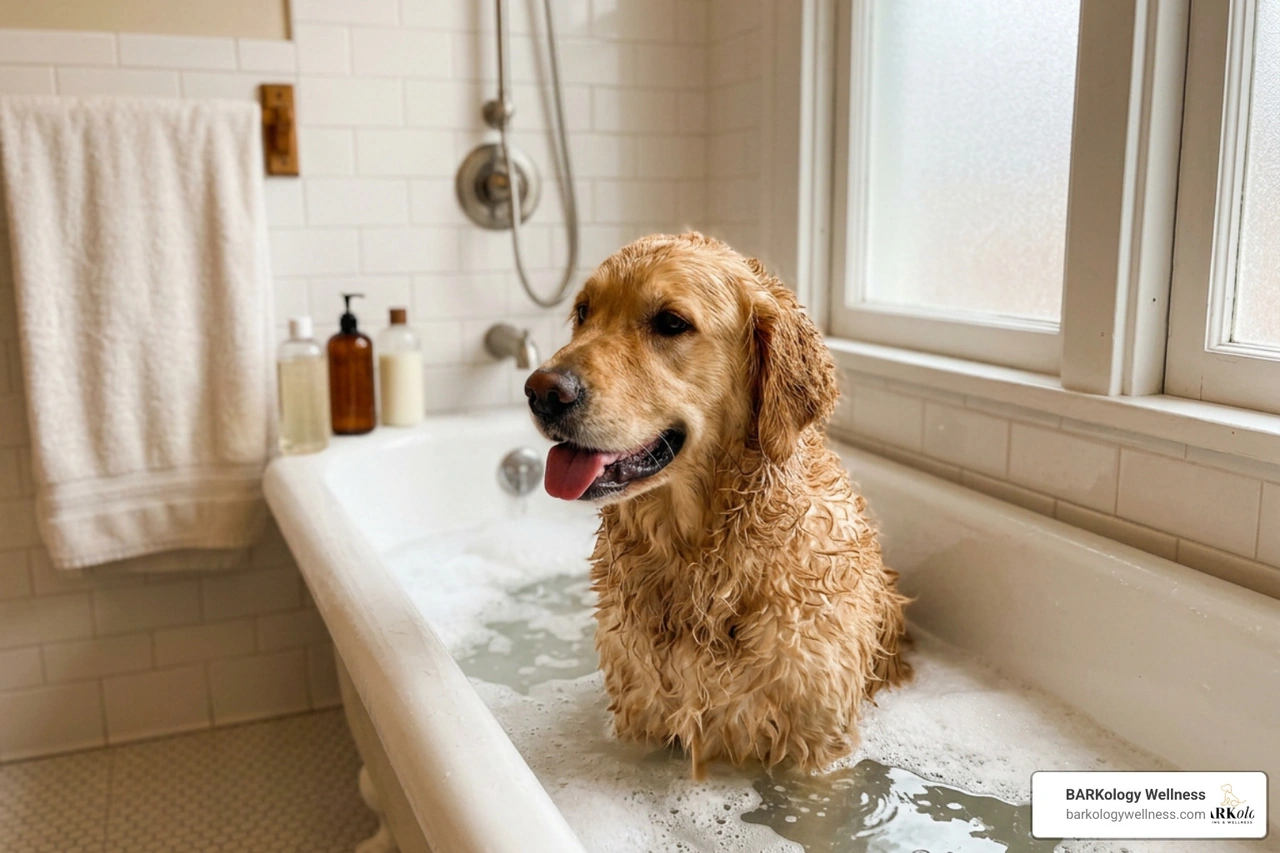
- Stir the powder into a tub of lukewarm water (hot water dries out dog skin and makes itching worse).
- Slowly pour the milky water over your dog's body, gently massaging it into their coat.
- Allow your dog to soak for 10 to 15 minutes.
- Rinse thoroughly with lukewarm water and pat dry with a soft towel.
If your dog is suffering from a dry, flaky coat, pairing this bath with a targeted dry skin treatment can help restore their natural shine and comfort. You can learn more about managing these specific coat changes in our guide on treating a dry skin dog.
When Home Remedies Fail to Provide the Best Treatment for Dog Skin Irritation
While natural remedies are fantastic supportive tools, they have limitations. It is vital to recognize when home care is no longer sufficient and professional medical intervention is required.
As a general rule, if your dog's symptoms fail to improve within one week of consistent home treatment, or if they worsen at any point, it is time to consult a veterinarian.
Watch for these warning signs that indicate a secondary infection or a more severe underlying issue:
- Scratching that causes bleeding, open wounds, or scabs.
- Intense, localized hot spots that feel warm to the touch and ooze moisture.
- Severe hair loss (alopecia) or a patchy, "moth-eaten" appearance to the coat.
- A strong, musty, or sweet odor emanating from the skin or ears.
- Thickened, darkened, or elephant-like skin (hyperpigmentation) caused by chronic inflammation.
- Constant head shaking, scratching at the ears, or discharge from the ear canal (which often points to otitis externa).
Delaying professional care when these signs are present can allow a minor allergy to escalate into a painful, deep-tissue bacterial infection. Exploring advanced, veterinary-supervised dog skin treatments is the safest pathway to long-term relief.
Clinical and Prescription Solutions for Chronic Dermatitis
When a dog suffers from chronic, year-round skin conditions like moderate-to-severe atopic dermatitis, lifestyle adjustments and home remedies are rarely enough. In these cases, the best treatment for dog skin irritation involves targeted, prescription-strength medications.
Fortunately, modern veterinary medicine has shifted away from relying solely on heavy steroid doses, introducing highly targeted therapies with fewer side effects. To help you understand the clinical options, we have compiled the key details of the most common antipruritic drugs based on the latest Clinical Guidelines for the Use of Antipruritic Drugs in the Control of the Most Frequent Pruritic Skin Diseases in Dogs:
| Medication Name | Drug Type | How It Works | Speed of Action | Efficacy Statistics | Key Side Effects & Considerations |
|---|---|---|---|---|---|
| Oclacitinib (Apoquel) | JAK Inhibitor | Blocks the JAK enzyme pathway to stop the itch signal before it reaches the brain. | Within 24 hours | Reduces pruritus by 57.8% at day 630 in long-term studies. | Safe for long-term use; monitor for mild GI upset. Discontinue 28 days before/after vaccinations. |
| Lokivetmab (Cytopoint) | Monoclonal Antibody | Mimics natural antibodies to target and neutralize the IL-31 cytokine (the primary itch molecule). | 1 to 3 days | A ≥50% reduction in pruritus was observed in 77% of dogs after one injection. | Extremely safe; metabolized like natural proteins. Lasts 4–8 weeks per injection. |
| Ciclosporin (Atopica) | Immunosuppressant | Suppresses T-cell activation to calm chronic, overactive immune responses. | 3 to 4 weeks | Reduces pruritus scores by 65% to 95% by day 28 in atopic dogs. | Often causes transient vomiting or diarrhea initially. Slow onset of action. |
| Systemic Glucocorticoids (Prednisolone) | Steroid | Broad, powerful anti-inflammatory that suppresses the entire immune system. | 4 to 24 hours | Effective in 25% of dogs within 4 hours, and 90% within 3–7 days. | Increased thirst, hunger, and urination. Long-term use can cause muscle wasting and thin skin. |
| Hydrocortisone aceponate (Topical Spray) | Topical Steroid | Localized steroid spray that targets specific itchy patches without systemic absorption. | 1 to 3 days | Reduces pruritus by 94% in dogs with flea bite hypersensitivity. | Excellent for localized maintenance. Biweekly use can delay allergy relapses to 115 days. |
Targeted Topical and Systemic Therapies
Choosing between these treatments depends on whether your dog is experiencing an acute, sudden flare-up or a long-term, chronic battle.
For an acute flare-up, such as a sudden reaction to a heavy pollen count, veterinarians often recommend fast-acting options like oclacitinib (Apoquel) or a short, tapering course of oral prednisolone. Systemic glucocorticoids are incredibly fast and effective, but because of their broad impact on the body, they are best used as a short-term "fire extinguisher" to stop intense scratching before secondary damage occurs.
For chronic, lifelong management, targeted therapies like lokivetmab (Cytopoint) or oclacitinib are highly preferred. Because Cytopoint is a biological therapy (a monoclonal antibody), it does not put strain on the liver or kidneys, making it an incredibly safe, long-term option for dogs of all ages.
If your dog has developed localized, painful lesions known as hot spots, combining these systemic options with a targeted canine hot spot treatment or a localized hot spot treatment dog spray can provide rapid, direct relief. For a complete, peer-reviewed clinical breakdown of these chronic conditions, consult the Atopic Dermatitis in Dogs - Integumentary System - MSD Veterinary Manual.
The Role of Diet, Supplements, and Skin Barrier Repair
True skin health starts from the inside out. A compromised skin barrier has disorganized lipid layers, which increases transepidermal water loss (TEWL), essentially letting moisture escape while allowing environmental allergens to penetrate deep into the skin.
To rebuild this barrier, we must focus on nutrition and targeted supplementation:
- Omega-3 Fatty Acids (EPA & DHA): Adding high-quality fish oil to your dog's diet is one of the most powerful long-term moves you can make. Omega-3s act as natural anti-inflammatories, altering the lipid composition of the skin cell membranes to reduce itching and flakiness. Clinical Insight: In a peer-reviewed study, adding essential fatty acids to a dog's diet allowed for a 24% to 100% reduction in the required daily steroid dose for 8 out of 11 dogs after 12 weeks.
- Sourcing Matters: Look for fish oil sourced from small, wild-caught fish like anchovies or sardines. These are higher quality and contain fewer accumulated toxins than oil from farmed salmon.
- Elimination Diet Trials: If a food allergy is suspected, an 8-week elimination diet trial is the gold standard for diagnosis. This involves feeding your dog a prescription hydrolyzed protein diet (where the proteins are broken down so small that the immune system cannot recognize them) or a single novel protein diet (like venison or kangaroo) that your dog has never eaten before.
- The Golden Rule of Diet Trials: You must be incredibly strict. No flavored dog treats, no table scraps, and no flavored oral medications (like chewable heartworm preventatives) can be given during these 8 weeks. A single slip-up can trigger a reaction and ruin the diagnostic timeline.
If you suspect your dog's diet is contributing to their discomfort, or if you've noticed physical changes in their fur, explore our diagnostic checklist for when my dogs coat is dry and flaky. For more details on managing chronic, allergy-induced skin barrier defects through diet, review the Treatment of canine atopic dermatitis: 2015 updated guidelines from the International Committee on Allergic Diseases of Animals (ICADA) | BMC Veterinary Research | Springer Nature Link.
Rebuilding the Skin Barrier with Topicals
While oral supplements work from the inside, we can dramatically accelerate healing by applying targeted barrier-repair ingredients directly to the skin.
Topical therapy is the "untapped secret" to successful allergy management. Atopic dogs lack key lipids and ceramides in their skin. By applying topicals containing ingredients like Ophytrium (a purified natural ingredient from the root of Ophiopogon japonicus), we can physically restore the epidermal lipid lamellae and reduce transepidermal water loss.
To make this practical at home, veterinarians highly recommend combining rinse-off shampoos with leave-on mousses or spot-ons. This approach, as detailed in The Importance of Topicals in a multimodal approach to atopy, looks like this:
- Give your dog an initial bath with an Ophytrium-based shampoo, allowing a contact time of 5 to 10 minutes before rinsing to let the active ingredients work.
- Instead of repeating stressful, daily baths, apply a leave-on Ophytrium mousse directly to the skin every 48 to 72 hours for three weeks.
This simple routine physically rebuilds the skin's defense system, drastically reducing your dog's reliance on oral medications.
Preventative Care and Professional Grooming Strategies
Keeping skin irritation at bay requires a consistent, proactive preventative routine. Think of grooming not just as a cosmetic luxury, but as an essential form of preventative healthcare.
To keep your dog itch-free, implement these vital home and professional strategies:
- Year-Round Flea Prevention: Because Tampa's warm, humid climate allows fleas to thrive 365 days a year, there is no "off-season" for parasites. Keep every pet in your household on a veterinarian-recommended, fast-acting preventative (such as oral isoxazolines) all year long.
- Environmental Cleanup: Wash your dog's bedding weekly in hot water with an unscented, hypoallergenic detergent. Vacuum carpets, rugs, and furniture regularly to minimize the accumulation of house dust mites and outdoor pollen.
- Wiping Paws After Walks: Keep a damp cloth or hypoallergenic pet wipe by the door. Gently wipe your dog's paws, underarms, and belly when they come inside to physically remove grass pollen and outdoor allergens before they can penetrate the skin.
- The Power of Professional Undercoat Removal: For double-coated and thick-coated breeds, dead undercoat easily traps moisture, heat, and environmental allergens right against the skin. A professional deshedding treatment and high-velocity blowout physically blast away this trapped debris, allowing the skin to breathe and preventing hot spots.
- Avoid Shaving Double-Coated Breeds: Shaving a double-coated dog (like a Golden Retriever or Husky) destroys their natural insulation against both heat and UV rays, and carries a permanent risk of post-clipping alopecia. Instead, regular professional deshedding is the correct way to keep them cool and comfortable.
At BARKology South Tampa, we specialize in supporting highly sensitive dogs through customized, stress-free grooming. By utilizing hypoallergenic dog grooming techniques and a holistic dog grooming philosophy, we ensure your dog's skin is never exposed to harsh, stripping chemicals.
During our therapeutic baths, we use a specialized, soothing anti-itching shampoo for dogs to calm active inflammation while gently lifting away trapped environmental allergens.
Frequently Asked Questions about Dog Skin Irritation
Managing dog skin allergies can feel overwhelming. Here are quick, clear answers to some of the most common questions pet parents ask.
Can I use human anti-itch cream or shampoo on my dog?
No. You should never use human anti-itch creams, hydrocortisone ointments, or shampoos on your dog unless specifically directed by a veterinarian.
Human skin has an acidic pH range of 4.5 to 5.5, whereas dog skin is much more alkaline, ranging from 6.2 to 7.4. Using human products, even a single time, strips your dog's natural acid mantle, causing severe skin barrier disruption and creating an ideal environment for yeast and bacteria to multiply. Additionally, many human topical creams contain ingredients (like zinc oxide or specific steroids) that are highly toxic to dogs if licked off and swallowed.
How often should I bathe a dog with skin allergies?
For a dog with active environmental allergies, bathing once or twice weekly with a gentle, therapeutic, or medicated shampoo is generally safe and highly recommended.
While historical advice warned that frequent bathing would dry out a dog's coat, modern veterinary dermatology has proven that regular, therapeutic baths are incredibly beneficial. They physically wash away trapped environmental allergens (like pollen and mold) before they can trigger an allergic reaction, while delivering active moisturizing ingredients directly to the damaged skin barrier. Just be sure to use lukewarm water, as hot water strips natural oils and intensifies itching.
Are there any natural or topical treatments that are unsafe for dogs?
Yes. Many natural remedies that are perfectly safe for humans are highly toxic or irritating to dogs. Always avoid these unsafe treatments:
- Undiluted Essential Oils: Many essential oils (including tea tree, peppermint, pine, and pennyroyal) are highly toxic to dogs. Because dogs lick their skin, they can easily ingest these oils, leading to severe liver damage, neurological issues, or respiratory distress.
- Tea Tree Oil: Even when diluted, tea tree oil carries a high risk of toxicity and skin irritation in dogs.
- Undiluted Apple Cider Vinegar: Applying undiluted vinegar to broken skin, open scratches, or raw hot spots causes intense burning and pain, which will worsen your dog's stress and scratching.
- Human Steroid Creams: Over-the-counter human hydrocortisone creams are easily licked off and can cause hormonal imbalances or internal organ damage in dogs.
Conclusion
At BARKology Wellness, we believe that your dog's skin health shouldn't be a constant battle. By combining proactive at-home care, targeted veterinary treatments, and regular professional grooming, you can break the painful itch-scratch cycle and give your pet the comfortable, happy life they deserve.
If you are located in Tampa or South Tampa, FL, we invite you to experience the BARKology South Tampa difference. Our luxury dog grooming and wellness therapies are specifically designed to soothe sensitive skin, blend advanced skin science with pampering care, and provide a serene, stress-free environment for your beloved companion.
Let us help you restore your dog's coat to its natural, glossy glory. Explore our premium BARKology South Tampa memberships to establish a consistent, preventative care routine. To learn more about our specialized skin-soothing treatments, browse our comprehensive dog wellness services or find the perfect fit for your pup's long-term health with our customized canine wellness plans.