
Why the Best Way to Remove Hair From Dogs Ears Matters More Than You Think
The best way to remove hair from dogs ears depends on your dog's breed, ear shape, and infection history, but here's a quick answer to get you started:
Quick Answer: Best Methods for Removing Dog Ear Hair
| Method | Best For | Key Benefit |
|---|---|---|
| Trimming (blunt-tip scissors or trimmers) | Most dogs, sensitive ears | Safer, less painful, reduces micro-trauma |
| Plucking (hemostats + ear powder) | Heavy canal blockage, chronic infections | Clears deep canal hair, improves airflow |
| Professional grooming | Anxious dogs, severe buildup | Expert handling, reduces injury risk |
The short version: trimming is the safer default for most dogs. Plucking should be reserved for dogs with recurring ear infections or heavily blocked canals, and ideally done by a professional.
Ear infections account for roughly 20% of all vet visits in dogs. For breeds with floppy ears or hair that grows continuously inside the ear canal, think Poodles, Shih Tzus, and Cocker Spaniels, that risk is even higher. A dog's ear canal is shaped like the letter "L," which traps moisture, wax, and debris in the lower horizontal section where air barely circulates. When hair is added to that equation, it acts like a plug, blocking airflow and giving bacteria and yeast the warm, dark environment they love.
The good news? With the right technique and tools, you can manage your dog's ear hair safely at home, or know exactly when to hand it off to a pro.
I'm Nabilah Shamseddine, founder of BARKology Wellness, where I lead premium pet wellness and grooming operations with a focus on personalized, health-first care. My work building high-standard grooming experiences has given me insight into why understanding the best way to remove hair from dogs ears is one of the most overlooked, and most impactful, things a dog owner can learn. In this guide, I'll walk you through exactly how to do it safely.
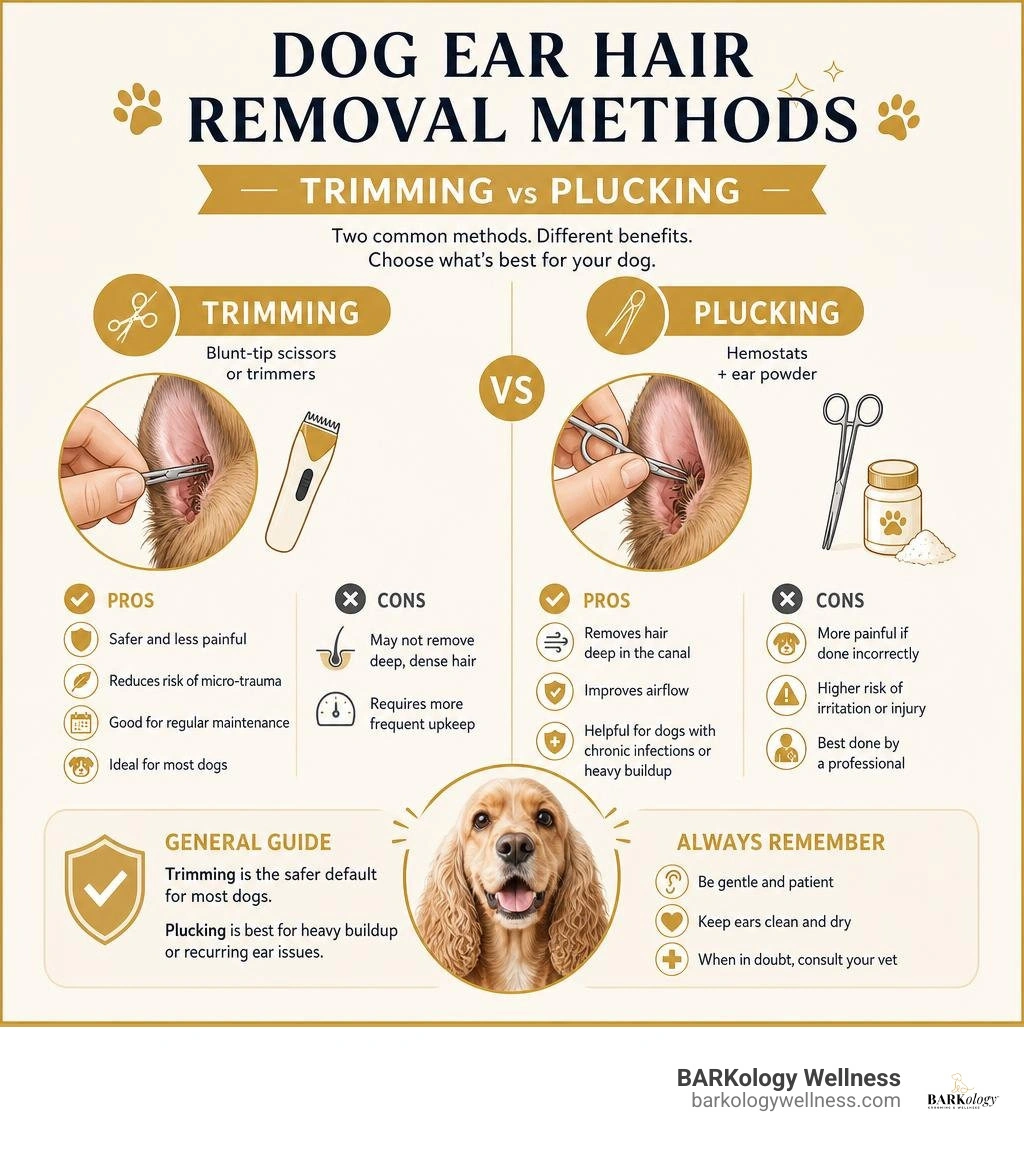
Best way to remove hair from dogs ears word roundup:
Evaluating the Best Way to Remove Hair From Dogs Ears: Plucking vs. Trimming
When we evaluate the best way to remove hair from dogs ears, the core debate comes down to two primary methods: plucking hair out from the roots versus trimming it close to the skin. Both techniques aim to enhance ventilation, but they affect the sensitive ear canal lining quite differently.
Plucking involves using fingers or hemostatic forceps to pull out fine or dense hairs directly from the hair follicle. While this leaves the canal smooth and hair-free for a longer stretch, it introduces a significant risk of micro-trauma. When a hair is plucked, it leaves an open, microscopic wound in the delicate epithelial lining of the ear canal. In humid environments, bacteria and yeast can infiltrate these micro-tears, which may actually trigger or worsen otitis externa (inflammation of the external ear canal).
Trimming, on the other hand, leaves the root intact while removing excess length blocking the canal entrance. It eliminates the risk of follicle micro-trauma and avoids causing acute pain. However, trimmed hair clippings can occasionally slip into the ear canal if not swept away thoroughly.
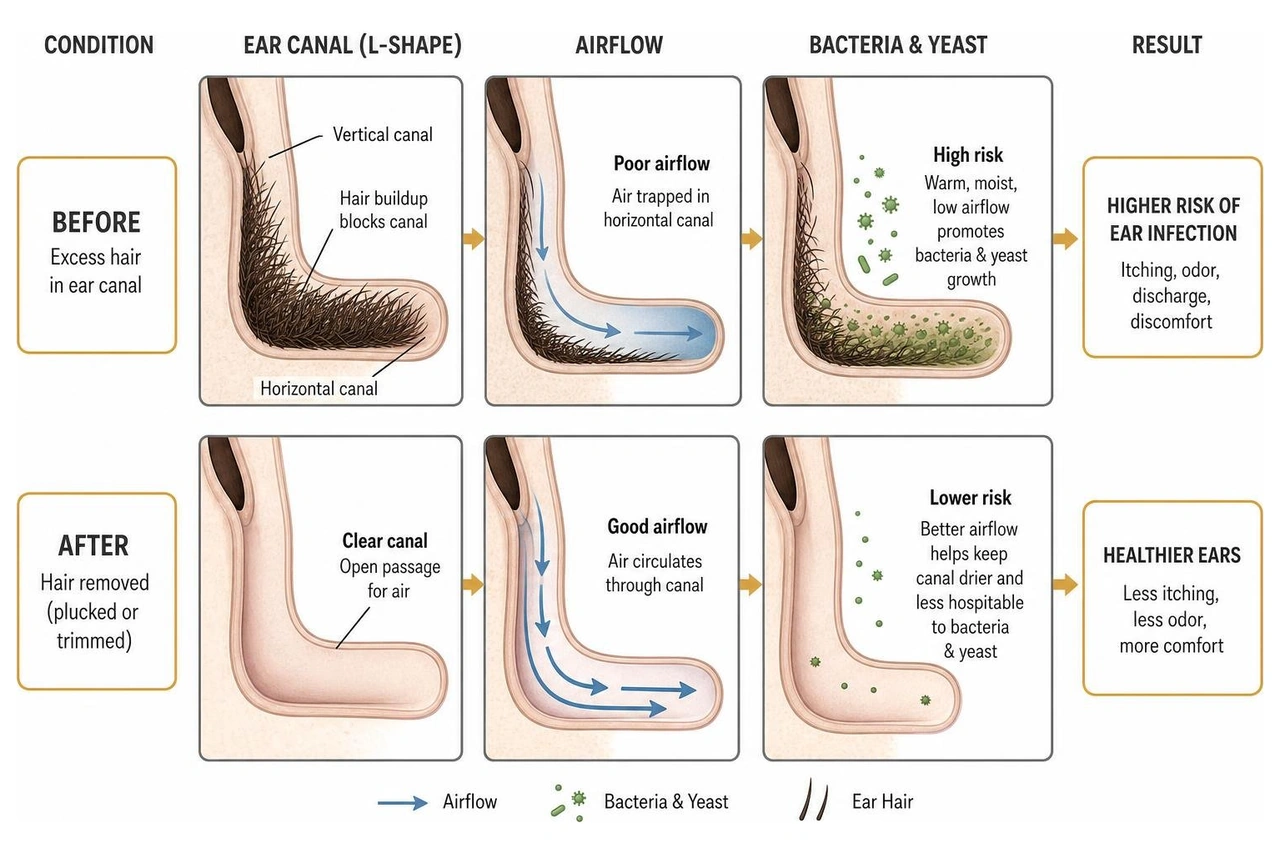
To weigh your options effectively, check out this side-by-side comparison:
| Feature / Criteria | Ear Hair Plucking | Ear Hair Trimming |
|---|---|---|
| Mechanism | Pulls hair from root/follicle | Cuts hair near skin surface |
| Pain / Discomfort | Moderate to high (requires desensitization) | Very low to none |
| Infection Risk | Higher due to microscopic skin tears | Minimal (unless hair fragments remain trapped) |
| Maintenance Frequency | Every 4 to 8 weeks | Every 2 to 4 weeks |
| Tools Required | Ear powder, locking hemostats / fingers | Blunt-nosed safety scissors, quiet trimmers |
| Best For | Extreme matting, severe canal obstruction | General upkeep, sensitive or anxious dogs |
For a deeper dive into safety metrics and veterinary dermatology insights, read this Comparative safety guide on plucking vs trimming.
Pros, Cons, and Veterinary Recommendations
Over the past few years, the consensus among veterinary dermatologists and professional groomers has shifted away from routine plucking. Modern research highlights that non-plucked ear canals retain tiny natural cilia, fine hairs that function like a fuzzy bouncer at the door of your dog's ear, assisting the ear's self-cleaning mechanism (known as epithelial migration).
Pros of Plucking:
- Completely clears the canal for up to 2 months.
- Allows topical ear medications to penetrate deeply during active medical treatment.
- Prevents extreme matting in high-growth breeds.
Cons of Plucking:
- Causes pain and discomfort, especially if done in large clumps.
- Creates micro-trauma that can harbor bacterial entry.
- Can cause localized swelling and increased moisture production.
Pros of Trimming:
- Entirely painless when executed correctly with proper tools.
- Preserves intact skin barriers without microscopic tears.
- Easy to perform safely at home during routine grooming sessions.
Cons of Trimming:
- Regrowth occurs faster (requires upkeep every 2 to 4 weeks).
- Stray trimmed hair fragments must be immediately flushed or wiped away.
Most veterinarians now recommend keeping hair short via trimming unless a dog suffers from chronic, severe canal blockages that trap moisture and lead to repeated infections. For additional insights on medical indications, check out this Veterinary guidance on plucking.
Determining the Best Way to Remove Hair From Dogs Ears for Specific Breeds
Not every dog needs inner ear hair removal. Breeds that shed naturally usually do not grow hair deep inside their ear canals. However, continuously growing single-coated and non-shedding breeds routinely produce thick fur inside the ear opening:
- Poodles and Doodles (Goldendoodles, Labradoodles): Their inner ear hair is soft but dense, easily forming tangled mats that hold onto wax and moisture.
- Shih Tzus, Maltese, and Lhasa Apsos: These small breeds grow fine, silky inner hair that wraps around wax, blocking airflow.
- Schnauzers: Their ear hair tends to be coarse, requiring routine trimming to keep the canal entrance clear.
- Cocker Spaniels, Basset Hounds, and Beagles: While floppy-eared breeds are already 3 times more likely to develop ear infections due to heavy ear flaps, those with added hair growth face double the risk.
When wax combines with dense fur, it produces heavy accumulation. If you notice thick brownish discharge or a yeasty scent, learn more about managing bad ear wax in dogs.
Essential Tools and Behavioral Preparation
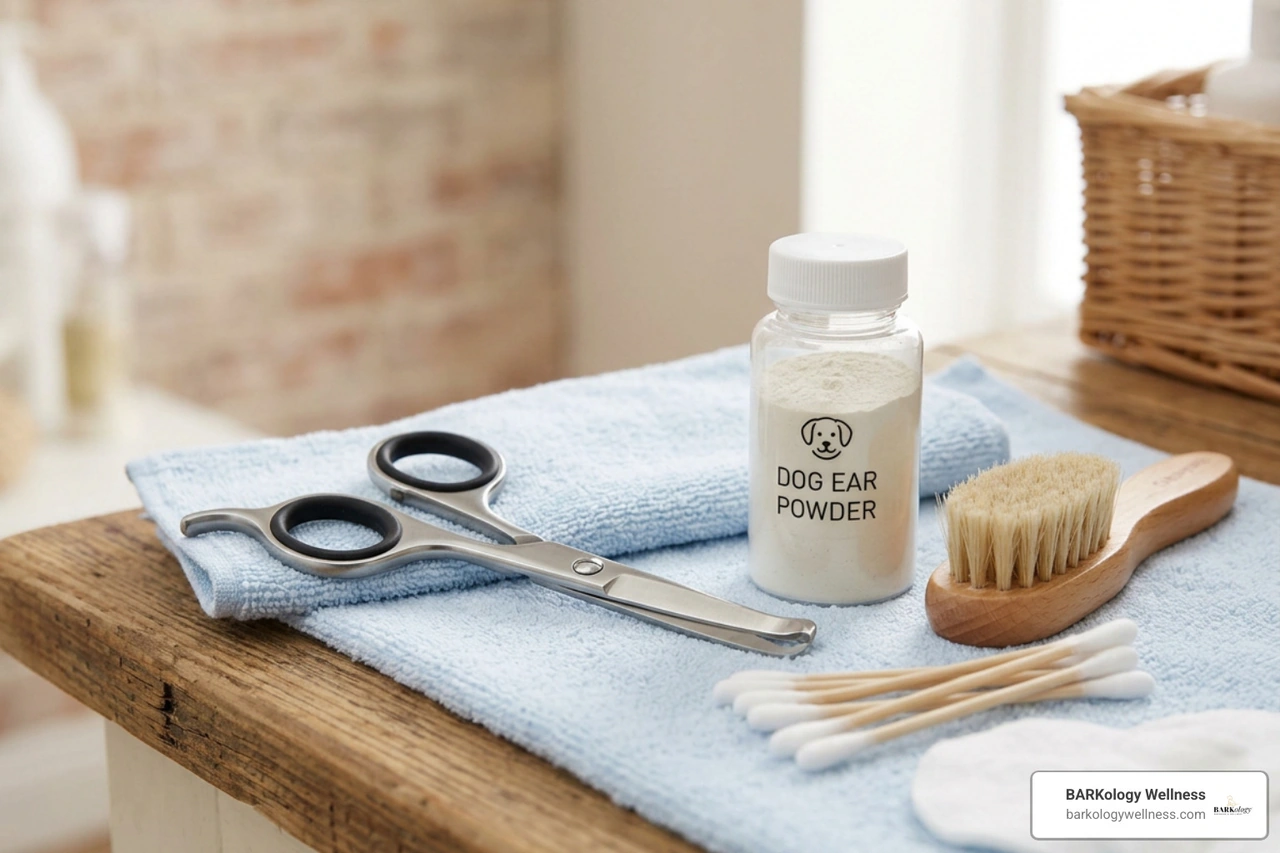
Before attempting any ear maintenance at home, collecting the right grooming equipment and preparing your dog emotionally is essential. Trying to trim or pluck an anxious dog with improper tools increases the risk of sudden head shakes and accidental injury.
Safe Tools for Trimming, Shaving, and Plucking
Never use standard household scissors, human tweezers, or pointed tools inside or near your dog's ears. Here is what we recommend having in your home grooming kit:
- Blunt-Tipped Safety Scissors: These rounded-tip grooming shears prevent accidental puncture wounds if your dog moves unexpectedly.
- Quiet Electric Ear Trimmers: Compact, low-vibration trimmers equipped with small safety guards are ideal for gently buzzing away hair around the canal opening without scaring sensitive pets.
- Stainless Steel Locking Hemostats: If plucking is necessary, smooth, curved hemostatic forceps allow you to isolate small bunches of hair without pinching ear skin.
- Pet Ear Powder: Formulated with zinc oxide or rosin, ear powder dries out greasy inner hair, drastically improving grip while reducing friction and tugging pain during extraction.
Desensitization and Painless Hair Extraction Techniques
Desensitizing your dog to ear touching makes groom time stress-free. Start when your dog is tired and calm, such as after a long walk in South Tampa FL.
- Touch and Reward: Gently lift your dog's ear flap, stroke the base, and immediately offer a high-value treat. Repeat this daily until your dog welcomes ear handling.
- Introduce Tool Sounds: Turn on your electric trimmer near your dog without touching their ear, rewarding calm behavior.
- Use Ear Powder for Grip: When plucking is required, puff a small amount of ear powder into the outer canal opening and gently massage the base for 20 seconds. The powder absorbs oils and dries the hair strands, allowing you to slide hair out smoothly with minimal tension on the skin.
Step-by-Step Instructions: Safe Ear Hair Removal
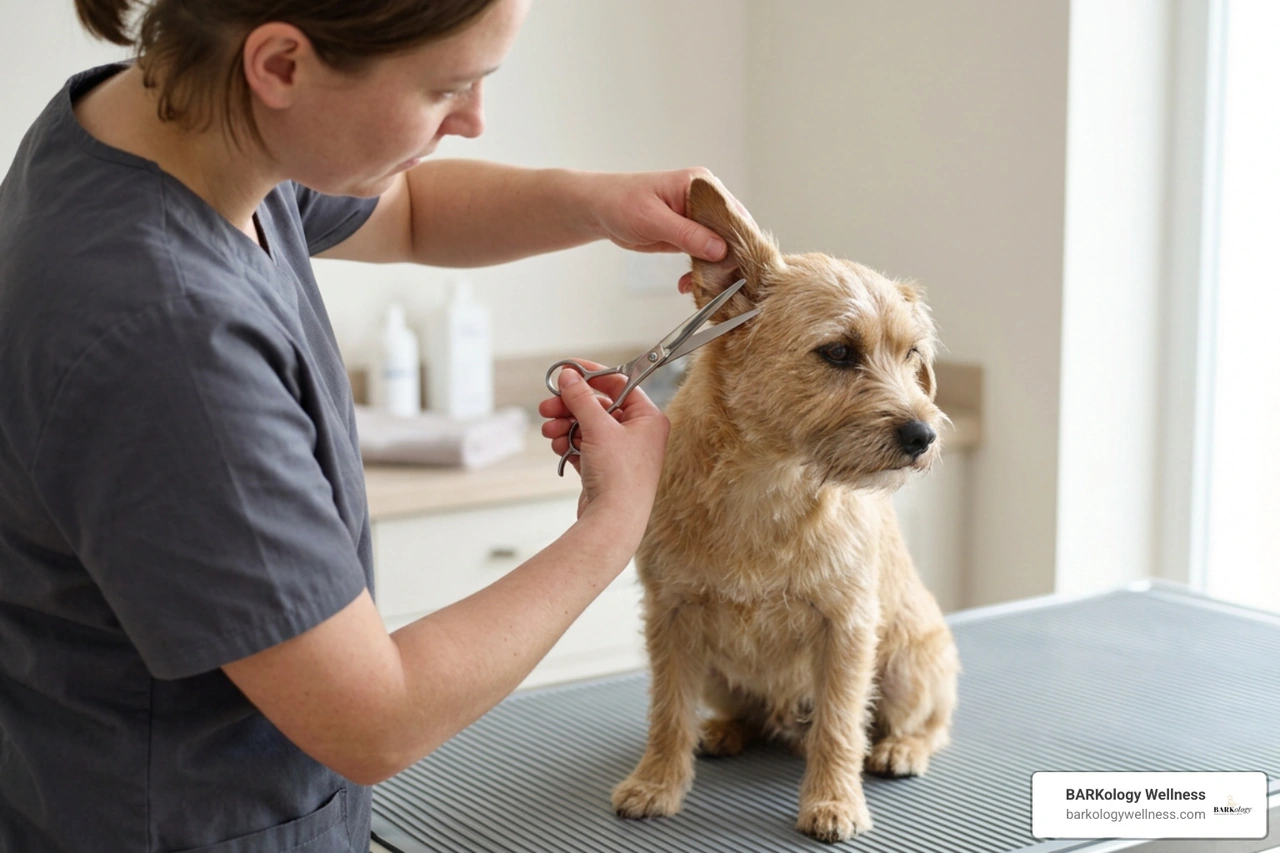
Ready to begin? Follow these clear steps to safely trim or pluck your dog's inner ear hair at home.
Executing the Best Way to Remove Hair From Dogs Ears Safely
- Positioning and Lighting: Place your dog on a stable, non-slip surface in a bright room. Have a helper gently hold your dog's head steady.
- Examine the Canal: Lift the ear flap (pinna) back to expose the inner entrance. Ensure the ear skin is pink and healthy, never attempt hair removal if the ear is bright red, swollen, or discharging pus.
- Trimming Outer Canal Hair: Hold blunt-tipped scissors parallel to the ear canal, pointing tips away from the eardrum. Trim away stray hair extending beyond the canal opening, keeping blades 1 to 2 mm off the skin to prevent nicks.
- Shaving the Entrance: If using quiet clippers with a short safety guard, lightly glide the tool across the entrance of the canal. Do not press the blade down into the horizontal canal.
- Plucking (If Advised by Your Vet): If plucking, apply ear powder, wait 30 seconds, and use your fingers or hemostats to grasp only 3 to 5 hairs at a time. Pull quickly and firmly in the direction of hair growth. Never yank large clumps at once, as this causes pain and causes microscopic skin tears. For additional safety precautions, reference this guide on how to remove hair from ears safely.
How to Clean Ears After Hair Removal to Prevent Infection
Flushing and wiping the ear canal immediately after hair removal is a critical step that many pet parents forget. Trimming leaves fine hair clippings behind that can sink down into the L-shaped canal, acting as foreign irritants.
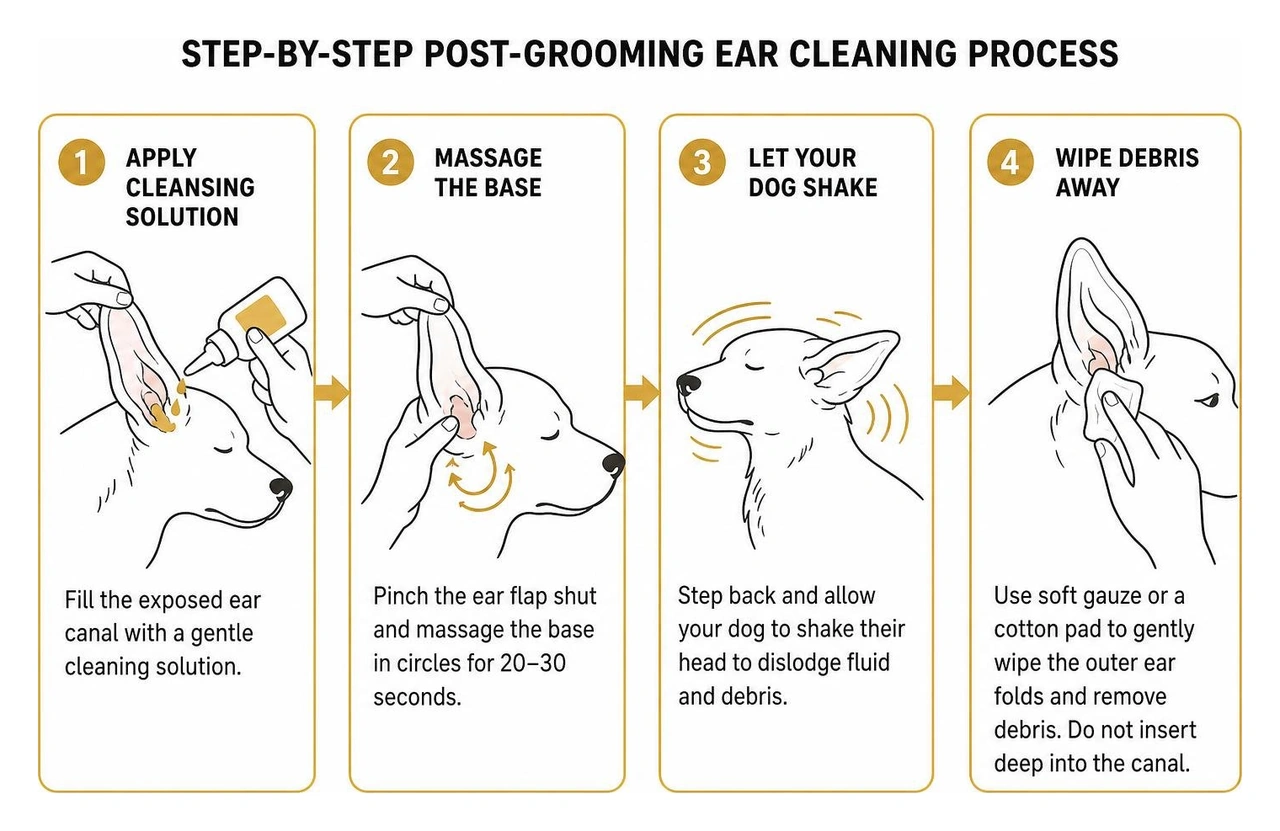
- Apply Cleansing Solution: Fill the exposed ear canal with a gentle liquid cleaner like a veterinarian-approved canine ear cleaner.
- Massage the Base: Pinch the ear flap shut and gently massage the base of the ear in a circular motion for 20 to 30 seconds. You should hear a squishing sound as the liquid breaks up wax and sweeps up loose hair clippings.
- Let Your Dog Shake: Step back with a towel handy! Allow your dog to shake their head vigorously to propel dislodged hair and fluid upward into the outer ear flap.
- Wipe Debris Away: Wrap soft cotton gauze or a cotton pad around your index finger and gently wipe out the upper ear folds. Never insert tools or Q-tips deeper into the ear canal than your first finger knuckle.
For a full walkthrough on routine ear hygiene, explore our comprehensive guides on dog ear cleaning and read how to clean dog ears safely.
Frequently Asked Questions About Dog Ear Hair Care
Can removing ear hair cause or worsen ear infections?
Yes, improper or excessive ear hair removal can actually trigger ear infections. Plucking hair causes microscopic tears in the ear canal lining, leading to localized inflammation and fluid weeping. In warm, moist ear environments, this open skin barrier allows bacteria and yeast to multiply rapidly. Furthermore, failing to flush out tiny hair clippings after trimming leaves prickling irritants inside the canal. To avoid post-grooming infections, choose trimming over plucking when possible, and always flush the ear with a gentle cleaner afterward.
How often should I remove hair from my dog's ears?
The ideal schedule depends on whether you trim or pluck:
- Trimmed Ears: Every 2 to 4 weeks during routine grooming or bath time.
- Plucked Ears: Every 4 to 8 weeks, as hair takes longer to regrow from the root.
Regularly check your dog's ears weekly during cuddle time to evaluate hair growth and smell for early signs of yeast build-up. You can learn more about establishing a routine schedule with our dedicated guide on ear cleaning for dogs.
When should I take my dog to a veterinarian or professional groomer?
You should skip home hair removal and consult a veterinarian if you observe:
- A distinct, foul odor (smelling like corn chips, bad cheese, or sour yeast).
- Dark brown, black, or yellowish pus-like discharge.
- Significant redness, swelling, or heat radiating from the ear flap.
- Your dog constantly shaking their head, scratching aggressively, or crying when touched.
In addition, severe skin conditions along the ear edges, such as ear margin seborrhea in dogs, require medical diagnostic care rather than standard grooming. When routine maintenance is all that's needed, choosing the best ear rinse for dogs ensures your dog stays comfortable and clean.
Conclusion
Determining the best way to remove hair from dogs ears comes down to placing your pet's comfort and health first. While plucking was once standard practice, modern veterinary guidelines highlight that gentle trimming is usually the safest, most painless approach for keeping the L-shaped ear canal clear and healthy.
By using proper blunt-tipped tools, desensitizing your dog with positive reinforcement, and following up every session with a thorough liquid cleaning, you can prevent wax buildup and safeguard your pup against costly ear infections.
If your dog is anxious about ear care, has heavily matted ear hair, or you simply prefer having trained hands manage their hygiene, our team at BARKology Wellness in South Tampa FL is here to help. Explore our full range of stress-free grooming and spa care options by visiting our BARKology Wellness grooming services page today!