
Why a Canine Ear Cleaner Belongs in Every Dog Owner's Routine
A canine ear cleaner is a specially formulated solution, or wipe, or powder, designed to remove wax, debris, and moisture from your dog's ear canal to prevent infections and odor.
Quick answer: What does a canine ear cleaner do?
- Removes built-up wax and debris from the ear canal
- Reduces moisture that encourages bacterial and yeast growth
- Helps prevent painful ear infections
- Deodorizes and soothes irritated ear tissue
- Prepares the ear for medicated drops when infections are being treated
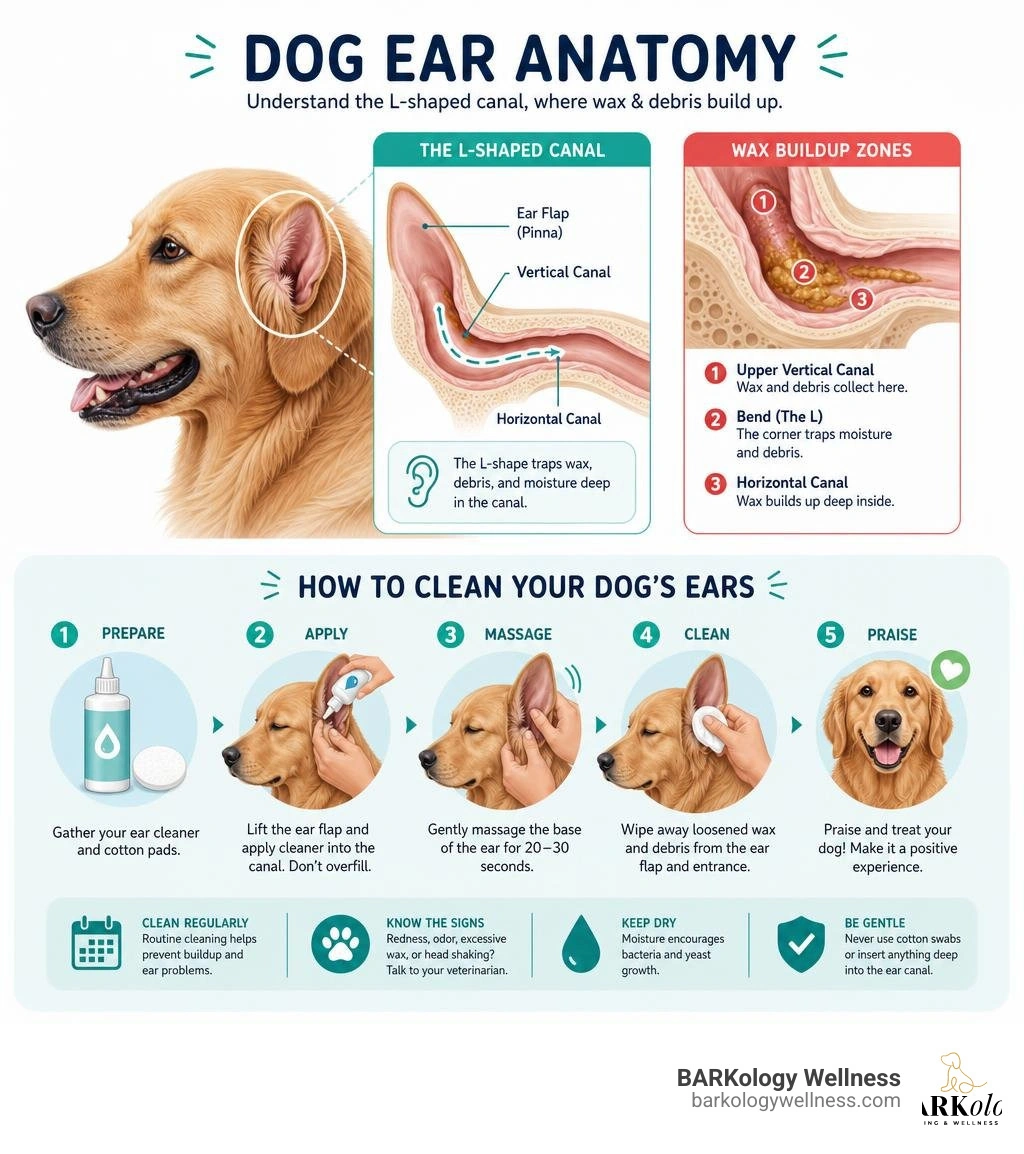
Dogs are more prone to ear problems than most people realize. Their ear canals are L-shaped, unlike human ears, which means dirt, wax, and moisture get trapped rather than draining naturally. Left unchecked, that buildup creates the perfect environment for bacteria and yeast to thrive.
The result? Itching, odor, head shaking, and sometimes a full-blown infection that requires veterinary treatment.
The good news is that regular, proper ear cleaning can prevent most of these problems entirely. You just need the right product and the right technique.
I'm Nabilah Shamseddine, franchise entrepreneur and leader at BARKology Wellness, where our team works hands-on with dogs every day, including guiding owners on proper use of a canine ear cleaner as part of a complete wellness routine. This guide walks you through everything you need to know to keep your dog's ears clean, comfortable, and healthy.
Canine ear cleaner word list:
Understanding the Role of a Canine Ear Cleaner
To truly understand why a canine ear cleaner is so vital, we have to look at the unique anatomy of our dogs' ears. Unlike the human ear canal, which goes straight in, a dog’s ear canal has a distinct L-shape. It travels vertically downward and then makes a sharp, 90-degree turn horizontally toward the eardrum.
While this structure is fantastic for their acute sense of hearing, it is a design flaw when it comes to self-cleaning. Gravity works against them, pulling dirt, dead skin cells, and heavy wax down into the horizontal canal where it becomes trapped.
In humid climates like South Tampa, FL, this structural pocket becomes a virtual greenhouse. When your pup goes swimming in the bay or gets a bath, water enters the vertical canal and pools at the bottom of the "L." This warm, dark, and damp environment is exactly what yeast and bacteria need to multiply.
Routine ear cleaning for dogs is the only way to manually flush out this trapped debris. By using a high-quality liquid wash, you break down the stubborn oils in the wax, allowing the debris to float to the surface where your dog can shake it out.
Skipping this step doesn't just lead to a smelly pet; it can cause chronic inflammation (otitis externa). Over time, repeated infections can cause the ear canal to narrow or calcify, sometimes requiring major surgery. Following proper instructions for ear cleaning in dogs is a fundamental pillar of preventive pet healthcare. If you want to dive deeper into the clinical benefits, you can read our comprehensive guide on ear cleaning for dogs.
Types of Products and Key Ingredients
When shopping for a canine ear cleaner, you will find that products generally fall into three main categories: liquid rinses, pre-moistened wipes, and grooming powders. Each format serves a very different purpose in your dog's hygiene routine.
To help you choose the right tool for the job, we have broken down the differences in the table below:
| Product Format | Primary Purpose | Best Used For | Pros | Cons |
|---|---|---|---|---|
| Liquid Rinses | Deep flushing of the entire L-shaped canal | Routine maintenance, removing heavy wax, post-swimming care | Reaches the horizontal canal; dissolves deep debris | Messy; many dogs dislike the wet sensation |
| Pre-Moistened Wipes | Surface cleaning of the pinna (outer ear flap) | Daily touch-ups, wiping away discharge, sensitive ears | Extremely easy to use; no mess; highly tolerated | Cannot reach or clean the deep horizontal canal |
| Grooming Powders | Moisture absorption and grip support | Breeds with heavy ear canal hair (e.g., Poodles, Doodles) | Keeps ears dry; makes hair plucking/trimming easier | Can cause irritation if overused or packed too deep |
Liquid Canine Ear Cleaner Solutions
Liquid rinses are the gold standard for true canal hygiene. Because they are poured directly into the ear, they are the only product format capable of reaching the horizontal canal to dissolve heavy wax and flush out deep-seated debris.
If your dog is a frequent swimmer or has floppy ears that trap moisture, a liquid rinse is essential. Many of the most effective formulas are designed to dry and acidify the ear canal, creating an inhospitable environment for microbes. For a list of top-tier liquid options, check out our review of the best ear rinse for dogs.
For a gentle, highly effective option, the Furaqua Pet Ear Rinse | Anti-Itch Antimicrobial Dog Ear Cleaner utilizes hypochlorous acid to naturally soothe itching and target yeast without stinging. If you prefer a trusted, classic European formula, Beaphar Ear Cleaner for Cats & Dogs 50ml - Beaphar is an excellent alcohol-free choice that includes MSM to support the delicate skin inside the ear.
Pre-Moistened Wipes and Finger Pads
If your dog’s ears are relatively clean and you simply want to wipe away a bit of surface dirt or dust after a walk, pre-moistened wipes or finger pads are highly convenient. They are also perfect for dogs that panic at the sensation of liquid being poured into their ears.
Wipes are designed to clean the pinna (the visible ear flap) and the very entrance of the ear canal. They are fantastic for daily maintenance, but because they cannot reach the horizontal canal, they should not be used as the sole method of cleaning for dogs prone to heavy wax buildup or infections.
Grooming Powders for Ear Hair Removal
Grooming powders are specialized products primarily used to manage ear hair. Certain breeds, such as Poodles, Shih Tzus, and Schnauzers, grow thick hair deep inside their ear canals. This hair can trap wax and moisture, acting like a damp sponge inside the ear.
Ear powder works by absorbing excess moisture and oil from the hair shafts, providing groomers with the grip needed to safely pluck or trim the hair. However, ear hair plucking is a debated topic. Plucking can sometimes create microscopic tears in the skin that invite bacteria. At BARKology Wellness, we recommend consulting your veterinarian to see if plucking is medically necessary for your specific dog, or if simple trimming and regular liquid cleaning is a safer route.
Active Ingredients in a Canine Ear Cleaner
When reading the label of a veterinary-strength liquid ear cleaner, you will likely see a combination of acids and drying agents. Understanding what these ingredients do can help you choose the right formula for your dog's needs.
- Salicylic Acid: This ingredient acts as a keratolytic, meaning it helps shed dead skin cells and exfoliate the lining of the ear canal. It also has mild antiseptic and anti-itch properties. For an excellent example of this in action, the Mopear – Powerful Salicylic Acid Ear Cleanser For Dogs & Cats | Non-Irritant, Anti-Odor Formula uses a 0.2% concentration to break down debris and neutralize foul odors without causing irritation.
- Lactic Acid & Benzoic Acid: These ingredients work together to acidify the ear canal. Yeast and bacteria thrive in alkaline environments; by lowering the pH of the ear, these acids make it incredibly difficult for microbes to survive.
- SD-Alcohol: Often included in clinical flushes to act as a drying agent. Because water is the enemy of healthy ears, alcohol helps evaporate leftover moisture after cleaning. However, it should only be used in healthy, uninjured ears, as it will sting inflamed skin. For a detailed look at clinical concentrations, you can review the FDA-registered Label: EAR CLEANSING- alcohol, lactic acid, benzoic acid, and salicylic acid liquid or the official VETERINARIAN FORMULATED EAR CLEANER FOR DOGS & CATS documentation.
Natural and Soothing Additives
If your dog has sensitive skin or mild redness, you might prefer a formulation that balances active cleaning agents with natural, soothing botanicals.
Ingredients like aloe vera and chamomile are frequently added to reduce inflammation and calm irritated skin. Witch hazel is a fantastic natural astringent that helps dry the ear canal without the intense sting of pure alcohol.
If you are looking for a gentle, botanical-based solution, the Dog Ear Wash | Natural Cleaning Solution for Fresh Ears – We Love Doodles combines witch hazel, tea tree oil, and chamomile for an organic, fresh-smelling clean. You can also find high-quality botanical options locally at specialty pet boutiques, such as getting a curated ear cleaner for dogs in Tampa at The Modern Paws.
Before choosing a natural formula, make sure you understand the role of drying agents by reading our guide on alcohol for dogs ears.
Step-by-Step Guide: How to Clean Your Dog's Ears at Home
Cleaning your dog's ears at home doesn't have to be a stressful battle. With the right preparation and a calm approach, you can make it a positive experience for both of you.

What You Will Need:
- A high-quality liquid canine ear cleaner
- Cotton balls or cosmetic cotton pads (never use Q-tips or cotton-tipped swabs deep in the canal!)
- A towel (things will get wet when your dog shakes)
- High-value treats (think freeze-dried liver, cheese, or chicken)
- A helper (optional, but highly recommended for wiggly pups)
Step 1: Preparation and Temperature Check
First, make sure your cleaning solution is at a comfortable temperature. Cold liquid squirted deep into an ear canal can cause a sudden, uncomfortable startle reflex. Warm the bottle slightly by holding it in your hands or placing it in a bowl of warm water for a few minutes before you begin.
Step 2: Positioning
Find a quiet, comfortable spot with easy-to-clean floors (like a bathroom or kitchen). Position your dog so their rear is against a wall or in a corner; this prevents them from backing away from you. If you have a small dog, placing them on a secure countertop with a non-slip mat works wonders.
Step 3: Apply the Solution
Gently lift your dog's ear flap (the pinna) straight up to open up the L-shaped canal. Place the nozzle of the bottle at the entrance of the canal.
Crucial Tip: Do not insert the plastic nozzle deep into the ear. If your dog suddenly jerks their head, the hard plastic could damage the delicate lining of the canal or even rupture the eardrum. Squeeze a generous amount of liquid into the ear until you can see the fluid level rising near the top.
Step 4: Massage the Base
While keeping the ear flap up with one hand, use your other hand to grasp the base of the ear just below the opening. You should feel a firm, tube-like structure. Massage this area gently for 30 to 45 seconds. You should hear a wet, squelching sound as the liquid breaks up deep wax and debris. If you want to learn more about identifying problematic wax types during this step, read our guide on bad ear wax in dogs.
Step 5: The Master Shake
Release the ear and take a step back. Your dog’s natural reflex will be to shake their head vigorously. Let them do it! This head shaking uses centrifugal force to fling the dissolved wax and debris out of the deep horizontal canal up to the surface of the outer ear.
Step 6: Wipe it Clean
Take a clean cotton ball or cosmetic pad and gently wipe away the loosened wax and excess cleaner from the ear flap and the visible entrance of the canal. Only clean as deep as your index finger can easily reach.
Never use cotton swabs or Q-tips in the canal. They act like a plunger, packing the dirty wax deeper into the horizontal canal and risking a punctured eardrum.
Step 7: Reward and Repeat
Shower your dog with praise and hand over a high-value treat. Once they are happy and relaxed, repeat the process on the other ear.
Frequently Asked Questions About Dog Ear Care
How often should I clean my dog's ears?
The ideal frequency depends entirely on your dog's breed, lifestyle, and ear shape.
- Floppy-Eared Breeds (Cocker Spaniels, Basset Hounds, Doodles): These breeds trap moisture easily and generally benefit from weekly or bi-weekly cleanings.
- Active Swimmers: If your dog loves splashing around the beaches of Tampa, you should clean their ears immediately after every swim to flush out trapped pond or ocean water.
- Prick-Eared Breeds (German Shepherds, Huskies): These dogs have excellent natural airflow and may only need their ears cleaned once a month, or when you notice a light buildup of dust.
A Word of Warning: Avoid over-cleaning healthy ears. Cleaning too frequently can strip away the natural, protective lipid barrier of the skin, leading to irritation and dry, itchy ears that are actually more susceptible to infection.
Can I use homemade ear cleaners like vinegar or hydrogen peroxide?
While the internet is full of DIY pet recipes, we strongly advise against using pantry staples like pure vinegar, rubbing alcohol, or hydrogen peroxide.
- Hydrogen Peroxide: When peroxide contacts organic matter, it bubbles rapidly. This bubbling can push debris deeper into the ear. Furthermore, peroxide is primarily water; leaving it in the ear leaves behind a damp environment that encourages yeast to grow.
- Rubbing Alcohol: If your dog has even mild, unnoticed irritation or micro-scratches from scratching, rubbing alcohol will burn intensely, causing your dog pain and making them fear future grooming sessions.
- Vinegar: While highly diluted organic apple cider vinegar can sometimes be used as a mild acidifier under veterinary guidance, improper dilution can cause severe chemical burns to the sensitive lining of the ear canal.
Stick to veterinarian-formulated, commercially balanced products to ensure safety and comfort.
When should I take my dog to the vet instead of cleaning at home?
Ear cleaning is a preventive maintenance tool, not a cure for an active medical issue. If your dog is showing any of the following signs, do not attempt to clean their ears at home. Instead, schedule an appointment with your veterinarian immediately:
- Severe redness, swelling, or heat radiating from the ear
- A strong, sweet, or foul odor (often indicating a yeast or bacterial infection)
- Thick, black, yellow, or bloody discharge
- Extreme pain or sensitivity when you touch their ears
- Constant head tilting, loss of balance, or rapid eye movements (which can indicate a deep middle-ear infection or a ruptured eardrum)
Attempting to pour liquid cleaner into an ear with a ruptured eardrum can cause permanent hearing loss or neurological damage. When in doubt, always have a professional take a look first.
Conclusion

Keeping your dog's ears clean is one of the simplest yet most impactful things you can do to support their overall health and comfort. By understanding their unique anatomy, choosing a high-quality canine ear cleaner, and mastering a gentle, stress-free cleaning technique, you can save your pup from painful infections and save yourself from costly veterinary bills.
Sometimes, keeping up with routine hygiene can feel overwhelming, or perhaps your pup is simply too wiggly for you to manage safely at home. That is where professional care comes in. If you are located in Tampa FL or South Tampa FL, we can help take the stress out of the process.
At BARKology Wellness, we offer luxury hygiene care designed to keep your dog healthy, clean, and thoroughly pampered. Whether you want to book a professional ear flush as part of a relaxing bath or want a complete nose-to-tail wellness package, our experienced team is here for you.
Discover our premium BARKology Wellness Grooming Services or explore our convenient membership plans to make routine ear care a seamless part of your dog's healthy lifestyle. Let us give your best friend the royal, stress-free treatment they deserve!