
Is It Safe to Clean Your Dog's Ear With Vinegar?
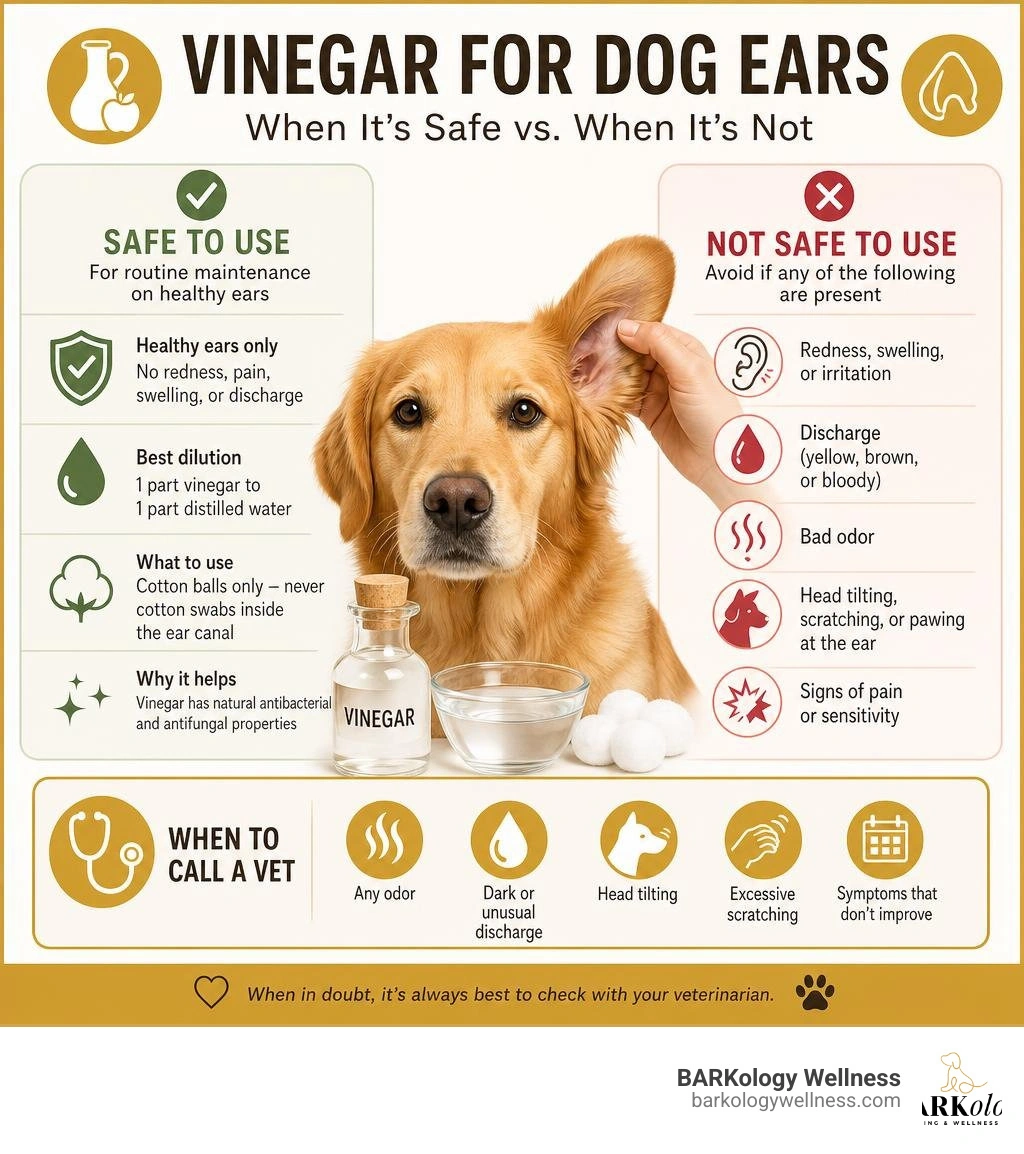
Cleaning a dog's ear with vinegar can be safe, but only under the right conditions. Here's the short answer:
- Safe for: Routine maintenance on healthy ears with no redness, pain, swelling, or discharge
- Not safe for: Active infections, inflamed or irritated ears, or a potentially ruptured eardrum
- Best dilution: 1 part vinegar to 1 part distilled water (never use undiluted)
- What to use: Cotton balls only, never cotton swabs inside the ear canal
- When to call a vet: Any odor, dark discharge, head tilting, or scratching that won't stop
Vinegar has real antibacterial and antifungal properties. The acetic acid in it can lower the pH inside the ear canal, making it harder for yeast and bacteria to thrive. That's why so many dog owners reach for it as a home remedy.
But here's the thing: ear infections account for roughly 20% of all vet visits for dogs. And using vinegar on an already-infected or irritated ear, especially one with tiny scratches from your dog's scratching, can cause pain, worsen the problem, and even damage the eardrum.
The difference between helpful and harmful often comes down to knowing what you're dealing with before you pour anything into your dog's ear.
I'm Nabilah Shamseddine, founder of BARKology Wellness, where our approach to pet care goes well beyond the basics, including understanding when a home remedy like vinegar can clean your dog's ear safely and when it's time to leave it to the professionals. In the sections below, we'll walk you through exactly what you need to know.
Clean dog ear vinegar terms to know:
The Risks and Benefits: Can You Clean Dog Ear Vinegar Solutions Safely?
When we look at the chemistry of a dog’s ear canal, it is a highly specialized, delicate ecosystem. Unlike human ear canals, which run relatively straight, a dog's ear canal has a distinct "L" shape. It drops vertically before turning horizontally toward the delicate eardrum. This unique anatomy is excellent for catching sounds, but it is equally efficient at trapping moisture, dirt, and debris.
In a warm, humid climate like ours here in South Tampa, FL, this "L" shape essentially turns your dog's ear into a biological greenhouse. Moisture from a humid afternoon walk, a splash in the pool, or a bath gets trapped at the bottom of the vertical canal. This is where yeast and bacteria thrive.
This is where the concept of using a clean dog ear vinegar solution comes in. Vinegar contains acetic acid, a natural compound that serves as both a mild antiseptic and an acidifying agent.
How Vinegar Works in a Healthy Ear
The primary benefit of vinegar is its ability to alter the pH level of the ear canal. A healthy canine ear canal maintains a slightly acidic to neutral pH. When moisture or debris builds up, the environment becomes more alkaline, which is the perfect breeding ground for microbes.
Introducing a properly diluted vinegar solution can achieve pH restoration, effectively dropping the pH back down to a level where yeast and bacteria cannot replicate. This process is known as acidification. When used strictly for preventative maintenance, a mild vinegar wash can help keep the ear canal clean, dry, and hostile to unwanted pathogens.
However, the risks of using DIY vinegar solutions are significant if the ear is not completely healthy. If your pup has been scratching at their ears, they have likely created microscopic cuts and abrasions inside the canal. Pouring an acidic solution like vinegar onto open wounds is incredibly painful, think of splashing vinegar on a fresh paper cut, but inside a highly sensitive, enclosed space.
Furthermore, if the delicate tympanic membrane (the eardrum) is ruptured or perforated, any liquid poured into the ear canal can leak directly into the middle or inner ear. This can lead to severe neurological complications, intense pain, permanent hearing loss, or loss of balance.
For a deeper dive into safe, professional-grade ear hygiene, check out our guide on Dog Ear Cleaning to understand how we manage this delicate process.
White Vinegar vs. Apple Cider Vinegar: How to Clean Dog Ear Vinegar Bases
If you search the internet for a DIY ear cleaner, you will find two main camps: those who swear by distilled white vinegar and those who advocate for apple cider vinegar (ACV). Understanding the differences between these two bases is crucial for your dog's safety.
Distilled white vinegar is highly consistent. It is clear, cheap, and has a standardized acidity level (usually 5% acetic acid). Because it contains no organic residue or complex sugars, it is the preferred choice for a basic, clean drying solution. It does its job of acidifying the canal and evaporating without leaving any trace behind.
Apple cider vinegar, particularly the raw, unfiltered variety, is often praised in natural pet care circles because it contains "the mother", a colony of beneficial bacteria and enzymes. However, raw ACV also contains organic sediment and trace sugars.
When you introduce organic sugars into a dark, warm, moist ear canal, you run the risk of providing a food source for the very yeast you are trying to eliminate. While ACV is an excellent dietary supplement or topical rinse for a dog's coat, it is generally less suited for the delicate, enclosed environment of the ear canal.
Additionally, ACV's amber hue can stain the light-colored fur of breeds like Poodles, Malteses, or Bichons Frises. If you do choose to use an ACV base, it must be filtered and heavily diluted with distilled water to minimize these risks. For more details on navigating these natural remedies safely, you can refer to the DIY Dog Ear Cleaner: Apple Cider Vinegar Safety Guide | Pet Stories.
The Danger of Alcohol and Boric Acid Additives
Many old-school "remedies" floating around online suggest mixing vinegar with isopropyl (rubbing) alcohol or boric acid powder. While these ingredients are common in some industrial formulations, using them in a homemade mixture is a recipe for severe skin irritation.
Rubbing alcohol is a powerful drying agent, but it is incredibly harsh. It strips away the natural protective lipid barrier of the ear canal's skin, leaving it dry, cracked, and highly vulnerable to infection. Furthermore, alcohol is highly volatile and will cause an agonizing, burning sensation on any inflamed or micro-abraded tissue.
Boric acid is another additive often recommended for its antifungal properties. However, boric acid is a chemical compound that can be highly toxic if absorbed through broken skin or ingested if your dog shakes their head and licks the runoff. It is incredibly difficult to measure and dissolve boric acid powder accurately at home, leading to gritty solutions that can physically abrade the delicate lining of the ear.
At BARKology Wellness, we strongly advise pet parents to avoid putting alcohol or chemical powders in their dogs' ears. If you want to understand why alcohol is so damaging to canine ears, take a look at our detailed breakdown on Alcohol For Dogs Ears.
DIY Recipes vs. Commercial Canine Ear Cleaners
When comparing a homemade vinegar solution to a high-quality commercial ear rinse, it helps to look at how they are formulated. A basic DIY recipe typically involves mixing equal parts distilled white vinegar and distilled water. While this simple mix can lower the pH, it lacks the sophisticated chemistry of modern veterinary products.
Commercial canine ear cleaners are specifically formulated to address multiple issues simultaneously without causing irritation. They don't just rely on acidity; they contain:
- Cerumenolytics: Special surfactants that actively break down, dissolve, and liquefy stubborn earwax (cerumen) so it can be easily wiped away.
- Drying Agents: Safe, non-irritating drying agents (such as benzoic acid or salicylic acid) that help evaporate residual moisture without stripping the skin's natural oils.
- Soothing Agents: Ingredients like aloe vera, chamomile, or eucalyptus that calm red, irritated skin.
- Buffered pH: Formulations balanced to match the precise physiological pH of a dog's ear, preventing the stinging sensation associated with raw household vinegar.
Some mild home remedies utilize witch hazel or a simple saline solution. Witch hazel is a natural astringent that can soothe mild outer ear inflammation, while a sterile saline mix is excellent for gently flushing out loose dirt. However, neither of these has the wax-dissolving power of a dedicated Canine Ear Cleaner.
To help you decide which route is best for your pup, we've put together a quick comparison table:
Comparing DIY Vinegar and Commercial Ear Cleaners
If you are looking for a safe, reliable option to keep your dog's ears fresh between grooming appointments, we recommend looking into a dedicated, professional-grade Best Ear Rinse For Dogs.
Red Flags: When to Avoid DIY Ear Cleaning
Before you even think about opening a bottle of vinegar, you must perform a thorough visual and sensory inspection of your dog's ears. There are several clear "red flags" that mean you should put the DIY ingredients away and book an appointment with your veterinarian immediately.
First and foremost is the risk of a ruptured eardrum. The tympanic membrane is a thin, delicate barrier that separates the external ear canal from the highly sensitive middle ear and inner ear. You cannot see the eardrum with the naked eye; a veterinarian must use a specialized tool called an otoscope to peer deep into the horizontal canal.
If you pour a liquid cleaner, especially an acidic vinegar solution, into an ear with a ruptured eardrum, the fluid will enter the middle ear. This can cause agonizing pain, facial nerve paralysis, a permanent head tilt, loss of balance (vestibular disease), or complete deafness.
Signs of a Ruptured Eardrum or Deep Infection:
- A sudden, persistent head tilt to one side
- Loss of coordination, stumbling, or walking in circles
- Rapid, involuntary eye movements (nystagmus)
- Intense pain when the base of the ear or the side of the head is touched
- Extreme resistance or aggression when you attempt to handle the ears
If your dog is showing any of these signs, do not put anything into their ears. They need a professional veterinary evaluation right away. To learn more about identifying abnormal wax and discharge, read our guide on Bad Ear Wax In Dogs.
When to Avoid DIY and Why You Shouldn't Clean Dog Ear Vinegar Solutions During Infections
It is a common misconception that a vinegar wash can cure an active ear infection. Let us be completely clear: vinegar is a maintenance tool, not a treatment for an active infection.
When a dog has an active ear infection (otitis externa), the delicate lining of the ear canal is highly inflamed, swollen, and often covered in microscopic cuts from scratching. If you apply a vinegar solution to an inflamed ear, the intense stinging can cause your dog severe pain and make them highly fearful of any future ear handling.
Furthermore, ear infections are caused by specific pathogens that must be identified under a microscope. Common culprits include:
- Yeast Overgrowth (Malassezia): Characterized by a sweet, musty odor and a thick, dark brown or black waxy discharge.
- Bacterial Infections: Can range from mild cocci infections to highly aggressive, resistant bacteria like Pseudomonas. These often produce a foul, putrid smell and a yellow or green purulent discharge.
- Ear Mites: Microscopic parasites that cause intense itching and leave behind a dry, crumbly black discharge that resembles coffee grounds.
An active infection requires targeted, prescription veterinary medications, such as antifungal drops, antibiotics, or anti-inflammatory treatments, to resolve. Vinegar cannot penetrate the thick biofilm of a severe infection, and it will not kill deep-seated bacterial or parasitic invaders.
Using vinegar on an active infection only delays proper medical care, allowing the pathogens to multiply and potentially migrate deeper into the ear structure. For a veterinary perspective on managing ear health safely, consult How to Clean Dog Ears With Vinegar: A Vetted Guide.
Step-by-Step Guide to Cleaning Your Dog's Ears at Home
If your dog's ears are healthy, odor-free, and simply have a small amount of normal, light-colored wax, you can perform a gentle preventative cleaning at home.
What You Will Need:
- A properly diluted ear cleaner (such as a 1:1 mix of distilled white vinegar and distilled water, or a vet-approved commercial rinse) warmed slightly to body temperature.
- High-quality cotton balls or cosmetic cotton pads.
- Clean medical gauze squares.
- A plentiful supply of high-value treats to create a positive association.
- Never use cotton-tipped swabs (Q-tips) inside the ear canal. They act like a plunger, packing wax and debris deeper down against the eardrum, and a sudden jerk of your dog's head can easily rupture the delicate membrane.
The Step-by-Step Process:
- Create a Calm Environment: Choose a quiet, comfortable space where your dog feels secure. If your dog is nervous, spend a few minutes offering treats and gently massaging their ears before bringing out the cleaning supplies.
- Examine the Ear: Gently lift the ear flap (pinna) and look inside. Check for redness, swelling, scratches, or an offensive odor. If everything looks pale pink and healthy, proceed.
- Apply the Solution: Gently hold the ear flap upward to straighten the vertical canal. Carefully squeeze a small amount of the lukewarm cleaning solution into the ear canal until you can see the liquid rising near the opening. Tip: If your dog hates the sensation of liquid being poured directly into their ear, thoroughly saturate a cotton ball with the solution and place it just inside the ear opening, gently squeezing it to release the fluid down the canal.
- Massage the Base of the Ear: While holding the ear flap up, use your thumb and forefinger to massage the very base of the ear (located right where the ear cartilage meets the skull) for 20 to 30 seconds. You should hear a squishing, wet sound. This motion breaks up the deep wax and debris, pulling it up into the vertical canal.
- Let Your Dog Shake: Release your grip and step back. Your dog will naturally shake their head vigorously. This shaking uses centrifugal force to fling the loosened wax and excess fluid out of the deep horizontal canal up to the outer ear.
- Wipe Away the Debris: Use a clean, dry cotton ball or a piece of soft gauze wrapped around your index finger to gently wipe away the loosened wax and moisture from the outer ear flap and the top of the ear canal. Only clean as deep as your finger can easily reach. Never push cotton balls or gauze deep into the canal.
- Reward and Repeat: Praise your pup enthusiastically and offer a high-value treat. Repeat the process on the other ear.
For more detailed tips on home ear hygiene, you can explore the Cornell University veterinary guide on How to Clean Your Dog's Ears. If you would like to see our professional approach to handling ear care during a spa day, visit our resource on Ear Cleaning For Dogs.
Frequently Asked Questions about Dog Ear Care
At BARKology Wellness, we receive many questions from South Tampa pet parents about maintaining their dogs' ear health. Here are some of the most common queries we address:
How often should I clean my dog's ears?
For most healthy dogs, a routine ear cleaning once every 2 to 4 weeks is plenty. However, the ideal frequency depends largely on your dog's breed, lifestyle, and ear anatomy.
Dogs with upright, erect ears (like German Shepherds or French Bulldogs) have excellent natural ventilation and rarely need frequent cleaning. Conversely, floppy-eared breeds (like Cocker Spaniels, Basset Hounds, or Golden Retrievers) trap moisture easily and benefit from more regular maintenance, especially after swimming or bathing.
Be careful not to over-clean. Cleaning too frequently can strip the ear canal of its natural protective oils, alter the healthy microbiome, and cause chronic irritation that actually makes infections more likely.
Can vinegar cure an active dog ear infection?
No, vinegar cannot cure an active ear infection. It is purely a preventative and maintenance tool. Active infections involve deep-seated bacterial or yeast overgrowth that requires targeted prescription medications, such as antibiotic, antifungal, or steroid drops prescribed by a veterinarian after a microscopic examination of the ear discharge.
Why do my dog's ears smell like corn chips?
That distinct "Fritos" or corn chip smell is a classic indicator of a yeast overgrowth (typically Malassezia). Yeast is a normal inhabitant of a dog's skin, but when moisture, heat, or allergies disrupt the ear's natural pH, the yeast population explodes. If you notice this sweet, musty odor accompanied by scratching or a dark brown discharge, it is time to skip the home remedies and consult your vet for a proper diagnosis.
Conclusion

Keeping your dog's ears clean, dry, and healthy is a fundamental part of their overall wellness. While a properly diluted white vinegar solution can serve as an affordable, preventative drying flush for healthy ears, it is crucial to recognize its limitations.
Using vinegar on an active infection, a ruptured eardrum, or inflamed skin can cause severe pain and worsen the underlying issue. When it comes to your dog's comfort and hearing, taking a cautious, informed approach is always the best path forward.
If you are located in the Tampa, FL or South Tampa, FL area and want to ensure your pup's ears are cared for with the utmost precision and luxury, let us handle the hard work. At BARKology Wellness, our experienced team provides tailored, stress-free grooming and wellness services in a peaceful, state-of-the-art environment.
We use only the highest-quality, pH-balanced, vet-approved ear rinses to keep your dog's ears fresh, clean, and comfortable without any of the risks of DIY kitchen chemistry.
Give your four-legged family member the royal treatment they deserve. Book an appointment today through our BARKology Wellness Grooming Services and let us keep your pup healthy, happy, and smelling wonderful from head to paw!