
Why Cockapoo Coat Care Is Harder Than It Looks
Cockapoo coat care is one of the most underestimated responsibilities of owning this breed, and most owners find that out the hard way.
Here is what you need to know right away:
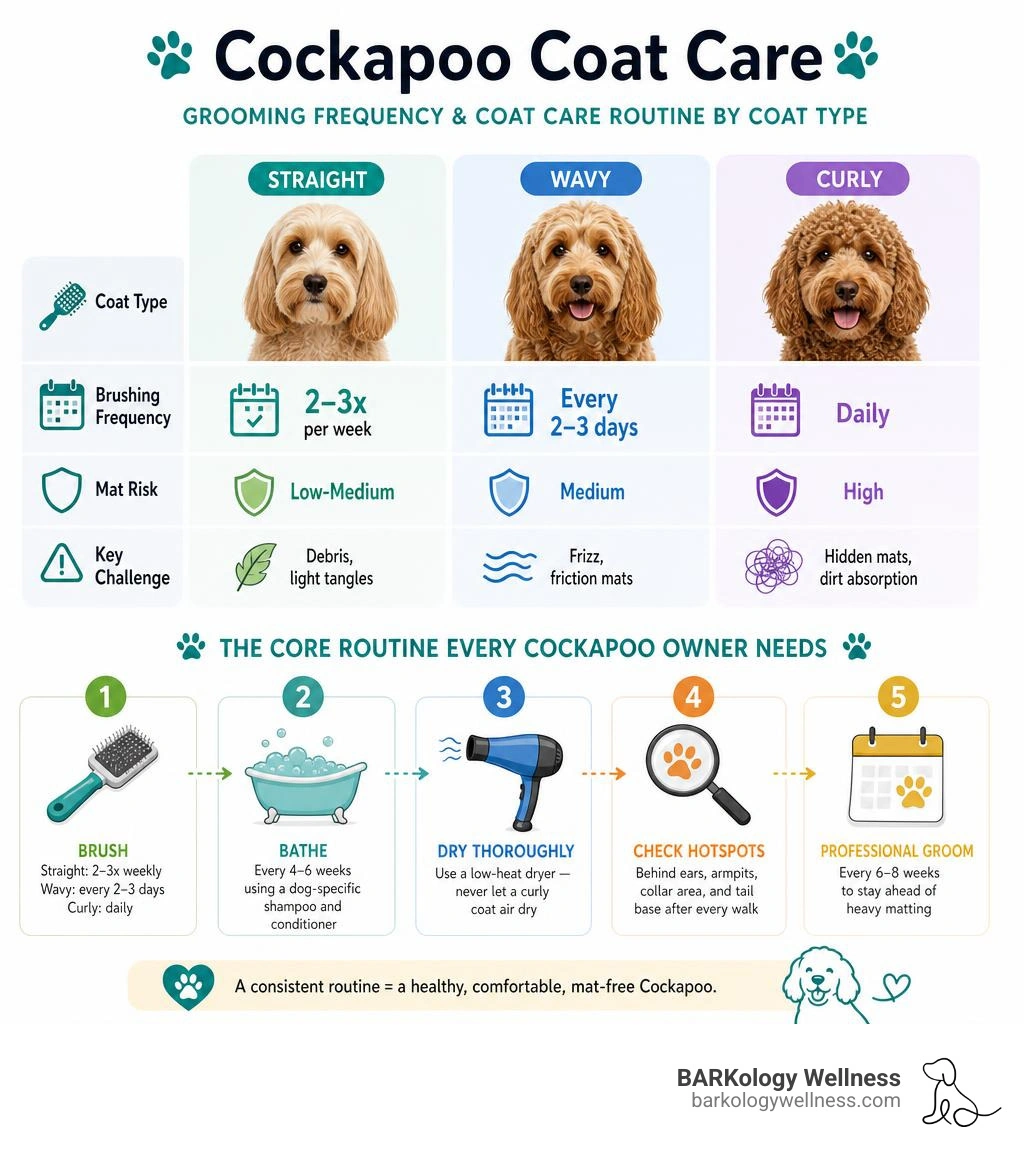
| Coat Type | Brushing Frequency | Mat Risk | Key Challenge |
|---|---|---|---|
| Straight | 2-3x per week | Low-Medium | Debris, light tangles |
| Wavy | Every 2-3 days | Medium | Frizz, friction mats |
| Curly | Daily | High | Hidden mats, dirt absorption |
The core routine every Cockapoo owner needs:
- Brush regularly, straight coats 2-3x weekly, wavy every 2-3 days, curly coats daily
- Bathe every 4-6 weeks using a dog-specific shampoo and conditioner
- Dry thoroughly with a low-heat dryer, never let a curly coat air dry
- Check mat hotspots, behind ears, armpits, collar area, and tail base after every walk
- Book a professional groomer every 6-8 weeks to stay ahead of heavy matting
That fluffy, irresistible coat does not manage itself.
Cockapoos inherit their coats from two very different parents, the Cocker Spaniel and the Poodle. The result is a coat that sheds very little but traps loose hair inside the curls instead. That trapped hair twists into tangles. Tangles become mats. Mats become a real health problem if ignored.
Most owners discover this around the one-year mark, when the adult coat fully comes in and suddenly even a rainy walk turns into a 30-minute detangling session.
The good news? With the right routine and the right tools, you can keep your Cockapoo comfortable, mat-free, and looking great, without losing your mind in the process.
My name is Nabilah Shamseddine, and as the leader of Barkology Wellness, I've built my work around one core belief: premium pet care should be as thoughtful and health-focused as the wellness standards we set for ourselves. That commitment to whole-dog wellbeing is exactly why cockapoo coat care sits at the heart of what we do, because a healthy coat is not just about looks, it's a direct reflection of your dog's overall comfort and health. Let's walk through everything you need to build a routine that actually works.
Cockapoo coat care further reading:
Understand the Coat You’re Working With
Cockapoos are part Cocker Spaniel and part Poodle, so their coats can land anywhere between silky spaniel hair and dense poodle curls. That is why two Cockapoos from the same family can have completely different grooming needs.
The big thing to understand: Cockapoos often shed less visibly than many breeds, but that does not mean hair disappears. Loose hair can stay trapped in the coat, especially in wavy and curly coats. Once trapped, it tangles with live hair and forms mats close to the skin.
For broader breed-specific guidance, the Cockapoo grooming guidance from the Cockapoo Club of GB also explains why regular brushing and combing are so important.
| Coat Type | Texture | Best Tools | Typical Routine | Best Trim Strategy |
|---|---|---|---|---|
| Straight | Silkier, spaniel-like | Pin brush, slicker, comb | 2-3 times weekly | Light tidy trims |
| Wavy | Fleece, loose curls, ringlets | Slicker, steel comb, detangler | Every 2-3 days | Teddy bear or puppy cut |
| Curly | Dense, poodle-like curls | Firm slicker, steel comb, dryer | Daily if kept long | Shorter practical clip |
Straight Coats: Easier, But Not Maintenance-Free
Straight Cockapoo coats usually have more Cocker Spaniel influence. They tend to be silkier, may shed a bit more visibly, and are often easier to comb than dense curls.
But easy does not mean optional.
Straight-coated Cockapoos still need brushing 2-3 times per week. Pay attention to feathering on the legs, ears, chest, tail, and belly. These areas collect leaves, sand, grass, and Tampa sidewalk debris like tiny little souvenirs your dog never asked to bring home.
A pin brush can work well for the topcoat, but always finish with a stainless steel comb. If the comb catches, there is still a tangle hiding.
Wavy Coats: The Classic Cockapoo Middle Ground
The wavy coat is the “classic Cockapoo” look: fluffy, soft, and charmingly unbothered by gravity. It is often called a fleece coat and may form loose ringlets.
Wavy coats usually need brushing every 2-3 days, and more often if the coat is long. This coat type is especially prone to friction mats under harnesses, collars, armpits, and behind the ears.
Line brushing is your best friend here. A moisturizing conditioner during baths and a light detangling spray between baths can help reduce frizz and make brushing less dramatic. Your Cockapoo may still act like you are performing a full opera, but the coat will cooperate better.
Curly Coats: Cute, Dense, and Mat-Prone

Curly Cockapoo coats look adorable, but they are the highest-maintenance coat type. These coats behave more like Poodle coats: dense, springy, and very good at hiding mats near the skin.
Curly coats often need daily brushing if kept long. They also absorb dirt and moisture more easily, which is a big deal in humid South Tampa weather. A damp curly coat that is not fully dried can tighten into knots quickly.
For many curly Cockapoos, a practical coat length of about 3-4 cm can make home maintenance much easier. You still get the cute curls, but you reduce the chance of painful mats and emergency shave-downs.
Build a cockapoo coat care Routine That Prevents Mats
The best cockapoo coat care routine is not complicated. It is consistent.
Think of it like dental care. Brushing once in a while is better than nothing, but it will not prevent problems if the hidden spots are ignored. Mats usually do not start on top of the coat where you can see them. They start close to the skin.
For more whole-coat basics, see our guide to More info about dog coat care.
Cockapoo coat care Tools That Actually Reach the Skin
You do not need a grooming salon in your laundry room. You do need tools that actually reach through the coat.
Essential tools:
- Slicker brush for loosening tangles and trapped hair
- Stainless steel comb for checking your work
- Pin brush for lighter straight or wavy coats
- Soft puppy brush for early training
- Detangling spray for dry tangles and friction spots
- Moisturizing dog conditioner for bath days
- Dematting comb or splitter for small mats, used carefully
- Nail grinder or nail clippers
- Dog-safe ear cleaner
- Grooming scissors or thinning shears for minor tidying only
- Microfiber towels
- Low-heat or high-velocity dryer
The slicker brush does the lifting. The comb tells the truth. If the comb cannot glide from skin to tip, you are not finished.
How Often to Brush Each Coat Type
Use this as your baseline:
- Straight coat: 2-3 times weekly
- Wavy coat: every 2-3 days
- Curly coat: daily, especially if long
- Long coat of any type: daily checks
- Short practical trim: several times weekly, with hotspot checks
Always check friction zones: underarms, behind ears, under the collar, around the harness, belly, groin, tail base, and paws.
A short trim reduces workload, but it does not remove the need for brushing. It just makes the job faster and less likely to involve bargaining with a 20-pound dog who suddenly has the strength of a small horse.
The Best Brushing Method for Hidden Tangles
The best method is line brushing.
Here is how to do it:
- Choose a small section of coat.
- Part the hair until you can see the skin.
- Brush from the skin outward with a slicker brush.
- Move section by section instead of brushing over the top.
- Use a steel comb to check the section.
- If the comb catches, spray lightly with detangler and work from the end of the hair upward.
- Hold the hair at the roots when detangling to avoid pulling the skin.
- Take reward breaks before your dog gets frustrated.
Do not surface brush. Surface brushing makes the top fluffy while mats quietly party underneath.
Bathing Without Creating a Knotty Disaster
Most Cockapoos benefit from bathing every 4-6 weeks. More frequent baths may be needed after muddy walks, beachy adventures, or rainy-day zoomies.
Use:
- Lukewarm water
- Dog-specific shampoo
- Moisturizing conditioner
- Detangling or leave-in spray when appropriate
Avoid human shampoo. Dog skin has different needs, and harsh products can dry the skin and coat. If your Cockapoo is itchy, flaky, or sensitive, gentle formulas such as oatmeal-based shampoos may help. You can also learn more in our guide to More info about dry skin in dogs.
Always rinse thoroughly. Shampoo or conditioner residue can irritate skin and make the coat feel sticky, which attracts dirt and tangles.
One important rule: do not bathe over mats. Water tightens mats. If your dog has tangles before the bath, gently brush them out first or ask a professional groomer for help.
Drying Is Where Most Mats Are Made, or Prevented

Drying is the step that separates “fluffy Cockapoo” from “felted sweater with legs.”
After bathing:
- Blot with a microfiber towel. Do not aggressively rub.
- Use a low-heat dryer or high-velocity dryer.
- Keep airflow moving with the coat, not whipping it into knots.
- Dry all the way to the skin.
- Brush and comb once the coat is dry enough to separate cleanly.
Air drying is risky for wavy and curly coats because curls tighten as they dry. Dampness trapped near the skin can also contribute to irritation, odor, and hotspots, especially in Tampa humidity.
Groom Through Puppy, Adult, and Seasonal Coat Changes
Cockapoo coats change with age, weather, lifestyle, and coat length. A routine that worked at 4 months may completely fail at 10 months.
The Cockapoo coat care guidance from the British Cockapoo Society highlights the importance of regular brushing, skin checks, and early grooming habits.
The Puppy Coat Phase: Easy Now, Harder Later
Puppy coats are usually soft, fluffy, and deceptively easy. This is the training phase.
Start as early as 8-12 weeks with:
- A soft brush
- Short sessions of 2-5 minutes
- Lots of treats and praise
- Gentle handling of paws, ears, face, tail, and belly
- Calm bath exposure
- Practice standing on a non-slip surface
The goal is not a perfect groom. The goal is teaching your puppy that grooming is normal, safe, and sometimes comes with snacks. That is a powerful life lesson.
The Adult Coat Transition Around 8–10 Months
Around 8-10 months, many Cockapoos begin the transition from puppy coat to adult coat. This is when owners often say, “But I brushed yesterday!”
We believe you. The coat changed the rules.
During this stage, the softer puppy coat sheds into the developing adult coat. If that loose coat is not removed, it gets trapped and mats quickly. Some Cockapoos seem to develop mats almost overnight.
During the transition:
- Increase brushing frequency
- Comb to the skin every session
- Check behind ears and under legs daily
- Consider a practical first full groom
- Avoid trying to keep a very long coat unless you can maintain it daily
This phase can last months, and some Cockapoo coats continue changing until around 2 years of age.
Seasonal Coat Challenges: Mud, Moisture, and Heat
South Tampa brings its own grooming challenges: humidity, rain, heat, pollen, and damp grass. Moisture plus curls equals mat potential.
After walks, check:
- Paws and between toes
- Legs
- Belly
- Ears
- Tail
- Harness areas
In warmer months, a shorter body trim can help reduce maintenance and improve comfort. In cooler months, you can keep a little more length, but avoid letting the coat get so long that brushing becomes unrealistic. Adult Cockapoo coats can grow quite long, sometimes up to around 15 cm, but long does not always mean comfortable.
Comfort beats fluff. Every time.
Cockapoo coat care Mistakes That Create Mats Overnight
Common mistakes to avoid:
- Letting a wet curly coat air dry
- Brushing only the surface
- Skipping the comb check
- Bathing over existing tangles
- Waiting too long between professional grooms
- Keeping the coat long without daily brushing
- Ignoring underarms, ears, collar areas, and tail base
- Using dull, weak, or worn-out brushes
- Cutting mats out with scissors
- Assuming “low shedding” means “low grooming”
Please be careful with scissors near mats. Mats pull skin upward, so it is easy to cut the skin by accident. When in doubt, stop and call a professional.
Focus on the Areas Where Cockapoos Mat, Itch, and Get Uncomfortable
Mats are not just cosmetic. They can pull on the skin, trap moisture, hide irritation, and create discomfort. Grooming is also your chance to notice lumps, redness, flakes, odor, parasites, or sore spots early.
For more skin-focused guidance, visit More info about dog skin care. If your dog has ongoing irritation, our overview of Dog Skin Treatments may also help you understand when professional care is needed.
The Most Common Mat Zones to Check First
Check these areas first:
- Behind the ears
- Under the collar
- Armpits
- Chest
- Belly
- Groin
- Tail base
- Backs of the legs
- Between toes
- Around paw pads
- Beard and chin
- Harness contact points
These are friction and moisture zones. That means they mat faster than the rest of the coat.
Ear Care for Floppy-Eared Cockapoos
Cockapoos have floppy ears, which can limit airflow. That makes ear checks especially important.
Check weekly for:
- Odor
- Redness
- Excess wax
- Head shaking
- Scratching
- Moisture
- Sensitivity
Use a dog-safe ear cleaner if recommended, and never push cotton swabs deep into the ear canal. Some Cockapoos grow excess hair in the ear canal. Whether that hair should be trimmed or removed depends on the dog, so ask your veterinarian or professional groomer for guidance.
Nail, Paw, and Pad Care
Nails usually need checking every 3-4 weeks. Long nails can affect posture, grip, and comfort, especially on slick indoor floors.
Paw care should include:
- Checking between toes
- Removing small tangles near pads
- Looking for grass seeds or debris
- Keeping paw pads clean and dry
- Trimming excess hair around pads when needed
For more support, see our guide to More info about dog paw care.
Face, Eyes, Beard, and Hygiene Trims
Cockapoo faces are adorable, but they can get messy fast.
Keep the face practical by managing:
- Hair blocking vision
- Tear staining
- Food trapped in the beard
- Wet chin hair after drinking
- Hair around the mouth
- Sanitary areas under the tail and around the genitals
A rounded teddy-style face can still be cute while keeping eyes clear and the beard manageable. Hygiene trims are not glamorous, but they are one of the best ways to keep your dog comfortable.
Decide Between Home Grooming and Professional Grooming
Home grooming and professional grooming are not rivals. They are teammates.
At home, you maintain the coat between appointments. A professional groomer handles the full reset: bathing, drying, clipping, shaping, sanitary trimming, nail work, and mat prevention planning.
What Owners Can Safely Do at Home
Most owners can do these at home:
- Brushing
- Comb checks
- Light detangling
- Bathing
- Full drying
- Ear checks
- Paw cleaning
- Face wiping
- Nail touch-ups if trained
- Mat spotting
- Puppy handling practice
Keep sessions short and positive. If your dog hates grooming, start with 2 minutes and reward calm behavior. Build slowly.
When a Professional Groomer Is the Better Choice
Call a professional groomer when:
- Mats are tight to the skin
- Your Cockapoo has a dense curly coat
- Your dog is anxious or reactive
- You need a full haircut
- The coat is pelted or felted
- Sanitary areas need trimming
- You are unsure about ear hair
- Skin looks red, sore, flaky, or irritated
- You cannot comb through the coat after brushing
A severe mat may require clipping short for comfort. That is not a failure. It is a reset. The goal is to prevent it from happening again.
The Most Practical Cockapoo Haircuts
The most practical Cockapoo trims are cute and maintainable.
Popular options include:
- Teddy bear cut: rounded face, soft shape, manageable body length
- Puppy cut: even length all over, easy to maintain
- Lamb cut: shorter body with fuller legs
- Summer cut: shorter overall for heat and humidity
- Hygiene trim: sanitary, paw, and face cleanup between full grooms
For active Cockapoos, we often like a shorter body with slightly fuller legs and a rounded face. It keeps the personality without inviting mats under the harness.
How Often to Book Professional Grooming
Most Cockapoos need professional grooming every 6-8 weeks.
Adjust based on coat type:
- Dense curly coat: every 4-6 weeks
- Wavy coat: every 6-8 weeks
- Straight or short easy coat: every 8-10 weeks, if maintained at home
- Long coat: often monthly upkeep
Activity level matters too. A Cockapoo who swims, hikes, rolls in grass, or treats puddles like a luxury spa will need more frequent care.
At BARKology South Tampa, we approach grooming as part of whole-dog wellness. Our grooming and wellness services are designed to support skin health, coat comfort, and a calm experience, not just a cute photo at pickup.
Conclusion: Keep the Curls, Lose the Chaos
Cockapoo curls do not have to run your life.
The winning formula is simple:
- Know your dog’s coat type
- Brush on the right schedule
- Comb all the way to the skin
- Bathe every 4-6 weeks
- Dry completely after every bath
- Check mat hotspots often
- Choose a realistic haircut
- Book professional grooming before mats take over
A beautiful Cockapoo coat should feel soft, clean, and comfortable, not tight, tangled, or itchy. If keeping the coat long creates stress for you or discomfort for your dog, a shorter trim is not “giving up.” It is good care.
If you are in Tampa or South Tampa and want support building a coat routine that fits your dog’s curls, lifestyle, and comfort, we are here to help. Explore grooming support with BARKology Wellness and let’s keep the curls without the chaos.