
Why Dog Grooming for Anxiety Is More Common Than You Think

Dog grooming for anxiety affects roughly 40% of dogs during grooming sessions, making it one of the most common behavioral challenges pet owners face. If your dog trembles at the sight of clippers, hides when you mention a bath, or becomes aggressive during nail trims, you're not alone, and more importantly, there are proven solutions.
Quick Solutions for Dog Grooming Anxiety:
- Desensitize gradually - Introduce grooming tools slowly with treats and praise
- Exercise first - A tired dog is a calmer dog; walk before grooming
- Choose fear-free professionals - Select groomers trained in low-stress techniques
- Create positive associations - Pair grooming experiences with high-value rewards
- Consult your vet - For severe cases, professional help may be needed
Grooming isn't just about keeping your dog looking good, it's essential for their health. Matted fur, overgrown nails, and dirty ears can lead to serious medical issues. But when anxiety takes over, what should be routine care becomes traumatic for both you and your pet.
The good news? With the right approach, grooming can transform from a dreaded ordeal into a positive, even enjoyable experience. This guide breaks down five practical steps that combine behavioral science with compassionate care to help your anxious dog feel safe and comfortable during grooming.
I'm Nabilah Shamseddine, a business leader in wellness-focused pet care. Through my work at BARKology Wellness, I've helped countless dog owners transform their approach to dog grooming for anxiety, creating experiences that prioritize both physical and emotional well-being.
Understanding the "Why": Signs and Causes of Grooming Anxiety
To help your dog with grooming fears, we must first understand them. Recognizing the signs of anxiety and their underlying causes is the crucial first step in making dog grooming for anxiety a thing of the past. It’s about their overall well-being, not just a haircut. For more on our approach to pet wellness, explore our commitment to holistic care at BARKology Wellness.
Common Signs of Grooming Anxiety in Dogs
Dogs communicate anxiety in many ways. It's important to recognize their cues, as what seems like stubbornness could be a plea for comfort.
Common behavioral signs of grooming anxiety include:
- Hiding or trying to escape: Your dog might try to duck under furniture, cower in a corner, or actively pull away from you or the groomer.
- Whining, barking, or growling: These vocalizations are often an attempt to express discomfort or to warn you to stop.
- Aggression: This can manifest as nipping, snapping, or biting, often stemming from fear rather than true aggression. It's a defense mechanism when they feel cornered or threatened.
- Excessive licking or panting: Even without physical exertion, rapid panting or frantic licking can be a sign of stress.
Physical signs can also be telling:
- Trembling or shaking: This is a classic sign of fear or anxiety.
- Drooling: Anxious dogs often salivate excessively.
- Rapid breathing: Their breath might become shallow and quick.
- Digestive upset: In severe cases, dogs might experience vomiting or diarrhea due to extreme stress.
Observing these signs is a clear signal that our dog is genuinely struggling with the grooming process.
Key Reasons Your Dog Dreads Grooming
Why do dogs get so worked up over grooming? It often boils down to sensory overload and negative associations. For many dogs, being held still amidst loud noises, strange smells, and unfamiliar handling can feel threatening.
Here are some key reasons:
- Sensory Overload: Dogs experience the world primarily through their senses. A grooming salon, even a calm one, can be overwhelming. The whirring of clippers, the blast of a blow dryer, the unfamiliar scents of shampoos and other dogs, and the bright lights can all contribute to an intense sensory experience that feels threatening.
- Loud Noises: The sound of clippers, especially those that vibrate, or the powerful whoosh of a high-velocity dryer can be terrifying. For dogs with sensitive hearing, these sounds are amplified and can be perceived as painful or dangerous.
- Being Handled by Strangers: If a dog isn't properly socialized or has had limited positive interactions with new people, being handled by a groomer can be very stressful. They might perceive firm handling as restraint, triggering a fight-or-flight response.
- Handling Sensitive Areas: Areas like their paws, ears, tail, muzzle, and groin are often very sensitive. If these areas are handled roughly, or if they've experienced pain there in the past (e.g., quicked nails, ear infection), they'll naturally anticipate discomfort.
- Past Negative Experiences: Just like us, dogs remember bad experiences. A painful nail trim, an accidental nick, or a rough bath can create a lasting negative association with grooming, making them dread future sessions.
- Fear of Pain: Whether it's the tug of matted fur, the accidental nip of clippers, or discomfort from standing on a slippery table, the fear of pain is a powerful motivator for anxiety.
- Association with Vet Visits: For some dogs, the car ride, the waiting room, and the unfamiliar smells of a grooming salon can trigger memories of unpleasant vet visits, compounding their anxiety.
Understanding these "whys" helps us approach dog grooming for anxiety with empathy and strategic solutions.
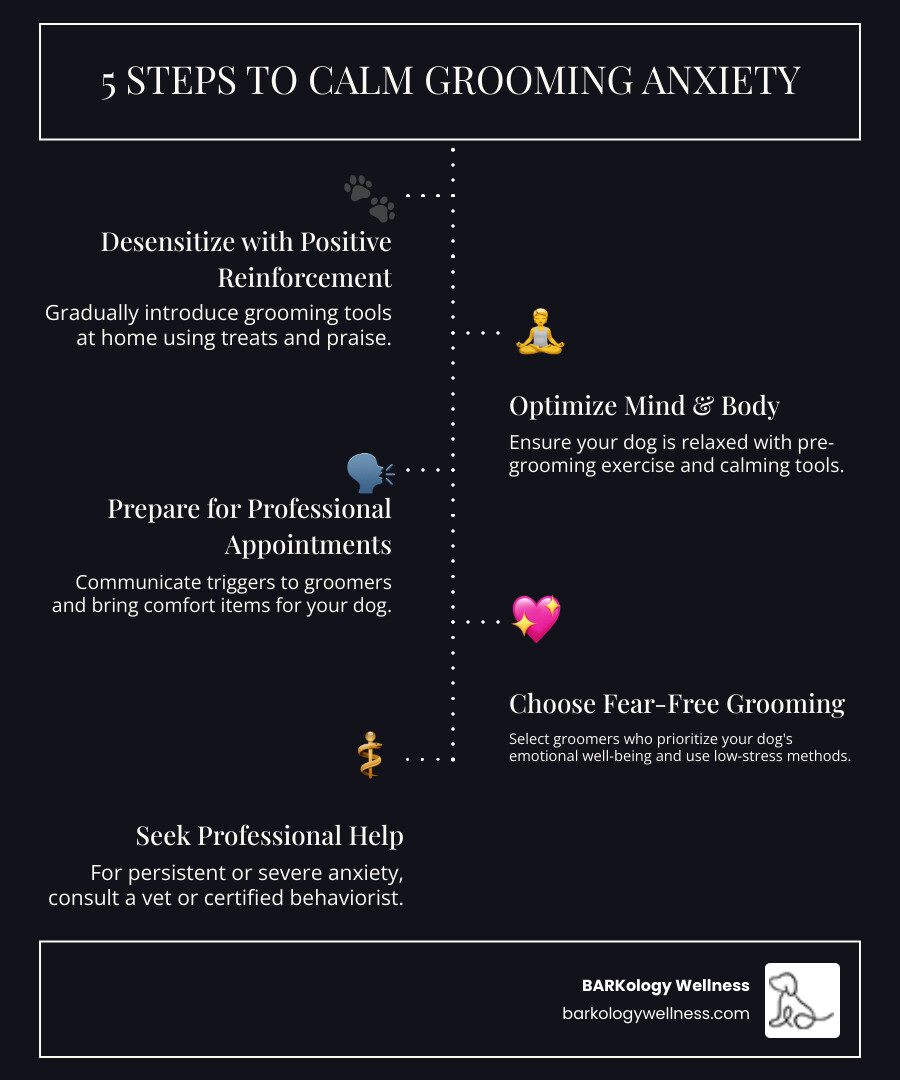
Steps 1 & 2: Creating a Calm Foundation at Home
The journey to stress-free grooming often begins right in our own homes. By building a calm foundation, we can help our dogs develop positive associations with grooming tools and touch, making future professional appointments much smoother. It’s all about patience, consistency, and a whole lot of love (and treats!).
Step 1: Desensitize and Counter-Condition with Positive Reinforcement
This step, known as desensitization and counter-conditioning, involves gradually introducing grooming in a way that feels safe and rewarding. The goal is to change their fear into positive anticipation.
Here's how we approach it:
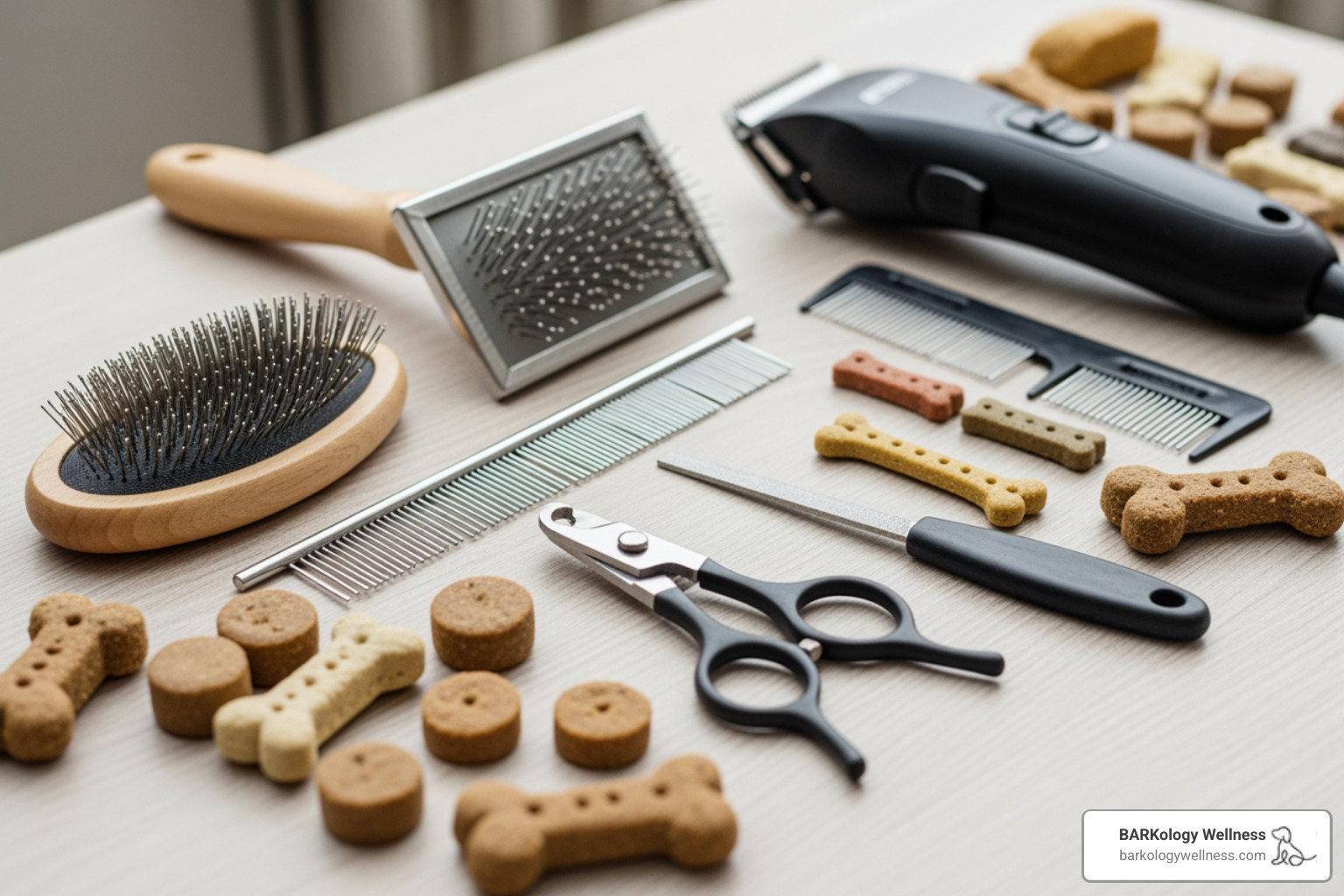
- Gradual Introduction to Tools: Place grooming tools (brushes, clippers turned off) on the floor. Let your dog investigate at their own pace without pressure.
- Reward with Treats: Offer a high-value treat for any curiosity or tolerance. The goal is to associate the tool with a reward.
- Gentle Handling Practice: Gently touch your dog all over, especially sensitive areas like paws and ears. Use a calm predictor word like "paws," then immediately give a treat. This teaches them that handling predicts a reward.
- Short, Frequent Sessions: Instead of one long, overwhelming session, aim for very short (1-2 minute) sessions multiple times a day. This prevents your dog from becoming overwhelmed and helps build positive associations quickly.
- Early Socialization for Puppies: Start this process immediately with puppies. Early, positive exposure to handling and tools can prevent anxiety from developing.
- Make it Fun: Turn sessions into a game. Grooming should be an opportunity for treats and praise, not punishment.
The key is to go at your dog's pace. If they show any signs of stress, stop, take a break, and try again later with an even gentler approach. For more tips on soothing your dog's grooming anxiety, check out this insightful article: 5 Ways to Soothe Your Dog’s Grooming Anxiety.
Step 2: Optimize Your Dog's State of Mind and Body
Sometimes, anxiety isn't just about the grooming itself, but about your dog's overall physical and mental state leading up to it. We can set them up for success by ensuring they are as relaxed and comfortable as possible before any grooming begins.

- Pre-Grooming Exercise: A tired dog is a calmer dog. Before grooming, take your dog for a long walk or a vigorous play session. Burning off excess energy reduces nervous jitters, making them more receptive to grooming, which is especially crucial for high-energy breeds.
- Diet and Nutrition Impact: While not a direct cure, a balanced diet supports overall well-being, which can indirectly impact anxiety levels. Some dogs may benefit from specific dietary considerations or supplements, but always consult your veterinarian before making significant changes.
- Calming Supplements: For some dogs, natural calming supplements can help take the edge off their anxiety. These often contain ingredients like L-Theanine, Chamomile, or Hemp-derived compounds. Again, always discuss these options with your vet to ensure they are safe and appropriate for your dog.
- Calming Tools and Products: The market offers several ingenious products designed to reduce anxiety during grooming:
- Calming Wraps or Shirts: Products like the Happy Hoodie or ThunderShirt can provide gentle, constant pressure, which many dogs find comforting, similar to swaddling a baby.
- Gentle Grooming Tools: For dogs sensitive to sound, consider silent clippers like Scaredy Cut Silent Pet Clippers or hearing protection such as Mutt Muffs.
- Calming Pheromone Diffusers: Dog Appeasing Pheromones (DAP) mimic the natural calming pheromones released by a mother dog, creating a soothing environment. We can use diffusers in the grooming area or sprays on bedding.
- Calming Masks: For dogs overwhelmed by visual stimuli, a calming mask can help reduce sensory input, allowing them to relax.
- Calming Music or Dog-Friendly TV: Playing soft, calming music or even dog-specific shows like DOGTV can provide a positive distraction and help create a more serene atmosphere during grooming sessions.
By addressing your dog's physical and mental state beforehand, we create a much more conducive environment for a positive grooming experience.
Steps 3 & 4: Navigating the Professional Grooming Appointment
Even with excellent at-home preparation, professional grooming can still be a hurdle for anxious dogs. The unfamiliar environment, new smells, and different people can be overwhelming. This is where choosing the right professional and preparing for the appointment become paramount. We want to ensure that every visit to our salon in Tampa or South Tampa is a step forward in building your dog's confidence.
Step 3: How to Prepare Your Dog for a Successful Grooming Appointment
Your role as a pet parent extends beyond just dropping your dog off. Your demeanor and preparation can significantly impact your dog's experience.
- Maintain a Calm Demeanor: Dogs read our emotions. If you're anxious about the appointment, your dog will be too. Project confidence and calmness to help them feel secure.
- Pre-Appointment Walk: A long walk or play session before the appointment helps burn off nervous energy. A tired, relaxed dog who has had a potty break will have a better experience.
- Communicate Triggers to Your Groomer: Open communication is vital. Inform your groomer about specific fears, sensitivities (paws, ears), past negative experiences, or anxiety signs. This information allows us to tailor our approach to your dog's needs.
- Bring Comfort Items: A favorite toy, a blanket from home that smells familiar, or even a special high-value treat can provide a sense of security in an unfamiliar environment.
- 'Happy Visits' to the Salon: Arrange short, positive visits to the salon without any grooming. Let your dog sniff around, get treats from the staff, and leave. These visits build positive associations and reduce fear.
- Arrive a Few Minutes Early: Rushing can add to your stress and, consequently, your dog's. Arriving a little early allows your dog to acclimate to the sounds and smells of the salon environment at their own pace before their session begins.
At BARKology Wellness, we understand these nuances. We prioritize a serene environment and a compassionate approach, ensuring that our grooming services in Tampa and South Tampa are designed to minimize stress and maximize comfort for your anxious pup. Learn more about our specialized grooming services here: More info about our grooming services.
Step 4: The Importance of a Fear-Free Grooming Environment
The concept of 'Fear-Free' grooming has revolutionized how we approach pet care, especially for anxious animals. It's not just a buzzword; it's a philosophy that prioritizes your pet's emotional well-being as much as their physical health.
What is 'Fear-Free' Grooming?Fear-Free grooming aims to prevent and alleviate fear, anxiety, and stress in pets. It involves a calm environment, gentle handling, positive reinforcement, and giving pets choice and control. This approach turns potentially stressful experiences into positive ones.
Building Trust with the Groomer:A skilled groomer trained in Fear-Free techniques understands canine body language and knows how to build trust. This involves:
- Patient Introduction: Allowing the dog to approach them, rather than forcing interaction.
- Gentle Handling: Using slow, deliberate movements and avoiding forceful restraint.
- Positive Reinforcement: Consistently rewarding calm behavior with treats and praise.
- Breaks as Needed: Recognizing signs of stress and offering breaks to prevent escalation.
Calm and Quiet Setting:The environment itself plays a huge role. Our BARKology Wellness salons in Tampa and South Tampa are designed with this in mind, offering:
- Minimal Sensory Overload: Calming colors, soft lighting, and quiet zones help reduce visual and auditory distractions.
- One-on-One Attention: We often schedule individual appointments or staggered services to ensure each dog receives undivided attention without the overwhelming presence of many other pets.
- No Kennel Dryers: We avoid the use of forced air kennel dryers, which can be loud, hot, and highly stressful for dogs. Instead, we opt for hand-drying or gentle fluff drying methods that are much more comfortable.
Here's a quick comparison of traditional grooming versus a Fear-Free approach:
| Feature | Traditional Grooming | Fear-Free Grooming (Our Approach) |
|---|---|---|
| Primary Focus | Efficiency, completing tasks | Pet's emotional well-being, comfort, safety |
| Environment | Can be noisy, busy, high-stress | Calm, quiet, minimal sensory overload |
| Handling | May involve restraint, quick movements | Gentle, patient, positive reinforcement, choice & control |
| Tools/Equipment | Standard tools, loud dryers | Specialized quiet tools, hand-drying, calming aids |
| Trust Building | Often secondary to task completion | Central to the process, built through positive interactions |
| Outcome for Anxious Dog | Increased fear, stress, negative associations | Reduced anxiety, positive associations, improved confidence |
By choosing a salon like BARKology Wellness that accepts Fear-Free principles, you're not just getting a grooming service; you're investing in a positive, trust-building experience for your anxious dog.
Step 5: Advanced Solutions for Severe Dog Grooming for Anxiety
Sometimes, despite our best efforts at home and choosing a Fear-Free professional, a dog's anxiety can be so severe that it requires additional intervention. This isn't a sign of failure, but rather an indicator that a deeper level of support is needed to ensure their well-being. We’re here to guide you through these advanced solutions.
When to Consider Professional Training or Veterinary Help for dog grooming for anxiety
If your dog's dog grooming for anxiety is persistent, escalating, or manifesting as aggression, it's time to call in the experts. Ignoring severe anxiety can lead to a worsening of the problem and even pose a risk of injury to both your dog and the people handling them.
We recommend seeking professional help when you observe:
- Persistent or Escalating Anxiety: Despite consistent desensitization and positive reinforcement, your dog's fear isn't improving or seems to be getting worse.
- Aggressive Behavior: Growling, snapping, or biting during grooming attempts (even gentle ones) is a serious concern that requires professional intervention for safety.
- Risk of Injury: If your dog thrashes violently, attempts to escape, or becomes uncontrollable, there's a risk of them injuring themselves or others.
Here's who can help:
- Certified Professional Dog Trainer: A trainer specializing in behavior modification can help implement custom desensitization and counter-conditioning protocols, often working one-on-one with your dog. They can teach you techniques to build your dog's confidence and acceptance of grooming.
- Veterinary Behaviorist: These are veterinarians with advanced training in animal behavior. They can diagnose underlying anxiety disorders, rule out medical causes for behavioral issues, and create comprehensive treatment plans that may include behavioral modification, environmental management, and sometimes, medication. They are uniquely qualified to address complex cases of dog grooming for anxiety. For a deeper dive into canine anxiety, refer to resources like Understanding canine anxiety.
The Role of Sedatives: Benefits, Risks, and When to Use Them
For dogs with extreme dog grooming for anxiety where behavioral modification alone isn't sufficient, or when the risk of injury is high, veterinarians may suggest mild sedatives. Sedatives are generally considered a last resort and should always be administered under veterinary guidance. We never recommend sedating your dog without consulting a qualified vet.
Benefits of Sedation (when prescribed by a vet):
- Reduces Stress: Mild sedatives can help calm a dog's nerves, alleviate intense anxiety, and make the grooming experience less traumatic.
- Ensures Safety: For dogs prone to biting or thrashing, sedation can make grooming safer for both the dog and the groomer.
- Facilitates Essential Care: Sometimes, certain grooming tasks (like severe matting removal or intricate nail trims) simply cannot be performed on a highly anxious dog without sedation, risking pain or injury.
- Prevents Negative Associations: A less stressful experience, even with medication, can prevent the dog from developing even stronger negative associations with grooming.
Risks and Side Effects:
- Like all medications, sedatives carry potential risks and side effects, which can include drowsiness, disorientation, nausea, or in rare cases, more serious adverse reactions. Your vet will assess your dog's health to determine the safest option.
- Sedation is a temporary solution and doesn't address the underlying behavioral issues. It should ideally be used in conjunction with a long-term behavior modification plan.
Muzzle Training as an Alternative:Before resorting to sedatives, consider muzzle training. A well-fitted, comfortable basket muzzle can make grooming safer for everyone involved, especially if your dog tends to nip when stressed. The key is to introduce the muzzle positively, associating it with treats and good things, so your dog willingly accepts wearing it. This can reduce the need for other types of restraint and provide a sense of security for the groomer, allowing for a calmer approach.
The Long-Term Benefits of Addressing Your Dog's Grooming Anxiety
Investing time and effort into managing your dog's grooming anxiety yields significant long-term benefits that extend far beyond a clean coat.
- Improved Health and Hygiene: Regular grooming prevents painful matting, skin infections, overgrown nails, and ear problems, contributing directly to your dog's physical health.
- Reduced Stress for Dog and Owner: When grooming becomes less of a battle, it reduces stress for both ends of the leash. A calmer dog means a happier owner, and a happier owner means a calmer dog – it's a wonderful cycle!
- Strengthened Human-Animal Bond: Working through challenges together, with patience and positive reinforcement, deepens the trust and bond you share with your dog. They learn that you are their advocate and protector, even during uncomfortable situations.
- Easier Vet Visits: The skills learned during anxiety-reducing grooming (like accepting handling, tolerating sounds, and trusting professionals) often transfer to other potentially stressful situations, such as vet appointments.
- Increased Overall Confidence: Overcoming a fear, even a grooming fear, can boost your dog's overall confidence and resilience, making them more adaptable to new situations in general.
Addressing dog grooming for anxiety is a proactive step towards a healthier, happier, and more confident life for your beloved companion.
Frequently Asked Questions about Dog Grooming for Anxiety
What is 'fear-free' grooming and how does it help anxious dogs?
Fear-free grooming is a approach to pet care that prioritizes a pet's emotional well-being by using gentle handling, positive reinforcement, and a low-stress environment. It focuses on building trust and making grooming a comfortable, or even enjoyable, experience rather than just completing the task. For anxious dogs, it helps by minimizing triggers (loud noises, harsh restraint), building positive associations with treats and praise, and allowing them to have a sense of control, gradually changing their perception of grooming from a scary ordeal to a positive experience.
How can I calm my dog for nail clipping at home?
Calming your dog for nail clipping at home involves patience and positive reinforcement. Start by handling your dog's paws regularly without clippers, rewarding them with treats. Introduce the clippers by letting them sniff them, then touch a nail with them, rewarding each step. Clip only one nail tip per session at first, always followed by a high-value reward, to build a positive association. You can also try doing it when your dog is tired after exercise, or while they are distracted with a long-lasting chew. If they show any stress, stop and try again later.
Can I groom my highly anxious dog myself?
While home grooming can be less stressful for some dogs because of the familiar environment and handler, it can be difficult and unsafe if the anxiety is severe or leads to aggression. If your dog shows extreme fear (e.g., severe trembling, growling, biting attempts), grooming them yourself could worsen their anxiety and put you at risk. In such cases, it's best to work with a professional fear-free certified groomer who has the skills and tools to handle anxious dogs safely, or consult your vet about a safe grooming plan that might include medication. We at BARKology Wellness in Tampa and South Tampa are experienced in handling sensitive pups and can offer guidance.
Conclusion
Navigating dog grooming for anxiety can feel like a daunting task, but as we've explored, it's a journey we start on as a partnership with our furry friends. Patience and consistency are crucial, reminding us that small, positive steps accumulate over time. We've seen how positive reinforcement, whether through treats, praise, or gentle handling, is the most powerful tool in our arsenal.
Addressing your dog's grooming anxiety isn't just about superficial beauty; it profoundly improves their overall well-being, health, and happiness. It strengthens the bond you share, teaching them that even in uncomfortable situations, you are their trusted guide.
At BARKology Wellness, we pride ourselves on offering a serene, science-based approach to dog grooming in Tampa and South Tampa. We are dedicated to ensuring that every dog, especially those with anxiety, experiences a happy and stress-free grooming session. We believe grooming should be a pampering experience that improves both physical health and emotional comfort.
We invite you to experience the BARKology Wellness difference. Explore our wellness-focused grooming memberships and find how we can help your anxious dog transform their grooming experience into one they actually look forward to.Explore our wellness-focused grooming memberships