
Why Dog Grooming for Difficult Dogs Requires a Different Approach
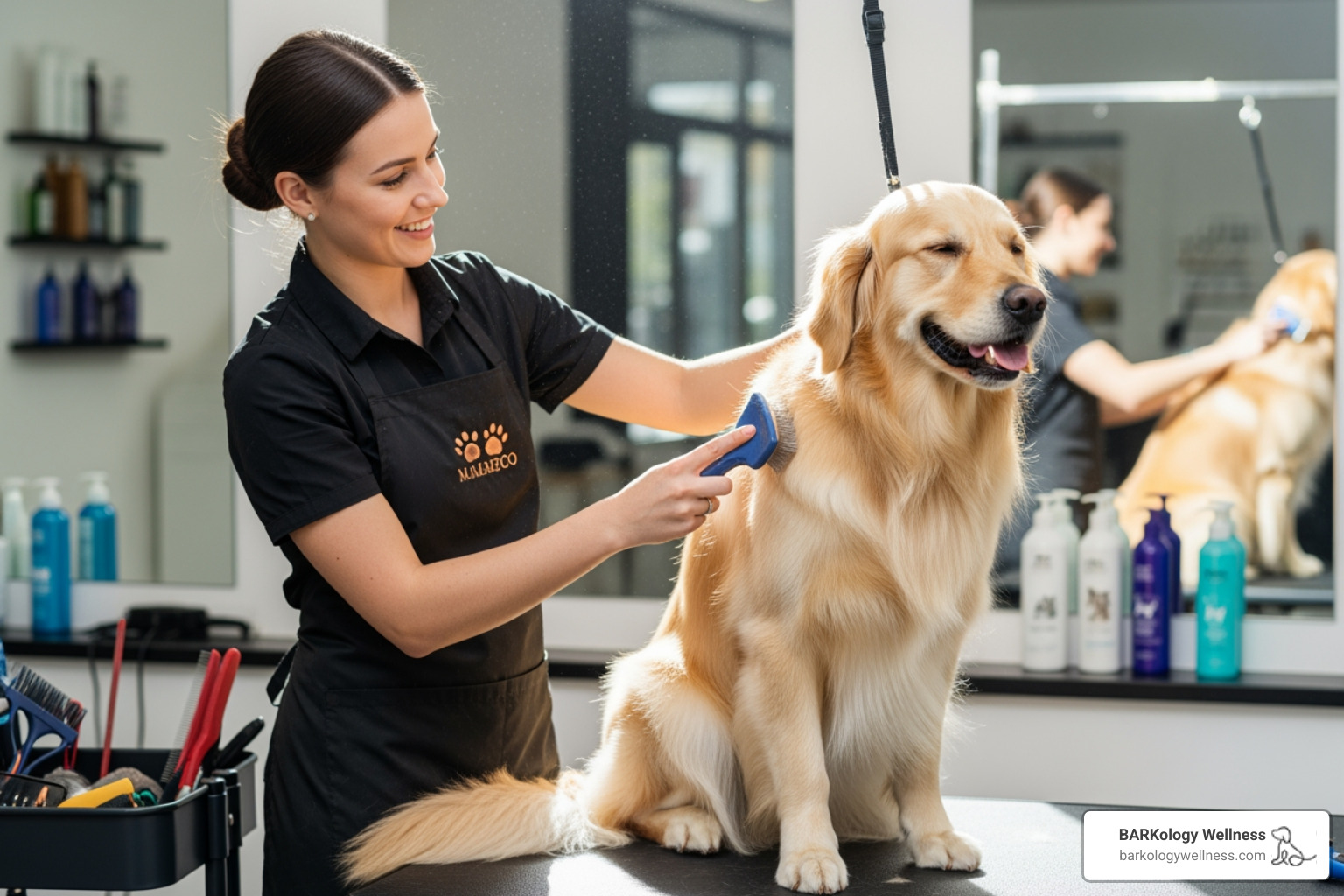
Dog grooming for difficult dogs is not about forcing compliance, it's about understanding fear, building trust, and finding professionals who prioritize your pet's emotional well-being over aesthetics. Here's what you need to know:
Finding the Right Groomer for Your Challenging Dog:
- Look for Fear Free or specialized certifications (CPG, CPPS) that indicate training in low-stress handling
- Ask about their experience with fearful, anxious, or reactive dogs specifically
- Inquire about their approach, do they use patience and desensitization, or restraint and speed?
- Request a consultation before booking to discuss your dog's triggers and history
- Confirm their communication plan for updates and policies on when to stop a session
Aggressive behavior during grooming almost always stems from fear and anxiety. A single bad experience, like a quicked nail, a loud dryer, a slip in the tub, or painful dematting, can create a lasting aversion.
The good news? With the right approach, most dogs can learn to tolerate or even enjoy grooming. It requires patience, positive reinforcement, and a groomer who understands that fearful dogs don't need force, they need a predictable, safe grooming plan.
In a salon, fear manifests as shaking, freezing, vocalizing, or resisting handling. These aren't signs of a "bad dog" but of an overwhelmed nervous system that needs a different strategy.
I'm Nabilah Shamseddine, and through my work with BARKology Wellness, I've seen how essential specialized dog grooming for difficult dogs is to both pet health and owner peace of mind. Our approach focuses on creating calm, one-on-one experiences that prioritize your dog's emotional well-being alongside their physical care.
Why is My Dog Difficult? Uncovering the Root Causes of Grooming Anxiety
When a dog shows aggression or fear during grooming, it's not being "naughty", it's communicating. This behavior is a reaction to perceived threats or discomfort, signaling an overwhelmed nervous system. The primary reasons are varied, but they almost always stem from underlying fear or anxiety, which can be worsened by unfamiliarity, past trauma, or undiagnosed pain.
Fear, Pain, and Past Trauma
For many dogs, being held by a stranger while loud, vibrating tools are used near their face and paws is a terrifying, invasive experience. A single negative incident, such as a quicked nail, a loud dryer blast, a slip in the tub, or painful dematting, can create a strong and lasting aversion. These events teach a dog that grooming equals pain, leading to a fear response in future sessions.
Beyond trauma, underlying pain can trigger aggression. An otherwise docile dog might lash out if grooming aggravates an existing condition like:
- Arthritis or joint pain: Making handling or standing painful.
- Ear infections: Causing agony during ear cleaning.
- Skin sensitivities: Leading to irritation from brushing or bathing.
- Dental pain: Triggering a snap when the face is touched.
- Hidden injuries: Making certain movements painful.
A sudden change in behavior always warrants a veterinary check-up to rule out medical causes.
Recognizing Your Dog's Stress Signals and Triggers
Identifying the root cause of grooming anxiety starts with observing your dog's body language. Understanding their stress signals is key to preventing escalation.
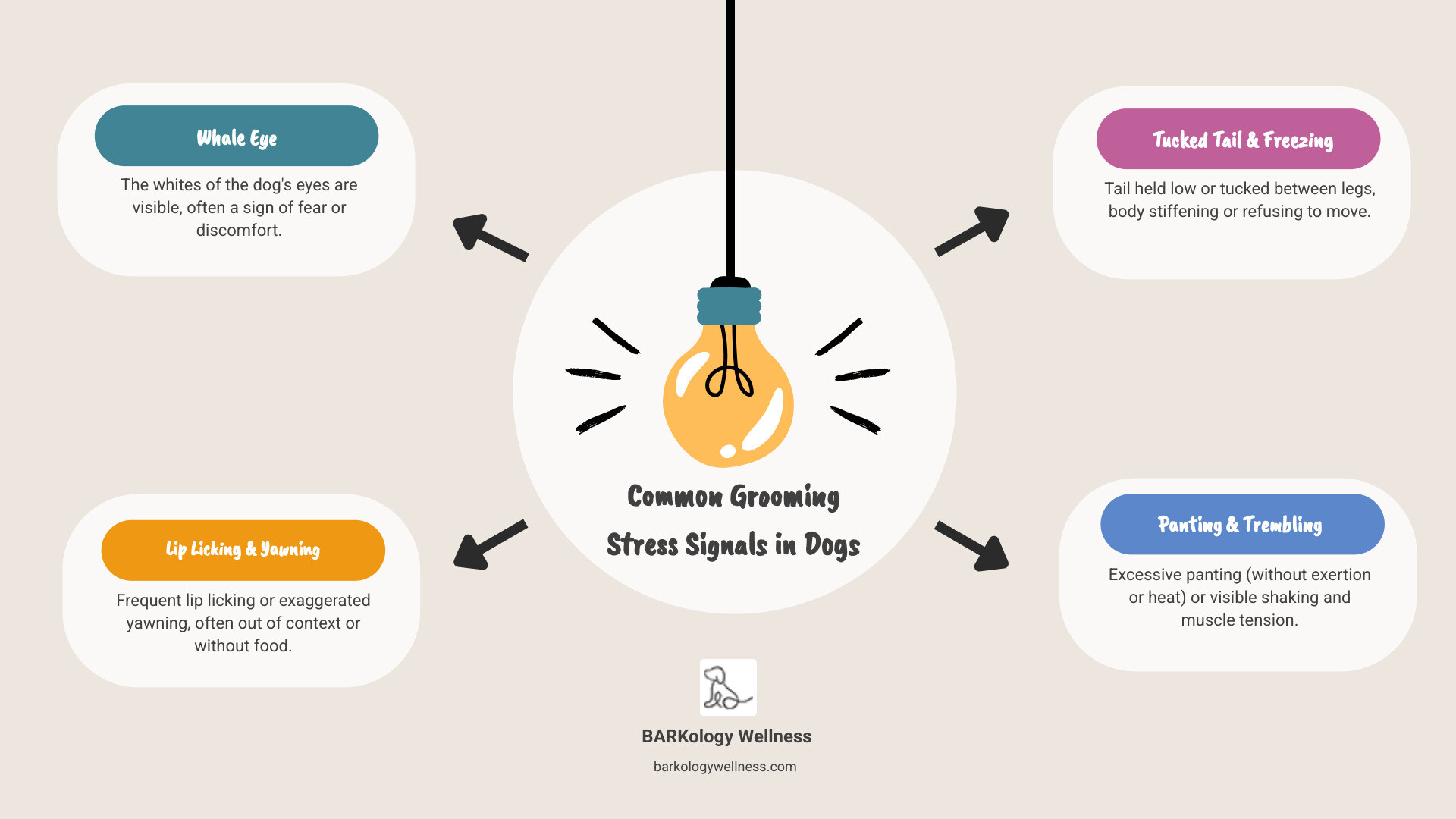
Common signs of stress during grooming include:
- Whale eye: Whites of the eyes are visible.
- Lip licking/Yawning: Displacement behaviors indicating stress.
- Tucked tail/Low posture: Classic signs of fear.
- Panting/Drooling excessively: Can indicate stress if not hot.
- Trembling/Shaking: A clear sign of fear.
- Freezing: A warning sign that often precedes a fight or flight reaction.
- Trying to escape: Actively trying to get away.
- Vocalizing: Whining, growling, or barking to communicate discomfort.
- Guarding paws/Resisting touch: Protecting sensitive areas.
- Snarling/Biting: Aggressive warnings or actions.
A crucial concept is "trigger stacking," where multiple stressors accumulate, leading to an exaggerated reaction. A dog might tolerate a bath (stressor 1) and brushing (stressor 2), but the clippers (stressor 3) cause a meltdown as their stress bucket overflows.
Common grooming triggers include:
- Loud noises: Clippers, dryers, other dogs.
- Vibrations: From clippers or dryers.
- Restraint: Being held on a table, in a tub, or by a loop.
- Unfamiliar touch: Especially on paws, ears, or face.
- Water: The sensation of being wet.
- Being lifted: Disliked by some dogs.
- The grooming environment: Unfamiliar smells, sounds, and people.
By recognizing these signs and triggers, we can adapt our approach to help a dog feel safe.
The Foundation of Trust: At-Home Preparation and Training
The journey to stress-free grooming begins at home. Owners play a pivotal role by building a foundation of positive associations and trust, which makes professional grooming less daunting. This proactive approach uses positive reinforcement to create a partnership with your dog.
Principles of Desensitization and Counter-Conditioning
Desensitization and counter-conditioning are science-backed methods to change a dog's fearful emotional response to grooming.
- Desensitization: This involves gradually exposing your dog to a feared stimulus (like clippers) at a very low intensity that doesn't provoke fear. You must stay "below their fear threshold," progressing in tiny steps only when the dog is relaxed.
- Counter-Conditioning: This pairs the feared stimulus with something highly positive, like high-value treats. The goal is to change the dog's association from negative (fear) to positive (excitement). Over time, the clippers predict good things.
Key principles:
- Gradual Exposure: Never push your dog past their comfort zone.
- Stay Below Threshold: The exposure should be so mild your dog doesn't react negatively.
- Positive Reinforcement: Pair every small step with high-value rewards (cheese, chicken, etc.).
- Move at Their Pace: Every dog is different. Rushing leads to setbacks.
- Short, Successful Sessions: Keep sessions brief (5-10 minutes) and end on a positive note.
These methods change how a dog's nervous system responds to grooming, building trust and positive associations instead of deepening fear.
At-Home Prep for Dog Grooming for Difficult Dogs
Owners can do a lot at home to make grooming less stressful by introducing tools and handling in a positive, low-pressure way.
Here’s how to prepare your dog:
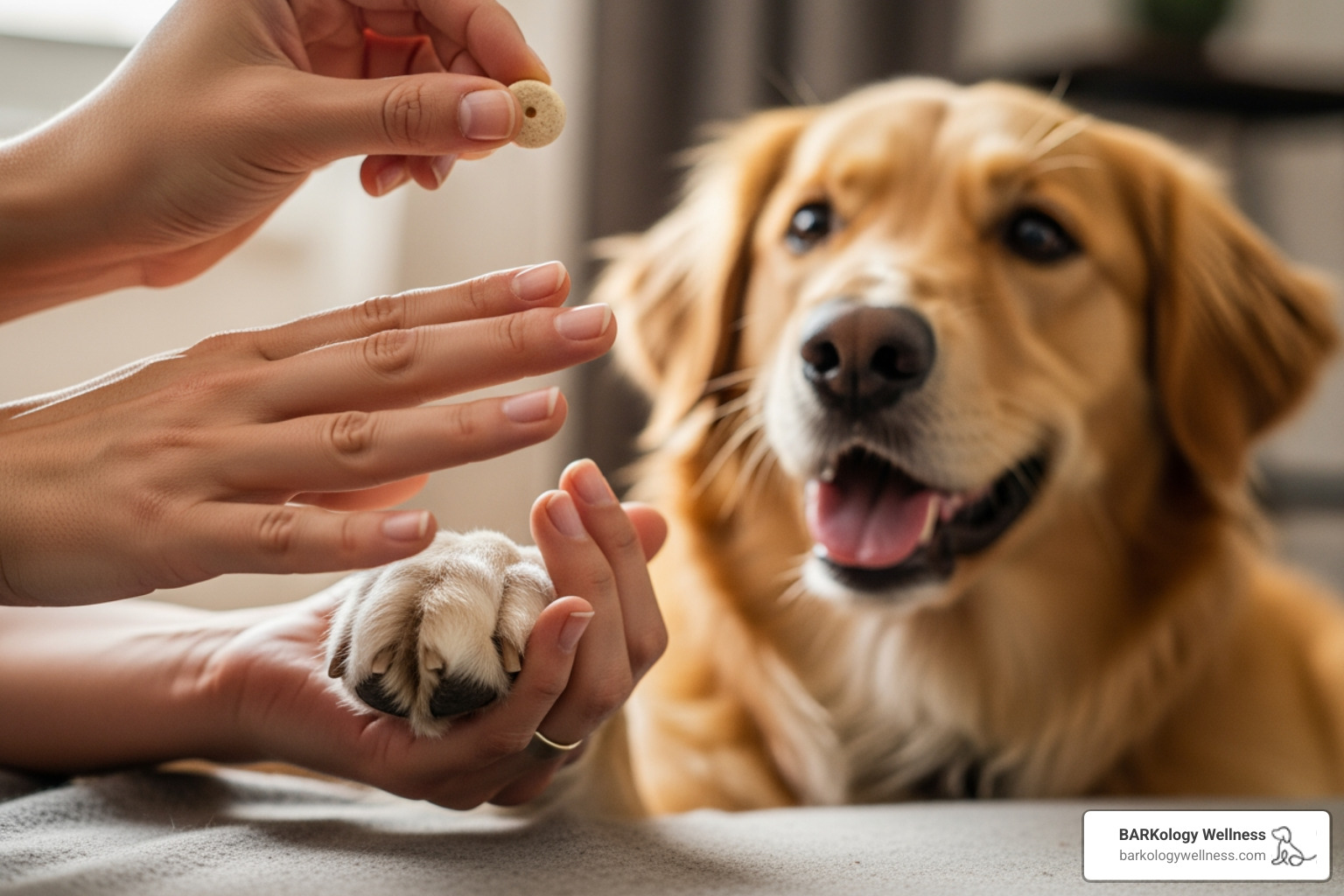
- Handling Exercises: Gently touch paws, ears, and mouth daily, pairing each touch with a treat. Gradually increase the duration.
- Paw Touching & Nail Prep: Start by touching a paw, then treat. Introduce clippers by letting them sniff, then treat. Tap the clippers on a nail, then treat. Only when they are comfortable, trim one nail and reward immediately.
- Ear Checks: Gently lift their ears, look inside, and reward. Practice touching the ear flap with a soft cloth.
- Muzzle Training: Introduce a muzzle positively. Put treats inside and let them put their nose in to get the treat. Gradually increase wear time, always pairing it with positive experiences.
- Introducing Tools (while off): Let your dog investigate tools like brushes and clippers. Reward their curiosity. Turn clippers on in another room, gradually bringing them closer while pairing the noise with treats.
- Brushing: Start with a soft brush on comfortable areas, pairing each stroke with a treat. Use a lick mat with peanut butter to distract and reward them.
- Bathing: Let your dog explore the empty tub for rewards. Gradually introduce water, starting with a wet washcloth, always with treats and praise.
The more consistent and positive these at-home interactions are, the less overwhelming professional grooming will be. For even more ways to support your dog's overall well-being, explore our wellness services.
Professional Approaches to Dog Grooming for Difficult Dogs
Even with at-home prep, some dogs find professional grooming challenging. This is where a specialized groomer's expertise is invaluable. At BARKology Wellness, our philosophy is rooted in cooperative care, working with the dog, not against them. Safety for both dog and groomer is paramount.
Creating a Calm and Safe Grooming Environment
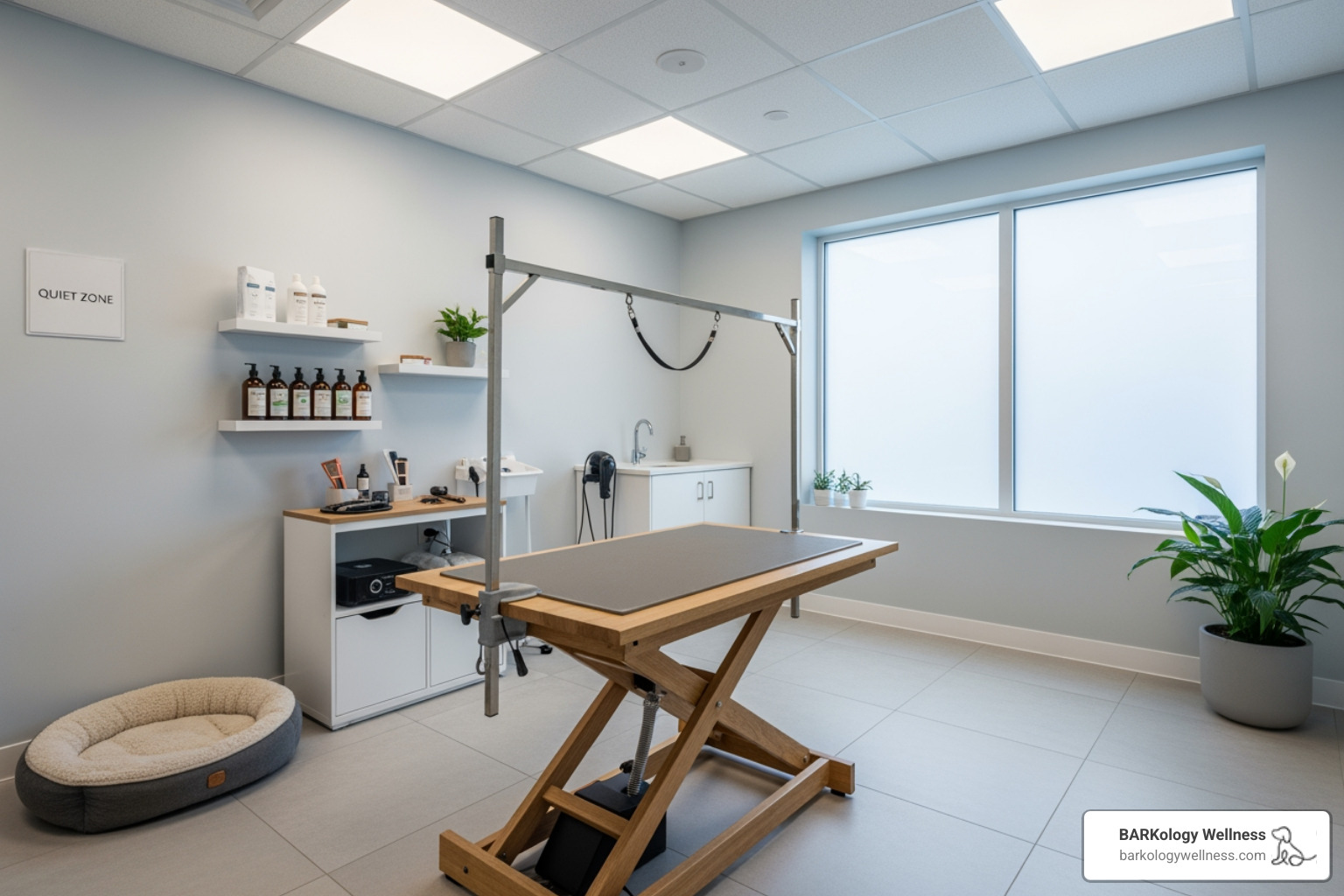
A busy, noisy salon can overwhelm an anxious dog. We focus on creating a serene, clean, and one-on-one grooming experience to minimize stress.
Our low-stress suites feature:
- One-on-One Appointments: Your dog gets undivided attention without the chaos of other dogs, allowing us to move at their pace.
- Quiet Space: We minimize loud noises and use quieter equipment.
- Non-Slip Surfaces: Stable footing in tubs and on tables provides confidence and prevents traumatic slips.
- Calming Aids: We may use pheromone sprays and soft, calming music.
- No Cage Dryers: We use hand-drying techniques for constant monitoring and comfort.
In Tampa, our facility is designed with these principles to ensure your dog's experience is as calm as possible.
The 'Minimum Viable Groom' and Other Trust-Building Techniques
For dog grooming for difficult dogs, we often use the "Minimum Viable Groom" (MVG) framework. This prioritizes essential hygiene over a perfect finish, building trust for future visits.
How we apply MVG and other techniques:
- Hygiene Over Perfection: For severe matting, a humane reset shave is the kindest option to relieve pain, preventing further discomfort.
- Focusing on Comfort: We choose shorter, easy-maintenance trims to reduce appointment time and stress.
- Short, Frequent Sessions: We may break the groom into multiple shorter visits to keep the dog under their stress threshold.
- The 'Touch Budget': We recognize that fearful dogs have a limited tolerance for handling. We work efficiently to manage this budget.
- Cooperative Care: We use positive reinforcement to encourage dogs to participate willingly, shifting the dynamic from being "done to" to "working with."
The principle is simple: progress over multiple visits is better than one "perfect" groom built on fear.
The Role of Restraints and Muzzles
When grooming difficult dogs, safety is not optional. Restraints and muzzles, used ethically, are safety tools, not substitutes for patience.
- Safety First: For dogs that pose a bite risk, a muzzle is a necessary safety measure. It prevents bites but doesn't address the underlying fear.
- When to Use a Muzzle: We use muzzles for dogs with a bite history or who show a high likelihood of biting, always for the shortest duration necessary.
- Proper Fit and Type: We recommend wire basket muzzles, which allow the dog to pant, drink, and take treats. Proper fitting is crucial.
- Humane Handling: Muzzle introduction should be positive. If a dog panics, it can worsen their fear, so we stop the session if they become severely distressed.
- Grooming Loops and Hammocks: These provide gentle, secure restraint to prevent falls for wiggly dogs but are never used unattended.
Our approach always involves clear communication with clients about the necessity and proper use of these tools. For more details on our gentle grooming practices, please visit our grooming services page.
Finding the Right Partner for Your Pet's Care
Choosing a groomer for a dog that struggles is a critical decision for their well-being. You need a partner who understands canine behavior, prioritizes safety, and is committed to building a positive relationship with your pet.
Finding a Specialist in Dog Grooming for Difficult Dogs
A standard groomer may lack the training for a difficult dog. Here's what to look for when seeking a specialist in dog grooming for difficult dogs in Tampa:
- Certifications: Look for groomers with credentials in low-stress handling, such as Fear Free certification. These programs train professionals to recognize and alleviate fear, anxiety, and stress in pets.
- Experience with Fearful Dogs: Ask directly about their experience with anxious or reactive dogs and how they've handled challenging cases.
- Approach to Difficult Cases: Inquire about their methods. Do they use desensitization and offer shorter sessions? A groomer who boasts about "powering through" is a red flag.
- Consultation Before Booking: A reputable specialist will often require a consultation to assess your dog's triggers and create a custom plan.
- Communication and Policies: Ask how they'll communicate during the groom and what their policies are for stopping a session if a dog is too stressed. Understand their pricing, as specialized care often requires more time and expertise.
When to Involve a Veterinarian or Behaviorist
Sometimes, even a skilled groomer needs help. Knowing when to involve a veterinarian or behaviorist is crucial for your dog's safety.
Consider seeking professional help when:
- Severe Aggression or Risk of Injury: If your dog shows severe aggression or poses a high risk of injury, consult a veterinarian immediately.
- Ruling Out Medical Issues: A vet can perform an exam to rule out pain as a driver of aggression and discuss anti-anxiety medication or sedation if needed for safe grooming.
- Behavior Modification Plans: A certified trainer or veterinary behaviorist can develop a comprehensive plan to address the dog's overall anxiety or aggression.
- Veterinary Collaboration: A good groomer will recommend a vet consult if they suspect pain or severe fear. We often collaborate with local Tampa veterinarians to ensure a holistic approach. Sedation, when recommended by a vet, is a humane choice to prevent trauma.
Frequently Asked Questions about Grooming Challenging Dogs
Navigating grooming with a challenging canine can bring up many questions. Here are some of the most common ones we encounter:
What grooming style is best for a dog that hates being groomed?
The best style prioritizes safety, comfort, and hygiene over aesthetics. This usually means shorter, easy-maintenance trims to reduce session time and stress. For severely matted dogs, a humane "reset" shave is the kindest option to relieve pain. The goal is a sustainable plan that builds trust, not a perfect look that causes trauma.
How long does it take for a fearful dog to get better with grooming?
The timeline varies greatly depending on the severity of the fear, its root cause, and the consistency of positive training. Some dogs improve in a few visits, while others with severe fear may need a multi-visit program and consistent at-home practice. Progress is measured in small wins, like increased tolerance for certain steps. Patience is essential; it's a journey, not a race.
Should I stay with my dog during the grooming appointment?
This depends on the dog. Some dogs are more anxious with their owner present, while others are comforted. At BARKology Wellness, our one-on-one, calm environment minimizes distractions. We assess each dog individually and will discuss with you whether your presence would be beneficial or a distraction during their session. Our priority is always the most stress-free experience for your pet.
Conclusion: The Long-Term Reward of Patience and Trust
Navigating dog grooming for difficult dogs is a challenge, but a rewarding one. By understanding the root causes of their fear, recognizing stress signals, and committing to a patient, positive approach, we can transform a terrifying ordeal into a manageable experience.
The long-term benefits of building trust extend far beyond a clean coat:
- Reduced Stress: Grooming day becomes a calm routine instead of a battle for both of you.
- Improved Health: Regular care prevents painful mats, infections, and other health issues.
- Stronger Bond: Respecting your dog's fears deepens your connection and trust.
- Better Quality of Life: A dog comfortable with handling is easier to care for in all situations, from vet visits to daily cuddles.
At BARKology Wellness in Tampa, we believe every dog deserves a gentle, fear-free grooming experience. Our approach blends science with pampering care, creating a serene environment where your dog's health and happiness are our top priority. We understand it's a journey, and we are here to partner with you every step of the way.
Ready to provide your challenging canine with the calm, compassionate care they deserve? Explore our wellness memberships and find how we can help your dog thrive.