
Why Stress Free Nail Grooming for Your Dog Matters for Health and Happiness
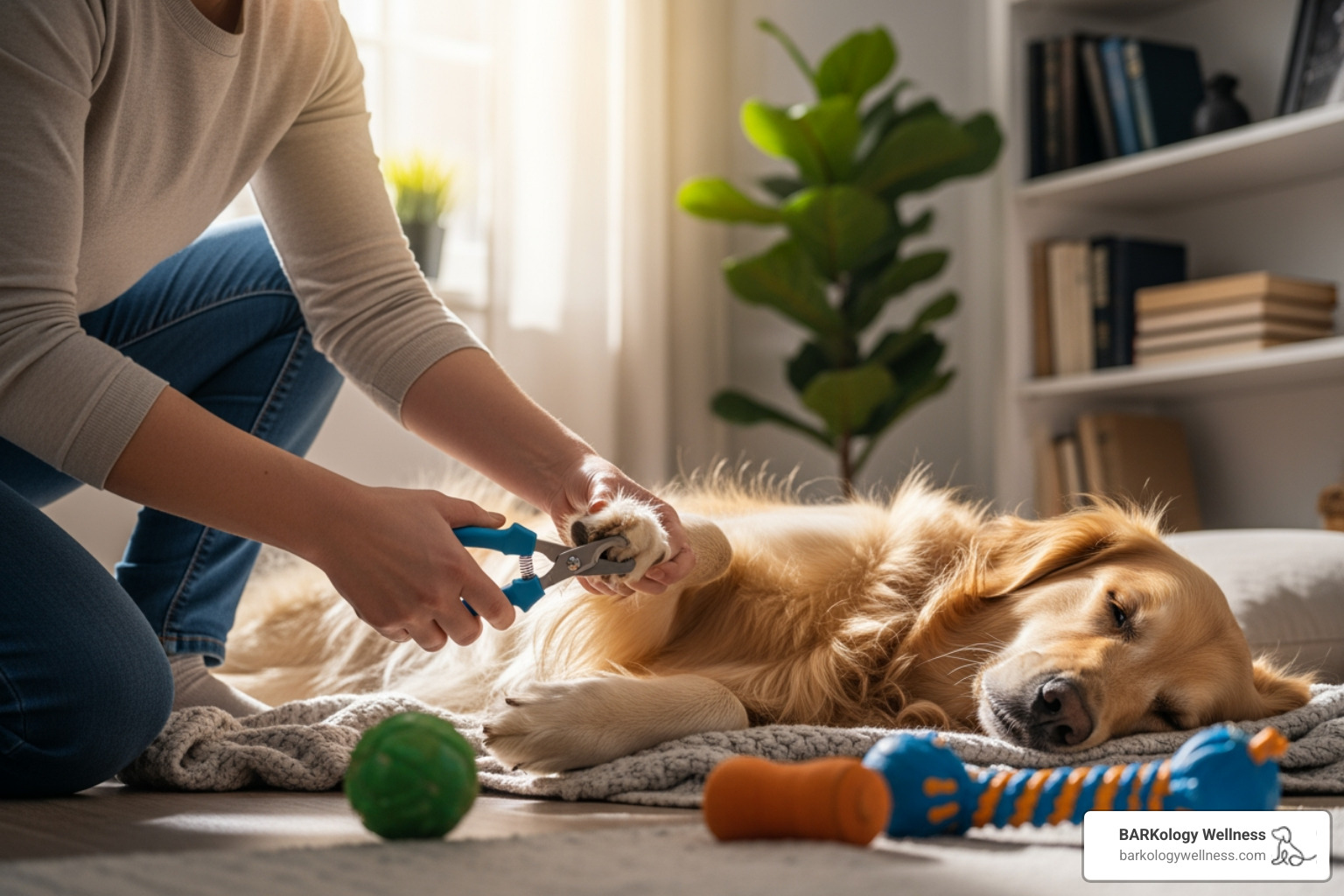
Stress free nail grooming for your dog starts with understanding that nail trims don't have to be a battle. Here's what you need to know:
Quick Answer: The 5 Keys to Stress-Free Nail Trimming
- Start slow - Build positive associations with paw handling before using any tools
- Use the right tools - Choose sharp, appropriately-sized clippers or low-vibration grinders
- Watch body language - Stop if you see yawning, lip licking, or tension
- Trim conservatively - Take tiny amounts to avoid the quick (the pink nerve center)
- Reward generously - High-value treats after each successful interaction
Does trimming your dog's nails feel like a wrestling match? You're not alone. Many dogs fear nail grooming because of past negative experiences, unfamiliar sounds and sensations, or anxiety over having their paws handled. The good news: it's never too late to change your dog's reaction to nail trims.
Regular nail care isn't just about appearance. Long nails can press into paw pads causing pain, change how your dog walks leading to arthritis, and even cause tendon injuries. Nail trims can be stressful for veterinary team members and for dogs - and that stress can increase a dog's fear of all veterinary care.
The solution lies in understanding nail anatomy, reading your dog's signals, and building trust through gradual desensitization paired with positive rewards.
As Nabilah Shamseddine, founder of BARKology Wellness with years of experience in premium pet care and wellness, I've helped countless dog owners transform nail trimming from a dreaded chore into a calm bonding experience through stress free nail grooming for your dog techniques. This guide will walk you through proven methods to make nail care easier for both you and your canine companion.
The Importance of Regular Maintenance and Frequency
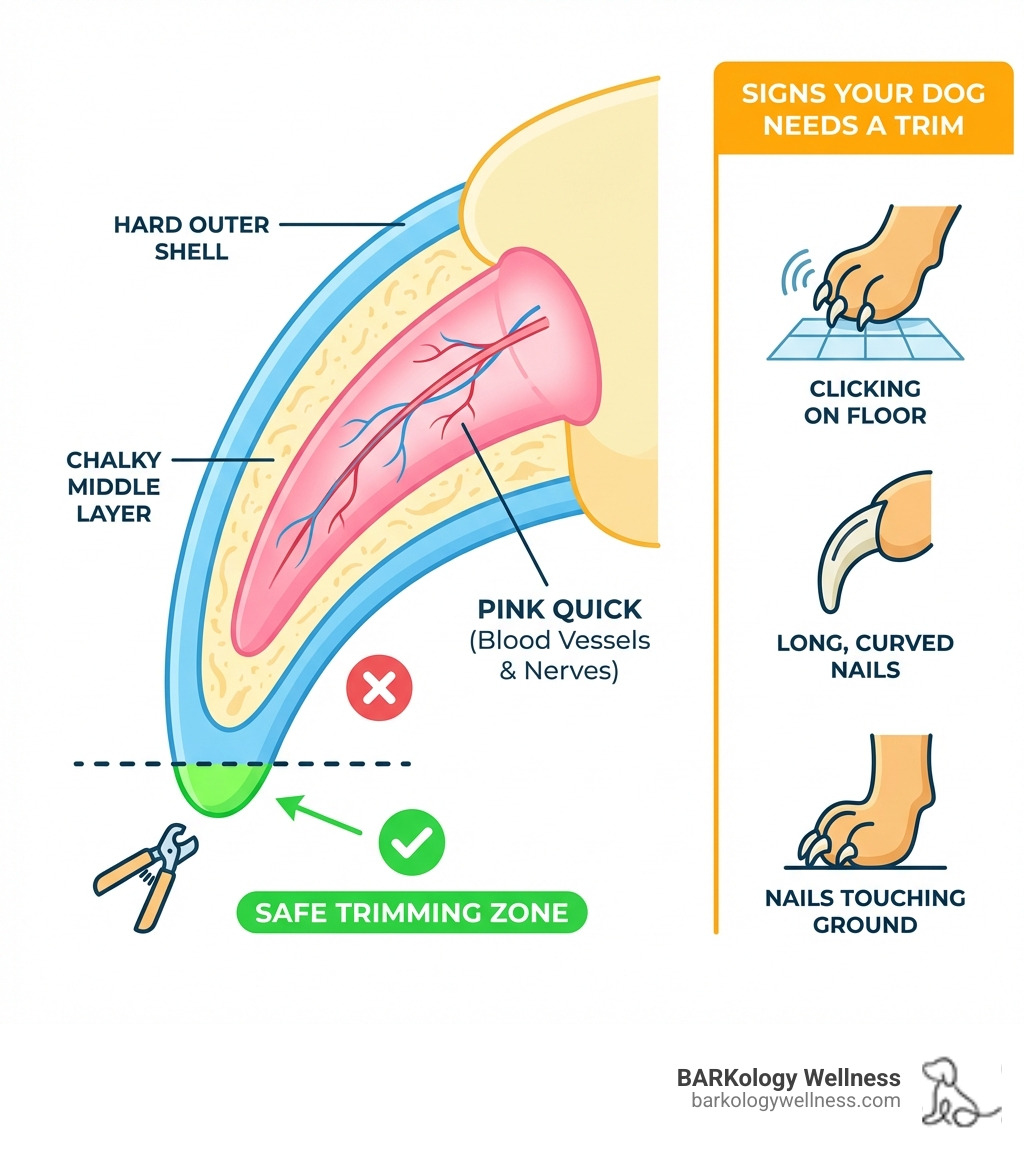
In our South Tampa grooming studio, we often see dogs arriving with "clicking" paws, that unmistakable sound of nails hitting the floor. While it might seem like a minor cosmetic issue, unhealthy dog nails can lead to a cascade of physical problems.
When a dog's nails are too long, every step they take pushes the nail back into the nail bed or forces the foot to splay. This changes the alignment of the leg, which can lead to splayed feet and, eventually, arthritis or tendon injuries. For senior dogs in Tampa, maintaining short nails is critical for mobility and preventing slips on hardwood or tile floors.
How Often Should You Trim?
The rule of thumb for most dogs is a trim every 2 to 4 weeks. However, this varies based on lifestyle. A dog that walks daily on the sidewalks of South Tampa may naturally wear their nails down, while a "lap dog" who spends most of their time on rugs will need more frequent attention.
One of the best reasons to keep up with a schedule for nail trims consistently is to encourage "quick recession." The quick is the living part of the nail containing blood vessels and nerves. If nails are left long, the quick grows longer too. By trimming tiny amounts frequently, we "chase" the quick back, allowing the nails to eventually become shorter and healthier.
If you find it difficult to keep up with this schedule at home, our grooming services are designed to handle this maintenance in a serene, low-stress environment.
Recognizing Stress and Creating a Stress Free Nail Grooming for Your Dog Environment
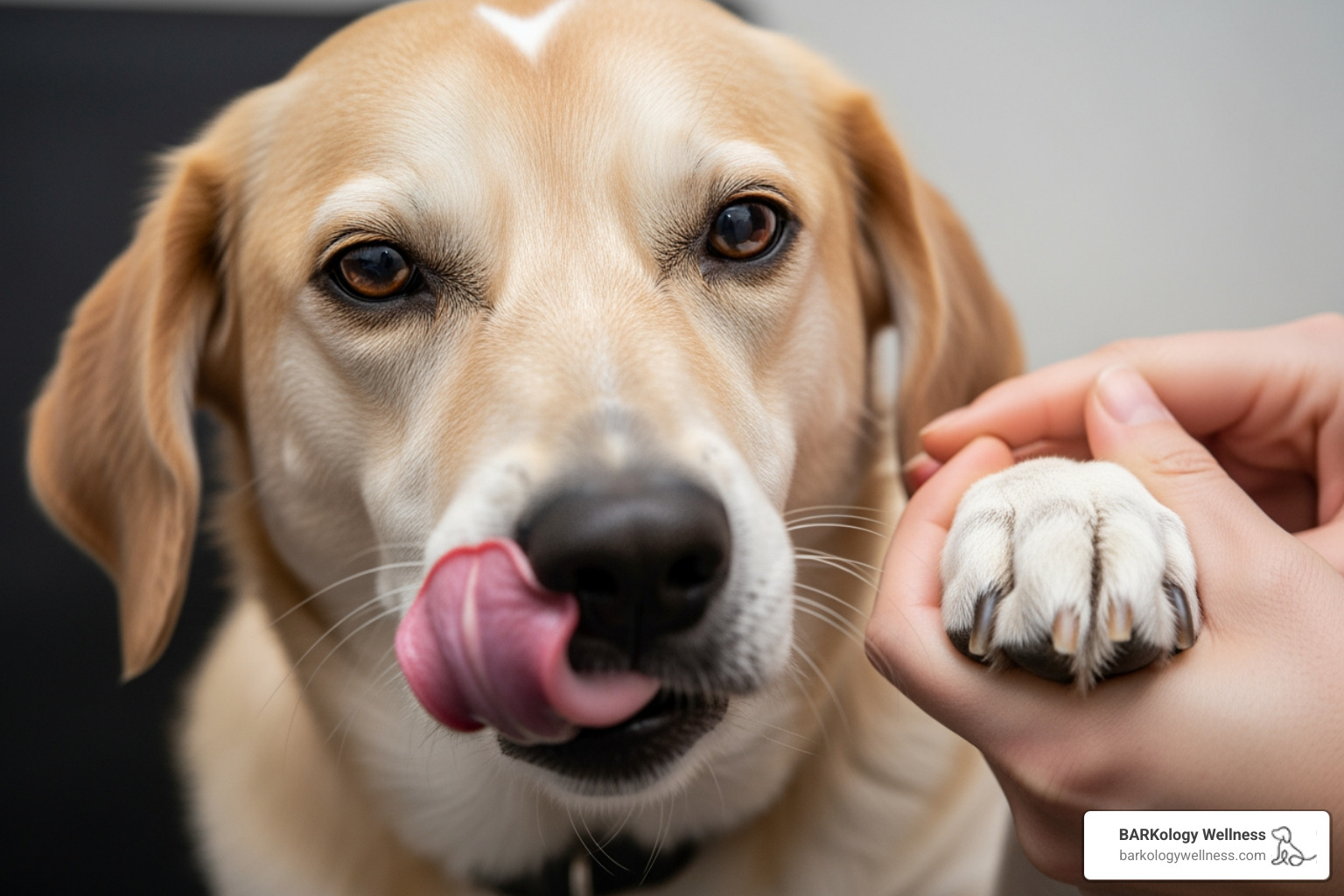
Before we even pick up a pair of clippers, we must become experts in "dog speak." Many pet parents miss the subtle signs that their dog is reaching a breaking point. Stress in dogs during nail trims is not "defiance", it is a genuine fear response.
Signs of Stress to Watch For:
- Yawning: When your dog isn't tired, a yawn is a major "I'm nervous" signal.
- Lip Licking: A quick flick of the tongue when no food is present.
- Panting: Heavy breathing despite a cool room.
- Tense Posture: Pulling the paw away or stiffening the body.
- Whale Eye: Seeing the whites of your dog's eyes.
To facilitate stress free nail grooming for your dog, the environment must be optimized for calm. We recommend using a non-slip surface, like a yoga mat or a rug, so your dog feels secure. Avoid slippery tile floors where they might feel they have no "brakes."
Choose a quiet space away from the hustle and bustle of the house. You can even use a silicone wall mat smeared with a bit of dog-safe peanut butter to create a positive association. While your dog is busy licking, you can gently work on their paws. The goal is to make the experience feel like a spa day, not a wrestling match. For more professional insights, you can read about taking the stress out of nail trimming for dogs.
Step-by-Step Techniques for Safe Trimming
Ready to start? Let’s break down the physical process of the trim. First, we need to master paw handling. Instead of grabbing the paw, which can feel restrictive, gently cradle it. Use your thumb on the pad of the toe and your forefinger on the skin above the nail. Pushing your thumb slightly up and back while pushing your forefinger forward will extend the nail, making it easier to see and cut.
The Trimming Process:
- The Angle: Always cut at a 45-degree angle, following the natural curve of the nail.
- The "Salami" Method: Instead of one big chop, take tiny, thin slices (like slicing salami). This allows you to stop the moment you see the "chalky white ring" that precedes the quick.
- The Dewclaws: Don't forget the nails on the inner side of the leg! These don't touch the ground and can grow into the skin if ignored.
- The Reward: Give a high-value treat after every single nail. We want your dog thinking, "Hey, every time that thing clicks, I get steak!"
Tool Comparison Table
| Tool Type | Best For | Pros | Cons |
|---|---|---|---|
| Scissor Clippers | Medium to Large Dogs | Strong, clean cut; great leverage. | Can crush the nail if dull. |
| Guillotine Trimmers | Small to Medium Dogs | Easy to replace blades. | Can be harder to see the quick. |
| Grinders (Dremel) | Fearful dogs / Dark nails | Smooth edges; less risk of bleeding. | Noise and vibration can be scary. |
| Safety Guard Clippers | Beginners | Prevents taking off too much at once. | Can provide a false sense of security. |
For a deeper dive into the mechanics, the AKC offers a great guide on how to trim your dog’s nails safely.
How can I identify the quick during stress free nail grooming for your dog?
Identifying the quick is the biggest hurdle for most owners. In light-colored nails, the quick is easy to see as a pink area inside the nail. However, many of our Tampa pups have dark or black nails.
For dark nails, the "chalky white ring" is your best friend. As you take tiny slices off the end of the nail, look at the cut surface. When you see a small, dark circle in the center of a chalky white area, stop. You are approaching the quick.
Expert Tip: Use a penlight or the flashlight on your phone to "backlight" the nail. This can sometimes reveal the shadow of the quick even through darker pigment.
What are the best tools for stress free nail grooming for your dog?
Investing in high-quality tools is a game-changer. Dull clippers crush the nail, which is painful for the dog and causes them to pull away.
- For Puppies: Use a small, manageable tool like the Li’l Pals dog nail trimmer.
- For Adults: The Safari Professional nail trimmer is a staple in many grooming kits because of its sharp, stainless steel blades.
- For Anxious Dogs: A dog-friendly nail grinder or the Dremel’s 7300-PT dog and cat nail grinder kit offers a "filing" sensation rather than a "clipping" one, which many dogs find less threatening.
Desensitization Strategies for Puppies and Fearful Adults
The goal of desensitization is to change your dog's emotional response to nail care. We want to move from "Oh no, the scary clippers!" to "Oh boy, the treat-dispensing clippers!"
Introducing nail care to a new puppy
If you have a new puppy in Tampa, start handling their paws on day one. Don't even think about clipping yet, just touch their toes, massage their pads, and give them a treat.
The 7-Day Success Plan:
- Day 1: Let your puppy sniff the nail clipper or grinder. Give a treat and praise.
- Day 2: Touch the tool lightly to each paw. Give a treat and praise.
- Day 3: Touch the tool to each paw and squeeze the clipper (so they hear the "click") or turn the grinder on. Don't trim! Just reward the sound/vibration.
- Day 4: Repeat Day 3, but hold the tool against the nail for one second. Reward.
- Day 5: Trim the very tiniest tip off just one nail. Offer a high-value treat like boiled chicken.
- Day 6: Try trimming two nails.
- Day 7: Continue slowly until all nails are done.
Helping a fearful adult dog overcome grooming trauma
For dogs with pre-existing fear, the process is the same but much slower. It may take weeks or months. Dogs have extra nerve receptors in their paw pads, making them highly sensitive. If your dog has had a "quicked" nail in the past, they remember that pain vividly.
For these cases, we often suggest "buying time." If your dog's nails are dangerously long, it might be best to have a veterinarian perform a sedated trim to get them back to a manageable length. Then, you can start your desensitization training at home without the pressure of overgrown nails.
If the clippers are too much of a trigger, try a "scratch board", a piece of wood with sandpaper attached. You can train your dog to "dig" at the board, effectively filing their own nails through play! You can also check out the Nailed It! Stress-Free Nail Care for Pets course for a deep dive into these alternative methods.
Frequently Asked Questions about Stress Free Nail Grooming for Your Dog
What should I do if I accidentally cut the quick?
First, stay calm! Your dog will react to your energy. If you panic, they will think something catastrophic has happened. It will bleed, and it will sting, but it is not a life-threatening emergency.
Have styptic powder ready before you start. Miracle Care Kwik Stop styptic powder contains benzocaine to help numb the pain. Simply pack a pinch of powder onto the bleeding nail and apply firm pressure for about two minutes. If you don't have styptic powder, cornstarch or baking flour can work in a pinch. Give your dog a "jackpot" of treats immediately after to end the session on a high note.
How do I know if my dog is too stressed to continue?
If your dog is panting heavily, vocalizing (whining or growling), or frantically trying to escape, stop immediately. Forcibly restraining a dog carries a high risk of worsening fear.
We use the "24-hour rule." If a session goes poorly, end it, give a treat for "trying," and don't attempt it again for at least 24 hours. This allows the dog's cortisol levels to return to normal. Remember: trimming one nail a day for ten days is just as effective as trimming ten nails in one day.
Are there alternatives to traditional clippers?
Yes! If clippers are a "no-go" for your dog, consider:
- Nail Grinders: These file the nail down gradually.
- Scratch Pads: Great for front nails; dogs file them while "searching" for hidden treats.
- Professional Walk-in Services: Sometimes, dogs behave better for a professional in a new environment. At BARKology, we offer standalone nail cutting services that take just 15 minutes.
Conclusion
Mastering stress free nail grooming for your dog is one of the greatest gifts you can give your pet. It ensures they can walk comfortably, prevents long-term joint issues, and strengthens the bond of trust between you.
Patience is your most valuable tool. Whether you are working with a wiggly puppy or a skeptical senior, moving at your dog's pace will always yield the best results. If you ever feel overwhelmed or your dog's nails have become too much to handle at home, our team at BARKology Wellness is here to support you with professional care that prioritizes your dog's emotional well-being.
For more tips on keeping your pup in peak condition, explore our wellness services or visit us in South Tampa for a personalized grooming consultation. Together, we can make "nail nightmares" a thing of the past!